

A good cable lock for trail cameras is your best first move against theft. It’s a simple piece of gear that stops someone from walking off with your expensive camera and, just as importantly, all the crucial wildlife data you've spent weeks collecting. Spending a little on a solid lock now is a whole lot cheaper than replacing a camera worth hundreds of dollars later.
Why Your Trail Camera Needs a Cable Lock
Picture this: you've spent weeks scouting the perfect spot, set up your camera just right, and you come back to check it... only to find an empty tree. It’s a gut-wrenching feeling that’s all too common for hunters, researchers, and landowners. A stolen camera isn't just a hit to your wallet; it's lost time, effort, and irreplaceable intel on wildlife patterns.
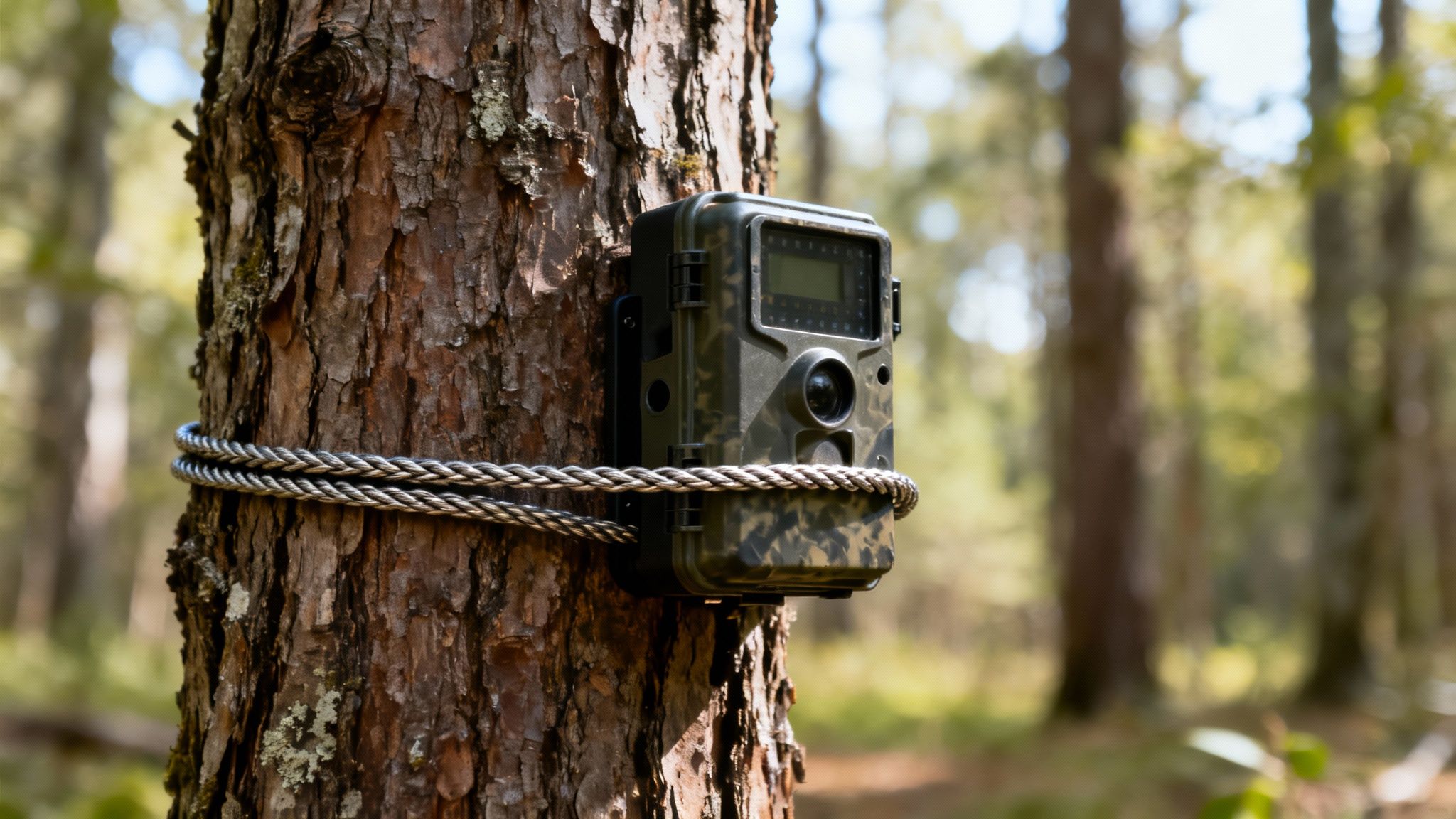
This is becoming a bigger problem as trail cameras get more advanced and more valuable. Today's cameras, with their 4G connectivity, high-res sensors, and GPS tracking, are prime targets for opportunistic thieves.
The Rising Cost of Unsecured Cameras
The math on this is simple. The global trail camera market hit around USD 852.97 million in 2024 and is expected to blow past USD 1.4 billion by 2032. As more of these high-tech, high-value cameras make their way into the woods, the cost of replacing one—often several hundred dollars—makes a cheap security cable a no-brainer. It's why accessory sales are growing right alongside camera sales. For a deeper dive into these numbers, you can explore the full trail camera market analysis.
More than anything, a simple steel cable lock is a powerful visual deterrent. Most thieves are looking for a quick and easy score. When they see a camera physically locked to a tree, it's often enough to make them move on to an easier target. It's a small investment for a whole lot of peace of mind.
A visible lock is your first and best defense. It tells a potential thief that your gear won't be an easy score, forcing them to either come prepared with tools or find a softer target.
What You Will Learn in This Guide
Securing your gear is about more than just slapping a lock on it; it's about building a complete security strategy. In this guide, we'll walk you through everything you need to know.
- Key Specs to Choose: We’ll get into the weeds on materials, cable thickness, length, and the different types of locks.
- Step-by-Step Installation: Learn how to mount your lock the right way for maximum security.
- Advanced Anti-Theft Practices: We'll go beyond the basics with tips on concealment and using tech to your advantage.
- Maintenance and Troubleshooting: Keep your lock working smoothly, even after seasons of harsh weather.
Of course, a lock only works if the camera is set up correctly in the first place. If you need a refresher on the fundamentals, check out our beginner's guide on how to set up a trail camera before diving into these more advanced security tactics.
Decoding Cable Lock Specs for Your Trail Camera
Picking the right cable lock means looking past the price tag and getting into the details that actually matter out in the woods. Not all locks are built the same, and the specs on the package directly translate to how well your camera will hold up against thieves and harsh weather.
A cable lock’s material, thickness, length, and locking mechanism all play a huge role. A cheap, thin cable might stop a casual walker, but it won’t slow down someone who came prepared with bolt cutters. Let’s break down what you need to look for to make sure your investment stays right where you put it.
Material and Diameter: The Core of Your Defense
The heart of any decent cable lock is what it’s made of. You absolutely want one made from braided steel. Those interwoven strands are way harder to cut than a single, solid wire because they force cutters to chew through multiple tough strands one by one, which takes a lot more time and effort.
Diameter is just as important. A thinner cable might save you a few bucks, but it’s a serious weak point in your security setup.
- 3/16" (4.7mm) Cables: These are on the lighter side. They offer a basic level of deterrence but are pretty easy to snip with common tools.
- 5/16" (8mm) Cables: This is the sweet spot for most of us. A 5/16" braided steel cable, like the kind used in the classic Master Lock Python, is a serious obstacle for most thieves.
- 3/8" (9.5mm) Cables: If you’re setting up in a high-risk area, a 3/8" cable is even tougher to beat, though it does add a bit of extra weight and is less flexible.
Also, make sure the cable has a thick vinyl coating. This outer layer is critical—it keeps the steel from rusting after a few rainstorms and prevents the cable from scratching up your camera or damaging the tree.
Pro Tip: When you're locking up your camera, pull the cable as tight as you possibly can. Any slack is an invitation for a thief to slip a tool in there and get enough leverage to pry or cut. A snug fit is a secure fit.
Finding the Right Length and Lock Type
The cable’s length dictates your mounting options. If it’s too short, you’ll be stuck with tiny saplings. If it’s too long, you’ll have a cumbersome coil of extra cable to deal with. For most scenarios, a 6-foot cable is the perfect balance, giving you enough length to wrap around most trees and posts without a ton of slack.
Next, you have to choose between two main locking mechanisms: keyed or combination.
To help you decide, here’s a quick rundown of what to expect from the key features.
Cable Lock Feature Comparison for Trail Cameras
This table breaks down the pros and cons of different features you'll find on cable locks, making it easier to see what works best for your situation.
| Feature | Keyed Lock | Combination Lock | Braided Steel (5/16") | Vinyl Coating |
|---|---|---|---|---|
| Pros | Highly pick-resistant. Simple and reliable to operate, even in the cold. | No keys to lose or forget. You can set a custom code you'll remember. | Excellent cut resistance against bolt cutters. The industry standard for a reason. | Protects the cable from rust and corrosion. Prevents scratches on your camera and the tree. |
| Cons | You can lose the key in the field, which is a major headache. | Can be tricky to operate with gloves on. You might forget the combination. | Slightly heavier and less flexible than thinner cables. | Can eventually crack or peel after years of sun and weather exposure. |
Ultimately, the best choice depends on how and where you'll be using your camera. Each feature offers a trade-off between convenience and security.
The choice really comes down to personal preference. If you’re managing a bunch of cameras, getting keyed-alike locks can make your life a lot easier. If you’d rather not fumble with keys in the dark, a combination lock is a solid alternative. This growing demand for specialized security gear isn't just in the trail cam world. The global market for cam-locks—the small mechanisms often used in these devices—hit an estimated $2.49 billion in 2024. You can read more about the cam-lock market's growth to see just how big this industry has become.
Getting That Cable Lock Installed for Rock-Solid Security
Properly locking up your trail camera is more than just slinging a cable around a tree and calling it a day. It’s a hands-on skill, and the little details are what really stop a thief in their tracks. The goal isn't just to lock the camera; it's to make stealing it so frustrating and time-consuming that they just give up.
It all starts with picking the right anchor point. A healthy, live tree that's at least 8-10 inches in diameter is your best bet. Forget about dead trees, rotting logs, or flimsy posts—anything a thief could easily break, cut, or pull out of the ground. Your anchor is the foundation of the whole setup.
This quick visual breaks down the key features that make a cable lock tough to beat.
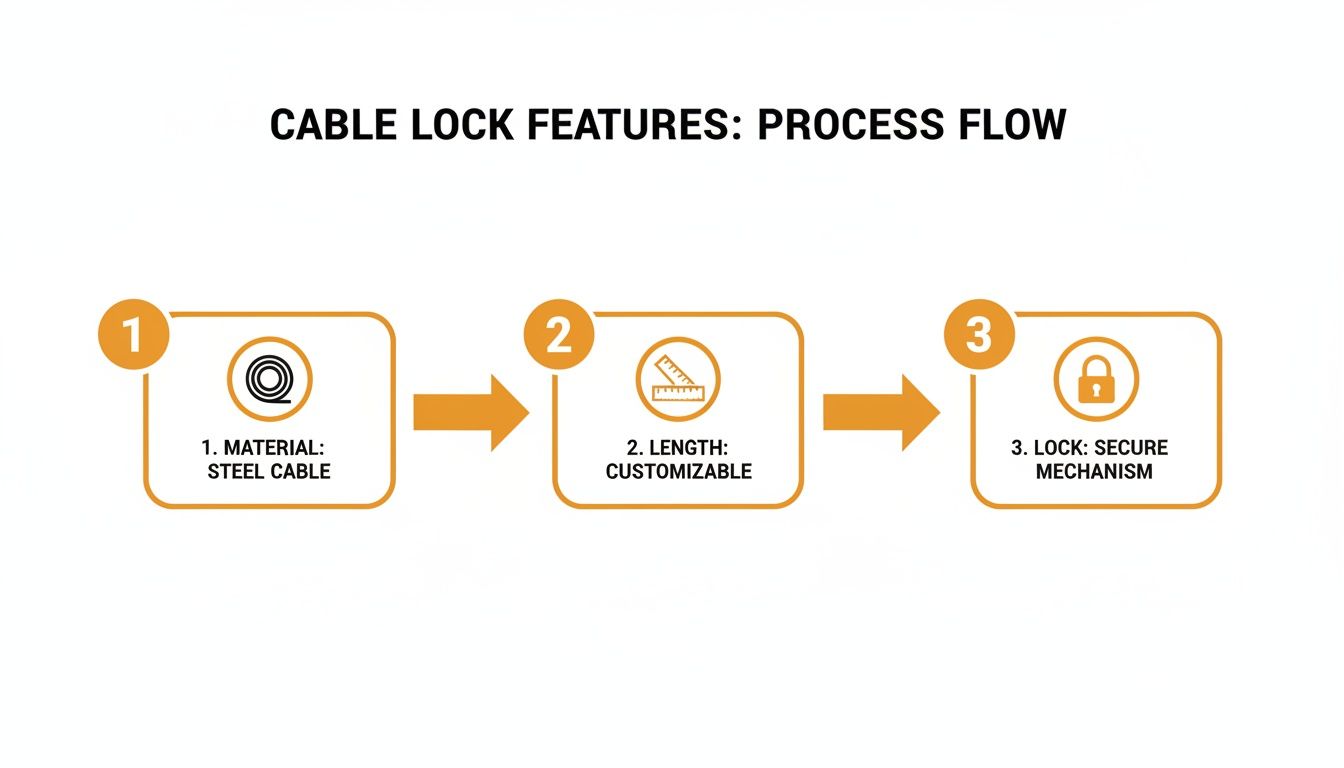
As you can see, it's the combination of braided steel, the right length, and a solid lock that creates a serious defense against anyone trying to mess with your gear.
The Art of a Tight and Secure Fit
Once you’ve got your anchor, your technique for threading and tightening the cable is what really matters. For the best protection, I always run the cable through the security loops on the camera body and through a steel security box if I'm using one. It’s a double-layered approach that forces a thief to defeat two different defenses.
Next, pull that cable as tight as you possibly can. Any slack is just an invitation for someone to slip in a pry bar or get a good angle with bolt cutters. A snug, tight fit is your best friend out there.
Field Expert Tip: I always make sure the lock mechanism itself is facing downward. It’s a simple trick, but it lets gravity do the work of shedding rain and moisture. This keeps the internal pins from rusting up or freezing solid when the weather turns nasty.
Pro Installation Tips for Out in the Field
Going beyond the basics can make a huge difference. These are the small tweaks that separate a casual setup from one that’s truly secure.
- Think About Your Angles: Try to position the camera and lock in a spot that’s just awkward to get to. Tucking it inside a cluster of branches or behind the main tree trunk can make it a real headache for someone trying to get tools in place.
- Trim Those Excess Straps: If you’re also using a mounting strap, snip off any extra length. A long, flapping piece of nylon is a dead giveaway that a camera is nearby.
- Give It a Final Tug: After you’ve locked it up, give the cable a hard pull. Make sure the lock is fully engaged and there’s no give. It’s a simple last-minute check that has saved me a lot of grief.
Field experience backs up the need for a quality cable. Most of us in the field swear by a 5/16-inch braided steel cable, usually about six feet long. It hits the sweet spot between being tough to cut and flexible enough to mount anywhere. When you pair a lock like this with a security box, the number of theft incidents drops like a rock—something retailers and field pros will tell you all day long.
If you want to dig deeper into these setups, our detailed guide covers everything you need to know about your game camera lock cable.
Advanced Anti Theft Strategies for Trail Cameras
A cable lock for trail cameras is your first line of defense, but real security comes from layering your tactics. Once you’ve physically locked down your camera, the next mission is to make it vanish—at least to the casual observer. This means you need to think like a seasoned hunter and a potential thief to make your gear as tough to find as it is to steal.
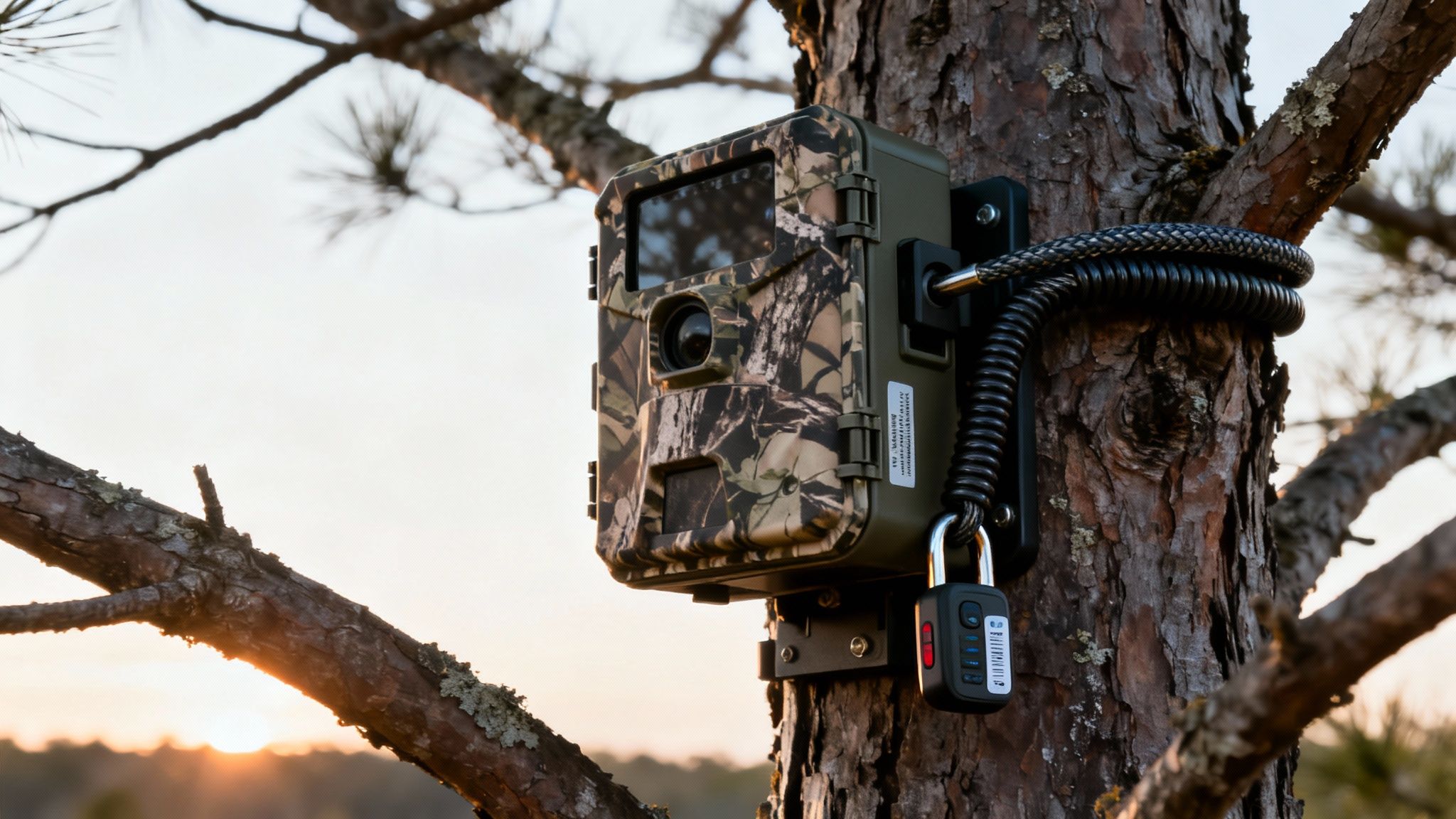
It all starts with concealment. A camera mounted at eye level along a well-worn trail is practically waving a flag, asking to be noticed. Get it up high. Placing your camera 8 to 12 feet up a tree and pointing it downward immediately removes it from a person's direct line of sight. It’s a simple change that makes a world of difference.
Enhancing Physical and Visual Security
Beyond just mounting your camera high, think about how it blends into its surroundings. Even a camouflaged camera can stick out like a sore thumb against the wrong backdrop. Use natural cover—thick branches, dense brush, or even a hollowed-out log—to break up the camera's silhouette and hide it from prying eyes.
For a truly tough-as-nails deterrent, combine your Python-style cable lock with a heavy-duty steel security box. This one-two punch is a thief’s worst nightmare.
- Dual-Layer Defense: The security box shields the camera body from being smashed or pried open, while the cable lock anchors the whole setup to the tree.
- Weather Protection: A good box also adds an extra layer of protection from rain, snow, and curious critters that might otherwise try to chew on your camera.
I once talked to a land manager on a public hunting property who told me his team cut camera theft by over 70%. Their secret? A combination of high mounting, security boxes, and braided steel cable locks. Thieves just gave up and moved on to easier targets.
Leveraging Technology for Tracking and Recovery
What happens if a really determined thief manages to get past your physical security? That’s when technology becomes your ace in the hole. Modern cameras with GPS and cellular capabilities are absolute game-changers for getting your gear back.
Geofencing is one of the most powerful tools you have. You set a virtual perimeter around your camera's location, and if it moves outside that zone, you get an instant alert on your phone. That gives you a critical head start on tracking it down.
Many of the more advanced models, like those from Magic Eagle, have these features built right in. If you want to dive deeper into how this works, check out their guide on the smart anti-theft system, which breaks down the GPS tracking and geofence alerts. This kind of tech means that even if your camera walks off, you still have a fighting chance to recover it.
Of course, protecting your gear is part of a bigger picture of staying safe in the outdoors. The same principles often apply, whether you're securing a trail cam or a campsite. For a broader perspective, you might find these safety and security tips for overnight car camping useful. By mixing a tough cable lock with clever placement and smart tech, you build an anti-theft system that’s much stronger than any single part.
Cable Lock Maintenance and Troubleshooting
Your cable lock for trail cameras spends its entire life outdoors, taking a beating from rain, dust, and wild temperature swings. It's tempting to think of it as a set-it-and-forget-it piece of gear, but that's a mistake. A little bit of upkeep is all it takes to prevent a seized lock and a wasted trip into the woods.
Think of your lock like any other piece of critical field equipment—it needs a quick clean and lube now and then. After a particularly muddy season, give the cable and lock body a quick wipe-down. More importantly, grab a can of compressed air and blast out any grit that’s worked its way into the keyhole or combo dials. That one step alone can save you from jammed-up internal pins down the road.
When it comes to lubrication, what you use is just as important as what you do.
- Steer Clear of Oil-Based Sprays: Products like WD-40 are a magnet for dust and dirt. They end up creating a gummy sludge inside the locking mechanism that causes more problems than it solves.
- Go with Graphite or Silicone: A dry lubricant, like powdered graphite, is what the pros use. Just a small puff into the keyway is enough to keep everything moving smoothly without attracting grime.
Solving Common Problems in the Field
Even a well-maintained lock can throw you a curveball. A sudden cold snap can freeze it solid, or worse, a key can snap off in the cylinder. Knowing a few field-expedient fixes can be a real day-saver.
If your lock is frozen shut, whatever you do, don't force the key. Your best bet is to use a hand warmer or even just cup your hands around the lock for a few minutes. That gentle heat is usually all it takes to thaw the mechanism without causing damage. For a jammed cylinder that just won't turn, a quick shot of lock de-icer or another puff of dry graphite can often free it up.
A broken key is the ultimate headache, but not a lost cause. A pair of needle-nose pliers or even a sturdy fishhook from your tackle box can sometimes be used to carefully work the broken piece out. This is exactly why a good multi-tool should live in your pack.
Finally, make a habit of checking the vinyl coating on the steel cable. If you notice deep cracks or spots where it’s worn away, exposing the braided steel, it's time for a replacement. That exposed steel is just asking for rust, which will silently weaken the cable and compromise your camera's security. A well-maintained lock is one you can trust.
Questions from the Field: Cable Locks
Even the slickest setup can leave you with questions. Let's tackle some of the most common ones I hear from hunters and landowners about using cable locks out in the wild.
Can Bolt Cutters Really Get Through a Braided Steel Cable?
This is the big one, and the honest answer is yes... eventually. A thief with a big pair of bolt cutters and enough time on their hands can defeat just about anything. But the key words there are time and effort.
Trying to cut a quality 5/16-inch braided steel cable is a real pain. It's not like snipping a solid wire. The individual strands tend to slip, fray, and resist, forcing the thief to make multiple cuts. It's loud, awkward, and takes way longer than they want to spend exposed in the woods.
The point of a cable lock isn't to be Fort Knox. It's to be a powerful deterrent. Most thieves are opportunists looking for a quick, quiet score. A tough, noisy cable makes your camera a much less appealing target than the unsecured one down the ridge.
How Do You Secure a Whole Bunch of Cameras?
When you're running multiple cameras, security can get complicated. Using keyed-alike locks is tempting because it thins out your keychain, but lose that one key, and your entire network is compromised. That's why I've come to prefer combination locks, where I can set a unique, easy-to-remember code for each spot.
Here are a few tips I've learned for managing a whole fleet of cams:
- Mix Up Your Combinations. Never use the same code for every single lock. If a thief happens to guess or crack one, you don't want them holding the master key to all your gear.
- Don't Cluster Your Cameras. Avoid hanging multiple cameras in the same obvious, easy-to-reach area. Use elevation changes and natural cover to make each one a separate challenge to even find, let alone steal.
- Keep a Log. Trust me on this one. Keep a private, secure note on your phone or in a notebook with each camera's location and its lock combo or key number. When you haven't checked a camera in three months, you'll be glad you did.
What Happens if the Lock Freezes Solid in Winter?
A frozen lock is one of the most frustrating things to deal with during a late-season hunt. Ice gets into the mechanism, seizes the pins, and makes turning a key or the dials feel impossible. Whatever you do, don't try to force it—that's how you snap a key clean off.
Gentle heat is your best friend here. A chemical hand warmer held right up against the lock body for a few minutes will almost always do the trick. If you're really in a pinch, just cupping your bare hands around it can generate enough warmth to thaw it out.
For prevention, a quick puff of dry graphite lubricant into the keyway at the start of the season works wonders. It helps repel moisture before it has a chance to freeze you out.
Ready to pair that physical security with some serious tech? The Magic Eagle EagleCam 5 comes loaded with an anti-theft suite that includes GPS tracking and geofence alerts. It’s the perfect partner for a good cable lock, creating a layered defense that protects your gear from every angle. Check out the full lineup of smart security features at magiceagle.com and lock down your investment.