

A game camera lock cable is your first, best line of defense out in the field. It’s a simple but tough security tool—usually made from braided steel—that physically anchors your trail camera to a tree or post, stopping thieves and vandals in their tracks.
Why Your Trail Camera Is a Target for Theft
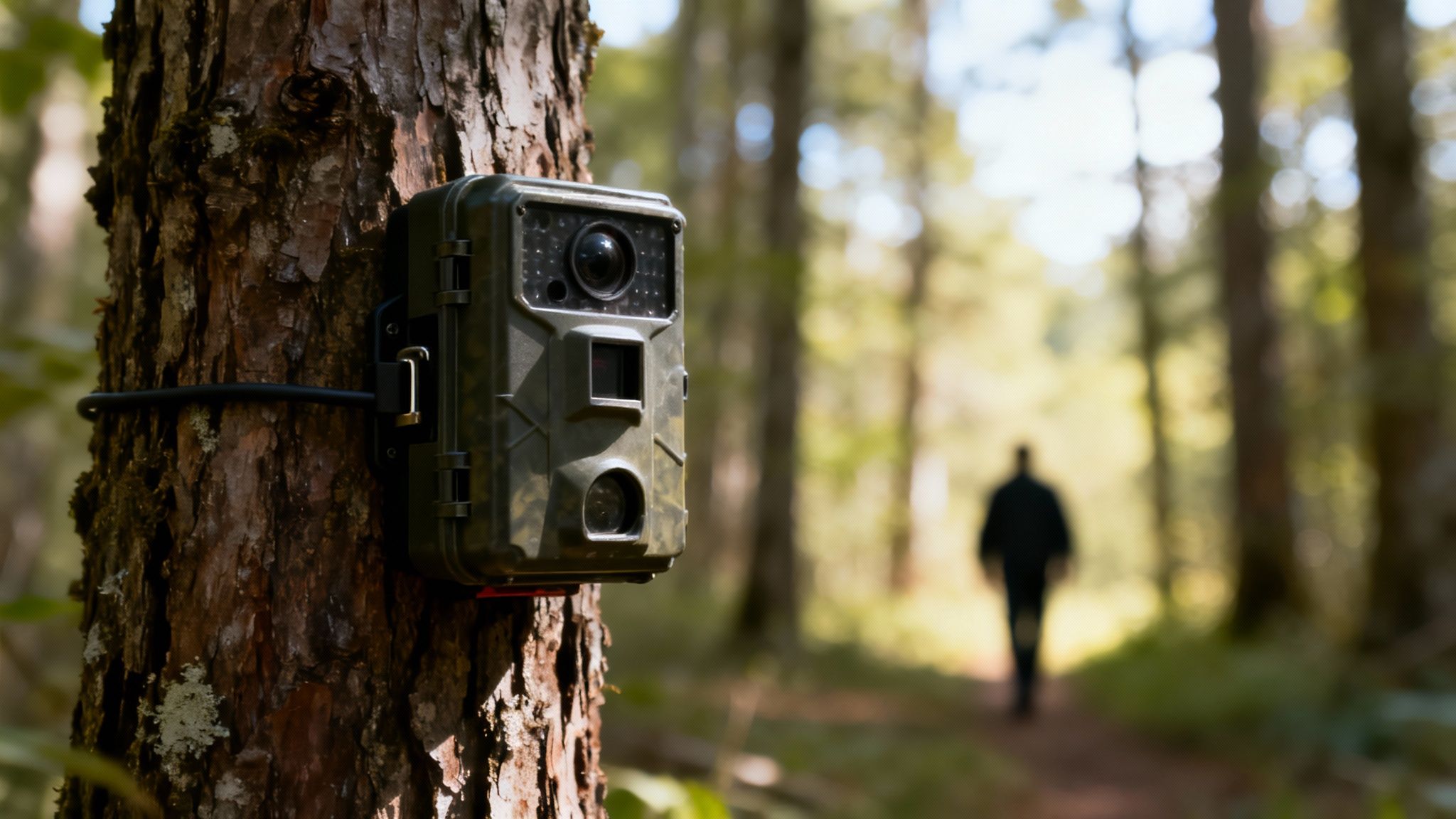
Let's be honest, your trail camera is more than just a gadget. It's your eyes in the woods, the silent scout that captures priceless intel and unforgettable moments. But that value also puts a target on its back.
Leaving a camera unsecured is like leaving your truck keys in the ignition at a public boat launch. It’s an open invitation for someone to ruin your day. The basic ideas behind protecting your gear are universal, and many of the same general strategies to protect assets from theft apply just as much to your trail cam as they do to your vehicle.
The Dual Cost of a Stolen Camera
When a trail camera disappears, you get hit twice. First, there’s the immediate financial sting of replacing a piece of hardware that can easily run you hundreds of dollars. That’s an unexpected expense that can mess up your budget and put a stop to your scouting overnight.
Second—and this is often the one that really hurts—is losing the data. Every photo, every video clip of that target buck, a rare coyote, or even a trespasser is gone for good. That information is the result of hours of planning, hiking, and waiting. Once it's gone, you can't get it back.
Think of a game camera lock cable less as an accessory and more as an insurance policy. It’s a powerful visual deterrent that makes any would-be thief think twice and move on to an easier target.
Your First Line of Defense
A good, solid game camera lock cable is the most important step you can take to protect your investment. Period. While high-tech features add some great backup, that physical lock is where real security starts.
The best approach is to layer your security. A strong cable combined with other smart tactics creates a seriously tough system to beat. For instance, what happens if someone does manage to cut the cable? That’s where digital security comes in. To see how this works, check out how a modern trail camera with GPS tracking can help you recover your gear even if the physical lock fails. It all starts with understanding why that simple cable is your first and most critical line of defense.
Understanding the Anatomy of a Security Cable
Picking a game camera lock cable is a lot like choosing the right rope for a tough job—not all of them are built the same. A cable's real-world effectiveness boils down to three key things: its material, its thickness, and its length. Getting a handle on these is the first step in turning a simple accessory into a serious theft deterrent.
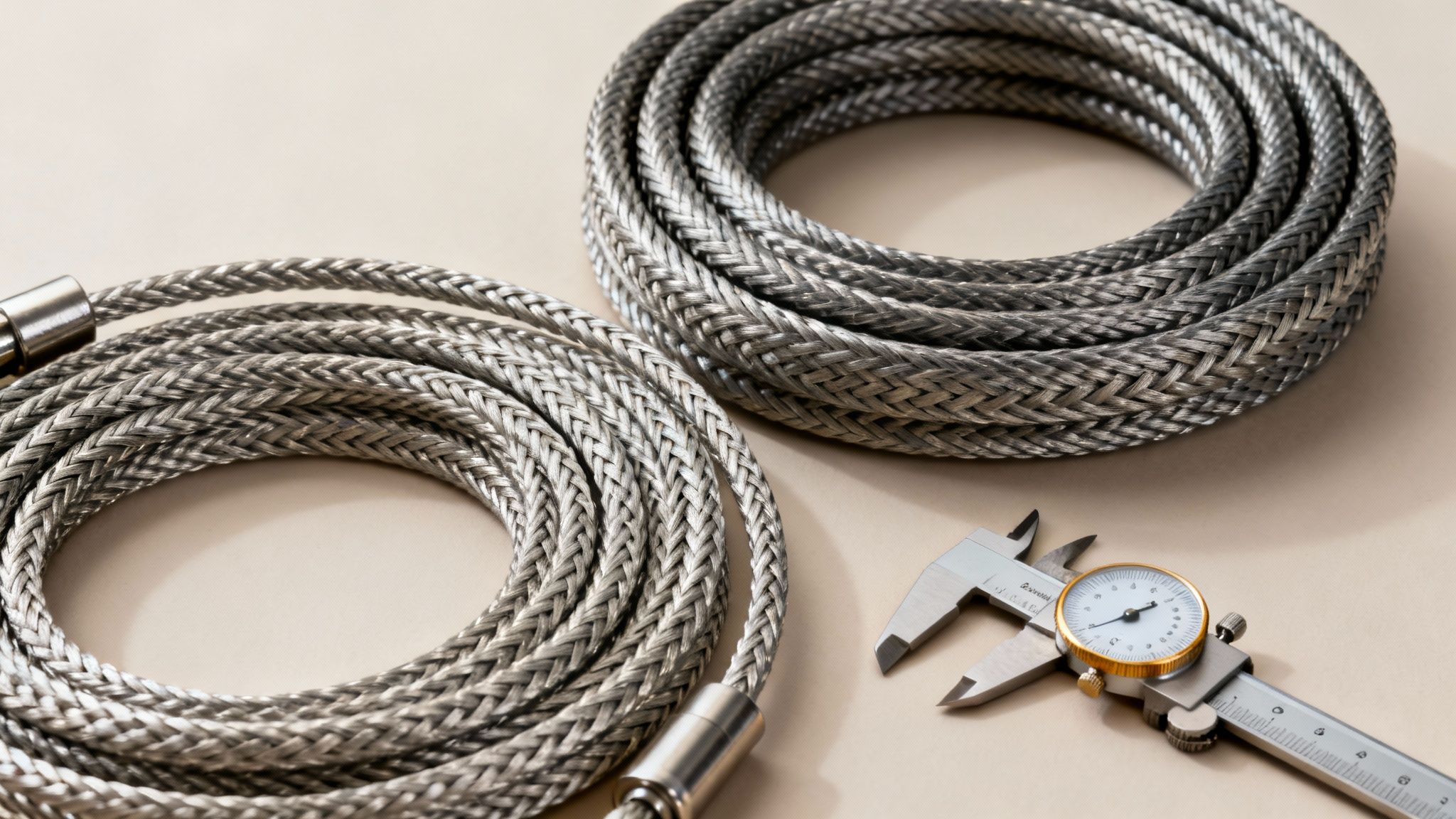
When you look at security cables, you'll see that braided steel is pretty much the industry standard, and for good reason. Unlike a solid chain where a thief can just attack a single link, braided steel is made of dozens of smaller strands woven together. This design gives you a fantastic combination of cut resistance and flexibility.
Think about it: if someone tries to snap a braided steel cable with bolt cutters, the strands tend to spread out and jam the tool's jaws instead of breaking cleanly. This makes cutting it slow, loud, and a real pain—three things a thief absolutely wants to avoid.
Why Cable Thickness Matters
The diameter of your game camera lock cable is one of its most important security features. It’s a direct measure of how much of a fight it’ll put up against cutting tools. I like to think of it as the thickness of a castle wall—the thicker it is, the harder it is to get through.
Most standard cables you'll find are 5/16 of an inch (around 8mm) thick. This size strikes a great balance between security and usability, fitting through the lock channels on almost any trail camera out there. It's more than enough to stop a casual, opportunistic thief in their tracks.
But if you’re looking for a higher level of security, you can step up to a heavy-duty 3/8-inch diameter (nearly 10mm) cable. That small increase in thickness makes a huge difference in cut resistance. The extra steel makes it incredibly difficult for standard bolt cutters to get a good bite, sending a clear message that your gear is not an easy score.
To help you decide, here’s a quick breakdown of what you can expect from standard versus heavy-duty options.
Comparing Game Camera Lock Cable Specifications
| Feature | Standard Option (e.g., 5/16" Cable) | Heavy-Duty Option (e.g., 3/8" Cable) | Primary Benefit |
|---|---|---|---|
| Material | Braided Steel with Vinyl Coating | Braided Steel with Vinyl Coating | Resists cutting and prevents fraying. |
| Thickness | 5/16 inch (8mm) | 3/8 inch (10mm) | Thicker cables are much harder to cut. |
| Ideal Use Case | Securing cameras in low-to-medium risk areas. | Protecting expensive cameras in high-risk or remote locations. | Matches security level to the environment. |
Ultimately, choosing between a 5/16" and 3/8" cable comes down to balancing your security needs with the value of the gear you're protecting.
Finding the Right Cable Length
Just as crucial as a cable's strength is its length. The right length gives you the freedom to secure your camera in all sorts of spots without making it less secure. If it’s too short, you’re stuck with only a few anchor points. If it’s too long, the extra slack can actually become a liability.
The most common and versatile length for a game camera lock cable is 6 feet. This gives you plenty of room to wrap it securely around most medium-sized trees and still cinch it down tight. Python-style locks are especially good at this and have been shown to make a statistically significant difference in preventing theft.
For example, the well-known Master Lock Python Cable is a 6-foot, 5/16” braided steel model designed to be both cut-resistant and flexible. It even has a protective vinyl coating to fend off weather and corrosion, which helps extend the life of the cable and protects your camera from scratches. For those who need even more peace of mind, professional-grade models with thicker 3/8” cables are available for larger, more expensive setups.
The goal is always a snug fit. Any significant slack in the cable gives a potential thief leverage to pry, twist, or get a better angle to cut the line.
Sometimes, though, you just need more length. If you're trying to secure a camera to a massive old-growth tree or need to anchor multiple devices together, you can find cables in 10, 15, or even 30-foot lengths. Just make sure to wrap any extra slack multiple times around your anchor point so it stays tight.
Keyed vs. Combination: Picking Your Lock
The braided steel cable is the muscle of your security, but the locking mechanism is the brain. It's the part you'll be fiddling with every single time you check your camera, so getting this choice right is about more than just security—it's about your own sanity in the field. Your main decision boils down to two camps: the old-school keyed lock or the modern combination lock.
Think of it this way: your choice isn't just about stopping a thief. It's about what works for you. Both will get the job done, but they offer totally different experiences with their own quirks and advantages.
The Case for Keyed Locks
Keyed locks are the classic, no-nonsense option. There's a certain elegance to their simplicity—put the key in, give it a turn, and you're done. They are incredibly reliable and far less likely to get jammed up with dirt, ice, or grime than the tiny moving parts of a combination lock.
That dependability is their superpower. When you're out in the freezing cold with fingers that barely bend, messing with a small, sticky dial is the last thing you want to do. A key is a solid, physical solution that just works.
But that strength is also its biggest liability: the key itself.
- One Point of Failure: Lose that tiny key somewhere on a long hike back to your camera, and you’ve got a real problem. It’s an all-or-nothing game.
- Juggling Keys: If you’re running a dozen cameras, you suddenly have a pocketful of keys to manage. Making sure you grab the right one for the right camera adds another step to your pre-hunt checklist.
For a lot of folks, the sheer, brute-force reliability of a keyed lock is worth the risk of losing the key. It's a proven system that has stood the test of time for a reason.
A keyed lock gives you pure mechanical simplicity. You never have to second-guess a forgotten code, making it a rock-solid choice for anyone who prefers a tangible, fuss-free security tool.
The Convenience of Combination Locks
On the flip side, you’ve got the keyless freedom of a combination lock. This is a massive plus for anyone who hates carrying extra keys or lives in fear of dropping them in a foot of snow. You set your code, lock it in your memory, and that's it.
It completely eliminates the physical object you have to keep track of, which can be a huge weight off your shoulders. There’s no key to leave in the truck, fumble in the dark, or accidentally snap off in the lock.
Of course, this system has its own Achilles' heel: your brain.
- Forgotten Codes: It’s amazing how quickly you can forget a code you haven't used in six months, especially if you set a unique one for each camera. A forgotten combo is just as bad as a lost key.
- Tough Conditions: Those small, numbered dials can be a real pain to turn with gloves on or when they're caked with mud or ice, which can slow you down when you’re in a hurry.
Even with those downsides, the liberation from keys is a huge selling point for people who want to streamline their gear and keep things simple.
A Quick Word on Cinching Mechanisms
Beyond the keyed vs. combo debate, there’s one feature you absolutely want to look for: an adjustable cinching mechanism. You’ll often see this in Python-style locks. This design lets you pull the cable tight as a guitar string around the tree, leaving zero slack.
Why does that matter? A tight cable is a nightmare for a thief to try and get leverage on or slip a tool behind. It dramatically boosts the effectiveness of your game camera lock cable. Whether you go with a key or a combination, make sure it has a cinching feature for a custom, rock-solid fit every time.
Mastering the Perfect Lock Cable Installation
Having a top-notch game camera lock cable is one thing, but making it actually work is another. Its effectiveness comes down entirely to how well you install it. Wrapping a cable around a tree seems simple enough, but the real security is in the details. Let's go beyond the basics and cover the strategic moves for anchoring, threading, and tightening your cable for max protection.
A proper setup takes your cable from a simple restraint and turns it into a serious deterrent. The whole point is to shut down any weak spot a thief might try to exploit, making sure your camera stays right where you put it.
The process really boils down to three key actions: finding a solid anchor, threading the cable the right way, and cinching it down tight. This visual guide breaks down that simple—but crucial—workflow.
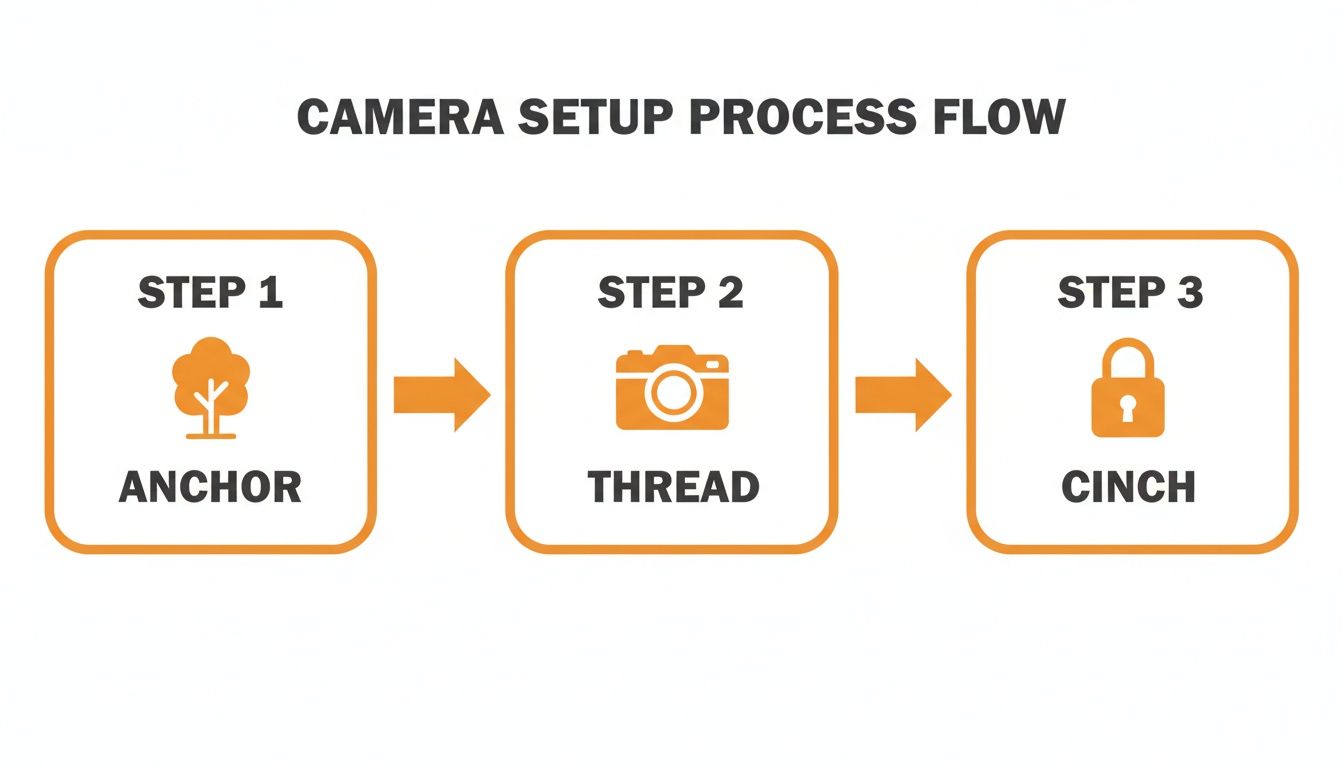
As you can see, each step builds on the last, creating a secure chain from the tree all the way to the lock itself.
Selecting Your Anchor Point
The first, and most critical, decision is picking what to lock your camera to. Your security is only as strong as its weakest link, and a junk anchor point is a huge vulnerability.
- Choose a Living, Sturdy Tree: Always go for a healthy, living tree that’s at least 6-8 inches in diameter. A small, weak, or dead tree can be pushed over or even cut down, making your lock totally useless.
- Avoid Fences and Posts (If Possible): They might be convenient, but wooden fence posts can be rotted at the base and easily snapped. Metal T-posts can be yanked right out of the ground. A solid tree is almost always the better bet.
If a good tree isn't available, you might have to get creative. Exploring options like our guide on trail camera stands can give you secure, alternative mounting solutions when mother nature doesn't provide the perfect spot.
Proper Threading and Cinching Technique
Once you've got your anchor, the next step is to route the cable correctly and get rid of every bit of slack. This is where a lot of folks mess up, creating an opening for thieves.
- Thread the Cable First: Before you even think about wrapping the tree, pass the end of the game camera lock cable through your camera’s security slots or brackets. This gets the camera attached before you do anything else.
- Wrap and Pull Tightly: Wrap the cable around the tree. Pass the lock mechanism through the loop on the other end of the cable and pull it completely taut. There should be absolutely no slack between the camera, the cable, and the tree.
- Position the Lock Mechanism: Cinch the lock down until it's snug. Try to position the actual lock mechanism where it’s a pain to access—like facing the tree or tucked away from any angle where someone could get a pry bar in there.
A tight cable without any slack is the key to defeating leverage attacks. If a thief can't fit a tool behind the cable or use its length to twist the camera, their job becomes exponentially harder.
Common Installation Mistakes to Avoid
Knowing what not to do is just as important as knowing the right steps. Steer clear of these common blunders and your security will be way better for it.
- Leaving Slack in the Line: This is the number one mistake. A loose cable can be twisted, used for leverage, or give a thief the perfect angle for bolt cutters.
- Using a Weak Anchor: Like we talked about, a dead sapling or a wobbly post is just asking for trouble.
- Placing the Lock in Plain Sight: Don't make it easy for them. Face the lock away from the main trail or obvious viewing angles to make it less noticeable and harder to mess with.
The trail camera market is exploding—it was valued at $101.7 billion in 2023 and is projected to hit $203.3 billion by 2032. That's a whole lot of high-value gear sitting out in the woods. This growth, especially in wireless cams, makes tough security accessories like 5/16” braided steel cables more important than ever to protect your investment from theft and damage.
Creating a Layered Anti-Theft Strategy
Think of a solid game camera lock cable as the fortress wall around your investment—it's the first and most obvious physical barrier you can put between a thief and your gear. But any good strategist knows that a single wall isn't enough. Real, bulletproof security comes from layering your defenses, combining tough hardware with smart digital tools.
This "defense-in-depth" approach means that even if one layer fails, another is waiting right behind it. When you pair a steel cable with your camera's built-in security features, you turn a simple setup into a system that makes thieves look for an easier target. It's the best way to protect both the camera itself and the valuable intel it's gathering for you.
Building Your Inner Digital Walls
Once your physical lock cable is pulled tight, it's time to arm the camera's internal defenses. These digital features are your inner walls, giving you a critical backup if someone manages to get past the cable.
Picture them as guards patrolling inside the castle. Even if an intruder scales the outer wall, they still have to deal with the security team inside. Your camera's digital tools work exactly the same way, creating extra headaches for any would-be thief.
The goal is simple: make stealing your camera more trouble than it's worth. Every security layer you add—from a basic password to GPS tracking—costs a criminal time and adds complexity, which dramatically increases the odds they'll just give up and move on.
Start with the basics. These simple steps can make a huge difference in stopping a theft before it happens or helping you get your gear back if it does walk away.
- Password Protection: This is your first digital lock. Set a strong, unique password to keep a thief from getting into your settings, wiping your photos, or reformatting your SD card.
- Cloud-Based Storage: Turn on automatic uploads to the cloud. This is a huge one. It guarantees that even if the camera disappears, your scouting data is safe and sound, accessible from anywhere.
- Geofencing Alerts: Many modern cameras, like those from Magic Eagle, let you draw a virtual boundary. If the camera moves outside that zone, you get an instant alert pinged to your phone.
Leveraging GPS for Tracking and Recovery
The ultimate digital safeguard, without a doubt, is GPS tracking. This feature turns your camera from a sitting duck into an active, trackable asset. It's interesting to see how lessons from the world of comprehensive car security systems apply here; just like GPS is a game-changer for recovering a stolen vehicle, it’s absolutely essential for finding stolen outdoor gear.
If a thief manages to cut your lock cable and make off with the camera, that GPS chip becomes your last and best line of defense. It will transmit the device's location, giving you or law enforcement the exact coordinates needed to track it down. This can turn a total loss into a successful recovery.
If you really want to maximize your digital defenses, you should see how to stay one step ahead with a smart anti-theft system that pulls together GPS, remote lockdowns, and motion alerts into one package.
By combining the raw strength of a steel game camera lock cable with the brains of passwords, cloud backups, and GPS, you build a layered security strategy that’s incredibly tough to beat. It's a complete system that protects your camera, secures your data, and gives you the best possible shot at getting your property back.
Keep Your Security Gear in Fighting Shape
A quality game camera lock cable is built to take a beating from the elements, whether it's pouring rain, a foot of snow, or baking sun. But even the toughest gear needs a little TLC to perform at its best. A few simple maintenance steps will keep your lock working smoothly season after season, saving you from headaches in the field.
Think of it like any other piece of critical outdoor equipment. You wouldn't put your rifle away wet, and the same logic applies here. Taking a few minutes to care for your lock now can prevent a major problem later, like a seized mechanism when you're miles from your truck.
A Little Prevention Goes a Long Way
Before you even head out to the woods, the single most important thing you can do is lubricate the locking mechanism. This isn't just a friendly tip; it's a pro-level move that can add years to your lock's life. Dirt, moisture, and big temperature swings are the enemies of all those small moving parts.
Just a small puff of graphite lubricant into the keyhole or around the combination dials makes a world of difference. Unlike oil-based sprays that can get gummy and attract grit, graphite is a dry lube that keeps things moving freely and helps prevent rust and seizing. It’s a simple step that ensures your key turns smoothly every single time.
Investing in physical security is a big deal. The global market for cam locks, which includes the type used in your game camera lock cable, hit $2.49 billion in 2024. That number is expected to jump to $3.28 billion by 2029. As you can see from the full market report, people everywhere are taking security more seriously.
On-the-Spot Field Fixes
Even with the best prep, things can still go wrong out in the wild. Knowing how to quickly solve a few common problems will keep your camera secure and your frustration in check.
Here’s how to handle the most frequent lock cable issues you might run into:
- Key is Stuck or Jammed: This is usually caused by a tiny piece of dirt or debris inside the lock. First, try another puff of graphite lubricant. If that doesn't do it, a few firm but gentle taps on the lock body can sometimes shake the obstruction loose. Whatever you do, don't try to force the key—that’s a surefire way to snap it off.
- Cinching Mechanism Won't Budge: If the cable is stuck and won't tighten or release, the internal ratchet is likely clogged with mud, ice, or pine needles. Try working the cable back and forth to break it free. A quick blast from a can of compressed air is also a great way to clear out debris.
- Forgot the Combination: We've all been there. It’s a frustrating moment, but don't grab the bolt cutters just yet. Before you do anything drastic, take a minute to calmly and slowly cycle through the numbers you most commonly use. If you have other combo locks, make sure you aren't trying to use the code for a different one. To avoid this entirely, always save your combinations in a secure note on your phone or in a logbook at home.
Got Questions About Game Camera Locks? We’ve Got Answers.
When it comes to securing your gear in the field, a lot of questions can pop up. Getting straight, honest answers is the key to using a game camera lock cable with confidence and making sure your investment is actually protected. Let's tackle some of the most common questions we hear from folks out there.
We've pulled these questions right from the community to give you practical advice, help you sidestep common issues, and make smarter choices for locking down your trail cams.
Can a Game Camera Lock Cable Be Cut?
Look, no lock is 100% invincible, but a quality braided steel cable is ridiculously hard to cut with everyday tools. That multi-strand weave is the secret—when bolt cutters bite down, the cable just frays and jams up the jaws. Cutting through it would take specialized equipment and a whole lot of time.
If you step up to a thicker 3/8-inch model, you get even more cut resistance than the standard 5/16-inch version. It’s not just a physical barrier; it's a powerful visual one, too. Most thieves will see that beefy cable and decide to look for an easier target.
Will a Lock Cable Fit My Trail Camera Model?
Thankfully, yes. The vast majority of modern trail cameras are built with security in mind, so they have pass-through holes or brackets made specifically for lock cables. These slots are almost always sized for standard 5/16-inch (8mm) cables.
That said, it never hurts to double-check. Take a quick look at your camera to find the security points. If you're unsure, a quick peek at the user manual will confirm compatibility before you buy a new game camera lock cable, guaranteeing a perfect fit.
Is a Python-style lock better than a separate padlock and chain? Absolutely. A Python lock’s integrated, adjustable cinching mechanism lets you pull the cable completely taut, eliminating dangerous slack. Plus, its braided steel cable is more flexible and often more cut-resistant than a comparable chain, making it a superior all-in-one solution for trail camera security.
What Should I Do with Extra Cable Slack?
Leaving extra cable dangling is a rookie mistake. It gives a thief a perfect handle to pry, twist, or try to smash the camera off the tree. The best way to deal with the extra length is to wrap it tightly around the tree a few more times before you lock it down.
This trick not only eats up the slack but also adds a ton of friction, making it even tougher for someone to mess with your camera. Always make sure that final loop is pulled as tight as you can get it for maximum security.
For a security system that pairs the raw strength of a game camera lock cable with smart digital defenses like GPS tracking and geofencing, check out the full lineup of cellular trail cameras from Magic Eagle. Learn how to build a complete, layered anti-theft strategy at https://magiceagle.com.