

At its core, a cell camera plan is just a special data subscription that lets your trail camera beam photos and videos straight to your phone. Think of it like a dedicated cell phone plan, but for your camera—stripped down to only the data it needs to transmit from the field, without any voice or text services.
Understanding How Cell Camera Plans Work
Choosing the right plan can feel like a chore, but it really comes down to one big decision: go with a major carrier like Verizon or AT&T, or pick a dedicated plan from the camera manufacturer itself. Each path has its own pros and cons for keeping your camera connected out in the woods.
A plan from a big carrier usually involves adding your camera as a new "line" to your existing family phone plan. This might sound convenient, but these plans aren't built for the unique way trail cameras send data—in short, intense bursts. You often miss out on specialized features designed for scouting.
On the other hand, plans offered directly by camera brands like Magic Eagle are built from the ground up for their own devices. They tend to be far more flexible, offering options like photo-based tiers, pooled data for running multiple cameras, and other features that actually make sense for a hunter. This shift is part of a bigger trend; the global market for this technology is expected to jump from $33 billion in 2021 to over $41.35 billion by 2025. That’s a huge leap, and it shows just how much people want better ways to get images from remote places. You can dig into more insights on the cell phone camera market to see the numbers for yourself.
To make things simpler, let’s break down the common plan structures you’ll run into.
Typical Cell Camera Plan Structures at a Glance
The table below gives you a quick snapshot of the most common types of cell camera plans you'll find on the market. It highlights the key differences in how they handle data, what they typically cost, and who they're best suited for.
| Plan Type | Typical Data/Photo Limit | Average Monthly Cost | Best For |
|---|---|---|---|
| Carrier Add-on Line | 1GB - 5GB Data | $10 - $20 | Folks who already have a compatible major carrier and want to keep everything on one bill. |
| Camera Mfr. Tiered | 250 - Unlimited Photos | $5 - $15 | Hunters with predictable activity on their spots who prefer the simplicity of paying per photo. |
| Camera Mfr. Pooled | 2GB - 20GB Shared Data | $15 - $50+ | Anyone running multiple cameras who wants to get the most bang for their buck by sharing data across all devices. |
As you can see, there’s a plan style for just about every need and budget. Whether you’re a set-it-and-forget-it scouter or a data-heavy power user with a dozen cameras, understanding these basic structures is the first step toward picking the right one.
Figuring Out Your Trail Camera Data Needs
Trying to pin down your data needs can feel a little like guessing which way the wind will blow next week. But it's not as complicated as it seems.
Think of data as the "gas" your trail camera needs to send photos and videos from the woods straight to your phone. Every single image or video clip uses a specific amount of that fuel to make the trip.
Just like a truck burns more fuel on a long haul than a quick trip to the store, higher-quality images and videos burn through more data. A low-res thumbnail barely sips any gas—we're talking around 50KB. But a full high-definition photo is a much longer drive, needing anywhere from 1MB to 3MB. And a short 15-second video? That’s a cross-country trek, easily eating up 5MB to 10MB or even more.
When you connect your own scouting habits to these numbers, those abstract gigabytes suddenly become a real, tangible resource. It lets you accurately guess what you'll need so you can pick a plan that actually fits, instead of just throwing money away on data you'll never touch.
Match the Data Plan to Your Scouting Style
To land on the right plan, you first have to get a feel for how busy your camera is going to be. Are you setting it up over a quiet, hidden water source, or right on a bustling food plot during the peak of the rut? The difference in data usage will be night and day.
A camera in a high-traffic spot could easily send you hundreds of photos a month. Meanwhile, one tucked away in a secluded bedding area might only send a few dozen.
Your camera settings play a huge role, too. If you only need thumbnail images to get a quick inventory of what's moving through, your data needs will stay low. But if you’re the kind of scouter who wants every single photo in full HD, your usage is going to skyrocket. This is where understanding the difference between old-school, photo-based plans and more modern, flexible GB-based plans becomes critical for keeping costs in check. We break this down in our guide comparing the two plan types.
This image shows a side-by-side of what you might see from a big carrier versus a plan built specifically for trail cameras.
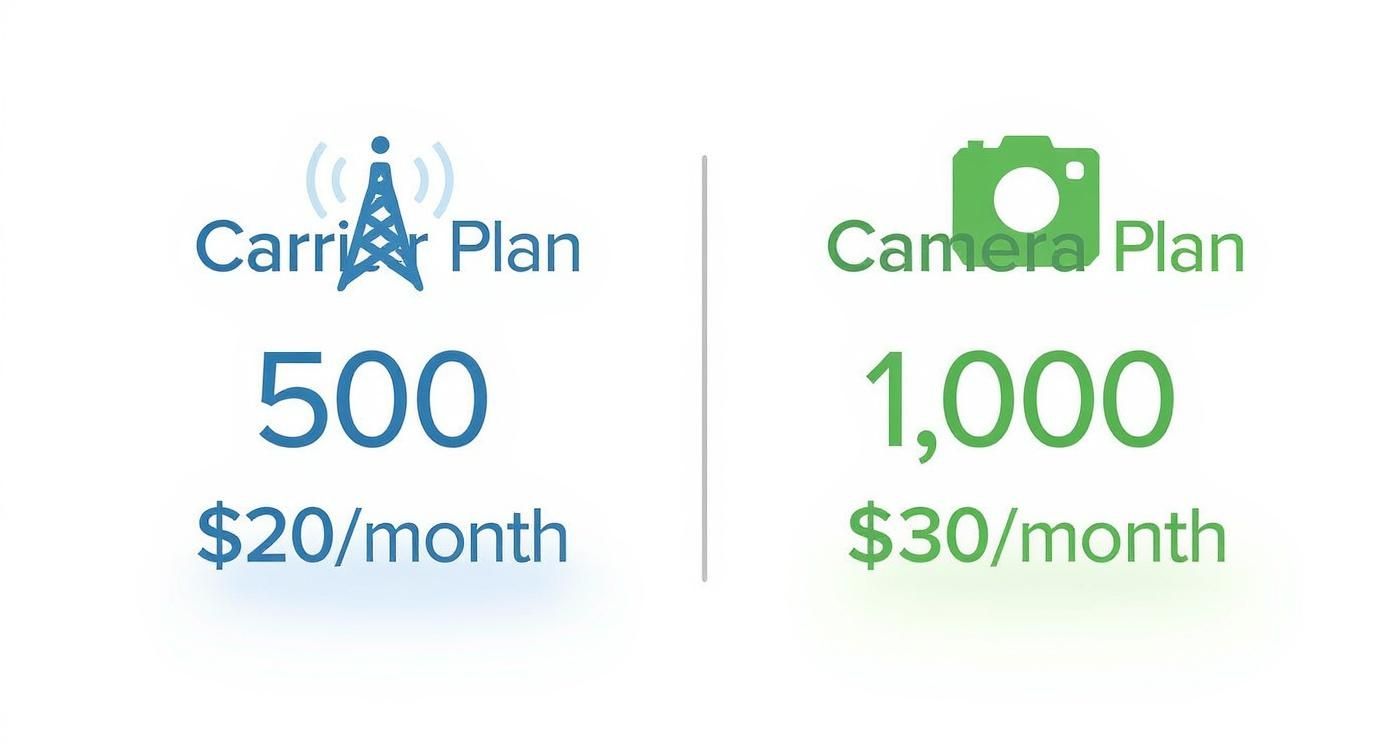
As you can see, the dedicated camera plans almost always give you more bang for your buck, which really drives home the value of choosing a service designed from the ground up for how we use these tools.
This hunger for high-quality images isn't just a trail camera thing; it’s pushing the entire tech industry forward. The market for smartphone camera parts was valued at a massive USD 38.53 billion in 2024. Why? Because nearly 89% of smartphone users say camera quality is one of the most important factors when they buy a new phone.
People want crystal-clear, detailed pictures, whether they're coming from a phone in their pocket or a trail camera strapped to a tree. That demand is what shapes the technology, and as image quality keeps getting better, file sizes will only get bigger—making it even more important to get your data plan right.
Navigating Plan Pricing and Avoiding Hidden Fees
When you're shopping for cell camera plans, the advertised monthly rate is just the tip of the iceberg. The price you see upfront isn't always the price you pay. Different pricing models and a whole host of sneaky fees can dramatically change what you end up shelling out each month.
Most plans fall into one of three buckets: tiered, shared data, or pay-as-you-go. Each one is built for a different kind of user.
A simple tiered plan gives you a set number of photos for a flat fee. Shared data plans create a big pool of data that all your cameras can drink from. And pay-as-you-go options give you ultimate flexibility by only charging you for what you actually use.
A tiered, photo-based plan might be perfect if you’re just watching one low-traffic feeder. But if you're a serious hunter managing cameras on multiple food plots, a shared data plan will almost certainly be the smarter, more economical choice.
Comparing Cell Camera Plan Pricing Models
To really get a handle on this, let's break down how these plans work, who they're for, and where the "gotchas" are hiding.
| Pricing Model | How It Works | Pros | Cons & Hidden Costs |
|---|---|---|---|
| Tiered (Photo-Based) | You pay a flat monthly fee for a specific number of photos (500, 1,000, etc.). | Simple, predictable monthly bill. Great for single cameras in known locations. | Overage fees for exceeding your photo limit can be brutal. You pay for unused photos if activity is low. |
| Shared Data | You buy a single pool of data (e.g., 2GB) that multiple cameras share. | Cost-effective for multi-camera setups. A busy camera can use data "donated" by a slow one, preventing overages. | Can be more expensive if you only run one camera. Requires more active management to monitor the shared pool. |
| Pay-As-You-Go | You only pay for the exact number of photos or amount of data transmitted. No fixed monthly cost. | Extremely flexible. Ideal for unpredictable camera usage, like monitoring a scrape that’s only hot for a few weeks a year. | Per-photo or per-megabyte costs can be higher. Can lead to surprisingly large bills during high-activity periods like the rut. |
Ultimately, the best model depends entirely on your scouting strategy. A mismatch here is the fastest way to overspend.
Uncovering Common Hidden Costs
The real trouble is often buried in the fine print. I’ve seen countless hunters get blindsided by extra charges that weren’t obvious when they first signed up. These little costs add up fast and can turn a supposedly "cheap" plan into a financial headache.
Keep an eye out for these usual suspects:
- Activation Fees: A one-time charge just to get your camera online.
- Seasonal Suspension Charges: Some companies charge you to "pause" your plan during the offseason, which totally defeats the purpose of saving money.
- Overage Penalties: This is the big one. Go over your photo or data limit, and you could face insane penalties, sometimes at a ridiculously high rate for every single extra photo or megabyte.
There's no substitute for reading the terms of service. It's boring, I know, but understanding these potential costs upfront is the only way to make a smart decision and avoid nasty surprises on your bill.
Choosing the Right Pricing Model for You
To keep from overspending, you have to match the plan’s structure to your specific needs out in the field.
Is your camera activity all over the place—dead quiet for months, then blowing up your phone during the rut? A flexible, pay-as-you-go plan might be your best bet. It stops you from paying for a ton of unused data during those slow periods.
For anyone running a network of several cameras, a shared data plan is almost always the clear winner. It lets a camera on a hot food plot borrow data from a quiet one watching a mineral lick. This optimizes your total usage and saves you from getting slammed with overage charges on any one device.
Finding the cheapest cellular trail camera plan is about more than just comparing the sticker price. It requires you to dig into the plan’s structure and align it with your scouting strategy. If you take the time to really dissect these models and watch for hidden fees, you can pick a plan that works hard for you without breaking the bank.
Matching Your Plan to Your Hunting Strategy
Your hunting strategy isn’t a one-size-fits-all deal, so why would your cell camera plan be? The real trick to getting the most out of your scouting budget is to match your plan to the rhythm of the hunting season. Let's be honest, you just don't need the same level of intel in June as you do in the heart of November.
Think about cell camera plans less as a fixed yearly bill and more as a flexible tool you can dial up or down. During the quiet off-season, a cheap, bare-bones plan is usually plenty for keeping an eye on things. But as the season gets closer, your plan has to keep up.
Aligning Plans with the Hunting Calendar
The pre-rut and rut are when your cameras are really earning their keep, capturing that massive spike in deer movement. This is when you need a beefier plan that can handle a flood of photos and videos without slapping you with surprise overage fees. The absolute last thing you want is for your camera to go dark a week before opening day just because you blew through your data cap.
- Off-Season (Spring/Summer): Go with a minimal plan. The goal here is simple inventory—watching feeders or mineral sites. You can expect low data usage.
- Pre-Rut (Early Fall): Time to upgrade. As bucks start moving and laying down their patterns, you’ll want more frequent updates and better-quality images to see what’s going on.
- The Rut (Peak Season): This is when you want all the data you can get. Activity explodes, and you need that real-time information to make your next move. An unlimited or high-tier plan is your best friend here.
A smart hunter treats their cell camera plan like any other piece of gear—it needs to be the right tool for the job at hand. Using a high-data plan year-round is like wearing insulated boots in July; it’s wasteful and inefficient.
Coverage and Advanced Scouting Tools
Before you lock into any plan, the single most important thing you can do is check the carrier's coverage map for your exact hunting spot. A fantastic plan is completely worthless if you can't get a signal. Don't just glance at the state map; zoom all the way in on your pin to make sure you have solid service.
Once you know you've got a signal, you can start looking at the cool features that give you a real leg up. Modern cell camera plans often come bundled with powerful apps that turn a bunch of pictures into actionable intelligence. This is where the technology really starts to shine.
The quality of these images is always getting better, thanks to huge leaps in the camera components themselves. Just look at the smartphone camera lens market—it was valued at USD 5.5 billion in 2024 and is expected to hit USD 10.61 billion by 2032. You can read more about these insights into the camera lens market and see how that growth trickles down to the gear we're putting in the woods.
Features That Enhance Your Hunt
Look for tools that make your scouting life easier and help you hunt smarter.
- AI Species Recognition: This is a game-changer. It automatically sorts your images, separating bucks from does and filtering out all the raccoons and squirrels. It saves you from scrolling through thousands of useless pictures.
- Real-Time Alerts: Get a ping on your phone the moment a target buck shows up. This lets you react fast and move in on a deer that just entered the area.
- Multi-Camera Management: If you're running cameras on multiple food plots or trails, having them all in one unified app is a must. A system like Magic Eagle’s, which lets you manage everything from a single dashboard, simplifies your entire scouting operation.
By thoughtfully matching your plan to the season and taking advantage of these advanced tools, your cell camera becomes more than just a picture-taker—it becomes a core part of your hunting strategy.
A New Generation of Trail Camera Connectivity
Anyone who's used a traditional cellular trail camera knows the routine. You spend time finding the right SIM card, wrestling with a clunky activation process, and then—of course—discover your chosen carrier has a dead spot right where the big buck has been walking. It’s a common, and deeply frustrating, list of chores.
Thankfully, newer technology is finally solving these exact problems, making setup way simpler and your connection far more reliable.
This shift is creating smarter, more user-friendly cell camera plans and devices that just work right out of the box. The focus has moved from frustrating DIY connectivity to a completely integrated, seamless experience.
No More Fumbling with SIM Cards
One of the biggest leaps forward is the move to SIM-free cameras. Instead of forcing you to hunt down a compatible SIM card from a specific provider, these cameras come with the cellular tech built right in.
This means you can forget about worrying whether your camera will work with AT&T or Verizon. No more confusing activation portals. It completely removes a major point of failure from the whole process. For anyone who's spent an afternoon on the phone with customer service trying to activate a tiny piece of plastic, this is a huge relief.
Smart Networks That Hunt for the Best Signal
Even better than ditching the physical SIM is the introduction of smart network technology. Think of it like a seasoned traveler who can speak multiple languages and automatically switches to the local dialect to get the job done.
Instead of being locked into a single carrier, a camera with this capability intelligently scans for all available networks in its location. It then automatically connects to whichever one has the strongest, most stable signal.
This technology, like Magic Eagle’s SignalSync, is a game-changer for anyone scouting in remote areas with spotty service. It dramatically increases the odds that your camera will stay online and reliably send you photos. If one carrier’s signal weakens, the camera just hops over to a better one, ensuring you get the intel you need without interruption.
The process is completely automatic—you get the best connection possible without ever having to think about it. For a deeper look at how these devices send images, check out our guide on how a trail camera connects to your phone.
One App to Rule Them All
Finally, this new generation of cameras ties everything together in a single, intuitive app. In the old days, managing multiple cameras meant juggling different plans, logins, and billing cycles—a logistical nightmare for any serious hunter.
Modern systems bring everything under one roof:
- Centralized Billing: All your cell camera plans show up on one simple, easy-to-read bill.
- Multi-Camera View: Check the status and see images from all your cameras on a single screen.
- Easy Plan Adjustments: Need more data this month? Upgrade or downgrade your plans for all devices from one dashboard.
This integrated approach transforms camera management from a complicated chore into a simple, streamlined part of your scouting strategy. It lets you focus on the hunt, not the technology.
Key Features to Consider Beyond Data Limits
Picking the right cell camera plan is about more than just counting gigabytes. While data allowances are the headline, several other features can be the difference between a game-changing scouting tool and a frustrating piece of plastic.
First off, think about where your photos and videos actually go. They don't live on your camera—they’re stored in the cloud. That makes the provider’s storage policy a huge deal. You need to know how long they hang onto your media and how easy it is to get your hands on the full-resolution copies. Some services will delete older images after 30 or 90 days, which could mean losing years of valuable intel on a buck's patterns.
Protecting Your Scouting Intel
Your trail cam images are your hard-earned scouting secrets. Data security isn't just a buzzword here; it's about making sure your provider is actively protecting that intel from prying eyes with things like encryption. It’s an often-overlooked feature that’s absolutely critical.
Another thing you’ll want to understand is what happens when you inevitably hit your data limit for the month. This is called data throttling, and not all providers handle it the same way.
- Hard Stop: Does the camera just power down, leaving you completely blind until the next billing cycle?
- Slow Down: Or does the service just slow things down, maybe sending you low-resolution thumbnails instead of completely cutting you off?
The second option is almost always better. It keeps you in the game, even if you’ve been getting a ton of pictures.
A great plan is backed by a great support team. When your camera is miles away in a remote location, the last thing you want is to be stuck troubleshooting alone. Responsive, knowledgeable customer support can resolve issues quickly, saving you a trip and minimizing camera downtime.
Responsive Support When It Matters Most
Imagine your camera goes dark right as the rut is kicking off. You need help, and you need it now. Being able to get an expert on the line who can diagnose the problem remotely is priceless. When you’re comparing cell camera plans, look for companies with accessible, U.S.-based support. They get the unique challenges hunters face.
These are the things that elevate a basic data plan into a truly reliable scouting partner: storage, security, throttling policies, and solid support.
Your Questions Answered: Cell Camera Plans
When you're getting into cellular trail cameras, a lot of questions pop up. It's totally normal. Getting clear answers is the best way to feel confident you're picking the right plan for your scouting.
We've gathered some of the most common questions we hear from hunters and property managers setting up their first cellular cameras.
Can I Use a Regular Cell Phone SIM in My Trail Camera?
Almost never. It’s a common thought—just pop in an extra phone SIM and go, right? But trail cameras are specialized gear. They need data-only or M2M (machine-to-machine) plans to work properly.
A standard phone SIM is built for voice, text, and data, and the camera's firmware usually just won't recognize it. Trying to force it is a recipe for activation headaches or surprise charges on your phone bill.
What Happens If My Trail Camera Loses Its Signal?
If your camera temporarily drops its connection, don't worry—it doesn't just give up. It switches gears and acts like a traditional trail camera, saving every photo and video it takes right to the SD card.
Once the signal comes back, it gets right back to work, sending you all the media it stored while it was offline. This is where cameras with multi-network technology really shine, giving you a huge leg up on reliability.
Key Takeaway: A spotty signal won't make you lose intel. The camera saves everything locally and sends it the moment it reconnects, so you never miss a thing.
How Do I Manage Multiple Cameras on Different Plans?
Honestly, trying to juggle separate plans for a handful of cameras is a logistical nightmare. The best way to manage multiple cameras is to stick with the same brand and use their unified app.
Most good companies offer shared or pooled data plans. This lets all your cameras pull from one big bucket of data. Not only does it make billing way simpler with a single monthly statement, but it’s also a lot more cost-effective than paying for individual subscriptions for every camera you own.
Ready to simplify your scouting with a camera that just works? The Magic Eagle EagleCam 5 features built-in SignalSync technology that automatically finds the strongest signal, eliminating connectivity headaches. Explore the future of trail cameras at https://magiceagle.com.