

For hunters, landowners, and anyone fascinated by whitetail deer, the rut is the event of the year. It’s when the woods come alive, transforming from a quiet, predictable landscape into a chaotic stage where otherwise reclusive bucks throw caution to the wind.
This dramatic shift isn’t triggered by a cold snap or the phase of the moon. It’s all about the sun.
Decoding the Annual Deer Rut
As the days get shorter in the fall, a whitetail’s internal clock goes off. This change in daylight, known as the photoperiod, triggers a hormonal cascade that kicks off the sequence of behaviors we call the rut.
Think of it as nature's most intense drama, unfolding in three distinct acts. If you learn the script—the phases, the timing, and what motivates a buck during each one—you gain a massive advantage in the field.
The Three Acts of the Rut
The entire rut follows a predictable progression. Each phase brings its own unique set of buck behaviors, creating different challenges and opportunities whether you're behind a bow or just a camera lens.
- The Pre-Rut: This is the build-up. Bucks start feeling the urge, establishing dominance by making rubs and scrapes. They’re fired up and actively searching for the first does to come into estrus.
- The Peak Rut: This is the main event. Breeding is in full swing. A buck might "lock down" with a receptive doe, staying by her side for 24-48 hours. It can seem like all movement has stopped, but don't be fooled—other bucks are still cruising hard, desperate to find their own mate.
- The Post-Rut: This is the aftermath. Worn down and often injured from weeks of fighting and chasing, bucks switch their focus back to food to regain lost body weight. It’s not totally over, though. A late-cycling doe can still spark a flurry of activity.
To give you a clearer picture, here's a quick breakdown of what to expect in each phase.
Quick Guide to Deer Rut Season Phases
| Phase | Typical Timing (Northern US) | Primary Buck Behavior | Scouting Focus |
|---|---|---|---|
| Pre-Rut | Mid-October to Early November | Establishing dominance, scraping, rubbing, seeking | Active scrapes, rub lines, funnels between bedding & food |
| Peak Rut | Mid-November | Chasing, breeding, "lockdown" with does | Doe bedding areas, cruising routes, pinch points |
| Post-Rut | Late Nov. through December | Recovering, feeding, searching for late does | High-carbohydrate food sources (corn, acorns, brassicas) |
This table simplifies the flow, but remember that the exact timing can shift slightly depending on your specific location.
Modern tools give us an incredible window into this annual cycle. A cellular trail camera, for example, can send updates right to your phone, turning biological theory into real-world intel. You can see exactly when buck activity is heating up on your property.
This timeline gives you a great visual of the general flow, from the early signs of the pre-rut to the chaos of the peak and the eventual recovery.
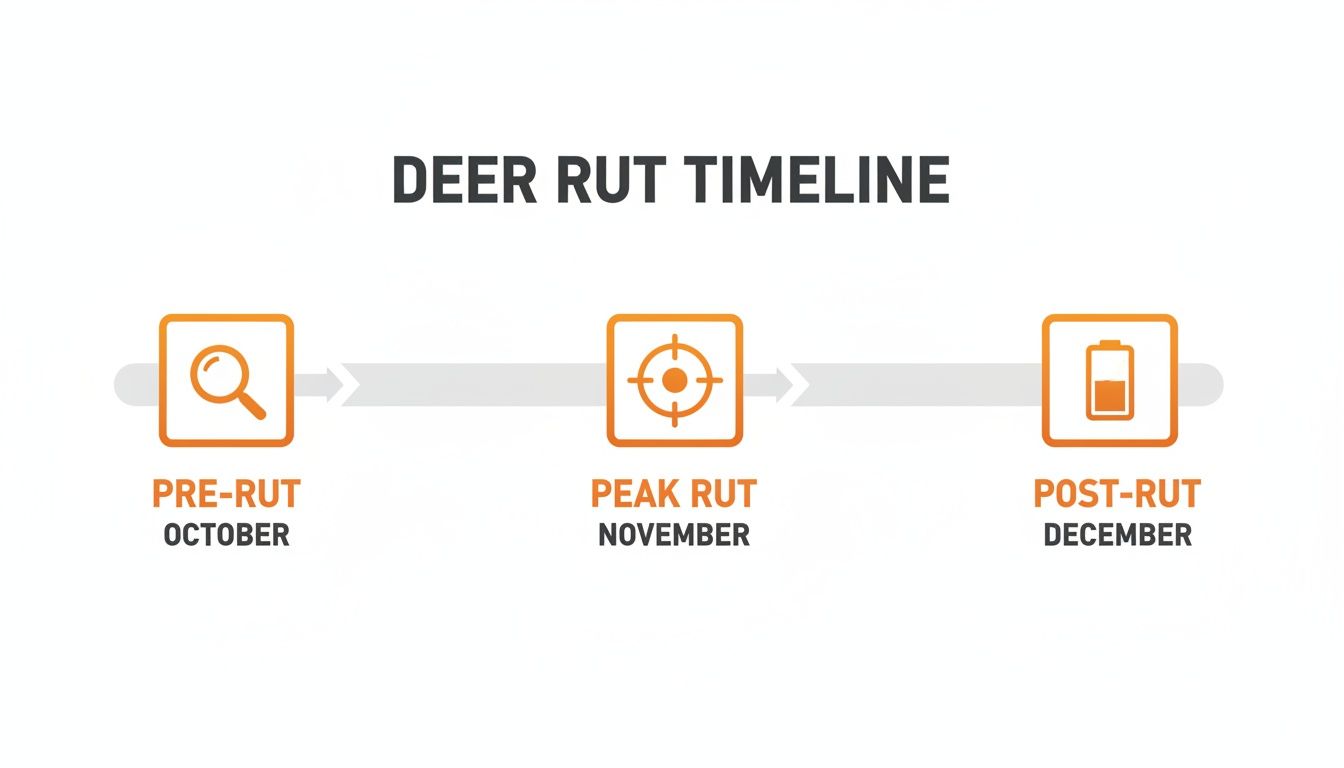
The biggest takeaway here is how consistent the peak rut is. For most of the northern U.S., it hits like clockwork in mid-November, offering that intense window of buck movement we all wait for.
The timing of the deer rut is one of the most consistent events in nature. While hunters may observe slight variations in deer movement from year to year due to weather, the underlying biological timing remains remarkably fixed.
This consistency is all driven by photoperiod—the amount of daylight in a 24-hour period. It’s not a guess; it's science. Massive studies compiling data from over 5,000 counties confirm that north of the Mason-Dixon line, approximately 90% of rut activity happens within a tight three-week window in November.
The average peak breeding day across the country is November 13. That date holds true year after year, despite all the myths about the moon or weather shifting the entire event. If you want to dive deeper, you can watch a detailed breakdown of this fascinating biological timing to learn more.
Navigating the Three Phases of the Rut
The deer rut isn’t just one chaotic event; it’s more like a three-act play. Each phase has its own script, specific deer behaviors, and, for hunters, a unique set of opportunities. If you don’t understand this progression, you’ll be a step behind. Knowing how to adapt your strategy as the drama unfolds is everything.
I like to think of it like a storm building. The pre-rut is the quiet before, where the wind picks up and the sky darkens. The peak rut is the intense, driving rain. And the post-rut is when the storm finally breaks, leaving a completely changed landscape behind.
The Pre-Rut: The Anticipation Builds
Starting in mid-October and running into early November for most of the country, the pre-rut is all about tension and testosterone. Bucks feel that biological switch flip, and their entire demeanor changes. They shift from lazy summer patterns to establishing dominance and advertising their presence to any does in the area.
This is the phase of sign-making. Bucks create rubs by thrashing their antlers on trees, and they paw out scrapes on the ground, urinating in them to leave a pungent, scent-based calling card. These signs are a buck's social media profile, letting every other deer know who’s in the neighborhood, their rank in the hierarchy, and that they’re ready to breed.
During the pre-rut, bucks are actively seeking out the very first does to come into estrus. This makes them more visible during daylight than at almost any other time. They are on their feet with a purpose, checking scrape lines and cruising travel corridors.
Hunting Strategy for the Pre-Rut:
- Hunt the Signs: Pinpoint fresh scrape lines and rubs. A buck will often check his scrapes religiously, making these prime spots for an ambush.
- Use Calls and Decoys: Bucks are on edge and territorial. Rattling antlers to sound like a fight or using a dominant buck grunt can bring a curious or confrontational buck right into your lap.
- Monitor Food and Water: Does haven't changed their patterns much yet. A stand placed on a trail between a known doe bedding area and a primary food source is a classic and deadly tactic.
The Peak Rut: The Lockdown
The peak rut, which typically hammers down in mid-November, is the most intense, chaotic period of the season. This is when the majority of breeding happens. A buck will find a receptive doe and enter a phase hunters call the "lockdown," where he’ll stick with her for 24 to 48 hours, refusing to let her out of his sight.
This can be a maddening time to be in the woods. A mature buck you’ve been watching for weeks might just vanish. He hasn't left the county; he's just preoccupied. But while one buck is locked down, countless others are frantically searching for the next available doe.
The "lockdown" doesn't mean all deer movement stops. It just becomes hyper-localized for that paired-up buck and doe. The real action shifts to the bucks still on the hunt, creating constant, albeit unpredictable, movement through doe territory.
This desperate searching behavior, known as "cruising," means bucks will cover miles of ground, often showing up in places they don't normally frequent. They are singularly focused and often let their guard down, creating incredible opportunities if you’re positioned correctly.
The Post-Rut: The Recovery
After the intensity of the peak, the post-rut begins. This phase, running from late November through December, is all about recovery. Bucks are physically wrecked. They’ve often lost a huge percentage of their body weight from weeks of fighting, chasing, and barely eating. Their primary focus shifts from breeding back to pure survival.
The main driver for a buck now is to replenish his fat reserves before the bitter cold of winter sets in for good. This means he will gravitate toward high-carbohydrate food sources like standing corn, acorns, or brassica food plots.
But the game isn't completely over. A few does weren't bred during the first cycle. Any unbred doe will enter a second estrus cycle roughly 28 days after the first peak. A late-cycling doe can create a miniature "rut" flurry, and even a weary buck won't pass up one last chance.
Hunting Strategy for the Post-Rut:
- Focus on Food: Find the best late-season food source, and you will find the bucks. They need calories, period. Their movement will revolve around getting to and from these feeding areas safely.
- Watch for Late Action: Pay close attention around the second week of December. If you see a lone doe acting skittish or being pestered by smaller bucks, a mature buck is likely nearby, waiting for his chance.
- Hunt Cold Fronts: A sharp drop in temperature will get deer on their feet and feeding. An afternoon hunt overlooking a quality food source right after a cold front can be one of the best sits of the entire year.
How Buck Behavior Changes During the Rut
Imagine a reclusive, nocturnal animal suddenly flipping a switch and becoming a bold, daylight-driven wanderer. That’s the power of the deer rut season. The cautious buck that spent months living in the shadows transforms into a creature governed by a single, overwhelming instinct: to breed.
This isn't just a minor personality quirk; it's a complete overhaul of his survival strategy. This dramatic shift makes him more visible but also far more unpredictable.
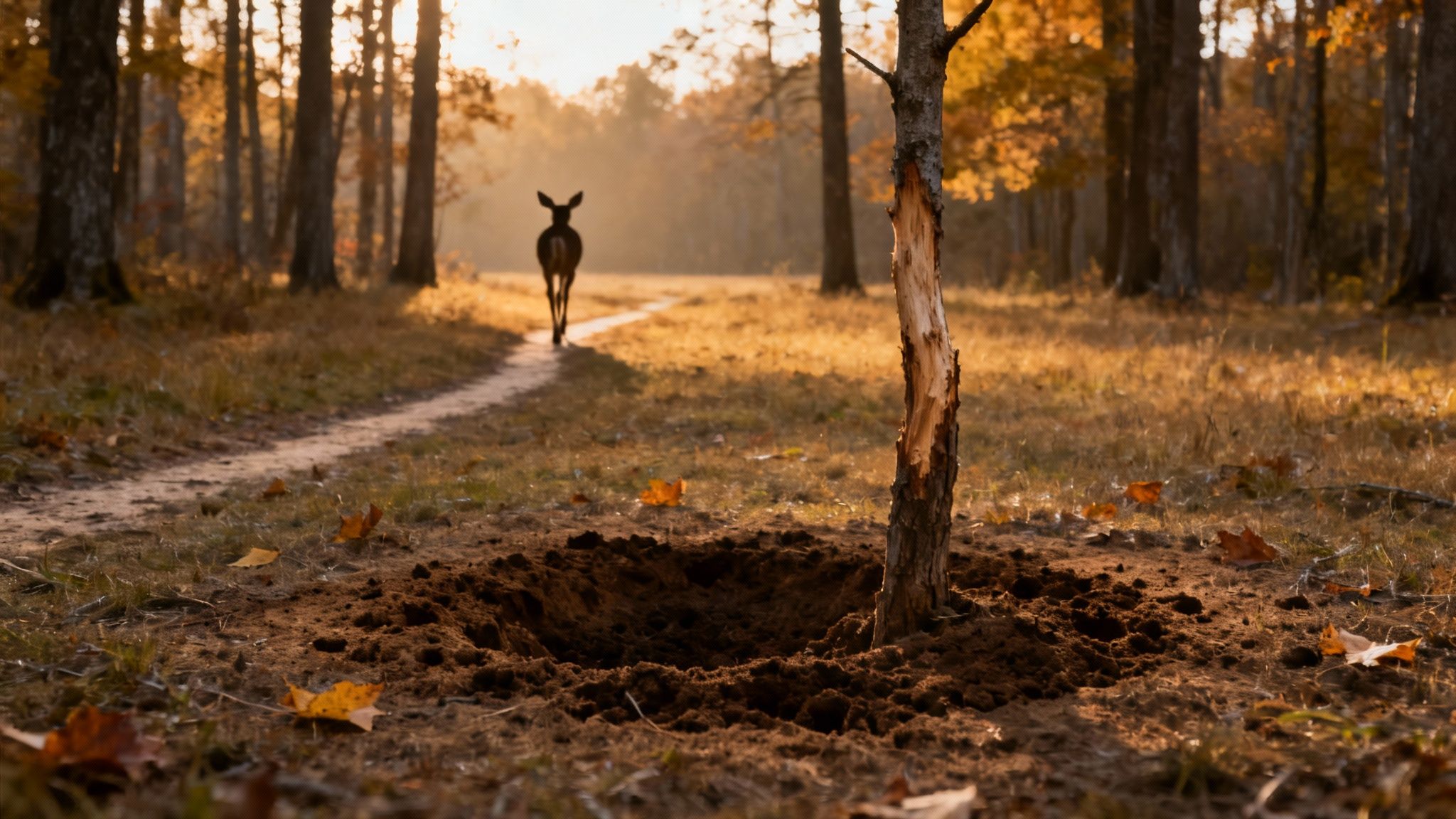
This whole transformation is driven by a massive surge of testosterone, which fundamentally rewires his brain. Caution gets thrown out the window, replaced by aggression. The constant need for security is completely overridden by the urge to find a mate. Everything he does—from how he moves to where he spends his time—is now dictated by this biological imperative.
The Phenomenon of Cruising
One of the most dramatic changes hunters see is the onset of "cruising." During this phase, a buck will travel relentlessly, often along well-worn routes, in a constant search for receptive does. His once-small, secure home range can suddenly expand by miles as he covers new ground.
Think of it like a delivery driver with an endless route—he’s constantly moving, checking key locations, and rarely stopping for long.
This constant movement serves a single purpose, but it makes trying to pattern a specific buck incredibly difficult. He might show up on a trail camera one morning and be three miles away by that afternoon. This is where modern scouting tools become invaluable.
For example, a cellular camera with AI detection, like those from Magic Eagle, can sift through thousands of images for you. Instead of manually checking photos, the system can instantly alert you when a buck appears, helping you identify these new travel patterns in real-time and pinpoint exactly where to set up.
The Physical Toll of the Rut
All this hyperactivity comes at a tremendous physical cost. During the rut, a buck's focus on breeding is so absolute that feeding becomes an afterthought. He is burning thousands of extra calories a day while consuming far fewer, creating a massive energy deficit.
A buck's body during the rut is like an engine running in the redline. The performance is incredible, but it can't be sustained. This physical decline is a key reason why the post-rut recovery period is so critical for his survival.
This extreme exertion leads to dramatic weight loss. It’s not uncommon for a buck to lose up to 30% of his body weight over a 4-to-6 week period. This combination of high movement and reduced feeding is physically devastating, leaving him exhausted and vulnerable right as winter approaches.
A Scientific Look at Buck Movement
This isn't just anecdotal evidence from hunters; scientific research confirms this explosion of activity. A study using GPS collars on bucks painted a clear picture of just how much they move during the deer rut season. Researchers found that while daily movements averaged just under 3 miles a day in early November, this rate jumped to over 5 miles a day in December, exceeding 6 miles a day at the rut's peak.
Even more striking were the "excursions"—short-term trips far outside a buck's normal home range. During December, every single one of the 33 bucks studied made at least one of these long-distance journeys. One buck was even documented making an astonishing 18-mile round-trip.
You can read the full research on buck movements during the rut to see just how far these animals will travel. This data highlights why bucks can seem to appear out of thin air during this special time of year.
Advanced Scouting Tactics for the Rut
Success during the deer rut isn't about luck. It’s about smart, proactive scouting that puts you in the right place before the action kicks off. You have to shift your entire mindset from where deer are right now to where they’re going to be. By learning to read the landscape and predicting how bucks will use it during this chaotic time, you can stop reacting and start anticipating.
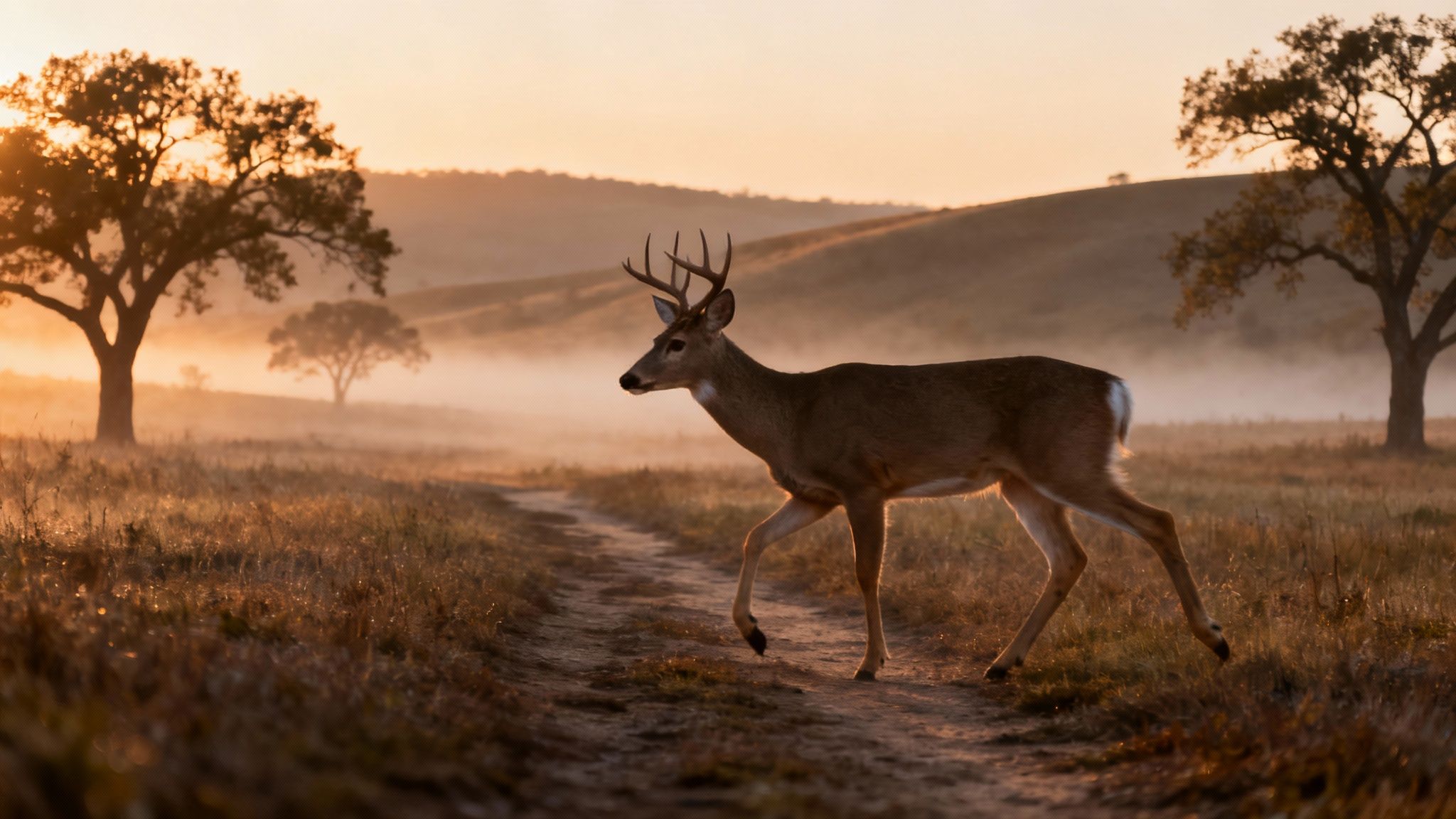
The whole strategy boils down to one simple truth: find the does, and the bucks will find you. During the rut, a buck’s entire world shrinks down to the location of the next receptive doe. That’s your single biggest advantage.
Identify and Hunt Doe Concentrations
Long before the rut hits full swing, your number one mission is to pinpoint where the does are spending most of their time. They are the anchor points that will pull in cruising bucks from miles around. Focus your scouting on two key locations.
- Bedding Areas: These are the sanctuaries where does feel safe. Use topographic maps and aerial photos to find thick cover, especially on south-facing slopes (for warmth) or near easy escape routes.
- Primary Food Sources: Find the groceries. Whether it’s an oak flat dropping acorns, a cut cornfield, or a clover plot, you need to know which food sources the does are hitting consistently.
The goal isn't to barge in and hunt right on top of these spots—that’s the fastest way to blow the does out and ruin your setup. Instead, you hunt the perimeter, setting up to intercept bucks as they scent-check these core areas from downwind. For a deeper dive, our guide on how to find deer bedding areas is a must-read.
Master the Art of Reading Terrain Funnels
As bucks start cruising for does, they don’t just wander around aimlessly. They use the path of least resistance, and the terrain itself creates these travel corridors. These natural funnels squeeze deer movement into predictable lanes, making them perfect ambush spots.
Think of it like rush hour traffic; cars don't spread out randomly, they flow down highways. Bucks do the same thing, and your job is to find those highways.
Key Terrain Funnels to Target:
- Saddles: That low dip in a ridgeline is the easiest way for a deer to cross from one side to the other without silhouetting itself against the sky.
- Pinch Points: Any feature that narrows the available travel space is gold. It could be where a woodlot tapers down or where a steep bluff pushes deer along a riverbank.
- Creek Bottoms: These low-lying areas almost always offer thick cover and a concealed travel route connecting different parts of a property.
A terrain funnel is a buck's best friend during the rut. It lets him cover ground efficiently while staying hidden as he searches for does. Setting up on the downwind side of a major funnel is one of the most deadly rut strategies there is.
Decode Rut-Specific Sign
Sure, bucks make rubs and scrapes all year, but their intensity and purpose change completely during the pre-rut and peak rut. A single scrape is interesting, but a scrape line is a billboard screaming a buck's travel route. You'll often find these along field edges or old logging roads, and they act as a buck's social media hub. He's leaving his scent and checking for any receptive does that have passed through.
The rut fundamentally changes whitetail behavior, making bucks far more active and way less cautious, especially during that peak breeding window. This is when your trail camera data becomes exponentially more valuable. Mid-day deer movement skyrockets, particularly in those terrain funnels between bedding areas where bucks feel safe enough to move in broad daylight. Finding these spots is the key to capitalizing on the madness.
Here’s a practical checklist to help you key in on the most important signs as the rut progresses.
Rut Scouting Checklist: What to Look For
| Scouting Target | Description | Best Phase to Find | Why It Matters |
|---|---|---|---|
| Active Scrape Lines | A series of fresh scrapes along a distinct travel route (field edge, ridge). Look for a licked-overhanging branch. | Pre-Rut & Peak Rut | It's a buck's communication hub. He's advertising his presence and checking for does. A hot scrape line is a high-odds ambush site. |
| Community Scrapes | An extra-large, heavily used scrape visited by multiple deer (bucks, does, fawns). Often found at intersecting trails. | Pre-Rut | This is the primary social hub for the local deer herd. It tells you exactly where the does are concentrating before the chaos begins. |
| Rub Lines | A series of rubbed trees showing a clear direction of travel. Bigger rubs often mean a more mature buck. | Pre-Rut | Rub lines connect bedding to feeding areas. They are a buck’s established travel route, making them perfect for pre-rut stand locations. |
| Terrain Funnels | Natural landscape features like saddles, pinch points, or creek crossings that concentrate deer movement. | All Phases | Bucks use these to travel efficiently and safely between doe bedding areas. They are the highways of the deer woods during the rut. |
| Doe Bedding Areas | Thick, nasty cover offering security and thermal protection, often on south-facing slopes. | Early Season & Pre-Rut | This is ground zero. Bucks will relentlessly circle and scent-check these areas from downwind once the rut kicks in. Find the does, find the bucks. |
This checklist isn't just about finding sign; it’s about understanding what that sign means in the context of the rut's timeline. Prioritize your scouting based on these targets, and you'll be one step ahead of the game.
Using Trail Cameras to Dominate the Rut
During the deer rut season, your trail camera stops being just a scouting tool and becomes your most valuable partner. It’s your eyes in the woods, working around the clock to make sense of the chaos. But just strapping a camera to a tree and hoping for the best won't cut it. You need a strategy—one built around the raw instinct that drives bucks this time of year.
Effective camera placement during the rut is all about gathering intel, not just snapping pretty pictures. It’s time to shift your focus from food plots to the travel corridors bucks use while searching for does. The goal is to set up on locations that funnel their movement and act as communication hubs.
Strategic Camera Placement for Rutting Bucks
Get inside the head of a cruising buck. He's on a mission, covering ground and constantly checking for receptive does. Your camera needs to be right on his path.
- Scrape Lines: A hot scrape line is a buck’s social media feed. Find the primary scrape and get your camera watching it, making sure you have a clear view of the overhanging licking branch. This is where bucks and does leave messages for each other.
- Terrain Funnels: Saddles, pinch points, and creek crossings are deer highways. Place a camera on the downwind side of a funnel, and you’ll catch nearly every buck that passes through that corridor on his quest for a doe.
- Doe Bedding Perimeters: The golden rule of the rut is simple: "find the does." Position your cameras on the main trails leading into and out of known doe bedding areas. Bucks will circle these sanctuaries relentlessly, scent-checking for a doe that's ready to breed.
By zeroing in on these three location types, you’ll graduate from simply seeing what’s on your land to truly understanding how bucks are using it to find a mate.
Optimizing Your Camera Settings
The fast-paced, unpredictable action of the rut calls for a different set of camera settings than you use the rest of the year. A slow trigger or a long delay between photos is a surefire way to miss the most critical moments.
During the rut, a buck might blow past your camera in just a few seconds, often hot on a doe's trail. Your settings need to be optimized for speed and context, not just a single, perfect picture.
Dial in your settings to capture the whole story unfolding in front of your lens.
- Trigger Speed: Set it to the fastest option your camera has. A delay of even one second can be the difference between getting a shot of a buck’s nose and capturing his entire body and rack.
- Delay Interval: Shorten your delay interval way down, usually to 10-30 seconds. This ensures you get multiple shots as a buck works a scrape or follows a doe, giving you a much better feel for his size and direction of travel.
- Video Mode: Video is pure gold during the rut. A short 15-20 second clip can show you if a buck is just passing through, actively chasing, or showing dominance—context a single photo can never provide.
The Cellular and AI Advantage
Modern cellular trail cameras have completely changed the game, transforming scouting from a passive waiting game into an active, real-time pursuit. Getting instant notifications is a true game-changer, letting you react to current events instead of just analyzing old data.
Imagine getting an alert on your phone from a Magic Eagle camera showing your target buck on his feet in daylight. That real-time intel allows you to make an immediate, informed decision to head for your stand. It’s an opportunity you would have completely missed with traditional SD card cameras. It’s the difference between knowing where a buck was and knowing where he is right now.
On top of that, advanced features like AI species recognition are a massive time-saver. Instead of sifting through hundreds of photos of squirrels and raccoons, the system filters the images for you, showing you only the deer. Combine this with the GPS mapping features found in many apps, and you can build a detailed, up-to-the-minute map of buck movements without ever setting foot in the woods and spreading your scent. Our guide on getting the most pictures of bucks on trail cams dives deeper into maximizing this technology. This is how you hunt smarter, putting yourself in the right place at the right time.
Legal and Ethical Hunting During the Rut
The rut can get wild. With bucks chasing does and testosterone running high, the woods can feel chaotic, and shot opportunities can appear and disappear in a flash. It’s an adrenaline-fueled time to be a hunter, but that intensity demands an even higher level of responsibility from every single one of us.
Grounding that excitement in safe, ethical practices is what separates a good hunter from a great one. It’s how we honor the animal, the land, and the tradition of the hunt itself.
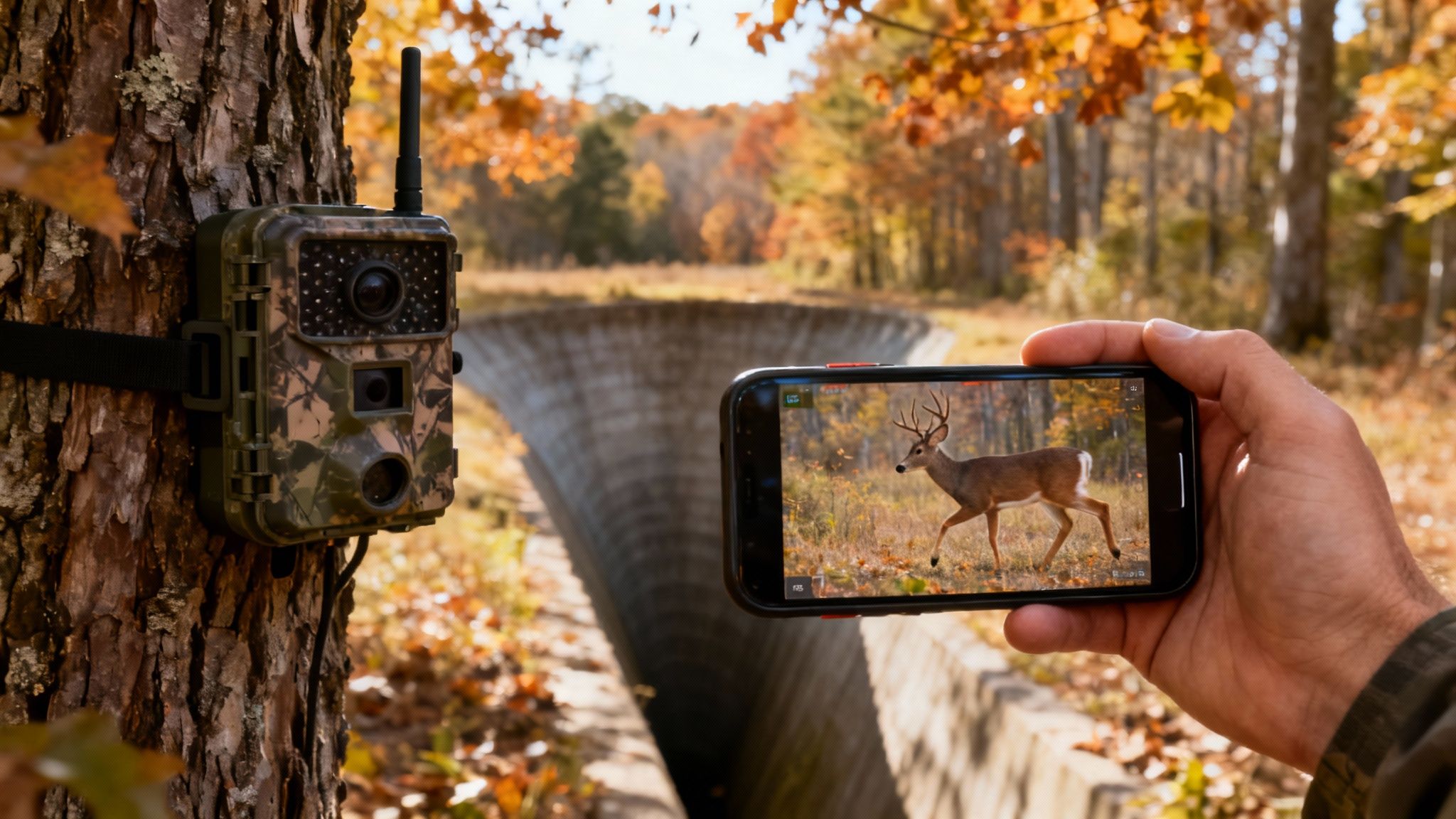
It all starts with absolute, positive target identification. A buck tearing through thick cover after a doe is a heart-pounding sight, but it's never an excuse for an uncertain shot. You have to be 100% sure of your target and what’s behind it before your finger even thinks about the trigger.
Prioritizing Ethical Shots and Boundaries
An amped-up buck is a tough animal, and a moving target makes a clean shot exponentially harder. Your greatest ethical tool here is patience. It's so much better to let a questionable opportunity walk than to take a risky shot that could wound an animal you can't recover.
Wait for the deer to stop. Wait for that clean broadside or quartering-away angle. Aim for a quick, humane harvest—anything less is a disservice to the animal.
This crazy activity also means bucks are on the move, often traveling far outside their usual stomping grounds.
During the rut, a mature buck can make excursions of several miles in a single day, often crossing multiple property lines without a second thought. It is the hunter's absolute responsibility to know and respect these boundaries.
Never, ever assume that buck will stay on your side of the fence. Use mapping apps like onX or HuntStand and look for clearly marked property lines so you know exactly where your permission ends. Trespassing to track a deer is not only illegal and unethical, but it also gives all hunters a bad name. The rules for public land can be just as complex, so it pays to do your homework. For a deeper dive, you can learn more about trail cameras on public land and what is legal.
Ensuring Personal Safety in the Stand
The all-day sits that make the rut so productive also bring their own set of safety challenges. Staying sharp and secure from dawn till dusk takes preparation and discipline.
Essential All-Day Sit Safety Checklist:
- Tree Stand Security: Always wear a full-body safety harness. I mean always—from the second your feet leave the ground until they’re safely back on it. Before each hunt, give your straps and cables a quick once-over for any signs of wear.
- Share Your Plan: This is non-negotiable. Tell someone exactly where you'll be hunting, what time you plan to be back, and where you parked your vehicle. It’s a simple step that could be a literal lifeline in an emergency.
- Stay Prepared: Pack more food, water, and layers than you think you’ll need. Being cold, hungry, or dehydrated leads to fatigue, and fatigue leads to bad decisions. Manage your energy so you’re just as sharp at last light as you were at sunrise.
Frequently Asked Questions About the Deer Rut
The deer rut is surrounded by generations of lore, and every hunter has their own theories. Separating fact from fiction is one of the biggest keys to a successful hunt. This section cuts through the noise and tackles the most common questions with clear, science-backed answers.
Understanding these details helps you anticipate what deer will do next, instead of just reacting to what they've already done.
Does Weather or the Moon Affect Rut Timing?
While plenty of hunters swear the moon phase dictates the rut, scientific research points overwhelmingly to one primary trigger: photoperiod. This is just a technical term for the decreasing amount of daylight, which acts as a nearly perfect biological clock. It kicks off the rut at almost the exact same time every year, regardless of what the moon is doing.
However, weather can absolutely impact deer movement within the rut. A strong cold front rolling in during peak breeding can ignite intense daylight activity. On the flip side, an unseasonable heatwave will often shut it down, making bucks more nocturnal even while the rut is biologically in full swing.
The rut's timing is fixed by daylight, but the intensity of the activity you see is heavily influenced by the weather. Think of a cold snap as the gas pedal and a heatwave as the brake.
What Is the Lockdown Phase?
The "lockdown" phase is that famous—and often frustrating—period during the peak of the rut. It happens when a buck finally finds a receptive doe and stays glued to her side for 24-48 hours until she is bred. During this time, that buck might seem to completely vanish from your trail cameras and scouting efforts. He's not gone, he's just preoccupied.
The best strategy here is to hunt the travel corridors between known doe bedding areas. While one buck is locked down and stationary, other mature bucks are still restlessly cruising those same routes, desperately searching for the next available doe. Patience in these spots will eventually pay off.
When Are Scents and Calls Most Effective?
Using scents and calls is all about timing. They aren’t magic, and if you use them at the wrong time during the deer rut, you can do more harm than good.
Here’s a simple breakdown:
- Pre-Rut: This is the time to challenge a buck's dominance. Rattling antlers to simulate a fight and using aggressive, dominant buck grunts can be extremely effective at bringing an amped-up buck in on a string.
- Peak Rut: Now, the focus shifts from fighting to seeking. Doe-in-estrus scents and soft tending grunts can be just the ticket to stop a cruising buck in his tracks, convincing him a hot doe is just out of sight.
Just remember, a buck that’s already locked down with a doe will likely ignore everything you throw at him. In that scenario, your best tools are a good stand location and a healthy dose of patience.
Gain a decisive edge this season with real-time intelligence from the field. Magic Eagle cellular trail cameras deliver instant alerts, AI species recognition, and live-streaming capabilities right to your phone, turning unpredictable rut behavior into actionable opportunities. Don't just scout—dominate the rut at https://magiceagle.com.