

Yes, deer absolutely move in the rain. But how much they move is a different story, and it all comes down to the intensity of the storm and the temperature.
Think of it this way: a light, steady drizzle often gets deer on their feet, while a heavy downpour with high winds will almost always send them running for cover. Learning to tell the difference is what separates a miserable day in the woods from an incredibly successful one.
Why Rainy Days Can Be Your Best Days
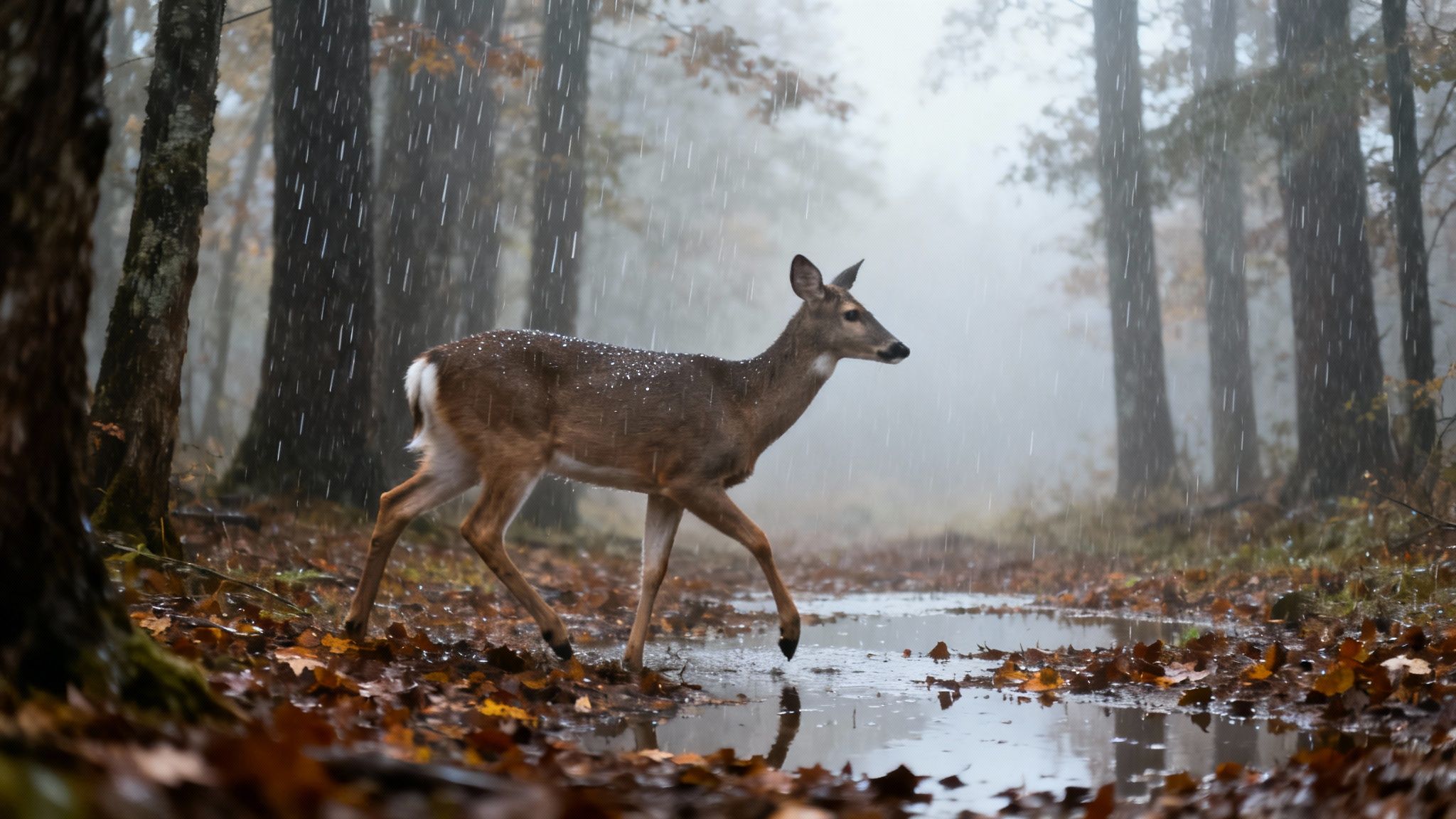
Most hunters see rain clouds and head for the truck, figuring deer are just like us—they'd rather stay dry and wait it out. That common mistake is exactly why you shouldn't. It creates a golden opportunity for anyone willing to brave the elements. The real question isn't if deer move in the rain, but how and why their behavior changes.
The answer is wired into their survival instincts. A light to moderate rain often acts as a trigger, flipping a switch that encourages them to leave their beds. Wet conditions can give them some serious advantages, making it the perfect time to feed or travel.
Understanding the Rainy Day Advantage
Instead of seeing rain as something to be endured, look at it as a tool that changes the entire dynamic of the woods. The right kind of rain can stack the odds in your favor, messing with a deer's senses while boosting your own stealth.
Here's what I mean:
- Noise Cancellation: Rain-soaked ground and leaves are your best friend. They completely muffle your footsteps, letting you slip through the woods far more quietly than on a dry, crunchy day.
- Scent Suppression: That moisture in the air is heavy. It grabs your scent, weighs it down, and keeps it from traveling. This makes it much harder for a deer's world-class nose to pick you up.
- Reduced Pressure: Simply put, fewer hunters are out there. When the woods quiet down, deer feel more secure and are much more likely to move confidently during legal shooting light.
Learning to read the weather—from a gentle mist to a driving storm—is a skill that lets you predict deer behavior with surprising accuracy. It’s not just about toughing it out; it’s about using the rain to gain a true strategic edge.
Here's a quick cheat sheet to help you translate different rain conditions into a game plan.
How Different Rain Conditions Affect Deer Movement
This table breaks down how various types of rain typically influence deer activity, giving you a starting point for your strategy.
| Rain Condition | Effect on Deer Movement | Your Best Strategy |
|---|---|---|
| Light Drizzle / Mist | High Activity. Often encourages feeding and movement, especially after a dry spell. | Get out there. Deer are comfortable and your approach is quieted. Focus on food sources. |
| Steady, Moderate Rain | Consistent Activity. Deer will move, but often stick closer to cover like thickets or conifer stands. | Hunt the edges. Look for movement along transition lines between bedding cover and feeding areas. |
| Heavy Downpour | Very Low Activity. Deer will bed down and wait it out, usually in dense cover. | Stay home or wait. Movement will be minimal until the storm breaks. Activity will spike right after. |
| Rain with High Winds | Minimal to No Activity. Wind makes deer extremely nervous as it masks sound and scent. | Hunt thick, sheltered areas. Deer will seek hollows or dense pines to escape the wind. |
| Rain Before a Front | Excellent Activity. Deer sense the pressure change and will often feed heavily before the storm hits. | Hunt aggressively. This is a prime time. Get to your stand early and sit all day if you can. |
| Rain After a Front | Excellent Activity. Once the storm passes, deer are eager to get up, stretch, and feed. | Be ready. The first few hours of clear weather after a rain are often incredibly productive. |
Remember, these are general rules. Factors like the time of year, hunting pressure, and the local terrain always play a role. But by using this framework, you can turn wet weather from a problem into a serious advantage.
To really get a handle on whether deer move in the rain, you have to think like a deer. Forget how you see the forest for a second and imagine it through their senses—a world of sounds, smells, and survival cues. Rain isn't just about getting wet; it fundamentally alters the rules of that world, rewriting a deer's entire playbook.
A light, steady rain is like hitting the mute button on the woods. That constant drip-drip-drip creates a blanket of white noise that not only masks distant threats but also muffles the sound of a deer's own hooves. It gives them the confidence to browse and travel more freely, knowing a snapped twig won't give away their position quite so easily.
The Hunter's Stealth Advantage
This sound-dampening effect is a massive advantage for us, too. The same wet ground that silences a deer’s step also quiets your boots, turning a crunchy autumn forest into a forgiving, silent landscape. Suddenly, your approach is ten times stealthier.
On top of that, rain acts as a natural scent killer. The moisture in the air is heavy, pulling your human odor down to the ground instead of letting it drift for hundreds of yards on the wind. This sensory one-two punch makes it much harder for a deer's incredible nose to pick you up.
The bottom line is that a light to moderate rain creates a rare window of opportunity. It compromises a deer’s two primary defense systems—hearing and smell—and tips the scales in your favor.
Cover and Conditions Dictate Everything
Now, the intensity of the rain is the real game-changer. During a light drizzle, deer often feel comfortable feeding in more open areas like food plots or along field edges. They seem less worried about predators and more focused on packing in calories, especially if a big storm front is on the way.
But a heavy downpour? That flips the script entirely. A driving, wind-blown rain will soak their coats, chilling them to the bone and draining precious energy. When that happens, their only instinct is to find good cover and wait it out.
- Dense Thickets: These offer great overhead protection and a solid break from the wind.
- Conifer Stands: The thick needles of pines and hemlocks act like a natural umbrella, keeping the ground underneath surprisingly dry. Knowing these spots is critical, and you can learn more about how to find deer bedding areas to pinpoint them.
This is exactly why deer seem to vanish during a torrential rain. They haven't left the county; they've just hunkered down in the thickest cover they can find, conserving energy until the weather breaks.
Research backs this up, showing that moderate rain is often the sweet spot. One study spanning seven hunting seasons found that rainfall under 0.66 inches actually led to a significant increase in hunter sightings. The conditions were just quiet enough to improve hunter success without shutting down deer activity. You can read the full research about these weather findings and see for yourself how a little rain can make a huge difference.
Decoding the Impact of Wind and Temperature
Rain never works alone. It's always part of a bigger weather system that includes wind and temperature, and you have to look at the whole forecast to really understand what the deer will be doing. The difference between a cold, windy 40°F rain and a calm, 60°F drizzle is the difference between seeing nothing and seeing everything.
Think of deer like tiny furnaces. Their main goal, especially when it gets cold, is to conserve energy and stay warm. A cold rain soaks their coat, stealing precious body heat and forcing them to burn more calories just to stay alive. In that scenario, their instinct is simple: find the thickest cover available and bed down until the storm passes.
Temperature: The Real Driver of Movement
The temperature dial is arguably the most important factor when rain is falling. A warmer rain, especially one that breaks a long dry spell, can be a massive trigger for deer activity. It brings relief from the heat, settles the dust, and often lines up with a drop in barometric pressure that gets deer on their feet.
Cold rain, on the other hand, does the exact opposite. A detailed study on whitetail bucks, for example, found that temperature was the make-or-break variable during wet weather. When temperatures were above 45°F during a rain event, buck movement actually increased compared to dry days. But once the mercury dropped below that 45°F threshold, the rain cut their travel by as much as half. You can discover more insights about these deer and rain findings to see just how crucial a few degrees can be.
This data is pure gold for a hunter. It completely busts the myth that all rain shuts down deer movement and gives you a clear, data-backed rule to follow: warm rain gets them moving, cold rain sends them to bed.
To put this into practice, here’s a quick breakdown of what the research suggests you'll see in the field.
How Temperature and Rain Affect Buck Movement
| Weather Condition | Buck Movement Level | Likely Deer Behavior |
|---|---|---|
| Warm Rain (> 45°F) | High to Very High | Deer are often up and feeding, taking advantage of the cooler temps and quiet woods. Prime time to be out. |
| Cool Rain (~ 45°F) | Moderate | Movement is unpredictable. Some deer may be active, but many will be cautious, sticking close to cover. |
| Cold Rain (< 45°F) | Low | Most deer will be bedded down in thick cover, conserving energy. Movement is minimal until the storm breaks. |
This table makes it clear: paying attention to the thermometer is just as important as watching the radar.
How Wind Changes the Game
Wind is the final piece of this weather puzzle. Deer use the wind to their advantage every second of every day, relying on it to carry the scent of approaching predators. A steady, predictable wind is one thing, but a gusty, swirling wind during a rainstorm makes them incredibly nervous. It completely overloads their senses, making it impossible to tell which direction danger might come from.
During rainy and windy conditions, deer will almost always seek shelter on the leeward side of ridges or hills—the side protected from the wind. This move is strategic. It allows them to stay out of the direct path of the biting wind and rain while still using the prevailing air currents to scent what's happening over on the windward side. Finding these sheltered pockets is the key to locating bedded deer during rough weather.
This simple flowchart shows how the right kind of rain can turn a challenging day into a productive one.
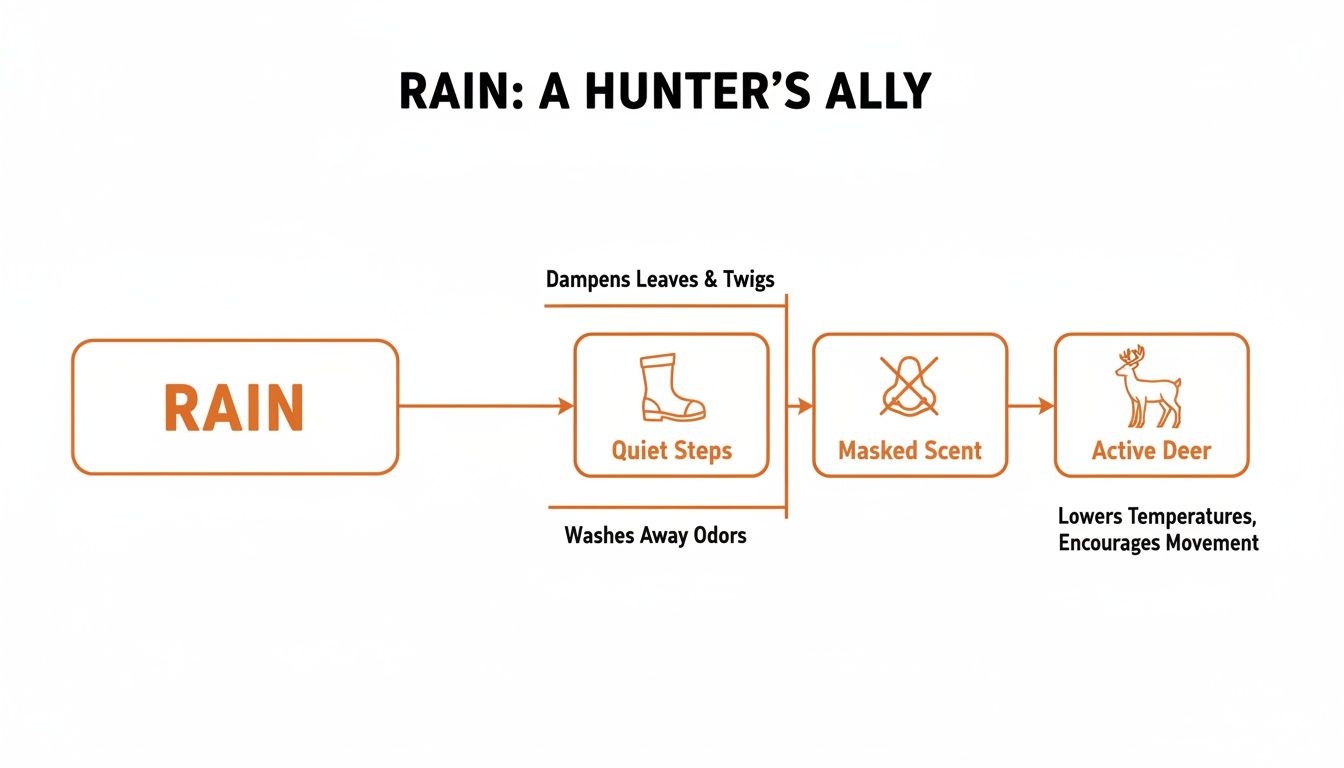
When the conditions line up, the rain quiets your approach, masks your scent, and gets deer moving. It’s the perfect storm for success if you know how to read the signs.
How Rainy Weather Influences the Rut
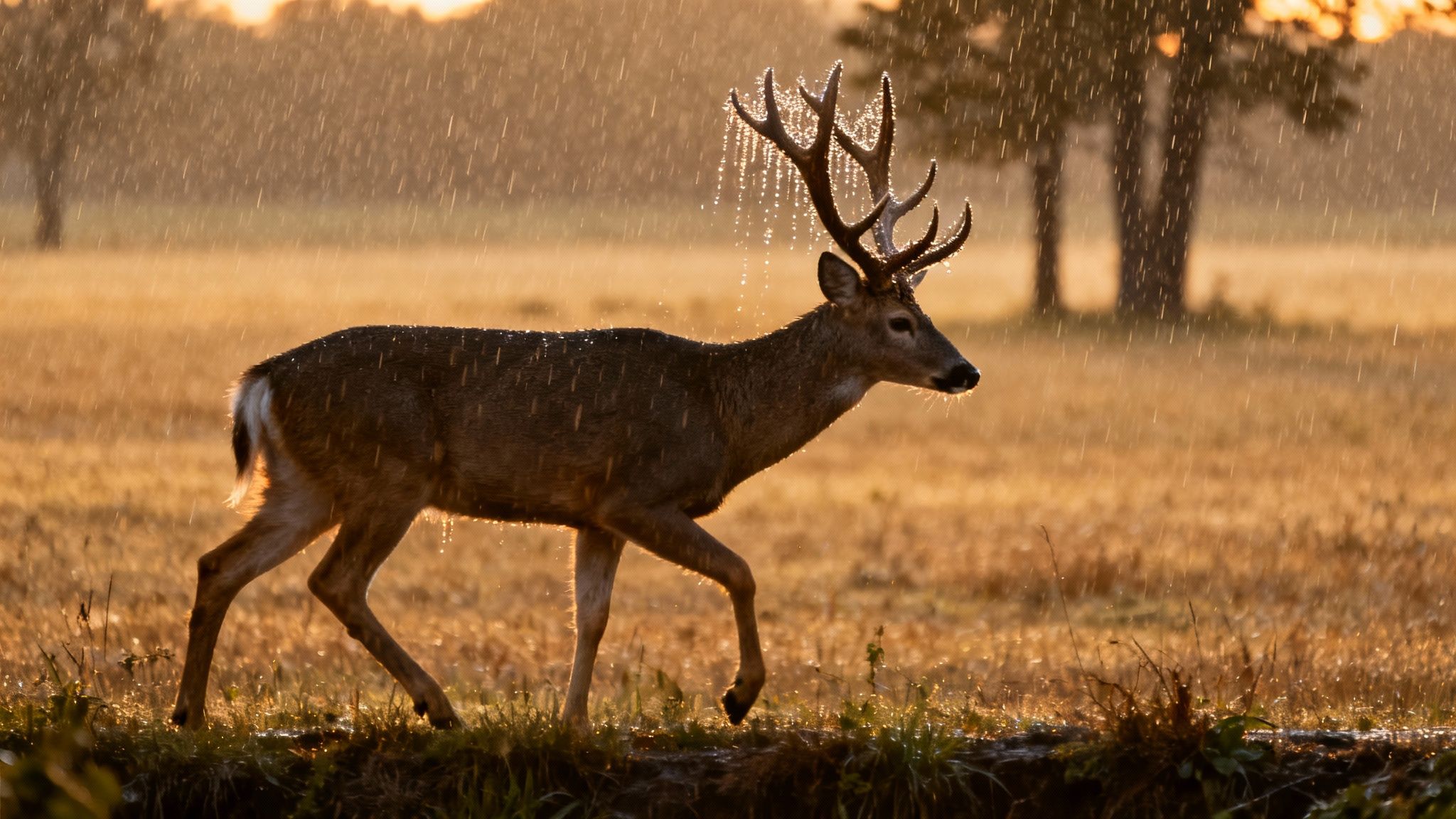
The rut is pure chaos and instinct, and throwing rain into the mix just changes the entire game. Bucks are on a singular mission during the breeding season, and bad weather often acts more like a trigger than a roadblock. In fact, a cool, steady rain can be the exact catalyst needed to kick rutting behavior into high gear.
For a buck on the move, this kind of weather checks a lot of boxes. The damp earth makes it easier for him to tear up scrapes and helps those scrapes hold scent longer, turning them into powerful communication hubs. Plus, the cooler temperatures that come with a rain front bring welcome relief for bucks wearing thick winter coats, letting them chase does and patrol their turf without overheating.
Rain as a Trigger for Rut Activity
A light, cool rain during any part of the rut almost always sparks an uptick in daylight movement. Bucks that seemed strictly nocturnal suddenly show up, working scrape lines and cruising for receptive does. The overcast skies act like visual cover, giving mature bucks the confidence to move when they’d otherwise stay bedded down.
But a torrential downpour will absolutely hit the pause button. Just like any other time of year, deer are going to seek shelter during a heavy rain to conserve energy. The real magic happens right after the storm breaks.
The hours immediately following a big rainstorm during the rut can be legendary. Bucks pop out of cover, full of pent-up energy and ready to make up for lost time. This often leads to some of the most intense chasing and territorial fights you'll see all season.
Connecting Rain to Specific Rut Phases
To really understand how deer use the rain during the rut, you have to match the weather to the specific breeding timeline. Your strategy needs to change whether you’re hunting the pre-rut, the peak, or the post-rut.
- Pre-Rut: A cool drizzle can be the perfect prompt for scraping activity. Bucks are busy establishing dominance, and a rainy day seems to encourage them to freshen up scrapes along field edges and travel corridors.
- Peak Rut: During the lockdown, a steady rain probably won’t move a buck that's already tending a hot doe. It can, however, get all the other bucks on their feet as they desperately cruise for the next available female.
- Post-Rut: Rain becomes absolutely critical here. Worn-out bucks are desperate to replenish their energy. A rainy day that pushes them toward food sources might be your best chance to catch a mature giant that survived the breeding chaos.
This isn't just hunter speculation; scientific observations back it up. A detailed study on red deer found that higher rainfall actually energized rutting dynamics, leading to more vocalizations and movement as males competed. You can learn more about these rutting behavior findings and see how precipitation directly fuels the fire.
It just goes to show that when the drive to breed is high, a little rain is more of an advantage than a problem.
Practical Strategies for Hunting in the Rain
Knowing how deer behave in the rain is one thing, but actually turning that knowledge into a successful hunt is a whole different ball game. A wet, dreary day can be incredibly productive, but only if you have the right playbook. It’s all about gear, tactics, and safety—the stuff that keeps you in the woods when everyone else has packed it in.
First things first: your gear. Staying dry isn't just about being comfortable; it's about staying safe and having the endurance to stick it out. Cold and wet is a fast track to hypothermia, which will end your hunt in a hurry. That's why high-quality, breathable rain gear isn't a luxury—it's non-negotiable. Layering with synthetic or wool fabrics underneath will also pull moisture away from your skin, keeping you warmer even if you get a little damp.
Pro Tip: Always pack a small, dry towel in a waterproof bag. You’ll be glad you have it when you need to wipe down a foggy scope lens, your hands, or your face. It’s a small detail that keeps you sharp and ready.
Choosing Your Hunting Method
Rain completely changes the forest floor, making it damp, soft, and quiet. This opens up some unique tactical advantages. The key is to adapt your hunting style to capitalize on the stealth that wet conditions provide.
- Still-Hunting: This is probably the single most effective tactic in the rain. The wet ground muffles your footsteps, letting you slip through the woods like a ghost. The trick is to move incredibly slowly. Take a few steps, then stop to scan and listen. Focus your efforts on those transition zones between bedding cover and food sources.
- Stand Hunting: When hunting from a stand, it's all about location, location, location. You want to be overlooking travel corridors that lead out of thick cover—think pine stands or dense thickets where deer have been hunkered down. That window right after a heavy downpour stops can be absolutely electric as deer finally get up to stretch and feed.
And before you head out, make sure you're truly prepared. Check out our complete guide on hunter essentials and must-have gear to ensure your pack is ready for whatever the weather throws at you.
Safety in Wet Conditions
Hunting in the rain isn’t without its risks, and they demand your full attention. Slick rocks, muddy hillsides, and slippery tree stand steps are accidents waiting to happen. When climbing, always maintain three points of contact and wear boots with an aggressive tread that will give you solid traction.
Visibility also takes a hit, for you and for other hunters. Wearing a blaze orange hat or vest is a critical safety measure, even if it’s not legally required for your season. Lastly, be extra mindful of your firearm. Keep the muzzle protected from rain to avoid any obstructions, and always give your scope a quick check for fog or water droplets before you even think about taking a shot. When you put safety first, you can hunt with confidence.
Optimizing Your Trail Cameras for Wet Weather
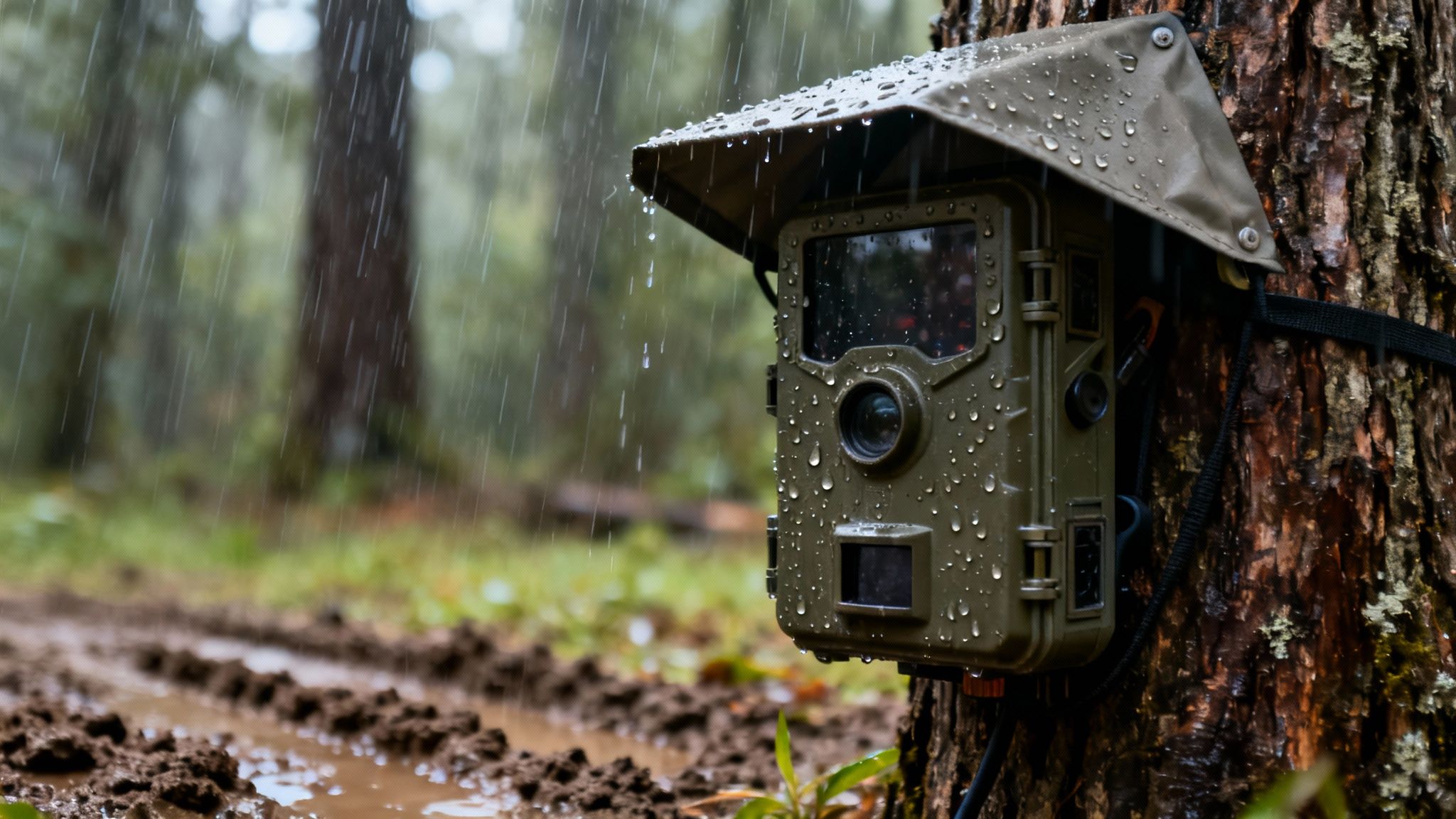
A rainy day can serve up a goldmine of intel on deer movement, but only if your trail cameras are ready for it. Wet conditions can throw a wrench in your scouting, causing everything from blurry, useless images to thousands of false triggers.
Fortunately, a few smart adjustments can make sure you’re capturing crisp, high-quality data when it counts the most.
The biggest enemy is rain hitting your lens and IR sensor directly. An easy fix is to position your cameras with a bit of natural overhead cover, like tucking them under the thick bough of a pine tree or a leaning trunk. This simple trick does wonders to keep raindrops off the lens and cut down on false triggers from falling water.
Another classic problem is lens fog, which can ruin an entire batch of photos before you even see them. For a deep dive on that, check out our guide on how to keep your trail camera from fogging up. Getting this right is step one to successful rainy-day scouting.
Fine-Tuning Your Camera Settings
To get the best shots when you know deer are on the move in the rain, you have to dial in your camera’s settings. The first and most critical adjustment is lowering the motion sensitivity. This helps stop the endless parade of false triggers from wind-whipped branches and driving rain.
- Sensitivity Level: Switch the sensitivity from High down to Normal or even Low. This tells the camera to ignore all that minor background chaos and only wake up for something substantial, like a deer walking by.
- Photo Burst: A 3-shot burst is a great middle ground. It gives you a better chance of snagging at least one clear image of a moving deer without completely maxing out your SD card in a single afternoon.
- Video Mode: Don't sleep on video mode during a storm. A short 10-15 second clip can tell you so much more than a single blurry photo. It instantly confirms whether that trigger was just the weather or the buck you've been after.
When you start correlating your trail cam photos with weather data overlays, you move beyond just seeing that a deer moved in the rain. You can start pinpointing the exact temperature, wind direction, and rain intensity that gets them on their feet on your specific property. That's next-level intel.
Answering Your Questions About Deer and Rain
Even with a solid game plan, you'll always have a few questions when the forecast calls for rain. Let's tackle some of the most common ones I hear to give you clear, practical answers for your next hunt.
Do Deer Bed Down in Heavy Rain?
Yes, absolutely. When a real gully-washer or thunderstorm hits, a deer's first instinct is to find good cover and conserve energy. They'll head for the thickest stuff they can find—think dense stands of pines, cedar thickets, or low-lying brush—and bed down until the storm blows over. This is exactly why deer movement seems to grind to a halt when the weather gets nasty.
But here's the key: this quiet period is almost always followed by a major spike in activity. The second that rain breaks, you need to be ready. Deer will be itching to get out of their beds to feed, stretch, and make up for lost time.
Is It Better to Hunt Before or After a Rainstorm?
Honestly, both windows offer incredible opportunities, but you have to play them differently. The hours right before a big weather front moves in can trigger an absolute feeding frenzy. Deer can sense the change in barometric pressure, and it often sends them straight to their primary food sources. This can be one of the best times to be sitting in a stand overlooking a food plot or oak flat.
The hours immediately after a storm are just as powerful. Deer that have been hunkered down for hours are hungry and eager to get on their feet. This creates a concentrated burst of movement that can be a game-changer for hunters who are already in position and waiting.
Does Rain Affect a Deer's Sense of Smell?
Rain completely changes the scent game, and usually in your favor. All that moisture in the air and on the ground literally weighs scent particles down. It holds your human odor closer to the ground and keeps it from traveling nearly as far as it would on a dry day. This can be a massive advantage, effectively cloaking your presence.
Just remember that swirling, unpredictable winds during a storm can still give you away. You always have to play the wind, no matter what. But a steady, light rain is one of nature's best scent killers and can help you get closer than you ever thought possible.
For scouting in any weather, having gear you can trust is non-negotiable. The Magic Eagle cellular trail camera system is built to handle the harshest conditions, delivering clear images and real-time intel so you can pattern deer movement, rain or shine. Learn more about how to make your scouting more effective at https://magiceagle.com.