

If you're only planting food plots in the fall, you're missing the boat.
Seriously. While those classic "hunting" plots full of brassicas are great for attracting deer in October and November, they overlook the most critical time of year for herd health. The real secret to growing bigger, healthier deer isn't just about hunting season attraction—it's about providing top-tier nutrition all summer long.
Summer food plots for deer are your secret weapon. They deliver the high-protein forage needed to support doe lactation, fawn survival, and buck antler development, especially during the late-summer slump when natural food sources get tough and woody.
Why Summer Food Plots Are a Game-Changer
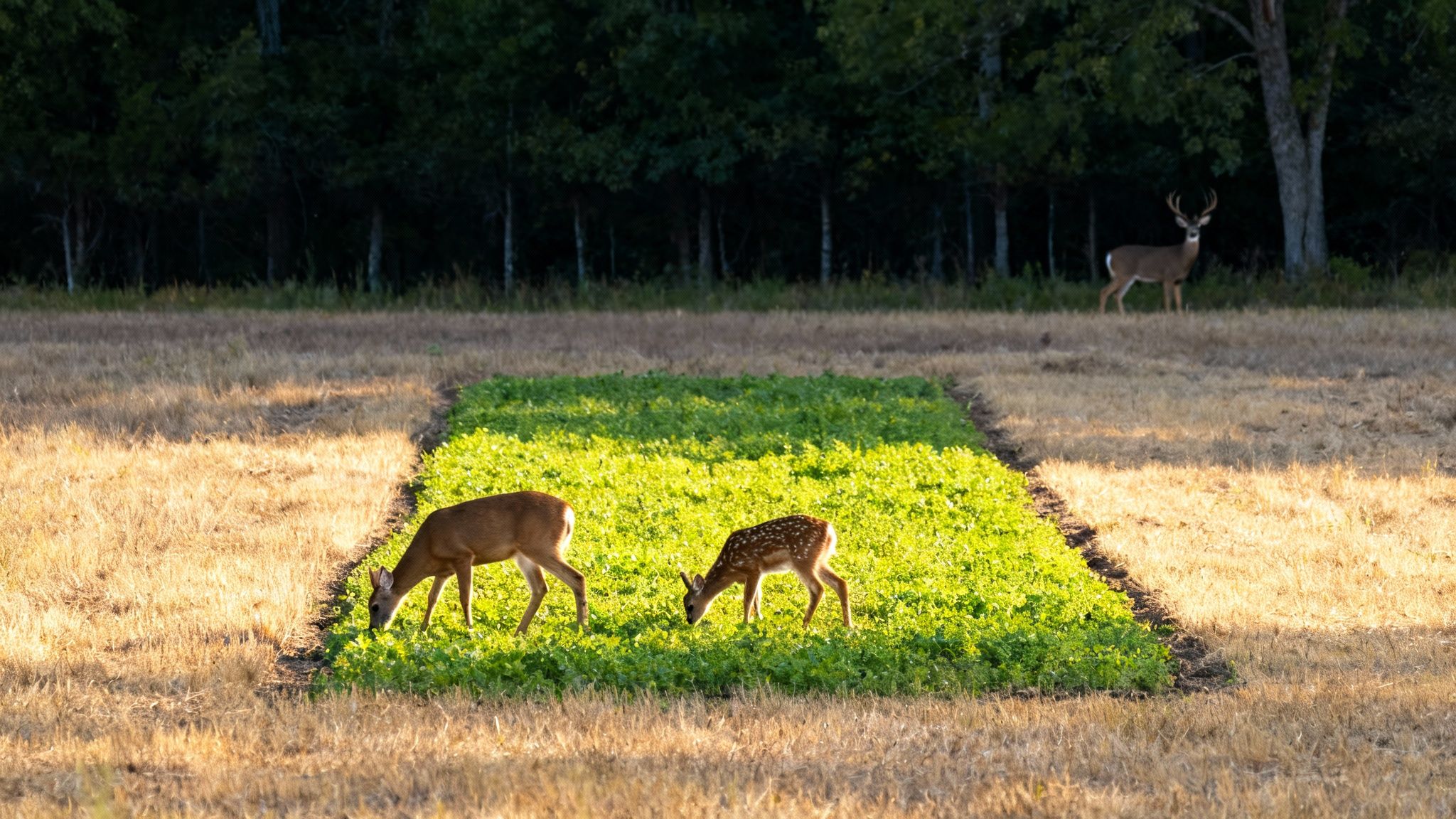
Think about what's happening on your property from June to August. Does are working overtime to produce milk for their fawns, and bucks are in a race to grow as much antler as they possibly can. Both of these biological processes are incredibly taxing.
This is what biologists call the "late-summer stress period." Natural vegetation is often past its prime, tasting bitter and offering less protein. That’s where a well-managed summer food plot steps in, acting like a 24/7 high-octane buffet.
Fueling Antler Growth and Fawn Development
For bucks, summer is everything. Antler growth is explosive, with some deer packing on up to a half-inch of new bone every single day. To do that, they need a diet loaded with protein and minerals. A diet with over 16% protein is the fuel that allows a buck to reach his full genetic potential.
Meanwhile, does are under immense pressure. They're trying to recover from a long winter while nursing one or two fawns. A doe's milk is unbelievably rich, and she can't produce enough of it without high-quality food. Skimp on her nutrition, and you'll see lower fawn survival rates and smaller, weaker young deer heading into their first winter.
A lush, protein-packed summer plot directly solves these problems. It becomes a nutritional hotspot that drives:
- Maximum Antler Growth: Giving bucks the raw materials they need to build their biggest racks.
- Improved Doe Health: Helping does stay in great shape while nursing, which sets them up for a successful fall breeding season.
- Increased Fawn Survival: Making sure fawns get the best possible start in life with nutrient-rich milk.
Training Deer for the Fall
Beyond nutrition, summer plots have a huge impact on deer behavior. Deer are creatures of habit. When you establish a reliable, delicious food source during the summer, you teach them that your property is the place to be.
A strategically placed summer plot doesn't just feed deer; it trains them. It becomes a central part of their daily routine, creating predictable travel patterns you can use to your advantage come fall.
It's a long-term investment. The bucks you see munching on soybeans in July are the same ones that will be cruising that same area for does in November. You're not just feeding them for a season; you're anchoring them to your land and creating a home-range advantage that pays off when it counts.
Ultimately, summer food plots are a cornerstone of any serious habitat management plan. They fit right in with broader efforts toward wildlife habitat improvement and even tie into advanced conservation concepts, like the AI-driven habitat restoration projects being explored today.
It’s about building a healthier herd that chooses to call your property home, year after year.
Choosing the Right Ground for Your Plot
The old real estate mantra "location, location, location" is just as true for deer food plots. Picking the right spot is more than half the battle—it's the foundation that decides whether your plot becomes a deer magnet or a forgotten patch of weeds. The best seed in the world won't do you any good if you plant it in the wrong place.
Before you even think about firing up the tractor, get out and walk your property. You need to see it from a deer's perspective, balancing what the plants need to thrive with how deer naturally use the land.
The Practical Checklist for Site Selection
Every plant has basic, non-negotiable needs. A spot that looks perfect from the truck window can be a total dud up close. Keep these critical factors in mind:
- Sunlight: Most summer forages, like soybeans and cowpeas, are sun worshippers. They need at least six to eight hours of direct sunlight every day to really take off. Steer clear of deep, shady hollows or small openings choked out by mature timber.
- Soil Drainage: Food plots hate having "wet feet." Look for ground that’s relatively flat or has a gentle slope. You want to avoid low-lying bottoms where water pools after every rain, as this will suffocate the roots and stunt growth.
- Equipment Access: This one sounds obvious, but it gets overlooked all the time. How are you going to get your tractor, ATV, and spreader to the plot? A super-secluded spot is great for deer, but it’s completely useless if you can't get your equipment in to plant and maintain it.
Don't get so wrapped up in finding a secret honey hole that you ignore the fundamentals. A plot with great sun, good drainage, and easy access will almost always outperform a perfectly hidden spot with poor growing conditions.
Strategic Placement: Sanctuary vs. Hunting Plots
Once you’ve scouted a few spots that tick the practical boxes, it's time to think like a hunter. The purpose of your plot should dictate its location. Are you building a nutritional powerhouse to grow bigger deer, or a tactical kill plot for opening day?
A sanctuary plot is all about providing stress-free nutrition. These are best tucked away in secluded areas, often deep inside your property where deer feel safe enough to feed in the daylight. The goal is simple: maximum nutrition, minimum human pressure.
To be truly effective, these plots should be part of a bigger sanctuary system. Studies have shown that setting aside about one acre of sanctuary plot per 100 acres of habitat—and rotating them with unhunted zones—can dramatically improve deer health. With white-tailed deer spanning 38 states, this strategy can boost fawn recruitment rates by 20-30% by keeping does well-fed and healthy.
On the other hand, a hunting plot is designed to create a shot opportunity. These are usually smaller, often shaped like an "L" or an hourglass, and placed strategically along known travel corridors between bedding and major food sources. The idea is to create a spot where a buck will pause for a quick bite on his way somewhere else, giving you a predictable, high-odds shot.
Placing these tactical plots correctly requires a deep understanding of deer movement. You have to know where they feel secure. For a masterclass on this, check out our guide on how to find deer bedding areas. By setting up your hunting plot between these safe zones and a larger destination field, you can create the perfect ambush for the early season.
Building a Healthy Foundation from the Soil Up
You can pick the perfect spot and the best seed money can buy, but if your soil isn't right, your plot is doomed from the start. A successful summer food plot isn’t just grown; it’s built from the ground up. That construction project begins with understanding what’s happening beneath the surface.
Ignoring your soil is like building a house on a shaky foundation—it’s just a matter of time before things fall apart. The success of your summer food plot begins with the ground, so learning how to create healthy soil is a non-negotiable first step for robust forage growth.
The Most Important First Step: Soil Testing
Before you turn a single clod of dirt, you absolutely must take a soil test. This isn't an optional step or something only "serious" land managers do. It's the single most important and cost-effective thing you can do to give your plot a fighting chance.
Taking a sample is simple. Grab a clean plastic bucket and use a spade or soil probe to collect 10-15 small cores from around your plot. Go down about 4-6 inches. Mix them all together in the bucket, pull out any rocks or roots, and let the soil air dry. Your local extension office or feed store can provide a test kit and send it off for analysis for a small fee.
Skipping a soil test is the number one mistake that leads to food plot failure. You're just guessing, and that often means wasting hundreds of dollars on the wrong seed, fertilizer, and lime.
Decoding Your Soil Test Results
When you get your results back, don't let the numbers intimidate you. You only need to focus on a few key things. The most critical is soil pH, which measures how acidic or alkaline your soil is on a scale from 0 to 14.
Most summer forages like soybeans and cowpeas thrive in a pH range of 6.0 to 7.0. If your soil is too acidic (below 6.0), the plants can't access the nutrients in the ground—no matter how much fertilizer you throw down.
Your test will tell you exactly how much lime you need, usually in tons per acre, to raise the pH to that sweet spot. Remember, applying lime is a long-term investment. It can take six months or more to fully work its magic, so get it on the ground well before you plan to plant.
The other key numbers are your N-P-K values:
- Nitrogen (N) is what fuels all that leafy green growth.
- Phosphorus (P) is vital for strong root development and energy transfer.
- Potassium (K) helps with overall plant health and makes them tougher against drought.
Your soil test will recommend a specific fertilizer blend, like 10-10-10 or 19-19-19, to fix any deficiencies.
Preparing the Perfect Seedbed
With your soil amendments planned out, the final step is creating a clean seedbed. The right method really depends on your equipment and the lay of your land.
This process flow shows the basic considerations for plot selection, focusing on sunlight, access, and proper drainage.

These core elements are non-negotiable for ensuring your chosen forages have the right environment to establish and thrive.
For most folks, the traditional method is still king: kill the existing vegetation with a good herbicide, wait a week or two, then till or disc the ground. The goal is to create a smooth, firm bed that ensures good seed-to-soil contact, which is absolutely essential for germination.
However, a no-till approach can be a game-changer, especially on sloped ground where you want to prevent erosion. This just involves spraying to kill the weeds and then using a no-till drill to plant seeds directly into the undisturbed soil. It requires specialized equipment, but it’s fantastic for preserving precious soil moisture.
Whichever method you choose, a well-prepared plot is the final piece of the puzzle. Now you're ready for seed.
Selecting and Planting High-Impact Forages

With a healthy, lime-adjusted, and fertilized seedbed ready to go, the fun part begins—picking what to plant. The right summer forage can transform your property into a nutritional powerhouse, delivering the protein that fuels antler growth and supports does and fawns. Get this choice right, and you'll see a real difference in your local deer herd.
For summer food plots, the goal is simple: provide the most attractive, protein-rich forage possible during those critical growing months. Legumes are the undisputed champions here. Plants like soybeans and cowpeas are not just highly palatable; they're also nitrogen-fixers, meaning they pull nitrogen from the air and store it in the soil, which helps out future plantings.
Top-Performing Summer Forages
There’s no single "best" forage, because the ideal choice really depends on your region, soil type, and deer density. That said, a few proven performers consistently deliver outstanding results across a wide range of conditions.
- Soybeans: Often called the "king of summer food plots," soybeans are a deer magnet. They offer incredible protein levels, often exceeding 25%, and stay tender and attractive all summer long. Be sure to look for forage soybeans, which are bred for leaf production and can handle grazing better than standard agricultural varieties.
- Cowpeas (Iron Clay Peas): Think of cowpeas as soybeans' tough cousin. They are more drought-tolerant and stand up better to heavy grazing pressure. This makes them a fantastic choice for smaller plots or areas with high deer numbers.
- American Jointvetch: This often-overlooked legume is a superstar in the South. It thrives in heat and humidity, tolerates acidic soil better than many other options, and can produce high-quality forage well into the early fall.
- Buckwheat: While not a legume, buckwheat is an excellent "nurse crop." It germinates quickly, suppresses weeds, and improves the soil by mining phosphorus. Deer will browse it, but its main job is often to provide cover and support for other, more desirable plants in a blend.
These warm-season crops are designed to provide high-protein forage exactly when deer need it most. For example, soybeans are typically planted at 50 pounds per acre by drilling or 60-80 pounds by broadcasting. The impact is undeniable. One study found that American jointvetch made up 33% of deer diets in some areas during summer and fall, offering far more protein and digestibility than native browse.
Monocultures vs Blends
Once you’ve narrowed down your choices, you have to decide: plant a single species (a monoculture) or mix several together (a blend)? Both approaches have their place, and the right strategy depends entirely on your specific situation.
A monoculture, like a pure stand of soybeans, can be incredibly productive. If you have a large plot (over an acre) and manageable deer density, a field of soybeans can produce a staggering amount of high-protein forage. The downside is risk—if a specific disease hits or browsing pressure is too intense, the entire plot can get wiped out.
This is where blends shine. Mixing different species, such as iron clay peas, buckwheat, and sunflowers, creates a more resilient and diverse food source.
A well-designed blend is like a food plot insurance policy. If deer hammer one species early, the others can fill in the gaps, ensuring there’s always something attractive available. Blends also cater to different preferences and provide a more balanced diet.
For a first-timer or someone with a small plot (under an acre), a blend is almost always the safer and more effective bet. Our comprehensive guide on planting a food plot for deer offers more detailed strategies for getting your seed in the ground, whether you choose a monoculture or a dynamic blend.
Seeding Rates and Planting Methods
Proper seeding rates are critical. Planting too thin results in a weak stand that can't compete with weeds, while planting too thick forces plants to compete with each other for nutrients, leading to stunted growth. Always follow the specific recommendations on your seed bag.
The table below offers a general guideline for some of the top summer forages. Just keep in mind that broadcast rates are typically higher than drill rates to account for less precise seed placement.
Comparing Top Summer Food Plot Forages for Deer
To help you decide, here’s a quick comparison of the key characteristics of popular warm-season forages. Use this to match a species to your specific needs and property conditions.
| Forage Type | Protein Content (%) | Seeding Rate (lbs/acre) | Drought Tolerance | Best For |
|---|---|---|---|---|
| Soybeans | 25-30% | 50-80 | Moderate | Large plots, high nutrition focus |
| Cowpeas | 20-26% | 50-90 | High | Smaller plots, high deer density |
| American Jointvetch | 18-25% | 15-20 | High | Southern climates, acidic soil |
| Buckwheat | 10-15% | 40-50 | Moderate | Nurse crops, soil improvement |
Ultimately, choosing the right forage is a balance of what your deer prefer and what your land can support. Don't be afraid to experiment with a small test plot to see what works best on your property.
When it's time to plant, the goal remains the same: achieve excellent seed-to-soil contact. Using a tractor and drill is the most efficient method, placing each seed at the perfect depth. However, broadcasting seed with a spreader and then lightly discing or dragging the plot to cover it works just fine for most landowners. The key is ensuring the seed is covered by about an inch of soil to protect it and promote good germination.
How to Manage Your Plot for Summer Success
Getting seeds into the ground feels like a huge win, but honestly, the real work has just begun. Planting is a single event, but managing your summer food plots is a season-long process. What you do over the next few months will decide whether your plot becomes a lush, deer-pulling magnet or a forgotten patch of weeds that never hits its full potential.
Believe it or not, your biggest adversary during the summer probably won't be drought or pests—it will be weeds. Aggressive summer weeds like pigweed and crabgrass are brutal competitors, fighting your chosen forages for every drop of water, ray of sunlight, and bit of nutrient. If you let them go, they can quickly choke out a new plot, especially when it’s young and vulnerable.
Winning the War on Weeds
Good weed control starts before you even see a problem. Your strategy is going to depend entirely on what you planted. If you went with herbicide-resistant crops like Roundup Ready soybeans or corn, your job is a whole lot easier. You can just wait until the weeds are a few inches tall, then spray the entire plot with a glyphosate-based herbicide.
This approach is incredibly effective. It knocks out the weeds without touching your crop. For most plots, one or two timely sprayings are all it takes to keep things clean for the entire growing season.
Now, if you planted a conventional blend with things like iron clay peas or buckwheat, you need a different game plan. A broad-spectrum herbicide is off the table—it would kill your forage right along with the weeds. Instead, you can turn to a grass-selective herbicide like clethodim. This stuff is great because it specifically targets grasses without harming your broadleaf forages.
For broadleaf weeds in a conventional plot, timely mowing can be a surprisingly useful tool. Just be sure to set your mower deck high enough to clip the tops of the faster-growing weeds without scalping the main canopy of your forage.
A clean plot is a productive plot. Don't let a few weeks of neglect undo all the hard work you put into site prep and planting. Stay vigilant and get on top of weeds before they get out of control.
Protecting Your Investment from Deer
This might sound backward, but one of the biggest threats to a new summer food plot is the very animal you're trying to feed. Deer can absolutely decimate a small, tender plot before it ever gets established, especially if you planted high-protein favorites like soybeans and cowpeas.
Protecting that plot for the first 4-6 weeks is absolutely critical. During this window, the plants are building the root systems and leaf mass they need to handle heavy browsing later on. By far, the most effective way to do this is with a simple, baited electric fence.
Here’s a proven, cost-effective setup that works like a charm:
- Install Posts: Get some simple t-posts or step-in posts and place them around the perimeter of your plot.
- Run Polywire: String one or two strands of polywire or polytape around the posts. I like to run one at about 18 inches and another at 36 inches off the ground.
- Bait the Fence: This is the magic step. Tear off small strips of aluminum foil, attach them to the wire every 15-20 feet, and smear a dab of peanut butter on each one.
The smell of the peanut butter pulls them in. When a curious deer touches the foil with its wet nose, it gets a safe but memorable shock. It doesn't take long for them to learn to respect that fence line, giving your plot the crucial time it needs to mature. Once the plants are big and tough enough to handle the grazing, you can take the fence down and let the feast begin.
You could also try commercial repellents, but in my experience, they need to be reapplied constantly, especially after it rains, which makes them less reliable than a fence.
Setting up a trail camera is a great way to monitor how much pressure the deer are putting on your plot and see how they're reacting to your fence. You can learn more about scouting tech's impact on deer behavior by exploring a deeper analysis of whether trail cameras scare deer. By understanding their patterns, you can make better decisions to ensure your plot is a success.
Common Questions About Summer Deer Plots
Even with the best-laid plans, questions always pop up once you get dirt on your boots. Every property is unique, and mother nature loves to throw a curveball now and then. This section tackles the most common questions I hear from landowners trying to nail down their summer food plots.
Think of it as your go-to troubleshooting guide. Getting these details right can be the difference between a lush, green buffet and a sun-baked patch of disappointment.
When Is the Best Time to Plant Summer Food Plots?
This is easily the most frequent question, and the answer isn’t a specific date you circle on the calendar. It’s all about soil temperature and frost. The perfect planting window opens once the danger of the last frost is long gone and your soil temperature is consistently holding above 60°F.
For most of the South, this usually means planting from late April through May. As you move north into the Midwest, you’re looking at late May and early June. Planting too early is a huge gamble. A single late frost can wipe out an entire field of tender seedlings like soybeans or cowpeas, forcing you to start all over. Patience really pays off here.
Can I Plant a Summer Food Plot with Minimal Equipment?
Absolutely. While a tractor, disc, and seed drill are the textbook setup, you don’t need a barn full of heavy iron to create a killer food plot. Several low-impact techniques work incredibly well, especially for smaller, out-of-the-way spots.
The most popular method is called "throw-and-mow." It’s a beautifully simple process:
- Spray the area: First, kill off all the existing vegetation with a non-selective herbicide like glyphosate. Give it a week or so until everything is brown and dead.
- Broadcast your seed: Spread your seed right on top of the dead thatch. This works best with smaller seeds like clover, chicory, or blends that include buckwheat.
- Mow it down: Use a lawnmower, string trimmer, or brush hog to chop the dead vegetation down right over your seed. This creates a natural mulch that locks in moisture and gets you that crucial seed-to-soil contact.
This no-till approach is fantastic for preventing erosion and can be done with tools most people already own.
How Do I Protect a Small Plot from Being Over-Browsed?
Small plots—anything under an acre—are like candy stores for deer. They are incredibly vulnerable to being browsed into oblivion before they ever get established. A handful of deer can mow down a half-acre of young soybeans in just a few nights.
The most reliable way to protect a small summer plot is with a simple electric fence. You're not building a fortress; you're just training the deer to stay away for a few critical weeks.
A single-strand polywire fence, set about 30 inches high and baited with peanut butter on little foil tabs, is surprisingly effective. The deer come in for a sniff, touch the bait with their nose, and get a harmless but memorable shock. After 4-6 weeks, once your plants are tall and strong enough to handle the grazing pressure, you can take the fence down. It's the single best insurance policy you can buy for a small summer plot.
What Is the Biggest Mistake People Make?
The most common—and most expensive—mistake is skipping the soil test. It's that simple. Too many people get excited, buy a pricey bag of seed, and then just guess when it comes to lime and fertilizer. That’s a recipe for failure.
Without a soil test, you're flying completely blind. You have no idea what your soil’s pH is or which nutrients it’s missing. Soil pH is the gatekeeper for everything else; if it's too acidic (which is very common), your plants can't absorb the fertilizer you spread, no matter how much you put down. It's like trying to fill a gas tank with the cap still on.
A soil test from your local extension office is cheap, often under $20. It gives you an exact roadmap, telling you precisely how much lime and what fertilizer blend your plot needs to explode with growth. Ignoring this step is the fastest way to waste your time, effort, and a whole lot of money. Don’t guess—get a test.
Take the guesswork out of scouting your new food plot. With the Magic Eagle EagleCam 5, you get real-time monitoring with an all-in-one 4G cellular connection, AI species recognition, and GPS anti-theft protection. Map your plots, track deer activity, and see the results of your hard work instantly. Visit https://magiceagle.com to see how our smart cellular cameras can give you a decisive edge this season.