

So you're ready to plant a food plot. It's about a lot more than just tossing some seed on the ground and hoping for the best. A truly successful plot—one that pulls in deer and keeps them coming back—starts with smart planning, solid groundwork, and the right techniques.
Get the foundation right, and you'll end up with a healthier deer herd and, ultimately, better hunting.
Laying the Groundwork for a Thriving Food Plot
Before you even think about firing up the tractor, know this: the success or failure of your food plot is decided long before a single seed is planted. The two most critical pieces of the puzzle are picking the right spot and getting the soil ready for business. I've seen it a hundred times—skipping these steps is the fastest way to turn a promising food plot into a weedy, barren patch that deer won't touch.
You've got to think like a deer. They're creatures of habit, and security is everything. Placing your plot in a location they already feel safe moving through is a massive advantage. Look for spots right next to thick cover, or along natural funnels that deer already use to travel between their feeding and bedding zones. If you're not sure what that looks like, it's worth learning how to find deer bedding areas, which controls how well plants can actually use the nutrients in the ground. Most food plot forages do best in a pH range of 6.0 to 7.0. If your soil is too acidic, which is common in wooded areas, your plants can't access the fertilizer you spread. You could dump a truckload of it out there, and it would do absolutely no good.
"A soil test isn't an expense; it's an investment. It's the roadmap that tells you exactly what amendments you need, preventing you from over-applying costly fertilizer and lime while ensuring your plants have what they need to reach their full potential."
The test results will tell you exactly how much lime you need to raise the pH and the right fertilizer blend (like 10-10-10 or 19-19-19) to fix any shortfalls in nitrogen, phosphorus, and potassium. This targeted approach saves you a ton of money and dramatically boosts how much forage you can grow.
When you look at the numbers, it just makes sense. Some estimates put the cost of forage you grow in a plot at around $0.03 per pound. Compare that to buying protein pellets, which can run you $0.25 per pound or more. A well-managed plot, guided by that simple soil test, can pump out several tons of high-quality forage per acre. That's a massive upgrade from the thousand pounds or so of natural browse you might get in a typical patch of woods. Taking the time to test and amend your soil sets the stage for a plot that’s not just a deer magnet, but a smart, cost-effective tool for managing your property.
Choosing the Right Seeds for Your Goals
With your soil prepped and ready to go, it's time for the fun part: picking what to plant. But walk into any feed store or browse online, and you'll be hit with a wall of seed bags, all promising to attract monster bucks.
The trick is to ignore the flashy marketing and match the right seeds to your actual goals, climate, and soil. It all starts with one simple question: are you planting for this fall's hunt, or are you building a year-round nutrition program?
- Annuals: Think of these as the sprinters. Plants like brassicas (turnips, radishes) and cereal grains (oats, wheat) grow fast and produce a massive amount of food in a single season. They’re perfect for creating a can’t-miss food source for the upcoming hunting season.
- Perennials: These are your marathon runners, like clover and chicory. They take a bit more patience to get established, but they come back year after year, providing a reliable food source without needing to be replanted.
Cool Season vs. Warm Season Plots
Next, you need to think about timing. Are you planting for the crisp days of fall or the long, hot days of summer? This decision isn't just about temperature—it's about giving the deer what they need, right when they need it most.
Cool-season plots are the undisputed workhorses of fall and winter. Planted in late summer or early fall, these forages thrive as the temperatures drop, providing critical energy for hunting season and the harsh winter months. Everyone knows how brassicas get sweeter and more attractive after the first frost, and cereal grains offer lush greens that deer will paw through the snow to find.
Warm-season plots, on the other hand, are all about fueling growth during the summer. Planted in spring after the last frost, species like soybeans, cowpeas, and lablab explode with protein-packed forage. This is exactly what bucks need for antler growth and what does need to support their fawns.
Seasonal Food Plot Seed Comparison
Choosing the right seed for the right season can feel complicated. This table breaks down some of the most common options to help you decide what best fits your property and goals.
| Seed Type | Season | Primary Benefit | Planting Window | Broadcast Rate (lbs/acre) |
|---|---|---|---|---|
| Clover | Cool | High Protein, Perennial | Spring/Fall | 8-10 |
| Brassicas (Turnips, Radishes) | Cool | High Energy, Late Season | Late Summer | 5-8 |
| Cereal Grains (Oats, Wheat) | Cool | Fast Growth, Early Attraction | Late Summer/Fall | 80-100 |
| Soybeans | Warm | High Protein, Antler Growth | Late Spring | 50-70 |
| Cowpeas | Warm | Drought Tolerant, High Protein | Late Spring | 40-60 |
| Chicory | Cool | High Mineral, Perennial | Spring/Fall | 5-7 |
As you can see, the rates and benefits vary wildly. A little planning goes a long way in creating a plot that delivers when you need it.
Calculating Seeding Rates and Planting Methods
Once you've picked your seeds, you have to get the right amount on the ground. Don't just guess. Seeding rates are on the bag for a reason—too much seed leads to overcrowding and stunted plants, while too little leaves your plot sparse and invites a weed takeover.
The amount of seed you need boils down to its size and how you plant it. Tiny seeds like clover and turnips might only require 5–10 pounds per acre, but big seeds like oats or wheat can demand 100–120 pounds per acre. These choices matter. A well-managed cool-season plot can easily produce twice the forage of a warm-season plot in the same area.
Spreading seed by hand or with a spreader, known as broadcasting, is how most of us do it. Because not every single seed will land in a perfect spot, it's smart to increase the recommended seeding rate by about 25%. This little adjustment helps guarantee you get a thick, lush stand that can outcompete weeds.
After broadcasting, you need to ensure good seed-to-soil contact. You don't need fancy equipment. Just lightly dragging the plot with a section of chain-link fence or a lawn roller is enough to press those seeds into the soil, which is crucial for them to germinate.
Take a look at the economics here—it’s a powerful argument for putting in the work.
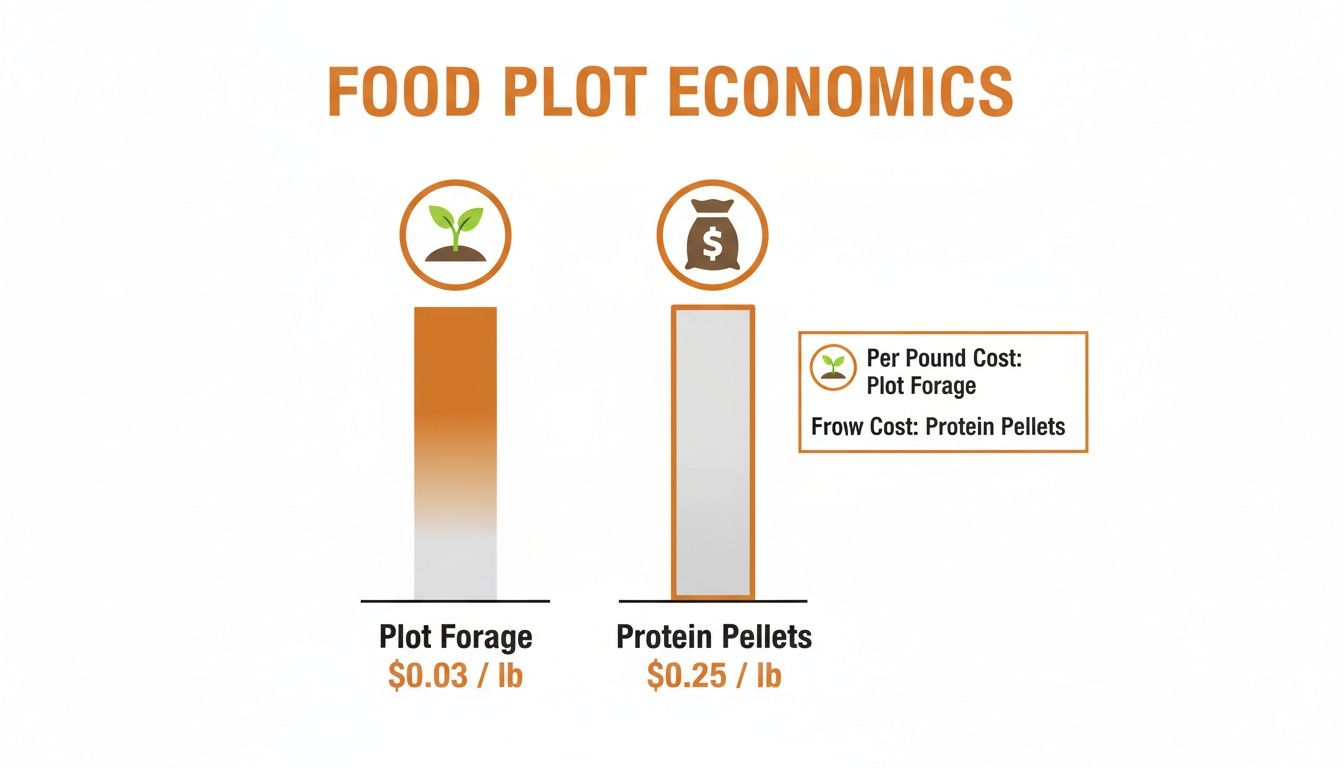
The numbers don't lie. Growing your own forage is dramatically cheaper per pound than buying bags of supplemental feed.
Single Species vs. Blends
So, should you plant a perfect, uniform field of a single crop, or mix it all up? While a pure stand of clover is a beautiful sight, blends almost always offer more bang for your buck.
Here’s why a mix is usually better:
- Staggered Maturity: Different plants pop at different times, which keeps deer coming back to your plot for months, not weeks.
- Insurance Policy: If a dry spell wipes out one species, the others in the blend can often pick up the slack, saving your plot from total failure.
- Cafeteria-Style Nutrition: A blend offers a more balanced diet. It's like a buffet, providing a variety of proteins, carbs, and minerals.
A classic fall blend might combine oats for immediate attraction, winter peas for a shot of protein, and daikon radishes for a late-season treat deer will dig for. This cocktail approach creates a dynamic food source that keeps working from opening day right through the end of the season. Mastering these basic principles, along with other general techniques for growing and caring for food-producing plants, will make you a much more effective habitat manager.
Managing Your Plot for Year-Round Attraction
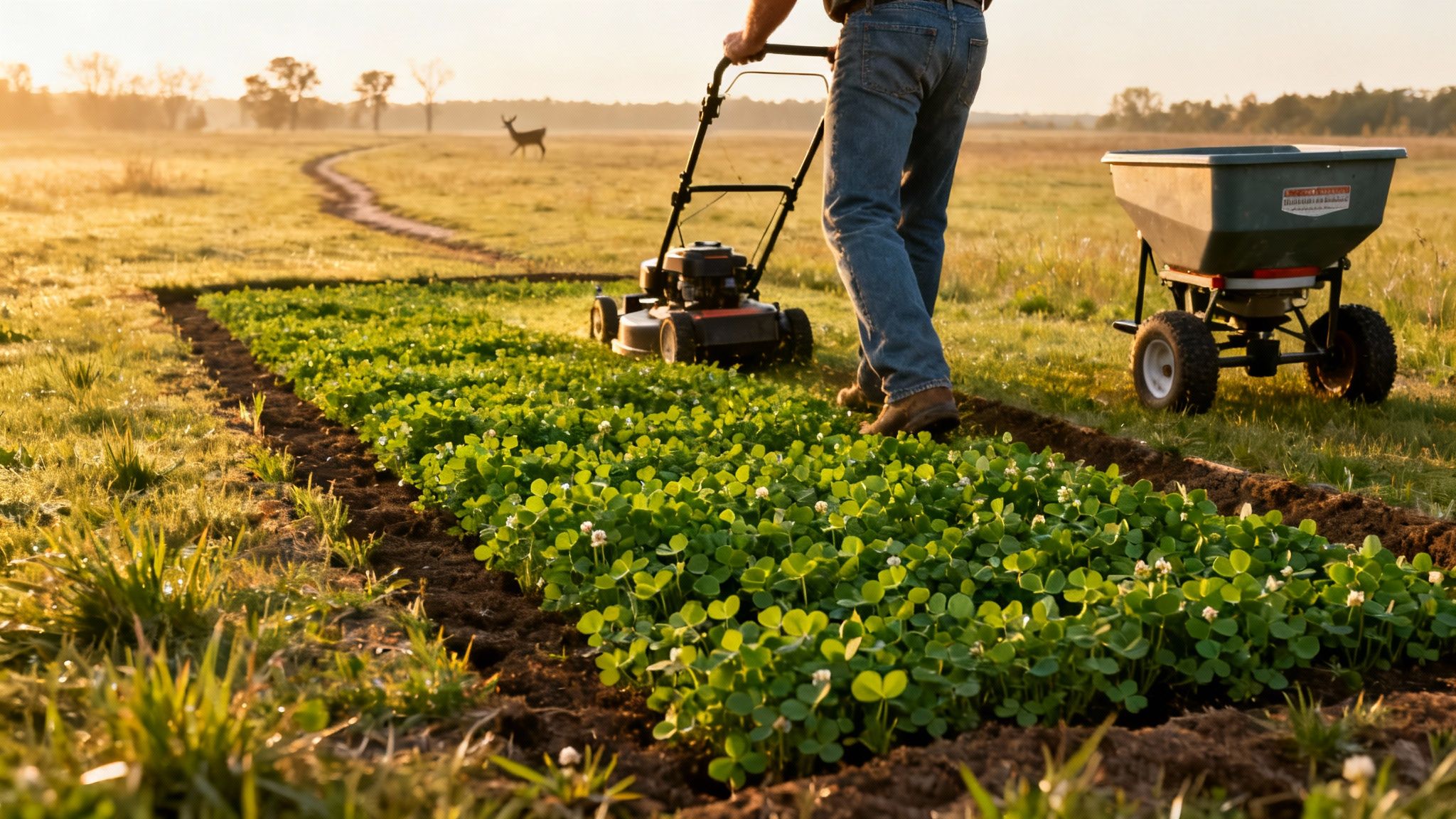
Getting seeds in the ground feels like a huge win, but the real work of planting a food plot for deer has just begun. The difference between a plot that peters out by October and one that pulls deer all year is simple: ongoing management.
Think of it this way—you wouldn't plant a garden, walk away, and just hope for a harvest. Your food plot is no different. To protect your investment of time and money, you need to stay active with weed control, fertility, and timely mowing. This is what keeps your plot producing the high-quality forage your deer herd needs.
Smart Weed Control Strategies
Weeds are the number one enemy of a food plot. They are thieves, stealing sunlight, water, and nutrients from the plants you actually want to grow. A lush plot can turn into a tangled, unappealing mess in just a few weeks if you let them take over.
Your two main weapons here are pre-emergent and post-emergent herbicides. A pre-emergent is applied before weeds sprout, creating a barrier in the soil that stops seeds from germinating. It’s a great move when establishing a new plot to get ahead of pesky grasses right from the start.
A post-emergent, on the other hand, is for killing weeds that are already up and growing. The trick is choosing the right one for the job. For instance, in a pure clover or alfalfa plot, a grass-selective herbicide is perfect—it will wipe out invading grasses without touching your broadleaf forage. Always, always read the label to make sure the chemical is safe for your specific crop.
"A well-timed herbicide application can save a struggling plot. Letting weeds get more than a few inches tall makes them much harder to control and gives them time to steal resources from your desired forage."
Timely Fertilization and Mowing
Your initial soil test laid the groundwork for fertilization, but that wasn't a one-and-done deal. Every time a deer takes a bite, it's removing nutrients from the soil. A follow-up fertilizer application can be a total game-changer, especially on plots getting hammered by deer.
After a few months of heavy grazing, a top-dressing of nitrogen can breathe new life into cereal grains and brassicas. For perennial plots like clover, stick with a fertilizer low in nitrogen but higher in phosphorus and potassium (something like 0-20-20). This feeds the roots and promotes plant health without fueling a new wave of weeds.
Strategic mowing is another powerful tool, especially for your perennials.
- Weed Management: Mowing chops down broadleaf weeds before they can produce seeds and spread.
- Encourage New Growth: Cutting clover triggers the plant to send up fresh, tender leaves, which are way higher in protein and more attractive to deer than old, woody growth.
- Maintain Dominance: Regular mowing prevents your perennials from getting choked out by faster-growing annual weeds.
A good rule of thumb for clover is to mow when about 20% of the plants start to flower. Cut it down to a height of 6-8 inches. Just be sure to avoid mowing during extreme heat or a drought, as that will stress the plants.
Combining these tasks with good old-fashioned observation is what separates the pros from the amateurs. Monitoring deer activity gives you invaluable feedback on what they're eating and how much pressure your plots are under. For an easy way to get eyes on the plot without spooking deer, check out our guide on how to set up a trail camera. This constant loop of managing and monitoring is what turns a good food plot into a great one.
Deciding How Much Acreage to Plant
One of the first questions land managers ask is, "How much ground should I actually plant?" It's a classic dilemma. Do you go with a small half-acre kill plot, or do you need a giant 10-acre destination field to make a real difference?
There's no single magic number, but the answer usually involves finding the right balance between your property size, your wallet, and what your local deer herd actually needs.
A widely accepted benchmark is a great place to start. Most wildlife managers and seasoned hunters agree that dedicating 2% to 5% of your total property to food plots is the sweet spot. That's enough to genuinely impact deer nutrition and start influencing their movement patterns.
The 2% Guideline in Practice
So what does that look like in the real world? It's simple math, but it gives you a clear target to aim for when you're sketching out your property map.
- On a 40-acre property: You're looking at planting roughly 0.8 to 2 acres total.
- On a 100-acre property: Your goal would be 2 to 5 acres of plots.
- On a 200-acre property: The target jumps to 4 to 10 acres of planted forage.
This guideline helps you think beyond just one big plot. A few well-managed, half-acre plots scattered in strategic locations are often way more effective than one huge field that's in the wrong spot.
Budgeting for Your Acreage Goals
Once you’ve got a target acreage, it’s time for a reality check on the costs. Let's be honest, the expenses for planting a food plot for deer can sneak up on you, so it pays to have a realistic budget from day one.
The initial land clearing is almost always the biggest one-time hit to your wallet. If you’re turning timber or thick brush into a new plot, you could be looking at anywhere from $200 to $800 per acre. The final number really depends on how thick the vegetation is and what kind of equipment you need to bring in.
After the initial work is done, you have your annual costs. A healthy plot needs seed, fertilizer, lime, and maybe some herbicide every year. A good, conservative estimate for these recurring costs is about $300 per acre. Knowing these numbers helps you build a plan you can actually sustain year after year without breaking the bank.
By figuring out both the upfront clearing costs and the recurring annual expenses, you can scale your food plots to a size that’s effective for the deer and financially sustainable for you.
Quantifying Your Return on Investment
Budgeting is half the battle, but you also need to know what you're getting for your money and effort. In the food plot world, the return on investment is measured in forage tonnage—the sheer amount of food your plot produces.
Cool-season plots packed with clover, cereal grains, and brassicas are workhorses. They can crank out up to 5 tons of digestible forage per acre, which translates to about 1,000 "deer-days" of feed.
On the other hand, warm-season plots with soybeans or sorghum typically yield about half that—around 2.5 tons per acre, giving you closer to 500 deer-days of feed. You can dive deeper into these benchmarks by reading this in-depth guidance for landowners.
These aren't just abstract numbers; they give you a tangible way to measure the impact of your work, making sure every dollar you spend is directly contributing to a healthier, more attractive property for your deer herd.
Troubleshooting Common Food Plot Problems
Even the most meticulously planned food plot can hit a snag. Let's be honest, we're dealing with nature here, and things don't always go according to script. A plot is a living system, and knowing how to read the signs when something's off is the difference between a minor setback and a total bust.
The real key is diagnosing the issue before it gets out of hand. Is it weeds? Poor soil? Or are the deer just hammering it too hard? Answering these questions is what separates the pros from the amateurs.
Measuring Success and Deer Pressure
So, how do you know if your plot is actually working? The best way is to see what the deer are doing. While hiding out in a blind with binoculars can tell you a little, nothing beats the 24/7 intel you get from a modern trail camera.
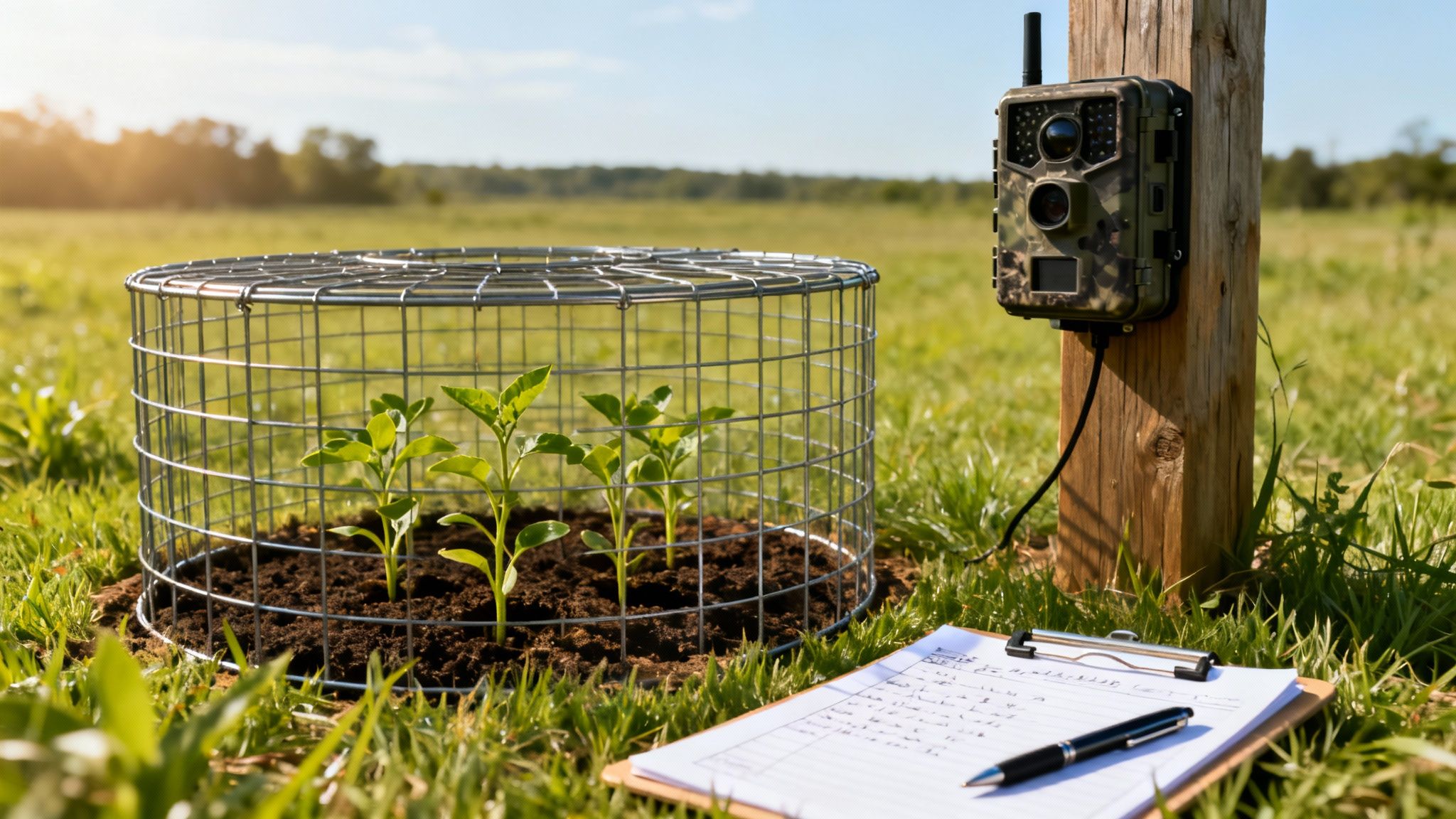
Specifically, using one of the many trail cameras that send photos to your phone gives you a real-time feed without ever having to spook deer by walking into the plot. This constant stream of information shows you not just if deer are visiting, but when they visit and what plants they're hitting hardest. This feedback is priceless for tweaking your strategy.
One of the most valuable, and simple, tools you can use is an exclusion cage. This is just a small, fenced-off section of your plot—a simple cylinder of wire fencing does the trick—that keeps deer from browsing inside it. This little cage becomes your control group.
By comparing the lush growth inside the cage to the chewed-down plants outside, you can see exactly how much pressure the deer are putting on your plot. It removes all the guesswork.
If the plants inside the cage look like a jungle while the rest of the plot is struggling, you don't have a growing problem—you have a deer problem. That simple visual tells you everything you need to know about overgrazing.
Diagnosing What Went Wrong
Sometimes, the problems go beyond just heavy browsing. When your plot is patchy, weedy, or just looks sick, it's time to play detective. Most plot failures boil down to a handful of common culprits.
- Poor Germination or Stunted Growth: You planted at the right time and got rain, but the plot is thin and the seedlings just won't take off. This is a classic rookie mistake. Usually, it's either bad seed-to-soil contact or incorrect planting depth. Tiny seeds like clover only need to be 1/4 inch deep; bury them any deeper and they'll never see daylight.
- Overwhelming Weed Competition: Your forage came up, but it was quickly swallowed by a sea of grass and weeds. This almost always means the existing weed seed bank in the soil wasn't dealt with before planting. A thick, healthy stand of forage is its own best defense against weeds, so a low seeding rate can also be the culprit.
- The Plot Was Eaten to the Dirt: This is a good problem to have, but it's still a problem. Your plot was so attractive that the deer wiped it out in a few weeks, leaving bare ground long before the season peaks. This is a dead giveaway that your food plot is simply too small for the local deer density.
Common Food Plot Problems and Solutions
Once you've figured out the "what," you can move on to the "how." Every so-called "failure" is just a learning opportunity that makes you a better land manager.
This table breaks down some practical fixes for the issues you'll most likely face when planting a food plot for deer.
| Problem | Potential Cause | Actionable Solution |
|---|---|---|
| Poor Germination | Bad seed-to-soil contact; Planted too deep | Re-seed the bare spots and use a cultipacker, roller, or even an ATV tire to press the seed firmly into the soil. |
| Stunted/Yellow Plants | Low soil pH; Nutrient deficiency | Pull a soil sample immediately. Apply lime and the recommended fertilizer blend based on the test results. Don't guess. |
| Heavy Weed Competition | Poor site prep; Low seeding rate | Mow the weeds before they go to seed. For next time, use a non-selective herbicide during site prep and increase your seeding rate by 25%. |
| Plot Eaten to Dirt | High deer density; Not enough acreage | Plant more acreage next season. Consider using an electric fence system to protect the plot until the forage is established and mature. |
Troubleshooting is just part of the game. By paying close attention, measuring browse pressure with cages, and using the right solutions, you can adapt and ensure your plots get better and better each year.
Got Questions About Food Plots? We've Got Answers.
Even with the best guide in hand, questions always come up when you’ve got dirt on your boots and a bag of seed in the truck. Getting the right answer can be the difference between a lush, green plot deer can't resist and a patch of expensive weeds. Here are a few of the most common things we hear from landowners just getting started.
What’s the Absolute Best Thing to Plant in a Food Plot?
This is the million-dollar question, but there’s no single magic bullet. The "best" thing to plant really comes down to your goals for the property and the time of year.
- For Fall and Winter Attraction: It's tough to beat a mix of cereal grains (think oats or winter wheat) paired with brassicas like turnips and radishes. The grains pop up fast, providing immediate food, while the brassicas get sweeter and more desirable after the first frost, giving deer that critical late-season energy source.
- For Spring and Summer Nutrition: This is where perennials shine. A solid stand of clover or chicory is a protein factory, which is exactly what bucks need for antler growth and does need for raising healthy fawns. They provide a steady food source for months on end.
Honestly, the ultimate strategy is to offer a buffet. A property that has both a high-protein perennial plot for the warm months and a high-energy annual plot for the fall will attract, hold, and grow more deer.
Can I Just Scratch Up the Ground and Throw Seed Out?
You can, but you’ll be disappointed with the results. Just broadcasting seed onto unprepared ground—often called the "throw and grow" method—is a gamble that rarely pays off. For a seed to have any real shot, it needs good seed-to-soil contact.
Without that direct contact, your expensive seed is just bird food or is left to bake in the sun. You have to clear the existing competition. Tilling, discing, or even just aggressively raking the soil to expose bare dirt is a non-negotiable first step. After you spread the seed, you need to press it in. Dragging a section of chain-link fence or, even better, using a cultipacker will dramatically boost your germination rate.
Simply tossing seed on top of grass and leaves is a recipe for failure. You have to get the seed touching bare dirt if you expect anything to grow.
How Late Is Too Late to Plant a Fall Plot?
This one is critical, and the answer is all about your location and what you’re putting in the ground. Most cool-season annuals need a certain amount of time to get established before the first hard frost slams the brakes on all growth.
As a general rule of thumb, you want your plants to have 30 to 45 days of growing time before that first killing frost hits.
- Cereal Grains (Oats, Wheat, Rye): These are pretty forgiving since they germinate quickly. In northern states, you can often get away with planting into early September. Down south, you can plant as late as October and still get a great stand.
- Brassicas (Turnips, Radishes): These need more time to put down a root and develop leafy tonnage. Planting these much later than early September up north is a risky bet. For most of the country, getting brassicas in the ground by mid-August is a good target.
When in doubt, check a local planting guide or talk to the folks at your local co-op. They’ll know the ideal window for your specific area.
A great food plot gets deer on your property, but great intel tells you when to hunt. Magic Eagle provides rugged, AI-powered cellular trail cameras that deliver real-time HD video and photos straight to your phone. Get the critical intel you need to understand deer movement and finally see what you’ve been missing. Visit https://magiceagle.com to make every sit count.