

Picture this: you have a tireless scout working for you out in the woods, 24/7, sending you photos and videos the second a trophy buck walks by. That's the magic of a 4G game camera. Think of it as a rugged, weatherproof smartphone for the forest—a high-quality camera, a motion detector, and a cellular modem all rolled into one, feeding you real-time intel directly to your phone.
What Is a 4G Game Camera
A 4G game camera is a powerful surveillance tool built to thrive in the wild. It uses the 4G cellular network to instantly send images and videos right to you, no matter where you are. This is a massive leap from traditional trail cameras that force you to physically hike out and pull an SD card just to see what you’ve missed.
This instant feedback loop completely changes how you hunt or manage wildlife. It shatters the old routine of trekking out to your spots, which not only saves a ton of time but, more importantly, keeps you from contaminating a promising area with your scent.
How Its Core Components Work Together
At its heart, a 4G camera is a simple but brilliant fusion of three key technologies working in perfect sync. You can dive deeper into the nuts and bolts in our guide on how cellular trail cameras work.
- A High-Quality Camera: This is your eye in the field. It’s built to capture sharp photos and clear videos, often equipped with powerful infrared or LED flashes for crisp nighttime vision.
- A Sensitive Motion Detector: A Passive Infrared (PIR) sensor is the trigger. It detects the heat and movement of an animal, telling the camera to start recording. This smart system saves battery life and data by only capturing what matters.
- A Built-in Cellular Modem: This is the messenger. Once an image is captured, the modem connects to the 4G network and zips the file to a cloud server, which then pushes it directly to an app on your smartphone.
A 4G game camera puts your scouting on autopilot. It’s a digital sentinel that never gets tired, giving you eyes on multiple locations at once without ever leaving a footprint.
It's no surprise that demand for this kind of real-time intel is exploding. The global market for 4G LTE cellular security cameras, which includes these advanced game cameras, hit USD 2.47 billion in 2024. Projections show it soaring to USD 5.89 billion by 2033. This growth isn't just a trend; it shows a fundamental shift toward smarter, non-intrusive wildlife management. You can learn more about these market trends in this detailed report on DataHorizzonResearch.com.
How 4G Connectivity Transforms Remote Scouting
Anyone who's spent years scouting knows the old routine all too well. You hike miles into the woods, pull an SD card, and get back to your computer only to find out the buck of a lifetime walked by last Tuesday. The information is already stale. It’s a history lesson, not actionable intel.
That entire frustrating process is what makes the jump to a 4G game camera so significant. Imagine getting a crisp, high-resolution photo sent straight to your phone the second that buck shows up. This isn't just about convenience; it’s a fundamental change in how you scout and hunt. You can finally react to what animals are doing right now, not what they did a week ago.
This diagram breaks down the simple but powerful combination of tech that makes it happen: a camera, a sensor, and a 4G modem all working together to deliver live updates from the field.
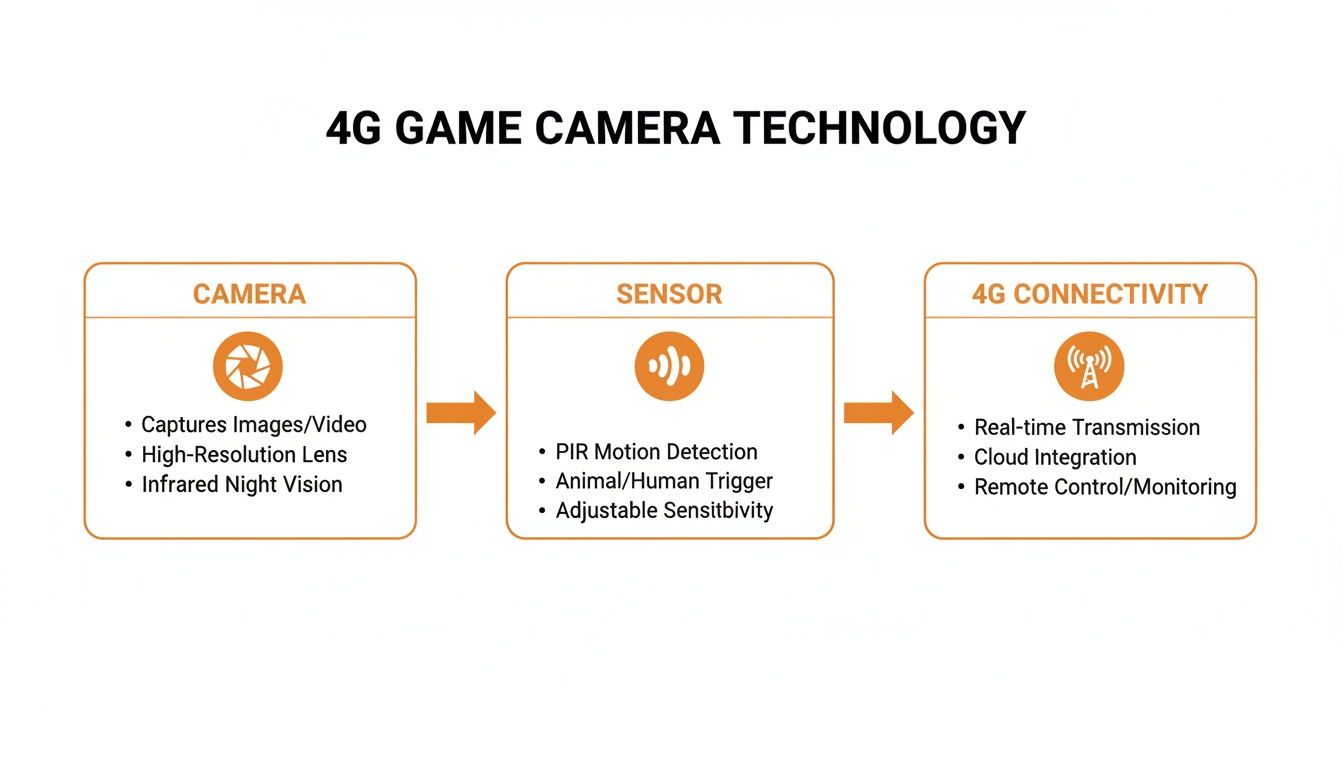
This seamless system turns a passive recording device into an active, on-the-ground informant, giving you eyes on your property from anywhere.
The Power of Instant Intelligence
Getting real-time alerts completely changes your strategic approach. Instead of relying on old data and educated guesses, you know exactly when and where game is moving. This instant feedback loop gives you several huge advantages:
- Immediate Decision-Making: A new buck shows up on camera at noon? You can change your plan for that evening's hunt instead of finding out days later.
- Reduced Human Pressure: The less you have to walk in to check cameras, the less scent, sound, and disturbance you leave behind. This is critical for keeping mature, wary animals on their natural patterns.
- Enhanced Property Security: A 4G game camera is also one of the best security tools you can have. It will instantly notify you of trespassers or any other unauthorized activity on your land.
A 4G connection turns your camera from a simple recorder of history into a live informant. It’s the difference between reading yesterday's newspaper and watching a live news broadcast from your hunting spot.
Let's take a quick look at how the technology stacks up side-by-side. The differences are pretty stark.
Traditional Trail Cams vs 4G Game Cameras
| Feature | Traditional Trail Camera | 4G Game Camera |
|---|---|---|
| Data Retrieval | Manual SD card swap | Instant, over-the-air to your phone |
| Alerts | None | Real-time photo/video notifications |
| Remote Control | No; settings adjusted on-site | Yes; change settings via mobile app |
| Human Intrusion | High; requires frequent visits | Low; check from anywhere |
| Security Use | Poor; delayed evidence | Excellent; immediate alerts |
| Setup | Simple hardware placement | Hardware placement + app setup |
It’s clear that while traditional cameras still have their place, 4G models offer a level of immediate feedback that can completely reshape your season.
Simplified and Integrated Systems
In the early days, setting up a cellular camera was a headache. You had to source your own SIM card, figure out a compatible data plan, and hope it all worked together. Thankfully, those days are over.
Modern systems have made the process incredibly simple. The Magic Eagle EagleCam 5, for example, is an all-in-one solution. The connectivity is built right in and managed through a single, easy-to-use app. This means you can get your camera activated and start receiving photos in minutes without ever talking to a cell phone company. You can learn more about how this works when you monitor cameras remotely.
This reliable, instant communication is powered by some pretty sophisticated network technology. For those interested in the nuts and bolts, understanding how things like 4G/5G mobile proxies work can offer a deeper appreciation for the tech. At the end of the day, this instant feedback loop is what helps you effectively pattern game, manage your property, and protect your investment.
Understanding Modern 4G Game Camera Features
Not all 4G game cameras are built the same. While basic cellular connectivity is the entry ticket, the real value lies in a suite of advanced features that turn a simple camera into a powerful scouting and land management tool. These are the elements that separate a good device from an indispensable one, ensuring you get clear, reliable intelligence from the field every single time.

There’s a reason these cameras are everywhere now. The market for cellular trail cameras hit USD 160 million in 2024 and is expected to climb to USD 280 million by 2033. This boom is fueled by hunters and researchers who rely on them—in fact, 62% of North American hunters now use trail cams to pattern game. You can dig into the numbers yourself in this cellular trail camera market report.
Advanced Connectivity and Signal Strength
A 4G game camera is just an expensive paperweight if it can’t get a signal. In those remote hollows and deep woods where cell service is spotty at best, signal reliability is everything. Your average camera will struggle in these fringe zones, constantly dropping offline and leaving you completely blind.
This is where advanced connectivity tech really earns its keep. Top-tier cameras are built with high-gain antennas designed to pull in even the weakest signals. More importantly, they feature multi-carrier technology, like SignalSync, which lets the camera automatically find and switch to the strongest cell network in the area. This intelligent switching means your photos actually get to you, no matter what. You can learn more about how SignalSync’s advanced signal-switching technology keeps you connected when it counts.
AI Species Recognition and Filtering
We’ve all been there—your phone buzzes with a notification, you get excited, and it’s just another photo of a wind-blown branch or a squirrel raiding your feeder. It's frustrating. This is where Artificial Intelligence (AI) completely changes the game. An advanced 4G game camera uses AI-powered species recognition to actually look at each image and figure out what triggered the shot.
Instead of a generic "motion detected" alert, the system tells you if it spotted a buck, a doe, a turkey, or just another raccoon. This lets you set custom alerts for only the animals you’re after, cutting through the noise and saving your time—and your camera's battery life—for the moments that truly matter.
A camera with AI detection is like having a digital assistant that sorts your mail for you. It filters out all the junk and only hands you the important letters, ensuring you never miss a critical message.
GPS Mapping and Anti-Theft Protection
Leaving hundreds of dollars of equipment strapped to a tree in the middle of nowhere is always a risk. Theft is a real concern. Modern cameras tackle this head-on with security features, and built-in GPS is the most critical of them all. If your camera gets stolen, you can track its exact location right from the mobile app, which massively improves your odds of getting it back.
But GPS is for more than just security; it's a powerful strategic tool. In an app like MAGIC EAGLE’s, the GPS data from each camera populates an interactive map of your property. Suddenly, you can see animal activity across your entire hunting grounds, connecting the dots between sightings from different cameras to build a clear picture of how game moves. It turns your network of individual cameras into one cohesive intelligence system.
Turning Photos Into Strategy with a Smart App
A great 4G game camera is only half the equation. The hardware in the field is your data collector, but a powerful mobile app is what turns all those photos into actual intelligence you can use. Think of it as your command center—the place where you organize, analyze, and transform individual pictures into a clear understanding of what’s happening on your property.
Without a seamless app experience, you're just getting snapshots. With one, you're building a strategy. The modern app isn’t just a gallery for pretty pictures; it’s a central hub for your entire scouting network, letting you manage cameras, tweak settings, and see what's happening from miles away.
From Image Gallery to Intel Hub
The best apps have evolved far beyond just displaying images. They’re now packed with tools designed to help you connect the dots and spot patterns you’d otherwise miss.
- Live-Streaming: This is an absolute game-changer. The on-demand ability to peek in on a food plot or mineral site in real time gives you immediate confirmation of what's there without ever leaving a scent trail.
- Interactive GPS Mapping: Instead of trying to remember which tree you strapped that camera to, you can see all your devices plotted on a satellite map. Tag key locations like scrapes, bedding areas, or buck sightings to create a rich visual log of activity.
- Cloud Storage and History: An organized cloud gallery lets you access years of scouting data from anywhere. This historical archive is invaluable for tracking how deer patterns shift from one season to the next.
This hunger for live, accessible data is fueling huge growth in the market. GSM-enabled cameras, the engine behind 4G game camera systems, are projected to jump from USD 26.02 million in 2026 to USD 45 million by 2035—a powerful CAGR of 20.05%. This isn't just a fad; it reflects a clear demand from hunters for reliable, real-time scouting tools. You can find more insights on this booming market over at Global Market Statistics.
Overlaying Data for Deeper Insights
A truly advanced app adds another layer of context to every single photo. The MAGIC EAGLE app, for instance, can overlay crucial weather data directly onto your images. You’ll see the temperature, barometric pressure, wind direction, and moon phase for the exact moment a photo was snapped.
This isn't just trivia; it's pattern recognition. When you can correlate animal movement with specific conditions, you start predicting future activity with far greater accuracy.
This feature turns your phone into a powerful analytical tool. You can filter your photos to answer critical questions that inform your hunt. Want to see every picture of a mature buck you got when the wind was out of the northwest? Or when the barometer was dropping? The app can show you instantly, helping you decide exactly when and where to be.
Your Field Guide to Camera Setup and Placement
A powerful 4G game camera is only as good as where you put it. All the tech in the world won't help if your setup is sloppy. Getting valuable, actionable intelligence from the field starts with a smart and strategic deployment. This guide will walk you through the essential steps, from getting it running at home to perfect positioning in the woods.

Before you even think about heading out, the real work begins at home. Fully charge your batteries and make sure you have a compatible, clean SD card ready to go. You’ll want to handle the initial activation and network connection where you have a strong, stable signal—your backyard is perfect for this.
Initial Activation and System Check
Getting your camera online for the first time should be painless. The goal here is simple: confirm that the hardware, software, and cellular connection are all talking to each other correctly before you're miles from civilization.
- Power Up Correctly: Start with fresh lithium AA batteries or a fully charged battery pack. Don't skimp here; this is non-negotiable for reliable performance, especially when the temperature drops.
- Activate in the App: Follow the on-screen prompts in the mobile app to link the camera to your account. This usually just means scanning a QR code inside the camera itself.
- Confirm Connection: Power the camera on and give it a minute to find and connect to the 4G network. Wait for a status light to confirm you have a solid, stable signal. This is the green light that tells you the camera is ready to send images.
Think of this as a pre-flight check. Verifying that all systems are a-go at home will save you a world of frustration and wasted trips if something isn't right in the field.
Strategic Placement for Maximum Intel
Once your 4G game camera is live, it’s time to pick the perfect spot. This is where art and science meet. You're balancing animal behavior with the technical needs of the camera, all while trying to capture clear, useful images without spooking game.
Where you set up shop depends entirely on your scouting goals.
- Game Trails: Don't face the trail head-on. Instead, position the camera looking down the trail at a 45-degree angle. This gives you a longer look at the animal as it walks by and cuts down on motion blur.
- Food Plots and Feeders: Mount the camera on a tree overlooking the main entry and exit points. This is how you'll learn which bucks are hitting the food source and at what times.
- Scrapes and Rubs: Get your camera about 10–15 feet away from an active scrape, facing it directly. This is a goldmine for inventorying the bucks in your area during the pre-rut and rut.
- Water Sources: In drier country, creeks and ponds are magnets for wildlife. Set up your camera to cover the most heavily used access points to the water.
For the best results, mount your camera at about chest height (3-5 feet) on a solid tree. Always clear away branches or tall weeds in front of the lens that might blow in the wind and cause false triggers. And a final pro tip: try to face the camera north or south. This keeps the rising or setting sun from blowing out your images with harsh glare.
Troubleshooting Common Connection and Power Issues
Even the toughest 4G game camera will eventually hit a snag out in the woods. When your scouting intel depends on that camera phoning home, knowing how to fix a problem quickly is everything. Most issues come down to one of two things: a weak signal or a battery draining way too fast. Luckily, the fixes are usually pretty simple.
If you’ve stopped getting pictures, the first thing to check is the signal strength in your app. A weak or spotty connection is the usual suspect, often caused by a thick canopy, a deep creek bottom, or just being on the hairy edge of a service area. But don't give up on the spot just yet—small tweaks can make a world of difference.
Solving Weak Signal Problems
A few simple moves can often give your camera the boost it needs to start talking again. Before you write off a location as a dead zone, run through this quick checklist:
- Get It Higher: Moving the camera just a few feet up the tree can be all it takes to clear ground-level clutter and catch a better signal.
- Check the Antenna: Make sure the antenna is screwed on tight and pointed straight up. You also want to avoid letting it press right up against the tree trunk, which can mess with its performance.
- Give It a Turn: It sounds too simple, but sometimes just rotating the camera 90 or 180 degrees on the same tree can help it find a better line of sight to the nearest cell tower.
Managing Battery and Power Drain
Walking up to a dead camera is one of the most frustrating things that can happen, especially when you’ve left it to soak for weeks. More often than not, it’s not a bad battery causing the problem.
Think about it: a camera sending you hundreds of pictures of a wind-blown branch is working overtime. It’s burning through its battery and your data plan for absolutely nothing. Smart management is the key to making it last.
To fix this, hop into your app and turn down the sensitivity of the PIR (motion) sensor. While you're at it, trim back any small branches or tall weeds waving in front of the camera. For a true set-it-and-forget-it solution, hooking your 4G game camera up to a solar panel will give it a constant trickle charge, keeping it running all season long. If you're still running into trouble, having reliable, U.S.-based customer support—like the team at Magic Eagle—is a huge advantage for figuring out those trickier issues fast.
Answering Your Questions About 4G Game Cameras
Jumping into the world of cellular scouting always brings up a few key questions. A 4G game camera is an incredible tool, but knowing the nuts and bolts of how it handles data, connectivity, and security is what really lets you master it. Let’s tackle the most common concerns head-on.
How Much Data Does a 4G Game Camera Use?
This is the big one, and the answer is: it completely depends on your settings and how busy your spot is. The good news is that most modern data plans are built around photo counts, not confusing megabytes. This makes it simple to pick a tier, like 1,000 photos per month.
Of course, if you’re sending high-definition video or using a live-stream feature, your data usage will jump up significantly. A solid system like the EagleCam 5 offers flexible plans, so you can match your package to your actual scouting needs and never overpay for data you aren't using.
Will a 4G Game Camera Work with Poor Cell Service?
How a camera performs in fringe service areas is what truly separates the good from the great. While any cellular device needs some signal to phone home, the best models are engineered specifically for those remote locations where service bars are few and far between.
You’ll want to look for key features like a high-gain antenna designed to pull in the faintest signals. Even better is multi-carrier technology that automatically sniffs out and connects to the strongest network in the area, regardless of the brand. For instance, Magic Eagle's SignalSync is built from the ground up to maximize connectivity in the tough environments we hunt in.
What Happens If Someone Steals My Camera?
Theft is a real worry out in the woods, and any top-tier 4G camera should have built-in security to fight back. Integrated GPS is a non-negotiable feature here, allowing you to track the camera's exact location right from the app.
A camera with GPS tracking and remote alerts turns a potential loss into a recoverable asset. It's the digital equivalent of a lock and chain, actively protecting your investment.
Other smart security features to look for are geofence alerts that ping you the second the camera moves from its spot and the ability to remotely snap a photo of the thief. These tools make your camera a much less appealing target and dramatically increase your chances of getting it back.
Ready to gain a real-time advantage in the field? The Magic Eagle EagleCam 5 delivers the advanced connectivity, AI intelligence, and anti-theft security you need to scout smarter. Explore the EagleCam 5 and transform your strategy today.