

You'll often see cellular trail cameras advertised for what seems like a steal—sometimes as low as $70 to $150. But before you jump on a deal, it's crucial to understand that the price tag is just the starting line.
The real cost of owning a cellular trail camera goes far beyond what you pay at checkout. Think of it like buying a cheap printer; the machine itself might be a bargain, but the long-term cost of ink cartridges is where they get you. It’s the same story with these cameras.
What an Affordable Cellular Trail Camera Really Costs
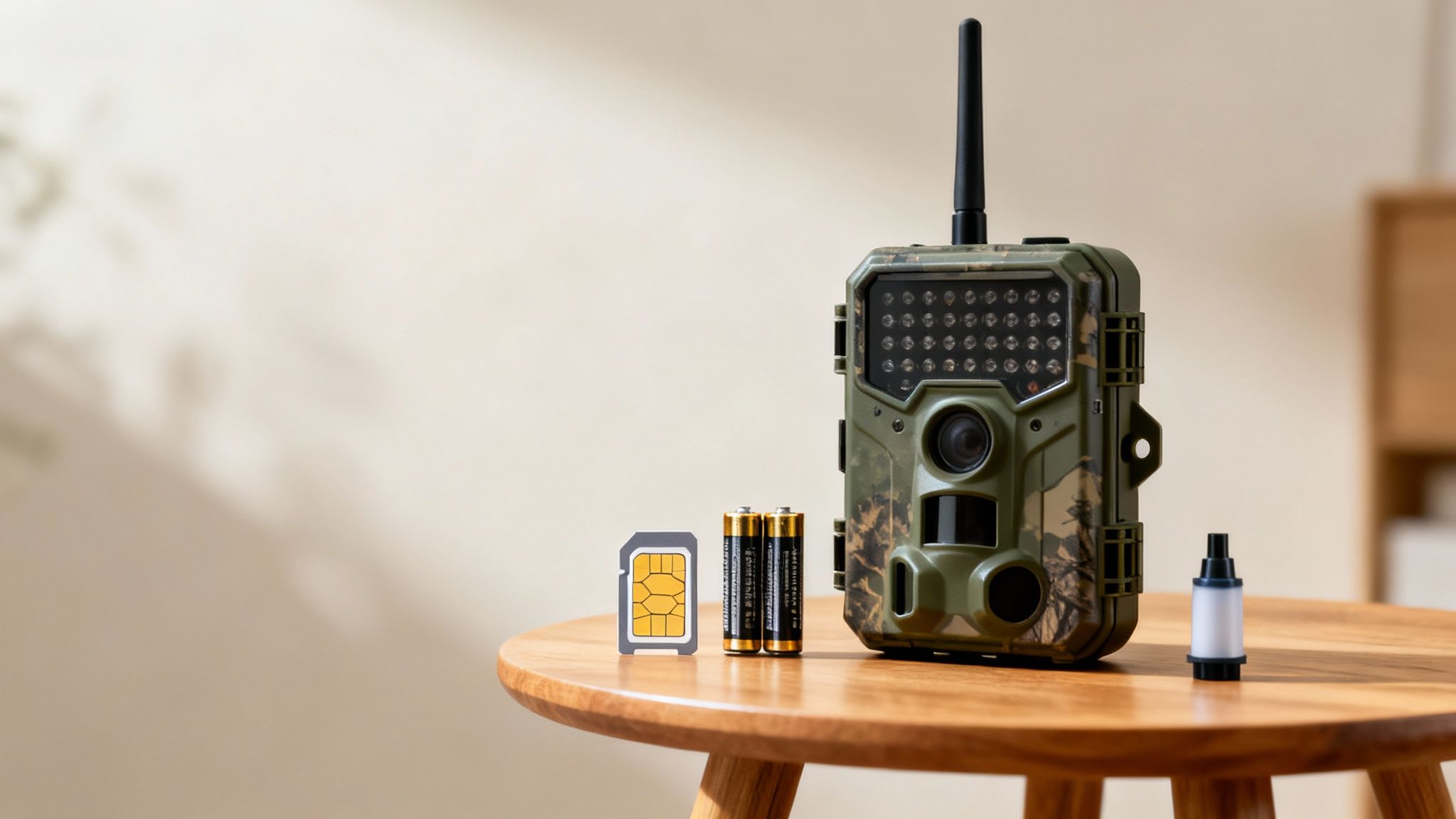
Defining "affordable" is tricky if you're only looking at the upfront hardware cost. A smarter way to look at it is the Total Cost of Ownership (TCO), which paints the full picture by including every expense you'll encounter over the life of the camera.
The sticker price is just the down payment. It’s the recurring costs that truly decide whether that "affordable" camera was a good deal or a money pit.
Breaking Down the True Expenses
To get a realistic financial picture, you have to factor in the things that will keep costing you money month after month. These hidden expenses can quickly turn a budget-friendly camera into a surprisingly pricey piece of gear.
Here are the key ongoing costs to watch out for:
- Cellular Data Plans: This is the "ink" for your camera. Plans can range from a few bucks a month for a handful of photos to much more for unlimited options. A cheap camera locked into an expensive, rigid data plan is no bargain at all.
- Battery Consumption: A power-hogging camera will chew through batteries, which gets expensive fast, especially in cold weather. Look for models with smart power management or solar panel compatibility to cut down on this long-term cost.
- Subscription or Cloud Fees: Some brands tack on extra fees for premium features like AI species recognition, video cloud storage, or even just accessing older photos. These can inflate the total cost over time.
A truly affordable cellular trail camera balances a reasonable upfront price with low, predictable ongoing costs. The goal is to get reliable performance season after season without any nasty financial surprises.
The Value of a Smart Investment
Focusing only on the lowest price tag is a classic mistake. That ultra-cheap camera might save you $40 today, but it could cost you hundreds in batteries and data overages over the next couple of years. And that's not even counting the hidden cost of its poor performance—missed shots, a weak signal, or a frustrating app all add up to lost time and missed opportunities.
On the other hand, putting a little more down upfront for a value-focused model often pays for itself. These cameras are built for efficiency, with optimized battery life and fair data plans. Thanks to recent tech improvements, high-end features like multi-carrier connectivity and AI filtering are now available in this price range. For a deeper dive, check out guides on finding the cheapest cellular trail camera plan to see just how much data costs can impact the overall value.
Ultimately, understanding the full financial picture helps you pick a camera that delivers consistent results without draining your wallet. It proves that the smartest purchase isn't always the cheapest one.
Decoding the Must-Have Features for Maximum Value

When you're looking at an affordable cellular trail camera, the spec sheet can feel like a foreign language. It's easy to get lost in a sea of megapixels and technical jargon. The trick is to ignore the noise and focus on the features that give you tangible, real-world advantages without just inflating the price tag.
Think of it like putting together a toolkit. You don't need every shiny, specialized tool ever made; you just need the right ones for the job. This guide will help you spot those essential tools, so every dollar you spend translates directly into better scouting intel and a camera you can actually rely on in the field.
Cellular Connectivity: The Lifeline of Your Camera
The single most important feature is, without a doubt, its ability to connect to a cellular network. If your camera can’t send you photos, it’s really just a fancy, standard trail camera. But not all connectivity is created equal, especially when you get into those remote areas where service is notoriously spotty.
A critical feature to demand is a multi-carrier SIM card. These SIMs aren't locked into a single provider like AT&T or Verizon. Instead, they automatically scan for and connect to whatever carrier has the strongest signal in that exact location. This is an absolute game-changer for anyone placing cameras in deep woods, river bottoms, or ravines where one network might be strong and another is non-existent.
A camera with multi-carrier support gives you maximum placement flexibility and total peace of mind. You don't have to guess which provider works best—the camera figures it out for you, ensuring a stable connection.
Battery Life and Solar Power
A cellular camera is only as good as its power source. Nobody wants to constantly hike into their best spots just to swap out batteries. It's not only a pain, but it also leaves a trail of human scent that can spook the very game you're trying to pattern. That's why efficient power management is completely non-negotiable.
Look for models built for low power consumption. Beyond that, compatibility with an external solar panel is a massive value-add. A good solar panel can stretch a camera's field life for months, or even indefinitely, turning a recurring battery expense into a smart, one-time investment. This is where an "affordable" camera really starts saving you money and time in the long run.
Image Quality: Beyond the Megapixel Myth
It's tempting to get drawn in by cameras boasting huge megapixel counts, but this is often just a marketing gimmick. A high megapixel number paired with a low-quality lens and sensor just gives you a bigger blurry photo. What you actually need for scouting is image clarity.
Focus on these practical image quality metrics instead:
- Lens and Sensor Quality: Look for brands that mention using quality components, like a Sony CMOS sensor. These are known for delivering sharper, clearer images both day and night—which is crucial for identifying a specific buck from a blurry blob.
- Nighttime Illumination: Does the camera use a no-glow or low-glow IR flash? No-glow flash is completely invisible to animal and human eyes, making it perfect for wary bucks or security surveillance. Low-glow offers a bit more range but emits a faint red glow that some animals might notice.
- Trigger Speed: This is how fast the camera snaps a picture after detecting motion. A trigger speed of 0.5 seconds or less is essential to capture a fast-moving deer or trespasser, rather than just their back end as they leave the frame.
Durability and Smart Security Features
Your camera is going to live outdoors, facing everything from freezing rain and blistering heat to curious bears. A tough, weatherproof housing is a must. Look for an IP rating (like IP66), which is an official certification of its resistance to dust and water.
Modern security features also add a ton of value. A simple lockbox helps, but today's advanced tools offer much better protection for your investment.
- Built-in GPS: This lets you track the camera's location right from your phone if it gets stolen.
- Geofence Alerts: The app can send you an instant notification if the camera is moved outside a predefined area you set on a map.
- Power-Off Protection: Some of the smarter cameras can still be tracked even after a thief powers them down.
The Power of a User-Friendly App and AI
The camera's mobile app is your command center. A clunky, confusing app can completely ruin the experience, no matter how good the camera hardware is. A great app should offer intuitive controls, simple photo management, and useful tools like interactive maps and weather data overlays.
One of the most valuable app features to emerge recently is AI-powered species recognition. Instead of getting a notification for every swaying branch or curious squirrel, the app can filter your alerts to only show you deer, turkey, or people. This saves you an incredible amount of time scrolling through junk photos and, just as importantly, reduces your data plan usage.
This feature became more common thanks to key industry milestones. Widespread 4G LTE standardization, for instance, slashed connectivity costs and enabled smarter features on budget-friendly models, fueling a market expected to approach USD 1 billion by 2033. To see how these trends are shaping the industry, you can check out the full trail camera market analysis.
Finding the Sweet Spot Between Price and Performance
Navigating the world of affordable cellular trail cameras often feels like a balancing act. Every dollar saved on the sticker price seems to come with a compromise in performance, but which trade-offs can you live with, and which ones will just leave you with a useless piece of plastic strapped to a tree?
It’s tempting to grab the cheapest camera on the shelf, often found in that sub-$100 range. But those rock-bottom prices are usually achieved by cutting corners on the components that actually matter in the field. It’s not just about slightly lower-resolution images; the compromises often gut the core functions that make a cellular camera an effective tool in the first place.
The Real-World Cost of Common Compromises
When a manufacturer needs to shave costs, they often start with the internal hardware and the software that runs it. These choices might look great on a spec sheet, but they lead to massive frustration when you're miles from civilization.
Here are the common trade-offs in ultra-budget models that really sting:
- Slow Trigger Speeds: A camera with a trigger speed slower than 0.5 seconds is a recipe for getting ghosted. Imagine waiting weeks for a picture, only to get the tail end of a trophy buck as it walks right out of the frame. This one spec can make a camera nearly useless for patterning fast-moving animals.
- Poorly Designed Apps: The app is your command center. Cheap models often come with clunky, bug-ridden apps that are a nightmare to navigate. This translates directly into wasted time, missed settings, and a frustrating experience every single time you open it.
- Weak Connectivity: To save a few bucks, budget cameras often use inferior antennas or lack support for multiple carriers. This severely limits where you can place them, forcing you to pick spots with five bars of service instead of the best game trails.
A cheap camera that fails to deliver a clear photo of your target animal at the right moment isn't a bargain. It's a wasted investment of time, money, and effort. The true value is in reliability, not just a low initial cost.
The 'Value-Premium' Strategy
This is where a smarter category of affordable cellular trail camera comes into play. Instead of slashing costs everywhere, these "value-premium" models make strategic investments in the features that have the biggest impact on your success. They might cost a little more upfront, but they eliminate the most painful compromises.
Think of it this way: a budget camera might boast a 20-megapixel sensor but pair it with a slow trigger. A value-premium camera, on the other hand, might use a high-quality 16-megapixel sensor paired with a lightning-fast trigger. The second camera will consistently deliver more useful intel, even if the file size is smaller. This is where smart money is spent.
For a broader perspective on features valued by the outdoor community, it can be helpful to check out a general holiday gift guide for outdoor lovers, which often highlights reliable and practical gear.
Affordable Cellular Trail Camera Feature Trade-Offs
This table breaks down the common differences you'll see in the field. It's not just about megapixels; it's about the entire user experience.
| Feature | Ultra-Budget Camera (Under $100) | Value-Premium Camera (Like EagleCam 5) |
|---|---|---|
| Connectivity | Often single-carrier, weak antenna | Multi-carrier auto-switching, stronger antenna |
| App Experience | Buggy, slow, limited features | Smooth, reliable, advanced controls & AI |
| Trigger Speed | Typically >0.5s; misses fast movement | Often <0.3s; captures the action |
| Detection Range | Shorter range, more false triggers | Longer, more accurate detection zones |
| AI Filtering | None or very basic | Advanced species recognition (deer, turkey, etc.) |
| Anti-Theft | Usually none | GPS tracking, geofencing, remote lock |
| Battery Life | Inefficient; drains batteries quickly | Optimized for longer field deployment |
These differences highlight a key principle: a slightly higher initial investment often buys you out of future frustration and delivers far more reliable intelligence.
Where Smart Investments Pay Off
Value-premium cameras like the EagleCam 5 focus investment in high-impact areas that directly lead to better scouting and security.
- Reliable Connectivity: They prioritize multi-carrier SIMs and quality antennas to make sure the camera stays connected in remote spots. That means fewer failed transmissions and more consistent updates.
- AI-Driven Alerts: By building sophisticated AI species recognition into the app, these cameras save you time and data. You won't waste your monthly photo limit on squirrels and swaying branches.
- Robust Security: Features like GPS tracking and geofencing are included because a stolen camera is the ultimate bad investment. These tools offer real protection for your gear.
This completely reframes the decision. You're no longer just hunting for the cheapest piece of hardware. Instead, you're making a strategic choice to invest in a reliable tool that delivers better intel, cuts down on frustration, and ultimately boosts your chances of success. To learn more about what separates a truly effective camera from a cheap one, our guide on what to look for in good cheap trail cameras offers a deeper analysis. The goal is to find that perfect sweet spot where price and performance meet to create undeniable value.
A Practical Checklist for Choosing Your Next Camera
Alright, let's move from theory to action. This isn't just a list of specs—it's a practical checklist to help you cut through the marketing noise and figure out which affordable cellular trail camera is right for you. Think of it as your guide to separating a reliable field tool from a frustrating piece of plastic.
Before you pull the trigger on a purchase, ask these questions. They'll help you focus on what actually delivers results out in the woods.
This diagram pretty much sums up the balancing act you'll be doing.
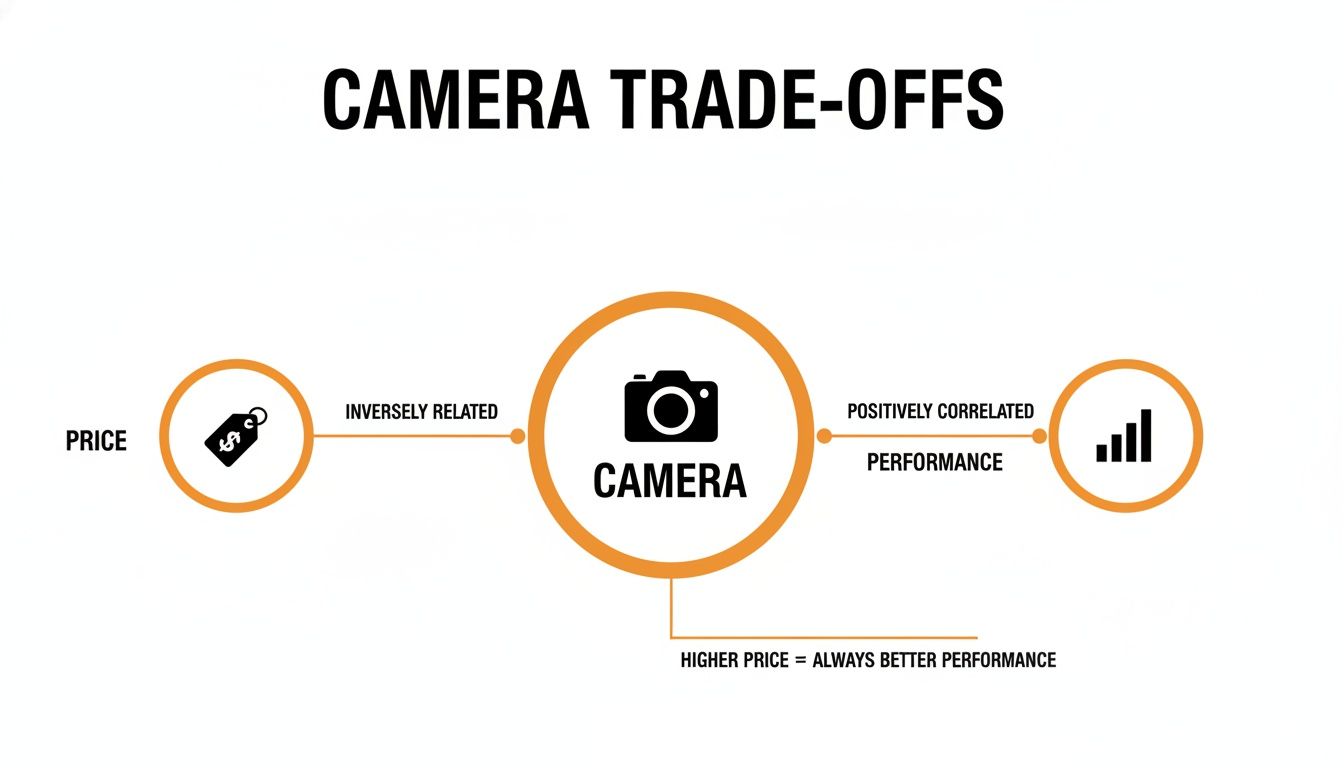
As you can see, saving a few bucks often means giving up some performance. The trick is finding that sweet spot where you get the features you need without paying for stuff you don't.
Connectivity and Network Reliability
Let's be blunt: if your camera can't send you pictures, it's just an expensive box sitting on a tree. A weak or spotty signal makes a cellular camera completely pointless. Don't just take the manufacturer's word for it; you need to dig into the specifics.
- Does it have a multi-carrier SIM? This is a huge one. A camera locked into a single network like AT&T or Verizon is a gamble. For anyone scouting remote areas, a multi-carrier SIM that automatically finds the strongest signal isn't a luxury—it's essential.
- How good is the antenna? Look for models that specifically mention a high-gain or external antenna. This can be the difference between getting a picture and getting nothing in those fringe service zones.
The App Experience and Usability
The mobile app is your command center. It's how you'll interact with your camera every single day, and a clunky, glitchy app can make even the best hardware feel useless.
Your camera's app should be an intuitive tool that makes your scouting more effective, not a constant source of frustration. A great app does more than just show you pictures—it helps you pattern animal behavior.
So, what should you look for beyond a basic photo gallery?
- Advanced Mapping Tools: Can you drop pins on an interactive map to mark your cameras, tree stands, feeders, and scrapes?
- Weather and Environmental Data: Does the app pull in weather forecasts, wind direction, and barometric pressure? Seeing this data overlaid with your pictures is a game-changer for figuring out why and when animals are moving.
- AI Species Filtering: Let's face it, nobody wants to scroll through hundreds of pictures of squirrels. An app that uses AI to intelligently sort photos by species saves you an incredible amount of time.
Security and Anti-Theft Protection
A trail camera is an investment you leave unattended in the wild, which unfortunately makes it a prime target for thieves. A simple lockbox is a decent start, but modern tech offers much better ways to protect your gear. And while you're thinking about securing your camera, it's a good idea to review guides on essential camping gear for beginners to make sure all your outdoor equipment is covered.
Here are the security questions you need to ask:
- Does it have built-in GPS tracking? This is hands-down the most effective feature for getting a stolen camera back.
- Can you lock it down remotely? The ability to disable the camera from your phone if it gets stolen makes it a worthless brick to a thief.
- Does it offer geofencing? Getting an instant alert the moment your camera moves outside a designated area could be the difference between losing your gear for good and catching someone in the act.
Customer Support and Warranty
Last but not least, what happens when something inevitably goes wrong? A camera from a company with non-existent support can quickly become a very expensive paperweight.
- Is customer support based in the U.S.? This isn't about patriotism; it's about practicality. U.S.-based support often means you get help faster from people who understand the product inside and out.
- What does the warranty actually cover? Look for a warranty that's written in plain English and clearly protects you from defects. A solid warranty shows the company stands behind its product.
Setup and Placement Tips for Peak Performance
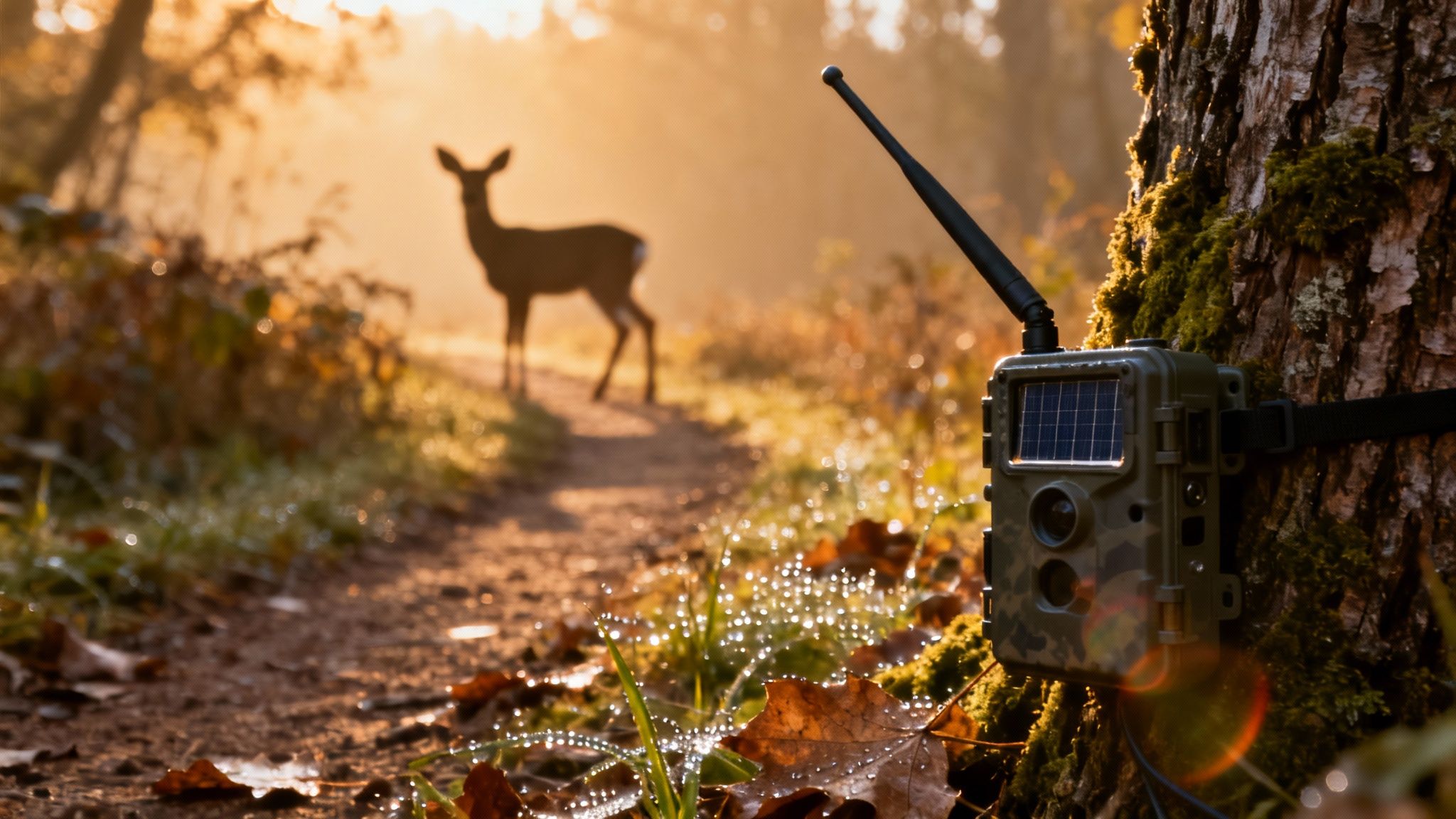
Owning a great cellular trail camera is only half the battle. How you deploy it is what turns a piece of hardware into a powerful intelligence-gathering tool. Even the best camera on the market will deliver junk photos if it’s pointed in the wrong direction or can’t get a signal.
Think of setting your camera like a director staging a scene. You need the right angle, the perfect lighting, and an unobstructed view of the action. This means considering everything from cellular reception to the sun’s daily path across the sky.
Maximizing Your Cellular Signal
A cellular camera without a signal is just an expensive standard trail cam. Before you even think about strapping it to a tree, your first move should always be checking the cell strength in your chosen spot. Most modern camera apps have a built-in signal meter you can check right on your phone.
To lock in a strong, reliable connection for consistent photo delivery, try these field-tested tricks:
- Give the Antenna a Clear View: Position the camera so its antenna has the clearest possible line of sight to the sky. Thick canopies, deep ravines, or the wrong side of a steep ridge can kill your signal.
- Get a Little Higher: Sometimes, just moving the camera a few feet up a tree can make a world of difference in signal strength. It’s a simple trick that often works wonders in fringe areas.
- Test Before You Walk Away: Once it’s set up, manually trigger the camera and wait for the confirmation that the photo was sent to your app. Don't skip this step. It'll save you from a frustrating return trip.
Positioning for the Perfect Shot
Once you’ve got a solid signal, the next mission is avoiding the dreaded "false trigger"—those hundreds of photos of swaying branches or sun glares that eat up your battery and your data plan. Smart placement is your best defense.
The goal is to get clean, actionable images of wildlife, not the wind. Think like a photographer and take control of what’s in the frame.
Your objective is to make the animal the most interesting thing in the picture. When you minimize environmental distractions like moving grass and direct sunlight, you’re telling the camera’s sensor to only wake up when something important happens.
Here are the best ways to eliminate those annoying false triggers:
- Face North or South: Whenever you can, point your camera north or south. This keeps the rising and setting sun from blasting directly into the lens, which causes glare and heat-based false triggers.
- Clear the Foreground: Take a minute to snip away any small branches, tall weeds, or ferns right in front of the camera. Wind-blown vegetation is the #1 cause of false triggers, period.
- Set a 45-Degree Angle to Trails: Don't point your camera straight down a game trail. Instead, set it at a 45-degree angle to the path. This gives the sensor more time to detect the animal and gives you a much better broadside shot instead of just a picture of a head or a tail.
Getting these details right can feel a little overwhelming if you're just starting out. For a full A-to-Z walkthrough, our guide on how to set up a trail camera breaks down everything from unboxing to your first transmitted photo. Mastering these simple placement tips will make a huge difference in your camera’s performance and the value you get from your investment.
Why EagleCam Delivers Unmatched Affordable Performance
When you’re looking for an affordable cellular trail camera, the goal isn't just to find the cheapest piece of hardware. The real win is investing in a reliable tool that gives you consistent, usable intel without the hidden costs and headaches that come with rock-bottom models. This is exactly where the EagleCam 5 carves out its niche—not as the lowest-priced camera, but as the smartest value for anyone serious about scouting.
The whole philosophy behind EagleCam is to deliver professional-grade features at a price that actually makes sense for the long haul. It deliberately sidesteps the compromises that make so many cheap cameras worthless in the field. Instead of a single-carrier SIM card that ties your hands, it uses SignalSync technology. This is an intelligent multi-carrier system that automatically finds and connects to the strongest network, making sure your camera stays online even in those tough, fringe-service spots.
A Cohesive Ecosystem for Serious Scouting
A lot of budget cameras fall flat when it comes to the app—it's often a clunky, neglected afterthought. The MAGIC EAGLE app, on the other hand, is a core part of the camera's value. It’s not just a photo gallery; it’s a full-blown command center built for efficient scouting.
Key app features that create real-world value include:
- Interactive Mapping: Forget simple GPS coordinates. The app lets you drop pins for your cameras, feeders, tree stands, and game sightings on a detailed map. Over time, you build a powerful visual database of animal movement.
- AI-Powered Filtering: The intelligent species recognition saves you a ton of time and data. It filters out non-target animals and waving branches, so you only get alerts for what you actually care about.
- Real-Time Data: On-camera sensors feed you live temperature and humidity readings, while cloud-based weather overlays help you connect animal activity with changing conditions.
Built for the Realities of the Field
Leaving a camera in the woods is an investment at risk. The EagleCam 5 tackles this problem head-on with a solid anti-theft suite that offers genuine peace of mind. A basic lockbox is a start, but EagleCam’s GPS tracking, geofence alerts, and remote lockdown capabilities give you an active defense against thieves.
The true measure of an affordable cellular trail camera is its long-term reliability. A camera that works flawlessly season after season, backed by accessible support, delivers far more value than a cheap alternative that fails when you need it most.
This focus on dependability carries over to its construction and support. The camera is built to handle rough weather, and its performance is backed by U.S.-based customer support—so you can get help from real people who know the product inside and out. This mix of smart tech, a powerful app, and rugged reliability is becoming more common. The market has exploded as technology improves, with cellular model adoption among hunters jumping from 15% to 35% in recent years because of the huge advantage of instant photo delivery. You can discover more insights about the cellular trail camera market and its growth.
In the end, the EagleCam 5 proves that "affordable" and "high-performance" can go together. It delivers the core features you need for serious results—reliable connectivity, a smart app, and robust security—making it the smarter, more dependable choice for anyone who relies on their gear to get the job done.
Frequently Asked Questions
Even with all the details, a few questions always pop up. Let's tackle some of the most common ones you might have before pulling the trigger on an affordable cellular trail camera.
What Are Typical Data Plan Costs?
Data plans are a big part of the long-term cost, so it's a critical question. For most budget-friendly cellular cams, expect to see starter plans around $5-$10 per month, which will get you a limited batch of photos. If you need thousands of pictures or want to transmit video clips, you'll be looking at plans in the $15 to $25 monthly range.
The real value, though, is in flexibility. You want to find a provider that doesn't lock you into a rigid annual contract. Pay-as-you-go options or plans that let you pause service during the off-season are ideal—this way, you're not burning money on data when the camera is sitting in your garage.
The key is to match the plan to your specific spot. A quiet food plot probably doesn't need an unlimited plan, but a camera watching a busy gate or property entrance just might. Smart AI species filtering is a game-changer here, as it can save a ton of data by stopping the camera from sending you every picture of a squirrel or raccoon.
How Does Cold Weather Affect Battery Life?
Cold weather is the absolute enemy of batteries, and trail cameras are no exception. Once the temperature drops below freezing, you can see battery performance tank by as much as 50%. An affordable camera that isn't built for power efficiency will chew through batteries even faster when the winter hits.
To fight back, your first step should be using high-quality lithium AA batteries. They're designed specifically to handle cold conditions way better than standard alkalines. For a true set-it-and-forget-it setup, pairing your camera with an external solar panel and a rechargeable lithium battery pack is the ultimate solution. It can provide consistent power all winter, pretty much eliminating the issue and saving you a pile of money on disposable batteries over time.
Can I Use One for Home Security?
Yes, absolutely. A good cellular trail camera can be a fantastic and surprisingly discreet security tool. Its camouflage is designed to blend into natural surroundings, making it hard to spot. And since it operates on its own cellular connection, it keeps working even if your home Wi-Fi network goes down.
Look for features like a no-glow IR flash, which makes it completely invisible to the human eye at night. When you combine that with instant photo alerts sent to your phone and built-in GPS tracking, you get a powerful, self-sufficient security guard for your driveway, shed, or those remote corners of your property.
Ready to see how professional-grade features can fit an affordable budget? Discover the Magic Eagle EagleCam 5 and get the reliable scouting tool you need. Learn more at MagicEagle.com.