

The right power source is the unsung hero of a successful trail camera setup.Your camera is only as good as the batteries inside it, and picking the best battery for a camera isn't a simple, one-size-fits-all decision. It all comes down to your specific camera, the climate you're in, and how long you need it to run without a trip back to the woods.
Get it right, and every feature—from instant cellular uploads to smart AI detection—works exactly as it should.
Choosing Your Trail Camera Power Source
Think of your trail camera like a high-performance engine. You wouldn't put cheap, low-octane fuel in a race car, and the same logic applies here. The wrong battery choice leads to sluggish performance, unexpected shutdowns, and wasted trips to your spot.
A basic, non-cellular camera might happily click away for months on a standard set of batteries. But a modern 4G powerhouse like the EagleCam 5, which is constantly working to send high-resolution images, needs a much more serious power strategy to keep up.
This guide will walk you through the main contenders—disposable Alkaline and Lithium AAs, rechargeable Li-ion packs, and even external solar options—so you can match the power source to your specific gear and goals.
Matching a Battery to Your Needs
The first step is understanding the trade-offs between cost, performance, and longevity. If you're just setting up a camera for a short weekend hunt in mild weather, a budget-friendly option might do the trick.
But for a remote, season-long deployment, especially where temperatures will dip below freezing, investing in a top-tier battery isn't just a good idea—it's essential.
Before you buy, ask yourself:
- What kind of camera am I running? Does it have power-hungry features like cellular connectivity, video recording, or GPS?
- What's the weather like? Will the camera face brutal, sub-zero temperatures that can kill weaker batteries?
- How long will it be out there? Are you setting it for a few days or for the entire season?
This flowchart breaks down the decision-making process based on your budget, performance needs, and whether you're dealing with the cold.
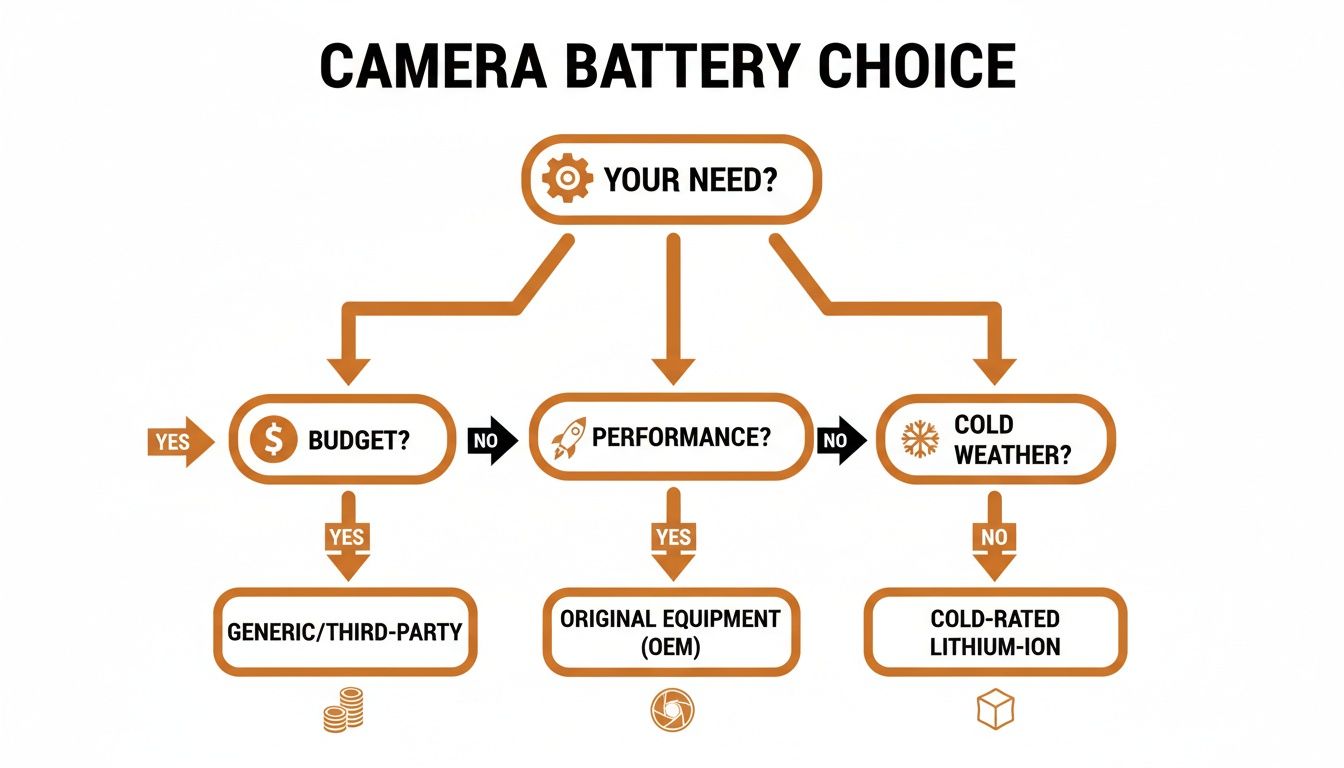
As you can see, while your budget is a natural starting point, performance demands—especially in cold weather—often push the decision toward more reliable and durable lithium-based solutions.
To make things even clearer, here’s a quick breakdown of the most common battery types.
Quick Comparison of Trail Camera Battery Types
| Battery Type | Best For | Pros | Cons |
|---|---|---|---|
| Alkaline AA | Short-term use in mild weather; budget-conscious setups. | Inexpensive; widely available. | Poor cold weather performance; prone to leaking; shorter lifespan. |
| Lithium AA | All-season use, especially in cold climates; high-trigger cams. | Excellent in extreme cold; 2-3x longer life than alkaline; lightweight. | Higher upfront cost. |
| Rechargeable Li-ion | High-use cellular cameras; long-term, remote deployments. | Cost-effective over time; consistent power output; eco-friendly. | Highest initial investment; requires recharging; performance can degrade over years. |
This table shows there’s a clear winner for almost every scenario. For serious scouting, especially with a cellular camera, lithium batteries are the gold standard.
The Foundation of a Reliable Setup
At the end of the day, your power source is the foundation of your entire trail camera strategy. It’s every bit as important as where you place the camera and how you configure its settings.
If you're just getting started, pairing the right power with the right deployment tactics is key. To learn more, check out our guide on how to set up a trail camera for the best results. Nail both, and you'll never miss that critical moment you’ve been waiting for.
Understanding Battery Ratings for Better Performance
Wading through battery specifications can feel like trying to read a foreign language. All those numbers and acronyms plastered on the packaging are supposed to be helpful, but what do they actually mean for your trail camera out in the woods?
The good news is you only need to understand two key ratings to predict how a battery will really perform: mAh (milliampere-hours) and Voltage.
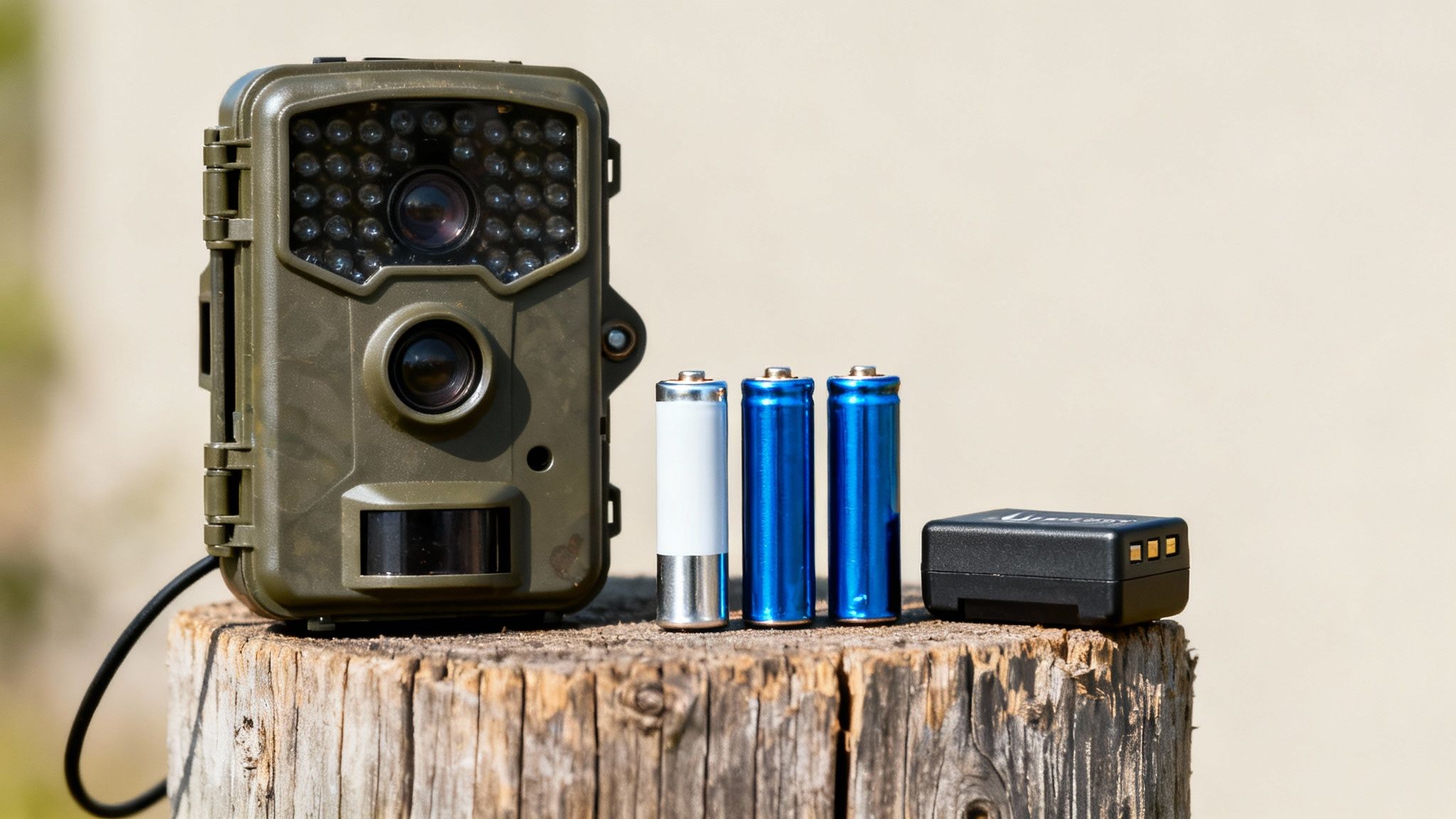
Think of these ratings as the vital stats for your power source. It's like knowing a truck's horsepower and fuel tank size—one tells you how much it can haul, and the other tells you how far it can go. These numbers reveal a battery's true potential and make the difference between a camera that lasts all season and one that quits on you unexpectedly.
What Is mAh Capacity
The milliampere-hour (mAh) rating is the single most important number for guessing your camera's runtime. The easiest way to think about it is as the size of the battery's fuel tank. A bigger mAh number means the battery holds more juice and can power your camera for a longer time.
For example, a standard alkaline AA battery might have a capacity around 2,000 mAh. A high-performance lithium AA, on the other hand, can pack 3,500 mAh or more. That's a huge difference, and it’s why lithium batteries often last two to three times longer in the same camera. For a power-hungry cellular camera sending photos all day, that high mAh capacity is a must-have.
This need for better energy storage is why the digital camera lithium-ion battery market is booming. Valued at $1.5 billion in 2025, it's projected to grow at a CAGR of 7% through 2033. This growth is driven by devices like advanced trail cameras, where features like AI species recognition demand reliable standby power for 30-60 days or more.
Why Voltage Stability Matters
If mAh is the fuel tank, then voltage is the fuel pressure. It’s the force pushing the electrical current from the battery into your camera. Most AA batteries start their life around 1.5 volts, but the real story is how they maintain that voltage as they drain.
This is where you see the stark difference between battery types.
Key Takeaway: A battery's ability to maintain a stable voltage is just as important as its initial capacity. A sudden voltage drop can cause a camera to shut down prematurely, even if the battery still has energy left in its "tank."
Alkaline batteries are notorious for their steep voltage drop. As they lose power, their voltage steadily declines, which can cause all sorts of weird camera behavior. You might get missed triggers, corrupted photos, or a camera that flashes a low battery warning and then dies almost immediately.
In contrast, lithium batteries (both disposable and rechargeable Li-ion) provide a remarkably flat and consistent voltage output. They deliver steady power right up until they're nearly empty, ensuring your camera's sensitive electronics work reliably from the first picture to the last. This consistent "pressure" is critical for top-tier performance.
Applying This Knowledge in the Field
So, what do you do with this info? When you’re picking out batteries, always prioritize a high mAh rating for a long life and a lithium chemistry for stable voltage.
- For High-Trigger Setups: If your camera is watching a busy game trail, the high mAh of lithium batteries means you won’t be swapping them out every few weeks.
- For Cellular Cameras: The constant power draw from sending photos requires the steady, reliable voltage that only lithium can provide.
- For Cold Weather: Lithium's consistent voltage is far less affected by cold, preventing the sudden power failures that plague alkaline batteries in winter.
Understanding these fundamentals lets you look at any battery for a camera and know exactly what to expect. For those who want to geek out on the technical side, this article on advanced battery and charging technologies offers a deeper dive into the science behind reliable power.
Comparing the Main Trail Camera Battery Options
Choosing the right battery for your trail camera is a lot like picking the right tires for a truck. You wouldn't put highway tires on a rig you're taking deep into muddy, off-road country. In the same way, the power source you pick has to match your camera's demands and the environment it lives in—especially for a high-performance cellular model.
The three main players in the trail camera world are alkaline AAs, lithium AAs, and rechargeable lithium-ion (Li-ion) battery packs. Each has its place, and understanding their pros and cons is the key to getting uninterrupted scouting footage. Let's break down which one is right for you.
Alkaline AA: The Budget-Friendly Starter
Alkaline AA batteries are everywhere. You can grab a pack at any grocery store, and their low upfront cost makes them tempting for casual users or anyone on a tight budget. For a quick, short-term deployment in mild weather, they’ll get the job done.
But think of them as fair-weather friends. Their performance tanks as soon as the temperature drops, and their power delivery is notoriously inconsistent. As they drain, their voltage drops, which can cause missed triggers, corrupted files, and a camera that dies long before the battery is actually empty. For any serious trail camera user, relying on alkalines is a gamble.
Lithium AA: The All-Weather Workhorse
If alkalines are the basic sedan of the battery world, disposable lithium AAs are the rugged, all-terrain SUV. They are the clear winners for anyone needing reliable, long-term power, especially in brutal conditions. A single set of lithium AAs can easily last two to three times longer than their alkaline cousins.
This impressive lifespan comes from their superior chemistry, which gives them a few critical advantages:
- Exceptional Cold-Weather Performance: They work perfectly in sub-zero temperatures that would kill an alkaline battery instantly.
- Stable Voltage Output: They provide consistent power right up until they're nearly drained, which keeps your camera’s sensitive electronics running flawlessly.
- Lightweight Design: They weigh a lot less than alkalines, a small but welcome perk when you're hiking gear into a remote spot.
While they cost more upfront, their longevity and rock-solid reliability make them a much smarter investment in the long run. They are the go-to battery for camera setups in any demanding environment.
Rechargeable Li-ion Packs: The Premium Power Solution
For the most demanding jobs, like running a cellular camera in a high-traffic area, a dedicated rechargeable Li-ion battery pack is the ultimate power source. Think of these as custom-built engines designed specifically for high performance. They give you the best of both worlds: the power density of lithium chemistry plus the long-term cost savings of being reusable.
Pro Tip: A rechargeable Li-ion pack is an investment that pays for itself. The initial cost is higher, but after just a few recharges, it becomes cheaper than constantly buying disposable lithium AAs for a power-hungry cellular camera.
The industry trend is clearly shifting toward rechargeable solutions. In fact, lithium-ion batteries are projected to dominate the market through 2029, mostly because their high energy density packs more power into smaller, lighter designs. This is a huge deal for modern, compact cameras and a key reason they’re becoming so popular. You can explore more about these market trends to see how the technology is evolving.
Performance Breakdown: Alkaline vs. Lithium vs. Li-ion Pack
To make the choice even clearer, here’s a head-to-head comparison of how these batteries stack up in the field. This table cuts through the noise and shows you exactly what you get with each option.
| Feature | Alkaline AA | Lithium AA | Rechargeable Li-ion Pack |
|---|---|---|---|
| Upfront Cost | Lowest | Medium | Highest |
| Long-Term Cost | High (due to replacements) | Medium | Lowest |
| Cold Performance | Poor | Excellent | Very Good |
| Runtime | Short | Long | Very Long (per charge) |
| Voltage Stability | Poor (steep decline) | Excellent (flat curve) | Excellent (flat curve) |
| Best For | Casual, short-term use in warm weather | All-season use, remote locations | High-use cellular cameras, maximum reliability |
When it's all said and done, alkalines have their place for quick setups in your backyard, but any serious user is going to benefit from an upgrade. For season-long reliability, especially when it gets cold, lithium AAs should be your minimum standard. But for a high-performance cellular camera you depend on for real-time intel, a dedicated rechargeable Li-ion pack is the smartest and most dependable choice you can make.
How Cold Weather Impacts Your Camera Batteries
Few things are more crushing than hiking out to a remote camera spot in the dead of winter, only to find it’s gone dark. More often than not, the camera isn't the problem. The real culprit is the set of batteries inside it, which have given up the ghost in the freezing temperatures.
If you’re not prepared for it, this one common issue can completely derail an entire season of scouting.
Cold weather is the natural enemy of most batteries. You can think of a battery as a tiny chemical factory. At room temperature, the chemical reactions inside fire off quickly, creating a steady flow of electricity to run your camera.
But as the temperature plummets, those reactions slow to a crawl. It’s like trying to run through molasses. This slowdown creates a double-whammy: a steep drop in voltage and a massive cut to the battery's usable capacity.
Why Alkaline Batteries Fail in the Cold
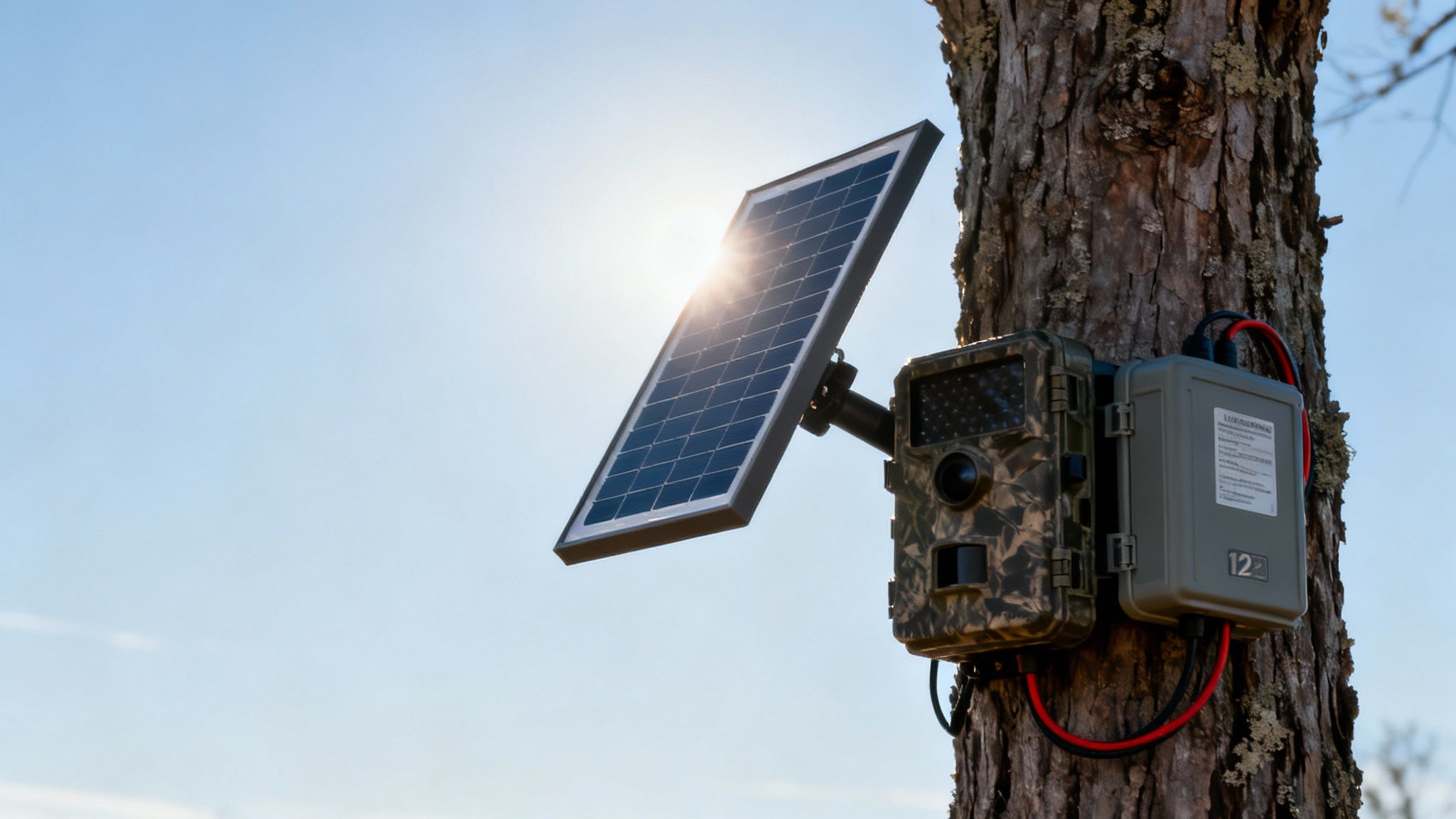
When it comes to cold weather, alkaline AA batteries are the absolute worst offenders. They might show a full charge when you’re warm and cozy indoors, but their internal chemistry just can't hack it in the cold. Once temps get close to freezing (32°F or 0°C), their performance falls off a cliff.
Below that point, the voltage they put out can drop so low that your camera’s electronics can no longer run, forcing a shutdown. The camera thinks the battery is dead, even though there’s still plenty of juice locked inside—it’s just too cold for the battery to release it.
Key Insight: A "dead" alkaline battery from a winter camera set isn't always empty. If you bring it inside and warm it up, you’ll often find it magically springs back to life. This proves the problem isn’t a lack of energy, but the battery's inability to deliver it in the cold.
This makes alkalines an unreliable, and frankly useless, choice for any serious winter camera deployment. You'll just end up with dead cameras, missed intel, and wasted trips into the field.
Lithium: The Undisputed Winter Champion
This is where lithium batteries completely change the game. Both disposable Lithium AAs and rechargeable Li-ion packs are built with a different chemistry that is far more resilient to the cold. They keep on trucking in temperatures well below zero, often down to -40°F (-40°C).
Their internal chemical reactions don't slow down nearly as much, allowing them to supply a consistent, stable voltage even when the weather is brutal. For any all-season scouting, having a dependable lithium battery for camera setups is non-negotiable.
- Consistent Power Delivery: They maintain their voltage, ensuring your camera's flash, sensor, and cellular modem have the power they need to work right every time.
- Full Capacity Use: You actually get to use the battery's entire "fuel tank," which means longer runtimes and fewer swaps.
- Peace of Mind: You can set your camera and trust it to keep running all season long, no matter how low the mercury drops.
Switching to lithium isn't just a small upgrade; it’s a foundational requirement if you depend on your trail camera to perform through the harshest months of the year. It’s the single best thing you can do to make sure your gear never lets you down when it counts.
Using Solar Panels for Extended Runtimes
For anyone running trail cameras in remote spots, the holy grail is a "set it and forget it" power system. The fewer trips you make to your camera site, the less time and gas you burn, and the less scent you leave behind. This is exactly where external power sources, especially solar panels, can take your setup from good to truly great.
Think of a solar panel as a constant trickle charger for your camera. It doesn't replace the main battery; instead, it works alongside it, continuously topping it off with every bit of sunlight it can grab. This simple addition can extend the life of your internal battery pack or an external battery box so dramatically that, in the right conditions, you might get nearly endless runtime.
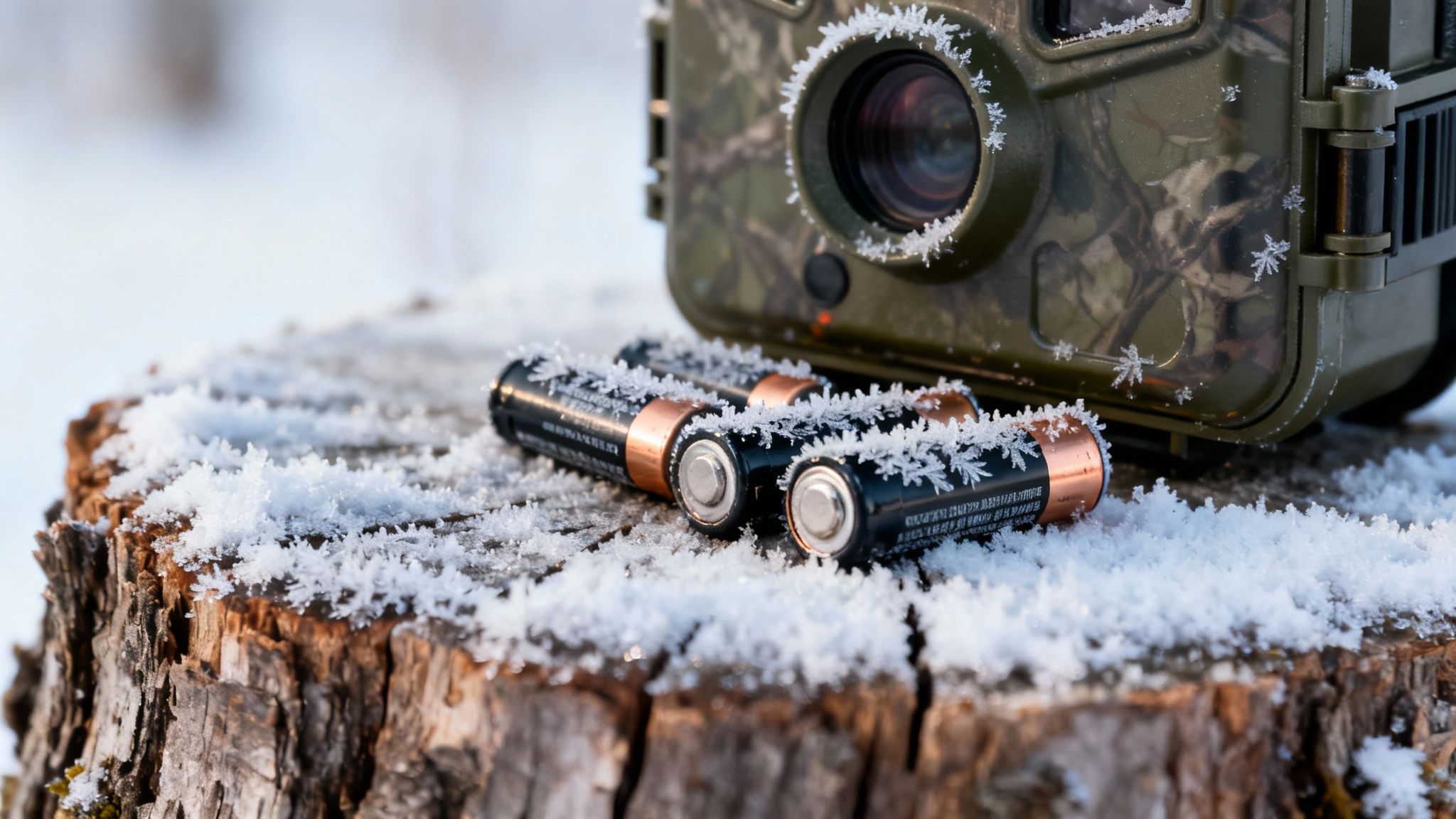
The technology behind these systems gets better every year. Solar hybrid solutions are already capable of extending the runtime of a battery for camera systems by up to 200%. Better yet, new technologies like graphene-based batteries are on the horizon, promising to pack more power into lighter packages, which will make getting gear into the backcountry even easier.
How to Position Your Solar Panel
Getting the most juice out of your solar panel is all about smart placement. A panel stuck in the shade is about as useful as a screen door on a submarine—it's just not going to get the job done.
To maximize its power-generating potential, just follow a few simple rules:
- Face the Sun: In the Northern Hemisphere, your panel should always face south. This angle ensures it catches the most direct sunlight as the sun moves across the sky.
- Avoid Shade: Before you mount it, look up. Make sure the panel won't be covered by shadows from trees, branches, or even heavy leaves. Even a little bit of shade can slash its charging efficiency.
- Keep It Clean: A panel caked in dirt, dust, or pollen can't absorb light. It’s worth learning how often to clean your solar panels based on your environment to keep it running at peak performance.
Nailing the installation is the key to creating a self-sustaining power source that keeps your camera clicking for months.
When to Use an External 12V Battery Box
While solar panels are fantastic, they aren't a silver bullet for every situation. In some spots, a beefy external 12V battery box is a much more reliable choice.
Field Insight: Solar panels need sun to work. If your camera is deep in a thick forest canopy or on a steep, north-facing ridge, a panel might not get enough light to keep up with a busy cellular camera.
You'll want to go with a 12V battery box in these scenarios:
- Heavily Shaded Areas: If your perfect camera tree is under a dense canopy, a big battery box provides a massive power reserve that a solar panel just can't compete with.
- Extremely High-Traffic Locations: When a camera is sending hundreds of photos a day, its power draw can easily outrun what a small solar panel can put back in.
- Maximum Reliability Needed: For critical security monitoring or important research projects, a sealed 12V battery is the most dependable, long-term power source you can get.
By combining these external power strategies with a quality lithium-ion battery for camera setups, you can build a system that’s practically unstoppable. For a deeper dive into picking and installing the right gear, check out our complete guide on https://magiceagle.com/blogs/knowledge/solar-panels-for-game-cameras. It'll walk you through everything you need to build a power system that lasts all season long.
Actionable Tips to Maximize Battery Life
Picking the right batteries is the first step, but how you actually run your camera in the field is what really determines how long it will last. Every single function—from snapping a picture to sending it over the 4G network—sips power. With a few smart tweaks to your settings, you can add serious runtime to your camera and cut down on those long walks to swap batteries.
Think of your camera's power source as a full tank of gas. High-resolution video, constant photo bursts, and instant cellular uploads are like flooring it on the highway. If you're in it for the long haul, you need to be strategic to make that fuel last.
Fine-Tune Your Camera Settings
Your camera’s menu is the command center for power management. A couple of small adjustments here can translate into weeks, or even months, of extra battery life.
- Reduce Photo and Video Resolution: Do you really need poster-sized images or 4K video of every deer that walks by? Lowering the resolution still gives you great scouting intel but uses way less power to capture and send the file.
- Adjust Trigger Sensitivity: Setting the sensitivity too high on a windy day will get you hundreds of photos of waving branches. This is a classic battery-killer that also clogs up your SD card. Match the sensitivity to your surroundings.
- Lengthen the Delay Between Triggers: A one- or two-minute delay after a trigger is a game-changer. It stops the camera from snapping dozens of pictures of the same animal as it lingers, which saves a massive amount of power.
- Control Cellular Upload Frequency: For cellular models, switching the upload setting from "Instant" to a scheduled check-in once or twice a day is probably the single most effective way to save battery.
Finding the right balance between gathering intel and saving power is key. You can dive deeper into this topic in our complete guide on how long trail camera batteries last.
Troubleshooting Common Battery Problems
Even with perfect settings, things can go wrong. If you find your camera dead way sooner than expected, run through this quick checklist before you assume the camera itself is the problem.
Field Tip: Never let your batteries drain completely empty. If the camera is in the middle of writing a file to the SD card when the power cuts out, you can corrupt the card and lose all your photos. Swap your batteries when they get low, not when they're dead.
Troubleshooting Checklist
- Check the Battery Type: Is it cold out? Are you still running alkaline batteries? This is the number one reason for cameras dying unexpectedly in the winter. Make the switch to lithiums for reliable cold-weather juice.
- Inspect the Contacts: Take a look at the battery terminals inside the camera and on the batteries themselves. Any dirt, grime, or corrosion can create a weak connection and kill the power flow.
- Confirm Proper Installation: It sounds simple, but it happens to all of us. Double-check that every battery is inserted correctly, matching the positive (+) and negative (-) ends. It’s an easy mistake to make when you’re in a hurry.
- Review Recent Settings: Did you recently bump up the video quality or change the cellular check-in to "Instant"? A recent settings change is almost always the culprit when you see a sudden drop in battery performance.
Frequently Asked Battery Questions
When you're out in the field, the last thing you want is a dead trail camera. We get a lot of questions about batteries, so let's clear up some of the most common ones to keep your camera running reliably.
Can I Mix Different Brands or Types of AA Batteries?
The short answer is a hard no. You should never, ever mix different battery types, like putting a few alkaline batteries in with some lithium ones.
Think of it like this: their chemistries, voltage, and discharge rates are completely different. Mixing them forces them to work against each other, which leads to terrible performance and can even cause them to leak acid, frying your camera's sensitive electronics. For consistent, reliable power, always use a full, fresh set of identical batteries from the same brand.
What Is the Best Way to Store Camera Batteries?
Proper storage is simple, but it makes a huge difference in battery life. Keep them in a cool, dry place away from direct sun or extreme heat. It’s also a smart habit to take them out of the camera entirely if you're storing it for the off-season.
For rechargeable Li-ion packs, the golden rule for long-term health is to store them at about a 50% charge. Leaving them fully charged or completely dead for months on end will slowly kill their ability to hold a charge.
Will a Solar Panel Work on Cloudy Days?
A solar panel’s output definitely drops on overcast days or in deep shade, but it doesn’t just shut off. It will still trickle a small amount of power into your battery, which helps offset what your camera is using.
To make it work in a wooded area, your best bet is to find a clearing or at least aim the panel where it can catch the most sun throughout the day. That said, if you're in a spot with a really dense forest canopy, a big external 12V battery box is almost always a more dependable choice for a power-hungry cellular camera.
Why Does My Camera Battery Die So Fast in the Cold?
This is a classic winter trail cam problem, and 99% of the time, it's because you're using alkaline batteries. At room temperature, they might show a full charge, but the cold grinds their internal chemical reactions to a halt. The voltage plummets, and your camera just gives up, thinking the battery is dead.
The best and only permanent fix is to switch to a lithium-based battery for camera setups. That means either disposable lithium AAs or a rechargeable Li-ion pack. Their chemistry is built from the ground up to handle sub-zero temperatures, ensuring your camera stays awake all winter long.
Ready to power your scouting with unmatched reliability? The Magic Eagle EagleCam 5 is engineered for peak performance in any condition, and pairing it with the right power strategy ensures you never miss a moment. Explore our cameras and accessories at https://magiceagle.com.