

When you're trying to find the best game camera for the money, you're really looking for that sweet spot where price meets rock-solid performance in the field. For most folks, this means a cellular model somewhere in the $150 to $250 range. This price point gets you high-quality images, reliable service, and smart features without paying for the flagship bells and whistles. The Magic Eagle EagleCam 5 consistently comes up in this conversation because of its smart AI detection and tough build.
Defining the Best Value in a Game Camera
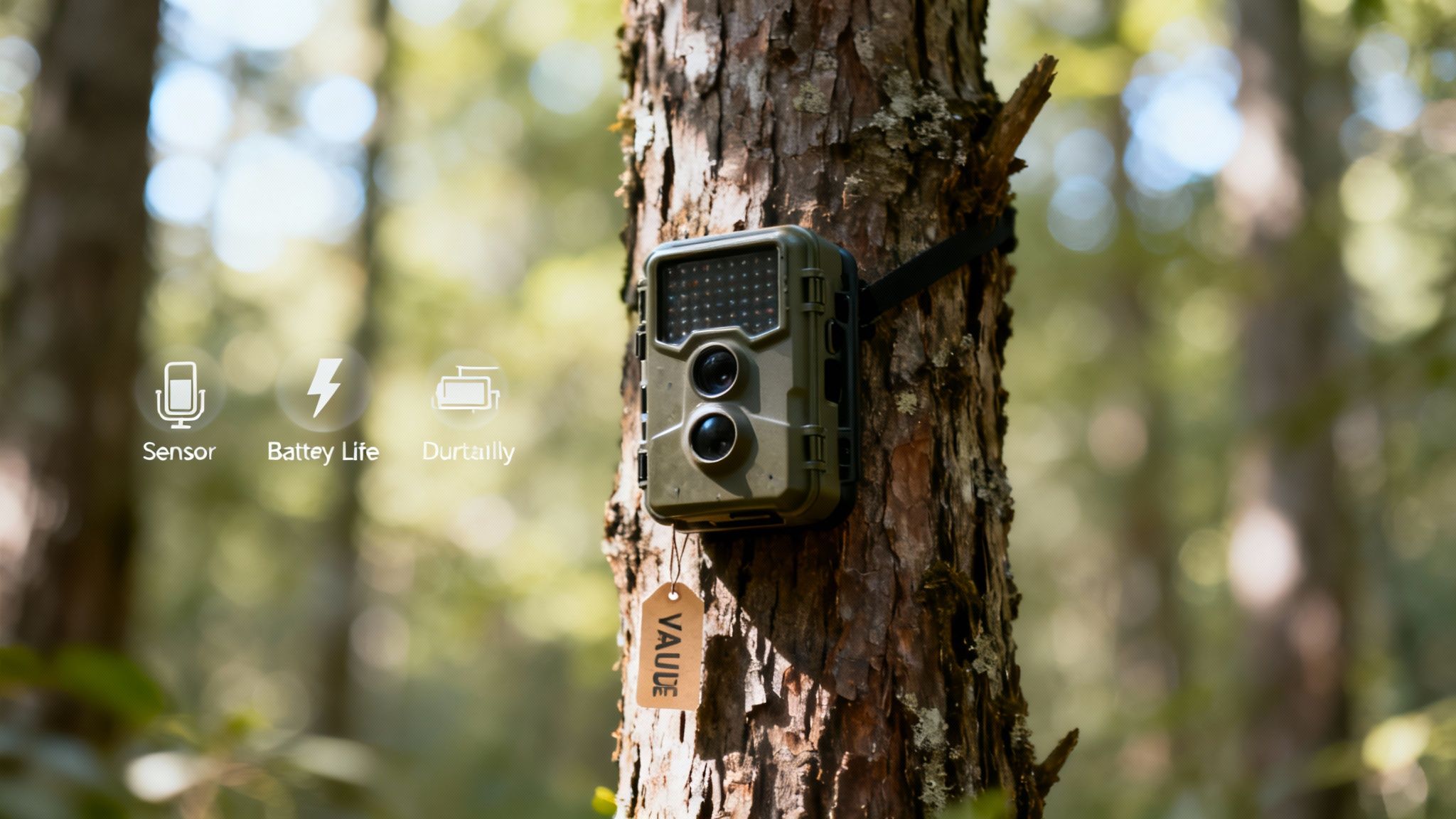
It's easy to get bogged down by marketing hype. Manufacturers love to throw around huge megapixel numbers, but the real value is in the core hardware that works reliably, day in and day out.
Forget the flashy specs for a minute. We're focusing on the four pillars that separate a camera you can count on from a cheap piece of plastic that will let you down.
Core Criteria for Evaluating Value
- Image Sensor and Lens Quality: A good sensor and lens are what create crisp, clear images, especially at dawn and dusk. This is way more important than an inflated megapixel count.
- Detection Circuit Reliability: This is all about trigger speed and accuracy. You need a camera fast enough to catch a buck on the move but smart enough to ignore false triggers from a swaying branch.
- Battery Efficiency and Power Options: A camera that eats batteries is a hidden cost and a constant headache. We look for models that sip power and can be hooked up to a solar panel for set-it-and-forget-it deployment.
- Long-Term Durability: A good value camera has to survive the elements. That means solid construction and a high IP rating to keep water and dust out.
The explosion of interest in wildlife photography has pushed camera tech forward. The game camera market was valued at $112.20 million in 2023 and is expected to climb to $185.69 million by 2031. What’s telling is that the 8–12 MP segment is still the most popular, which proves that experienced users value balanced performance over just raw numbers.
Key Takeaway: True value isn't the cheapest camera on the shelf. It’s the one that does its job without fail and doesn't load you down with expensive extras you don't need. Focus on the engine—the sensor, detection circuit, and battery life—not the paint job.
To help you cut through the noise, I’ve put together a quick guide to some of the top-performing cameras that deliver a fantastic return on your investment. If you're working with an even tighter budget, check out our other guide on finding good cheap trail cameras.
Quick Guide to Top Value Game Cameras
Here's a quick look at some game cameras that give you the best combination of price, features, and reliable performance, tailored for different needs.
| Model | Standout Feature | Ideal Use Case | Price Point |
|---|---|---|---|
| Magic Eagle EagleCam 5 | AI-Powered Species Recognition | Hunters & Landowners | $$ |
| Tactacam Reveal Pro 3.0 X | High-Quality Photos & Video | Security-Conscious Users | $$$ |
| GardePro T5NG Pro | Excellent No-Glow Performance | Budget-Conscious Users | $ |
| Browning Dark Ops Pro DCL | Dual Lens for Day/Night | Wildlife Photographers | $$ |
Ultimately, the right camera depends on what you need it to do. Whether you're scouting a food plot, keeping an eye on your property, or just enjoying the local wildlife, one of these models should fit the bill without breaking the bank.
Comparing the Core Features That Matter Most
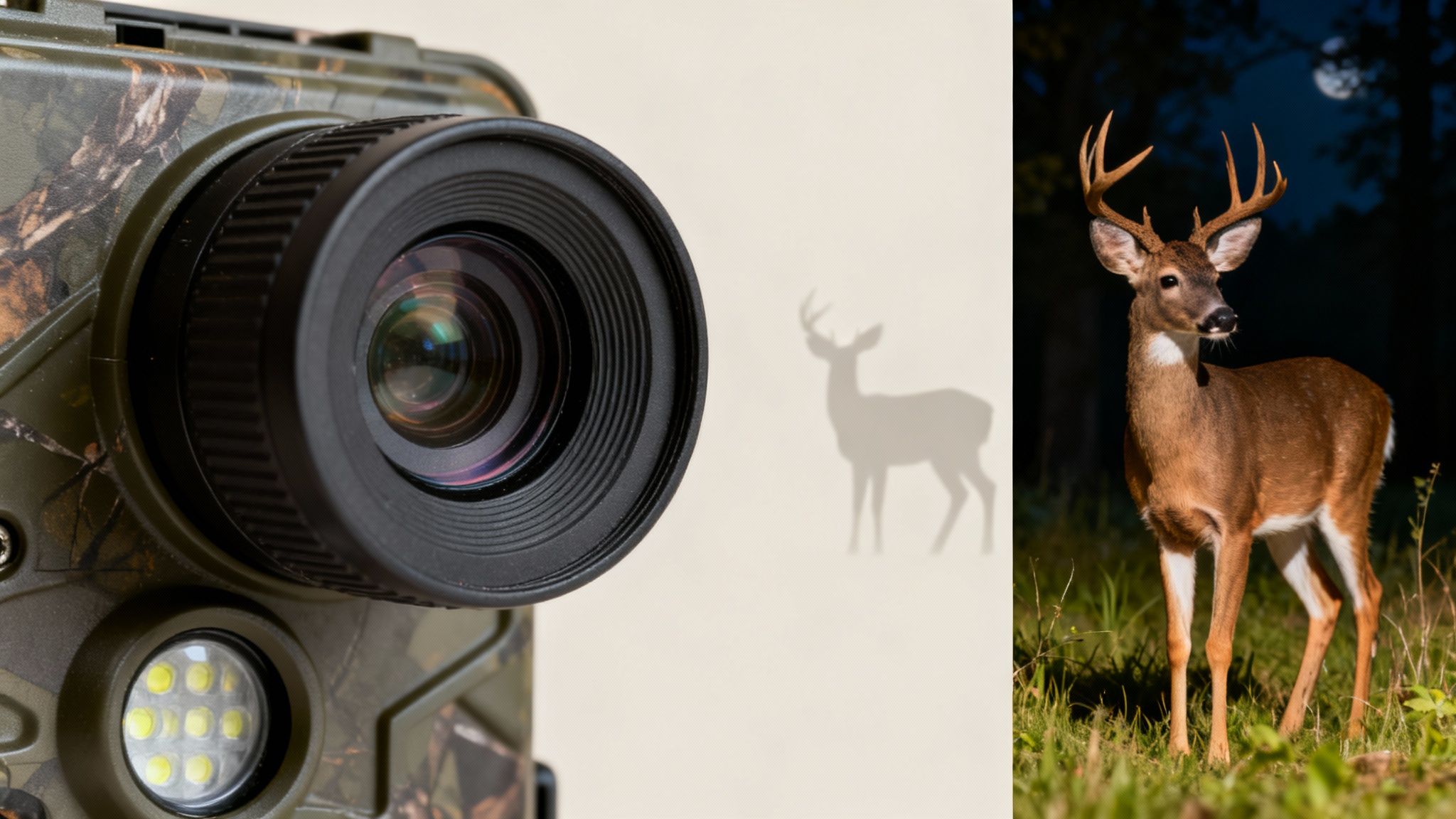
Finding the best game camera for the money means looking past the marketing slogans on the box and digging into the hardware that actually gets the job done. The real-world performance of a trail camera boils down to a few critical specs: trigger speed, flash type, and sensor quality.
These are the features that determine whether you get a perfect shot of a mature buck or just a blurry photo of its tail disappearing out of the frame. Understanding them is the key to making a smart investment.
Trigger Speed and Recovery Time
Trigger speed is simple: it’s how fast the camera wakes up and snaps a picture after sensing movement. A slow trigger—anything over 0.5 seconds—is a recipe for missed opportunities, especially on game trails where deer are on the move. For those scenarios, you want a trigger speed between 0.2 to 0.4 seconds to reliably capture the animal squarely in the frame.
But that's only half the battle. Recovery time, the speed at which the camera can take a second picture, is just as important. A quick recovery of under a second is crucial for getting follow-up shots of a buck chasing a doe or capturing multiple animals in a group.
A fast trigger gets the first shot, but a quick recovery captures the whole story. A slow camera in either respect means you're missing valuable intel every time it fires.
Flash Technology: No-Glow vs. Low-Glow
The flash your camera uses dictates its performance after dark. Each type serves a specific purpose, and the right choice really depends on your property and goals.
- No-Glow (Black Flash): This is the ultimate in stealth. It uses infrared LEDs that are completely invisible to animal and human eyes, making it perfect for security or scouting high-pressure areas where deer are easily spooked.
- Low-Glow (Red Glow): This technology produces a faint red glow from the infrared LEDs when triggered. While it’s slightly visible, a low-glow flash typically has a longer range and brighter illumination, leading to clearer, more detailed night photos.
For most wildlife scouting, low-glow offers a great balance of performance and discretion. But if absolute stealth is your top priority, no-glow is the only way to go. If you want to dive deeper, our guide on what are the best trail cameras breaks this down even further.
Image Quality Beyond Megapixels
Don't get fooled by huge megapixel numbers. Manufacturers love to advertise high MP counts, but that spec can be incredibly misleading. True image quality comes from three things working together: the image sensor, the lens, and the processing software.
A camera with a high-quality 8MP or 12MP sensor will almost always take better night photos than a cheap camera boasting a 40MP sensor that just uses software to blow up a low-quality image.
The sensor is the heart of the camera; a good one captures more light for crisp, low-noise images at dawn and dusk. The lens quality determines sharpness, and the internal software puts it all together. The best game camera for the money will have a balanced system where all three components are solid.
The Detection Circuit
A camera’s detection circuit is its eyes and ears. It uses a Passive Infrared (PIR) sensor to pick up the heat and motion of an animal. Two specs define its performance: detection range and detection angle.
A long detection range, like 80-100 feet, lets the camera monitor big, open areas like food plots. The detection angle determines how wide the sensor's "vision" is. A wider angle is great for trails where animals might pop out from the sides, but a narrower angle can help prevent false triggers from wind-blown branches on the edge of the frame.
A well-designed circuit has a detection zone that closely matches the camera's field of view. This simple alignment is key to ensuring you don't end up with a memory card full of empty pictures.
Cellular Connectivity and AI Smart Features
The biggest leap in trail camera technology isn’t just about sharper images; it's about getting those images instantly and intelligently. Cellular connectivity and artificial intelligence (AI) have completely changed the game. They’ve turned these devices from simple data loggers you had to retrieve into real-time monitoring tools you can manage from anywhere.
For years, checking a camera meant hiking into the woods, swapping SD cards, and leaving your scent all over the place—potentially spooking the very animals you were tracking. Cellular models end all that by sending photos and videos straight to your phone. It’s not just a convenience; it’s a massive strategic advantage for hunters and a huge time-saver for anyone managing property.
Of course, this remote access comes with a recurring cost: a data plan. These work just like your cell phone plan, with different price tiers based on how many photos or videos you need each month. Picking the right one is key to managing the camera's total cost over its lifetime.
Understanding Cellular Plans And Coverage
Most cellular cameras are locked to a specific carrier like Verizon or AT&T. Others, like the Magic Eagle EagleCam 5, are smarter—they use multi-carrier technology to automatically latch onto the strongest signal available. Before you buy anything, you absolutely have to confirm which provider has a solid signal where your camera will be. A top-of-the-line camera is just a paperweight without service.
The global cellular game camera market is exploding for this exact reason, with an estimated size of around $250 million in 2025. This growth is fueled by everyday users who see the incredible value in remote monitoring without needing a degree in IT.
Data plans are usually billed monthly or annually, and you can almost always save a good chunk of change by paying for a full year upfront. Costs can be as low as a few bucks a month for a basic plan (maybe 100 photos) or run $20 or more for unlimited images and video clips.
Key Insight: Don't get upsold on a huge data plan right away. Start with a basic tier and see how much you actually use in the first month. It’s almost always easy to upgrade later, but paying for data you never use is just throwing money away.
To give you a better idea of what to budget for, here’s a look at what the monthly costs generally look like across the industry. Just remember that prices and photo counts can change, so it's always smart to double-check the brand's website for the latest info.
Comparing Monthly Cellular Plan Costs
Here's a quick overview of data plan pricing from leading cellular trail camera brands to help you budget for those recurring costs.
| Brand (e.g., Spypoint, Moultrie, Magic Eagle) | Basic Plan (Photos/Month) | Mid-Tier Plan (Photos/Month) | Premium Plan (Photos/Month) |
|---|---|---|---|
| Typical Industry Range | $5 - $10 for 100-250 Photos | $10 - $15 for 750-1,250 Photos | $15 - $25+ for 2,000+ Photos or Unlimited |
As you can see, the costs are manageable, but they add up, especially if you run multiple cameras. Picking a plan that matches your actual needs is the best way to keep your budget in check. For a deeper dive, our guide explains in detail how do cellular trail cameras work and what to look for.
AI Smart Detection Ends Notification Fatigue
The second game-changing feature is AI-powered smart detection. A standard motion sensor is dumb—it triggers on anything that moves. A swaying branch, a curious squirrel, a falling leaf... you name it. This leads to hundreds of useless notifications, a cluttered photo gallery, and a battery that dies way too fast.
AI is the solution to this "notification fatigue." Smart cameras use advanced algorithms to actually analyze what's in the picture before it sends you an alert.
- Animal Recognition: The camera can be taught to tell the difference between a buck, a doe, a turkey, or a raccoon. Some can even identify specific bucks.
- Human/Vehicle Filtering: For security purposes, you can set the camera to only notify you when it spots a person or a vehicle, completely ignoring all wildlife.
This filtering is a massive deal. Instead of sifting through countless false alarms, you only get buzzed for the action you truly care about. For a hunter, that means getting an instant alert when a target buck finally shows up, not every time a squirrel raids the corn pile. This kind of targeted monitoring has become a non-negotiable feature for a modern, high-value trail camera.
Assessing Durability and Power Solutions
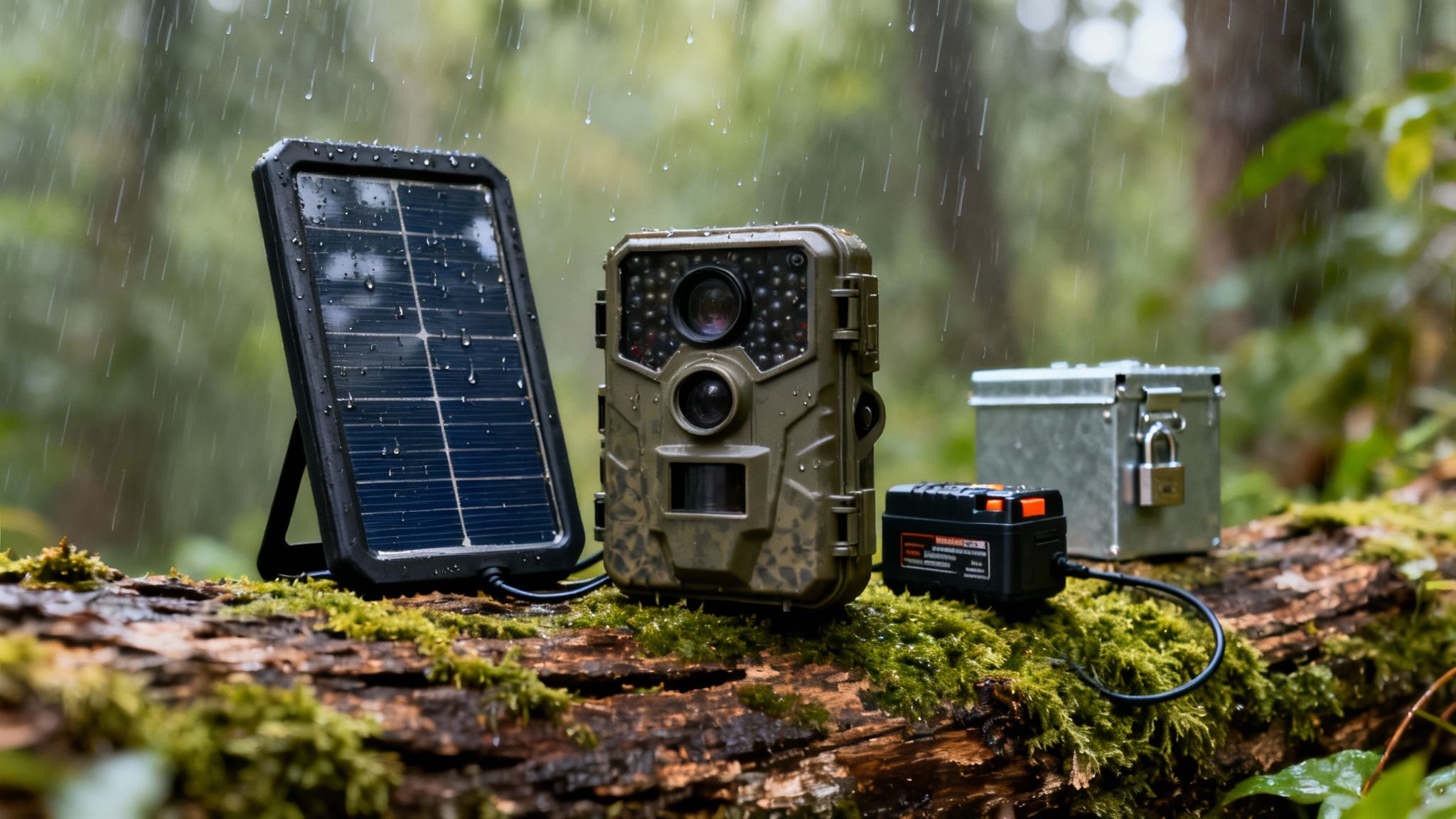
A game camera's real value isn't just in the pictures it takes. It's in its ability to survive season after season of abuse from the elements. A camera with incredible specs is completely useless if it dies in the first downpour or burns through a fresh set of batteries every couple of weeks. This is where durability and smart power management separate the serious tools from the toys.
A camera's toughness starts with its housing. Look for a solid, well-sealed case built to handle everything from scorching summer days to brutal winter freezes. Good camouflage is more than just a pretty pattern, too—it needs to blend into your specific environment to keep the camera hidden from sharp-eyed game and potential thieves.
But the single most important number to look for is the IP (Ingress Protection) rating. This tells you exactly how sealed the camera is against dust, rain, and snow.
Decoding Weatherproof Ratings
An IP rating gives you a clear, no-nonsense measure of a camera's resilience. For instance, a camera rated at IP66 offers total protection from dust and can handle powerful jets of water from any direction. That's the level of weatherproofing you need for a device that’s going to live outside 24/7, ensuring its sensitive electronics stay dry and working.
A lower rating might be fine if you're just using it in fair weather or under a protective overhang, but for serious, all-season scouting, IP66 should be your baseline. Anything less is a roll of the dice with Mother Nature.
Don’t just take the word "weatherproof" on the box at face value. Look for a specific IP rating. An IP66 certification means the camera has been independently tested to survive harsh conditions, giving you real confidence that your investment is protected.
Powering Your Camera for the Long Haul
Power management is the other side of the reliability coin. The cost and frustration of constantly swapping batteries can quickly turn a "value" camera into a money pit. You generally have three options, each with its own pros and cons.
- Disposable AA Batteries: This is the old standby. AAs are easy to find anywhere, but the cost adds up fast. Lithium AAs are the way to go here; they perform far better in the cold and last much longer than alkaline, making them the superior—though pricier—choice for dedicated users.
- Rechargeable Battery Packs: Many brands offer their own rechargeable packs. The initial cost is higher, but they pay for themselves over time and are much better for the environment.
- External Solar Panels: This is the ultimate "set it and forget it" solution. A small solar panel keeps your camera’s internal batteries or rechargeable pack constantly topped off, giving you virtually endless power.
The upfront cost for a solar setup—usually between $50 and $80—can pay for itself in a single season by eliminating battery purchases. Even better, it drastically cuts down on the number of trips you need to make to your camera site, which means less human disturbance in your scouting area.
Protecting Your Investment from Theft
Finally, a durable camera is one that actually stays where you put it. Theft is an unfortunate reality, so physical security is non-negotiable, especially on public land or accessible private property. Your first line of defense should be a purpose-built security lockbox.
These heavy-gauge steel boxes are made to fit specific camera models, protecting them from two-legged thieves and four-legged vandals like bears.
For mounting, a Python cable lock is the industry standard. You thread it through the lockbox and cinch it tight around a tree, making it nearly impossible to remove without serious cutting tools. Some cameras, like the Magic Eagle EagleCam 5, are also adding built-in GPS tracking and geofence alerts that ping your phone if the camera is moved. It’s a powerful layer of digital security to help protect your gear.
Our Top Pick: The Magic Eagle EagleCam 5
In our hunt for the best value in game cameras, the Magic Eagle EagleCam 5 kept coming out on top. It’s one of those rare pieces of gear that delivers modern tech, field-tested toughness, and straightforward operation without a brutal price tag. This isn’t just a camera; it’s a full-blown remote scouting system built for people who are serious about what they do.
What really makes the EagleCam 5 different is its smart approach to staying connected. We’ve all dealt with the frustration of a camera dropping service. This one sidesteps that headache by using multi-carrier technology, automatically latching onto the strongest network signal it can find. That feature alone is a game-changer, saving you the guesswork of matching your camera to a specific provider’s spotty coverage map.
Core Strengths: Where It Really Shines
The EagleCam 5’s biggest advantage is its AI-powered animal detection. This is a massive leap from basic motion sensors that get fooled by every swaying branch. This system intelligently filters out false triggers from wind or squirrels, so you only get the alerts that matter. If you’re a deer hunter, you can literally tell the app to only ping you when it sees a deer. That saves a ton of battery and stops your phone from buzzing with useless notifications.
Beyond the tech, this camera is built to be left out in the woods for a long time. It has a solid IP66 weatherproof rating, meaning it’s sealed up tight against dust and driving rain. Combine that with its serious security features—like a built-in GPS tracker and geofence alerts—and you can feel confident your investment is protected from both storms and thieves.
The real genius of the EagleCam 5 is how it delivers only the most important information right to your phone. The AI filtering and rock-solid connectivity turn it from a simple data collector into an active scouting partner that works for you.
How It Performs in the Real World
To see where this camera really earns its keep, think about these common setups:
- For the Serious Hunter: You’ve got a camera watching a scrape on public land, miles from any road. The EagleCam 5’s multi-carrier signal means you’ll get that notification the second a target buck shows up. Meanwhile, its GPS tracker gives you peace of mind that your gear is still where you left it.
- For the Landowner: You need to keep an eye on a remote gate and a feeder a quarter-mile down the path. The AI can be set to alert you only when a vehicle pulls up to the gate, while it keeps a separate log of deer activity at the feeder. You manage everything from one app.
This kind of flexibility makes it a powerful tool for almost anyone. It pulls double duty as both a security device and a wildlife monitor without cutting corners on either job.
A Fair Shake: Pros and Cons
No camera is the perfect tool for every single situation. The EagleCam 5 strikes an incredible balance, but it’s important to know its strengths and weaknesses before you buy.
Primary Strengths:
- AI-Powered Filtering: Cuts down on junk photos and helps you sort images by species. It’s a huge time-saver.
- Reliable Connectivity: Multi-carrier support automatically finds the best signal. This is non-negotiable for remote spots.
- Integrated Security: The built-in GPS and geofencing aren’t gimmicks; they offer real protection against theft.
Potential Considerations:
- Video Transmission Costs: Just like any cellular camera, sending HD video clips uses more data. You'll want to be on the right data plan if you plan to request a lot of videos.
- Initial Setup: It’s pretty simple, but to really dial in the AI and mapping features, you’ll need to spend a few minutes in the app tweaking the settings to your liking.
For anyone who values smart, efficient scouting, the EagleCam 5 is the best game camera for the money. If you want to spend less time walking to your camera, get timely alerts that actually matter, and use gear that’s built to last, this is the one to get.
Finding Your Ideal Game Camera
The term "best" is tricky. There's really no one-size-fits-all camera out there; the right one is simply the one that perfectly matches what you're trying to do. A hunter tracking a specific buck needs something entirely different from a landowner keeping an eye on a back gate or a researcher studying local wildlife.
Figuring out your primary goal is the most important step in finding the best game camera for the money. It directly impacts which features you should care about. For some, getting instant cellular updates is a dealbreaker. For others, long-term battery life and crystal-clear video are the top priorities. This approach ensures you don't waste money on bells and whistles you'll never use.
For the Dedicated Hunter
Hunters demand performance when it counts. Your ideal camera will have a no-glow flash to stay completely invisible on high-pressure properties. You’ll also need a lightning-fast trigger speed—ideally under 0.4 seconds—to capture sharp images of deer on the move, not just their back ends as they leave the frame.
Above all, dependable cellular transmission is key. You need timely, reliable updates sent straight to your phone to make smart decisions about your next hunt without tromping through the woods and leaving your scent everywhere.
For Property Owners and Researchers
If you're managing land or conducting wildlife studies, your focus shifts toward data collection and long-term deployment. High-definition video becomes much more valuable for observing animal behavior or getting a clear shot of a vehicle's license plate.
Extended battery life is a must to cut down on trips to remote camera sites. Prioritizing models with solar panel compatibility is a smart long-term move, giving you a nearly endless power supply for continuous monitoring. You'll also want to look for robust data management tools within the camera's app to help organize and analyze thousands of images.
The market for these devices is strong, with the global trail camera industry valued at around $134.5 million in 2025. This growth is fueled by a mix of hunting, security, and research applications all benefiting from better tech. You can discover more insights about the trail camera market's growth and segmentation.
For the Casual Nature Lover
If you just want to see what critters are wandering through your backyard, you can get exceptional image quality without the hassle or recurring costs of a cellular plan. A user-friendly, budget-conscious non-cellular camera is the perfect fit here.
These models are simple to set up and deliver excellent day and night photos directly to an SD card. You get all the fun of seeing what wanders by when you aren't looking, without paying for features built for more intense work.
To make the choice easier, this decision tree can help you figure out if a feature-rich camera like the EagleCam 5 is the right fit for your needs.
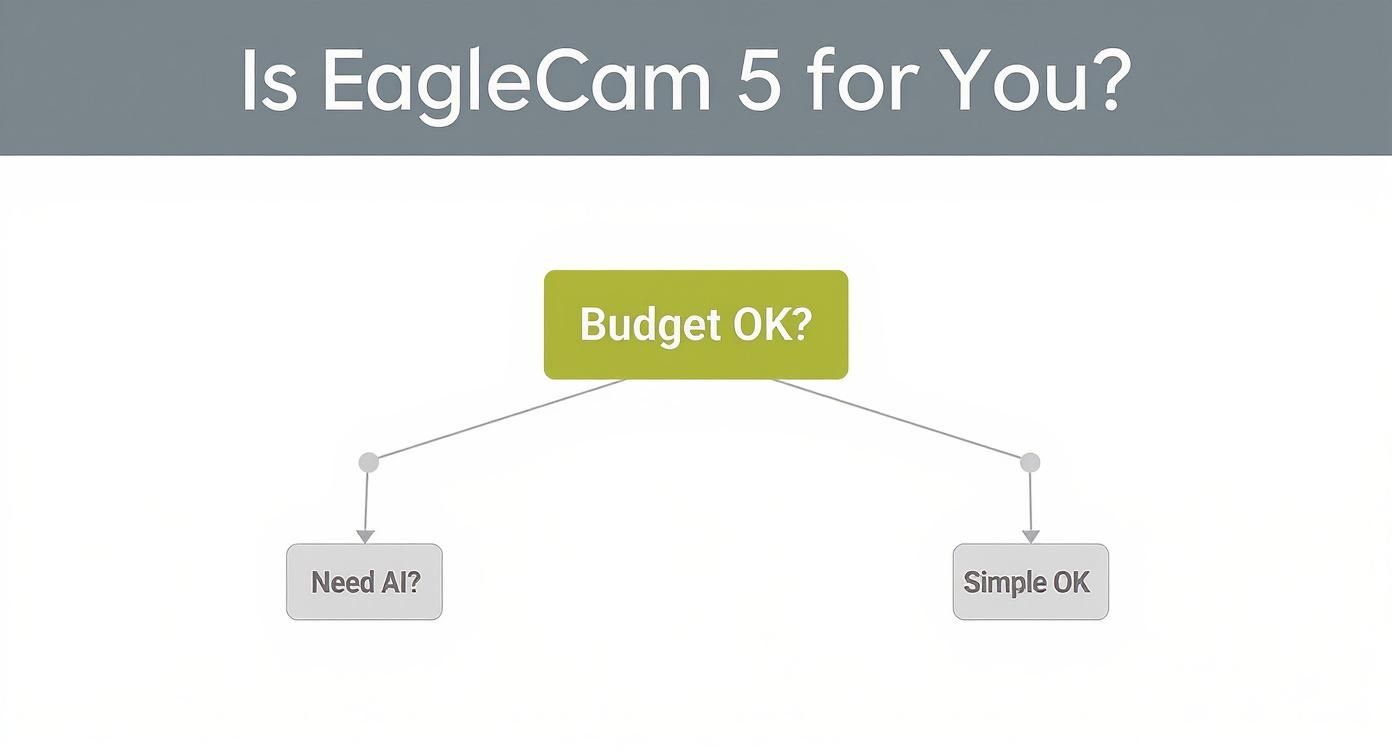
The flowchart makes it clear that while your budget is a starting point, the real decision comes down to whether advanced features like AI-powered filtering are actually necessary for what you want to accomplish.
Frequently Asked Questions
Getting into trail cameras can bring up a lot of questions. Finding clear answers is the key to picking the right one and avoiding a purchase you’ll regret down the line.
The biggest advantage of a cellular camera is getting photos and videos sent right to your phone, almost instantly. This remote access saves you from making trips into the woods, which means less scent pressure on your hunting spots. It also doubles as a real-time security system, turning the camera from a passive recorder into an active monitoring tool.
Megapixels And Budgeting
It's easy to get caught up chasing high megapixel counts, but that number doesn’t guarantee a better picture. The quality of the image sensor, lens, and internal processor matter far more, especially when it comes to those critical low-light shots at dawn and dusk. A camera with a premium 12MP sensor will almost always take sharper, clearer night photos than a cheap camera boasting a low-grade 40MP sensor.
Always look at real-world sample images over megapixel specs when judging a camera. Performance in the field, not a number on a box, tells the true story of image quality.
For a great value game camera, a smart budget is between $100 and $250.
- Under $100: These are usually basic, non-cellular models. They're perfect for casual backyard wildlife watching or low-stakes monitoring where you don't need instant updates.
- $150-$250: This is the sweet spot for value. In this range, you'll find powerful cellular cameras packed with features like AI detection and high-performance sensors, giving you the perfect mix of capability and cost.
This price range gets you access to professional-grade tools without the premium price tag, ensuring you get a reliable camera that sends clear intel from the field straight to your device.
Ready to invest in a camera that delivers unmatched value and real-time results? Explore the full range of smart cellular trail cameras from Magic Eagle and see the difference AI-powered scouting can make. Learn more at https://magiceagle.com.