

The quest for a trophy whitetail buck is a journey of strategy, patience, and meticulous planning. Choosing the right state can be the single most important decision you make, dramatically influencing your chances of success. Factors like deer density, trophy genetics, public land access, and tag availability separate legendary hunting grounds from average ones. This guide moves beyond anecdotal evidence, providing a data-driven breakdown of the top 10 best states to hunt whitetail deer. We'll analyze Boone & Crockett records, public land percentages, season structures, and actionable scouting strategies for each location.
Whether you're a seasoned hunter seeking a new challenge or planning your first out-of-state trip, this roundup offers the critical insights needed to pinpoint the ideal destination for your hunting style and goals. Our state-by-state profiles will cover specific regions to target, the most effective hunting styles, and crucial access considerations, giving you a complete blueprint for your next adventure.
To maximize your efforts in these prime locations, modern scouting tools are essential. We'll also explore how advanced cellular trail cameras, like those from Magic Eagle, provide a decisive edge. These devices deliver real-time intelligence on buck movement directly to your phone, helping you understand patterns and ensuring you are in the right place at the right time. This comprehensive resource is designed to save you valuable time in research and put you on the path to tagging the buck of a lifetime.
1. Texas - The Trophy Whitetail Capital
When it comes to sheer numbers and trophy-class whitetails, Texas stands in a league of its own. Boasting an estimated statewide deer population of over four million, the Lone Star State is a premier destination for hunters seeking mature, heavy-antlered bucks. The state's diverse geography, from the dense brush country of South Texas to the oak-filled Hill Country, supports incredible genetic potential and allows bucks to reach full maturity.
While over 97% of Texas is privately owned, this dynamic creates a unique hunting culture centered on intensive wildlife management. This focus results in consistently high success rates and the production of world-class deer. Legendary ranches and dedicated outfitters have refined land management to a science, making it one of the best states to hunt whitetail deer if your goal is a once-in-a-lifetime trophy.
Why Texas Excels for Trophy Hunters
The primary advantage of hunting in Texas is the combination of a long season, typically running from early October through January, and management practices that prioritize herd health and age structure. Ranches like the famous King Ranch in South Texas regularly produce bucks scoring over 170 inches, with some exceeding the 200-inch mark. This level of quality is a direct result of meticulous, year-round scouting and habitat control.
Actionable Scouting and Hunting Strategy
Success in Texas hinges on preseason intelligence. Given the vast landscapes and managed properties, cellular trail cameras are not just a tool; they are essential for effective scouting.
- Year-Round Monitoring: Deploy cameras like the Magic Eagle on feeders and water sources immediately after the season ends. This establishes a baseline of the resident deer population and helps you track antler growth throughout the summer.
- AI-Powered Filtering: Use Magic Eagle's AI species recognition to automatically filter out non-target animals and does. This saves you time by focusing your analysis exclusively on mature bucks, allowing you to build a specific "hit list" before the season opens.
- Identify Core Areas: By mapping camera locations that consistently capture your target bucks, you can pinpoint their core territories. This data is crucial for understanding travel corridors between food sources and bedding areas. For a deeper dive into this tactic, explore these expert tips on how to find deer bedding areas.
- Hunt Smart: Use the collected data to place stands along transition routes, not directly on food sources. This minimizes hunting pressure and increases your chances of intercepting a mature buck during daylight hours.
2. Wisconsin - The Public Land Giant
For hunters who prize self-guided adventure on public land, Wisconsin is a whitetail paradise. With a massive deer population exceeding 1.5 million and vast tracts of state-managed land, the Badger State offers unparalleled opportunity. Its diverse landscape, from the sprawling northern forests to the rich southern agricultural zones, consistently produces healthy herds and trophy-caliber bucks.
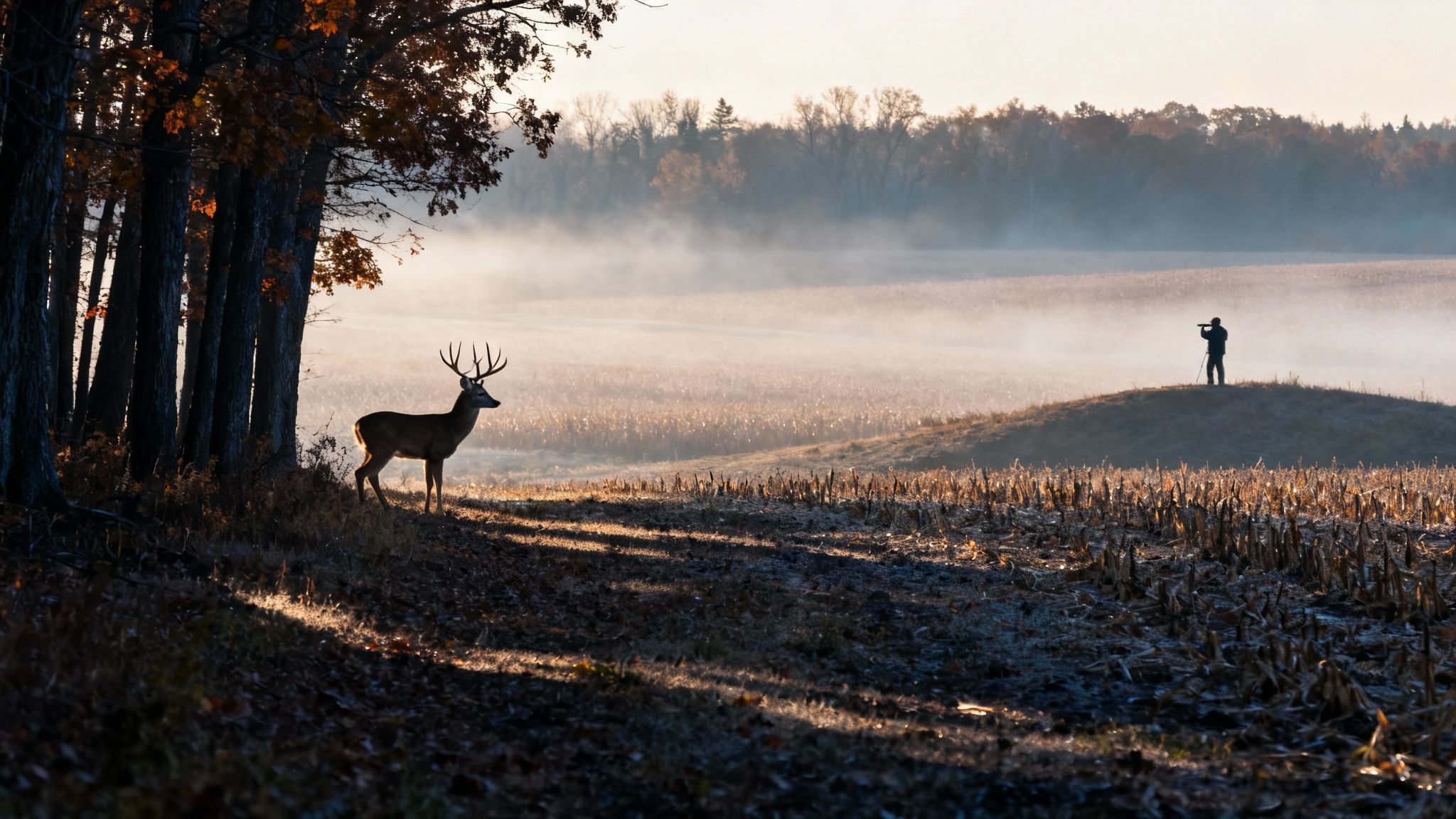
Unlike states dominated by private leases, Wisconsin’s commitment to public access makes it one of the best states to hunt whitetail deer for the DIY hunter. Success rates are high, with the annual rifle season alone yielding over 100,000 harvests. The availability of quality public ground means any hunter can pursue bucks reaching the 130 to 160-inch class with smart scouting and persistence.
Why Wisconsin Excels for Public Land Hunters
Wisconsin's primary advantage is the sheer volume and quality of its public hunting areas. The state actively manages its forests and wildlife areas to sustain robust deer populations, creating a system where hunters can find success without paying for access. This public land focus, championed by groups like The Hunting Public, fosters a culture of hard work and woodsmanship.
Actionable Scouting and Hunting Strategy
Winning on public land requires outsmarting both the deer and other hunters. Cellular trail cameras are a game-changer, allowing you to monitor vast areas remotely and identify unpressured bucks.
- Early Season Recon: Deploy cameras in early September along transition zones between dense timber bedding areas and agricultural food sources. This helps you pattern mature bucks before hunting pressure increases.
- Data-Driven Timing: Use the Magic Eagle's environmental sensors to track temperature trends. A significant drop in mid-October often signals the start of pre-rut activity, telling you exactly when to focus your efforts.
- Pinpoint Core Zones: Map buck movements by deploying multiple cameras along established trails and rub lines. This data reveals core territories and helps you identify low-pressure ambush points for archery season.
- Low-Pressure Hunts: Take advantage of Magic Eagle's live-stream capabilities to monitor stand locations during low-traffic midweek days (Tuesday-Thursday). This allows you to slip in and hunt when deer are most likely to be moving naturally.
3. Iowa - The Boone & Crockett Factory
Iowa is revered in the hunting community for one primary reason: its consistent production of giant, record-book whitetails. The state’s rich agricultural landscape, combined with world-class genetics and strict management, creates the perfect storm for growing mature bucks with heavy antlers. With a statewide deer population estimated at 1.2 million, Iowa offers a prime opportunity for hunters seeking a true giant in the 150-inch class and above.
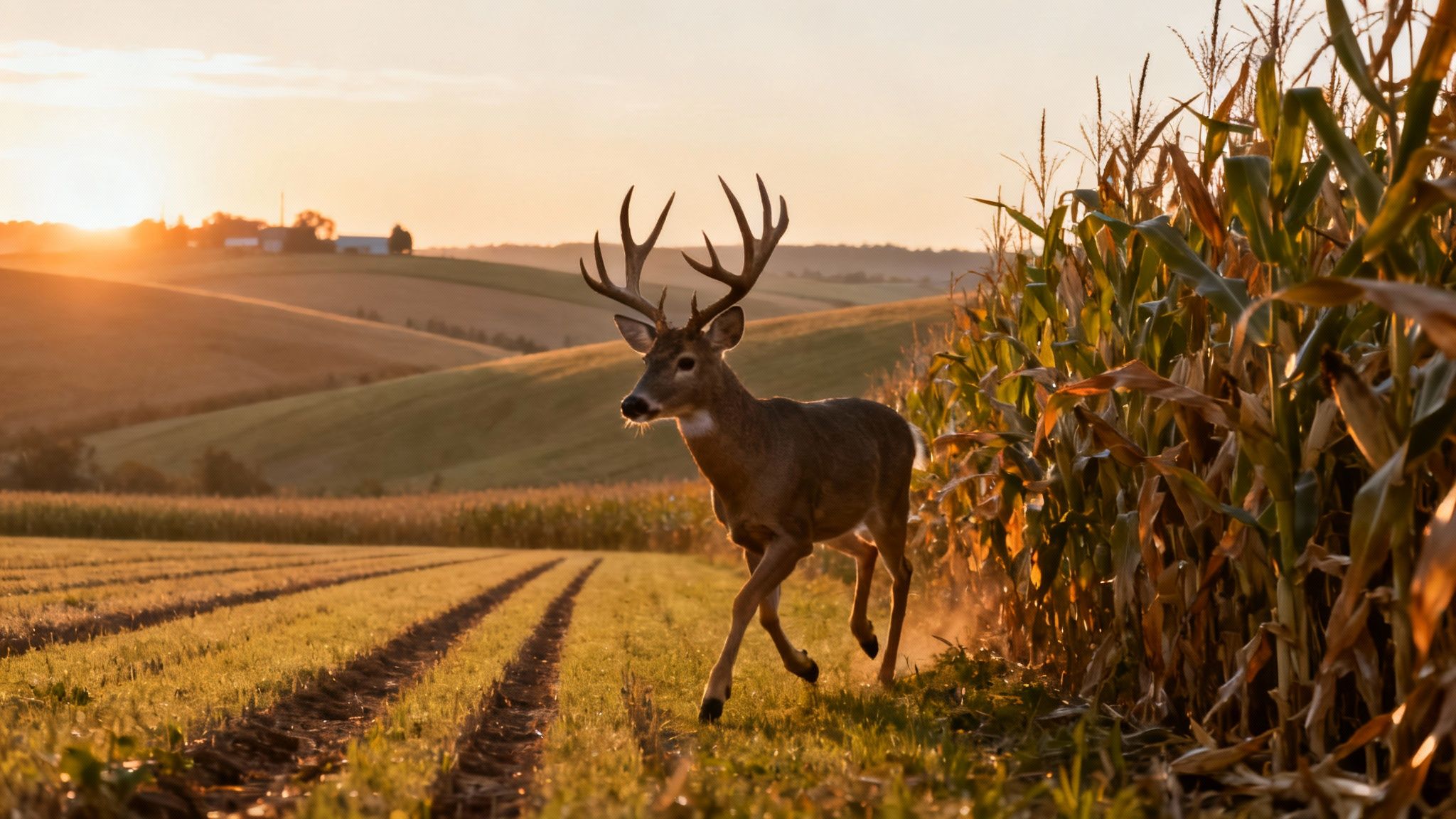
Unlike states dominated by vast private ranches, Iowa's hunting landscape is a mix of public land, private parcels accessible through permission, and affordable leases. This makes it one of the best states to hunt whitetail deer for the serious, self-guided trophy hunter. The rolling hills and river bottoms of counties like Winneshiek and Allamakee in Northeast Iowa are legendary for producing bucks in the 160 to 180-inch range, proving you don't need a high-fence operation to find a world-class animal.
Why Iowa Excels for Trophy Hunters
Iowa’s trophy potential is a direct result of its limited tag allocation system for non-residents, which effectively manages hunting pressure and allows bucks to reach older age classes. The nutrient-rich soil supports endless fields of corn and soybeans, providing an ideal food source that fuels exceptional body and antler growth. This combination means that while drawing a tag can be challenging, the quality of the hunt is unparalleled once you do.
Actionable Scouting and Hunting Strategy
Success in Iowa requires meticulous, data-driven scouting to pattern specific trophy-class bucks in a competitive environment. Cellular trail cameras are a non-negotiable tool for understanding deer movement before the season begins.
- Pattern Pre-Rut Behavior: Deploy Magic Eagle cameras in August along agricultural field edges and within river valley bedding areas. This timing is critical for identifying which mature bucks are establishing their core areas for the fall.
- Leverage AI for Efficiency: Use Magic Eagle's AI species recognition to instantly filter out does and immature bucks. This allows you to focus solely on your target animals, documenting their patterns and building a precise "hit list."
- Map Key Transition Zones: Obsessively scout the transition zones between food sources and bedding cover. Use your camera data to pinpoint the exact entry and exit trails mature bucks use, which are prime locations for ambush setups. For more information on camera usage regulations, it's crucial to understand the latest rules; learn more about Iowa's trail camera laws here.
- Hunt the Wind: Plan your stand locations based on prevailing wind patterns. In Iowa, a consistent northeast wind often provides the perfect advantage for morning hunts on the downwind side of a known travel corridor.
4. Kentucky - The Southern Premier Destination
Kentucky has quietly emerged as a powerhouse, offering a unique blend of accessible public land and exceptional private hunting opportunities. With a statewide herd estimated at over one million whitetails, the Bluegrass State provides a diverse landscape where northern hardwoods meet southern mixed forests. This creates ideal habitat that supports both high deer densities and serious trophy potential.
Unlike many states where top-tier hunting is exclusive to private land, Kentucky offers the rare advantage of public ground with genuine 140-plus inch buck potential. The Daniel Boone National Forest and numerous state-owned properties provide vast tracts for the DIY hunter. This combination of accessibility and quality makes Kentucky one of the best states to hunt whitetail deer for those willing to put in the work.
Why Kentucky Excels for Public Land Hunters
The primary advantage of hunting in Kentucky is its proven track record for producing mature bucks on public land. The state’s one-buck limit is a key management strategy that encourages hunters to be selective, allowing more bucks to reach older age classes. Areas like the eastern section of the Daniel Boone National Forest regularly yield success rates over 30% for bucks scoring in the 120-140 inch range. This makes it a destination where dedication and smart scouting can lead to a trophy-class animal without the cost of a private lease.
Actionable Scouting and Hunting Strategy
Success in Kentucky’s rugged public terrain requires a disciplined and tech-driven scouting approach. Cellular trail cameras are a game-changer for monitoring vast and remote areas efficiently.
- Early Season Recon: Deploy cameras like the Magic Eagle in early August along established elk trails and water sources within the Daniel Boone National Forest. Deer frequently use these same paths, making them excellent monitoring locations.
- Leverage AI for Efficiency: Utilize the Magic Eagle’s AI species recognition to filter out elk and other non-target animals. This allows you to focus exclusively on tracking mature buck movement patterns and identifying potential target animals before the season begins.
- Map Key Features: In Kentucky’s steep terrain, deer concentrate in specific areas. Use your camera's GPS tagging feature to map bedding areas on benches and saddles between ridge systems. These travel corridors are prime locations for ambush setups.
- Pinpoint Water Sources: During dry periods, water becomes a critical resource. Deploying cameras on secluded ponds or creek crossings can reveal predictable daily patterns, helping you identify the best access corridors for a hunt.
5. Missouri - The Central Whitetail Proving Ground
Missouri offers a superb blend of trophy potential, accessibility, and sheer deer numbers, making it a true whitetail proving ground. With a robust population of around 1.3 million deer, the Show-Me State provides diverse habitats, from the rugged timber of the Ozark Mountains to the fertile agricultural lands in the north. This variety supports strong genetics and allows bucks to reach impressive maturity.
What sets Missouri apart is its balance between quality hunting and hunter opportunity. While it produces Boone and Crockett-class bucks annually, it doesn’t carry the high price tag of more famous trophy destinations. This accessibility makes it one of the best states to hunt whitetail deer for dedicated hunters looking for a legitimate chance at a mature buck without needing to invest in a high-fence operation.
Why Missouri is a Consistent Producer
The key to Missouri's success is its combination of excellent habitat and strategic management. The state’s regulations, including an antler point restriction in many counties, have successfully improved the age structure of the buck population. This allows more deer to reach the 3.5 to 4.5-year-old class, where antler growth truly peaks. Northern Missouri's agricultural zones consistently yield bucks in the 130-150 inch range, while managed private properties in the Ozarks can boast success rates over 60%.
Actionable Scouting and Hunting Strategy
In Missouri's mixed terrain, scouting success depends on identifying travel corridors between bedding and feeding areas. Cellular cameras are indispensable for patterning bucks in these transitional zones without applying unnecessary pressure.
- Target Transition Zones: Deploy Magic Eagle cameras along the edges of agricultural fields in northern Missouri or on ridge-top saddles and creek bottoms in the Ozarks. These are natural funnels for deer movement.
- Establish a Pre-Rut Baseline: Set cameras out by mid-August to monitor buck activity and velvet antler growth. Use the GPS tagging feature to map out rub and scrape lines as they appear in September and October, revealing the primary routes of dominant bucks.
- Leverage AI for Rut Insights: As the pre-rut heats up in late October, use Magic Eagle’s AI species recognition to focus solely on buck activity. Monitor the frequency of new bucks showing up on your cameras; this is a clear indicator that the seeking phase of the rut has begun.
- Pinpoint Bedding Areas: In the dense timber of the Mark Twain National Forest, use camera data to work backward from evening food source photos to identify likely bedding areas on nearby ridges. For more detail on this tactic, learn how to find deer bedding areas to refine your stand placement for morning hunts.
6. Pennsylvania - The East's Trophy Whitetail Capital
Pennsylvania has firmly established itself as a top-tier destination for serious hunters, managing a robust population of approximately 1.4 million whitetails. The state offers a unique blend of sprawling public lands and managed private properties, creating exceptional trophy potential in the eastern United States. This isn't just a numbers game; it's about quality.
The state’s controlled hunting culture, limited tags, and intensive management programs have cultivated a herd with excellent age structure. This focus consistently produces mature bucks in the 140 to 160-inch class, often with lower hunter density than some famous Midwest hotspots. For those seeking a challenging and rewarding hunt, Pennsylvania is one of the best states to hunt whitetail deer on the East Coast.
Why Pennsylvania Excels for Trophy Hunters
The primary advantage in Pennsylvania is the sheer volume of accessible public land combined with a management philosophy that works. The state's preference point system, while competitive, makes drawing premier tags achievable for non-residents. Regions like the northern tier state forests are known producers of 140-160 inch bucks, while success on game lands in the Laurel Highlands can be high for those willing to put in the work.
Actionable Scouting and Hunting Strategy
Success on Pennsylvania’s public lands demands a more strategic scouting approach than on managed private ground. Cellular trail cameras are a game-changer for monitoring remote and hard-to-reach areas with minimal pressure.
- Early Season Intelligence: Deploy Magic Eagle cameras on state game lands in early September. Focus on topographic funnels like saddles and benches to establish baseline patterns before hunting pressure increases.
- Filter the Noise: Pennsylvania’s doe populations are healthy. Use Magic Eagle’s AI species recognition to automatically filter out does and non-target animals, ensuring you only spend time analyzing mature bucks.
- Map Key Travel Routes: Use your camera's GPS tagging feature to map established rub lines and scrape lines. Correlating this data with topographic maps helps reveal core travel corridors for rutting bucks.
- Hunt the Edges: Identify transition zones where public land borders private agricultural fields. These edges are dynamite spots, but always double-check boundaries. Your camera data will tell you exactly when and where bucks are crossing, giving you the perfect ambush point. For more insights on this, check out these strategies for capturing more bucks on trail cams.
7. Mississippi - The Southern Rising Star
Often flying under the radar, Mississippi has rapidly become a powerhouse destination for hunters seeking high-quality, mature bucks without the Texas price tag. With a statewide deer herd estimated at 1.75 million, the Magnolia State combines a long, liberal season with outstanding genetics, particularly in the fertile Mississippi Delta and coastal plain regions. The state's management programs and ideal habitat are consistently producing impressive results.
Mississippi’s appeal lies in its accessibility and trophy quality. Affordable private land leases, often ranging from $2-5 per acre, and substantial public land opportunities make it one of the best states to hunt whitetail deer for the budget-conscious trophy hunter. The combination of managed timber properties and nutrient-rich agricultural zones creates the perfect environment for bucks to grow old and heavy-antlered, with bucks topping 140 inches becoming increasingly common.
Why Mississippi Is a Top Contender
The secret to Mississippi's success is its habitat and management. The Yazoo Delta region, for instance, is an emerging hotspot for producing bucks in the 140-160 inch class. Public lands like the Delta National Forest and various Wildlife Management Areas (WMAs) are known for high success rates, with hunters reporting 30-40% success on bucks scoring 120-150 inches. This consistent production of quality animals makes Mississippi a serious contender.
Actionable Scouting and Hunting Strategy
Success in Mississippi, especially on private leases or sprawling public tracts, requires a deep understanding of how deer use the landscape throughout the year. Cellular trail cameras are your best tool for gathering this crucial long-term intelligence.
- Document Genetic Progress: Deploy Magic Eagle cameras year-round on private leases. Use AI species recognition to filter and track specific bucks from season to season, documenting their antler growth and establishing a clear picture of the property's genetic potential.
- Map Habitat Transitions: Use GPS tagging on your camera photos to map timber harvest areas, prescribed burns, and new growth. This helps you understand how deer patterns shift in response to habitat changes and identify new travel corridors.
- Identify Natural Funnels: Focus camera placement on natural funnels between thick timber bedding areas and agricultural food sources like soybeans or corn. These transition zones are prime ambush points during the pre-rut and rut.
- Leverage Environmental Data: Pay close attention to the temperature and humidity data provided by your Magic Eagle camera. In the humid South, deer movement spikes during cool fronts. Use these alerts to know exactly when to be in the stand for peak activity.
8. Ohio - The Midwest's Hidden Gem
Often overshadowed by its more famous Midwestern neighbors, Ohio has quietly emerged as a powerhouse for whitetail hunters. With a robust herd of over 700,000 deer and significant public land access, particularly in the eastern and southern portions of the state, the Buckeye State offers a fantastic blend of opportunity and quality. Its fertile farmlands and rolling hardwood hills provide the ideal nutrition and cover needed to produce impressive bucks.
This combination of accessible land, reasonable tag costs, and proven genetics for producing 130-150 inch deer makes Ohio one of the best states to hunt whitetail deer for those seeking a rewarding and attainable hunt. The state's effective management has created a balanced age structure, meaning hunters have a real chance at encountering a mature, heavy-racked buck without paying for a high-fence experience.
Why Ohio Excels for the Public Land Hunter
Ohio’s primary advantage is the quality of its public hunting areas, especially in the Appalachian hill country of the east and southeast. These vast tracts of forest, like the Wayne National Forest, consistently produce trophy-class deer. Hunters willing to put in the effort to get away from access points are often rewarded with encounters that rival private land hunts in other states.
Success rates on these public lands for bucks in the 120-140 inch range can reach 20-30%, a testament to the state’s healthy herd and effective wildlife management programs. This makes it an ideal destination for the DIY hunter.
Actionable Scouting and Hunting Strategy
Success in Ohio’s hilly terrain requires understanding how deer use elevation changes to their advantage. Cellular trail cameras are crucial for patterning bucks as they move between bedding areas on ridges and feeding zones in agricultural valleys.
- Monitor Transition Zones: Deploy Magic Eagle cameras on trails connecting thick hillside bedding cover to valley food sources. Focus on benches and saddles that funnel deer movement.
- Leverage AI for Efficiency: Use Magic Eagle's AI detection to filter images and focus your analysis on mature bucks. This is especially helpful when monitoring multiple properties or vast public land tracts, allowing you to quickly identify target animals.
- Pinpoint Pre-Rut Movement: Begin scouting in late August and early September to document buck patterns before the rut shuffle begins. Monitor established trails and field edges to learn how specific bucks use the landscape.
- Use Data to Hunt Smart: Analyze camera data, noting the time and temperature of peak buck activity. This intelligence allows you to plan hunts around cold fronts and key transition times, increasing your odds of intercepting a mature buck during legal shooting light.
9. South Carolina - The Southeast's Growing Opportunity
While not traditionally seen in the same light as Midwest giants, South Carolina is rapidly emerging as a premier destination for serious whitetail hunters. The state offers a unique combination of an incredibly long season, affordable access to private land, and a growing population of trophy-class bucks. With an estimated 1.1 million deer, the Palmetto State provides a rich environment for hunters seeking a high-value southern hunt.
The state’s hunting culture is built on a tradition of plantation-style management, which focuses on producing healthy herds and mature bucks. This, combined with mixed hardwood-pine habitats and a mild climate, creates ideal conditions for antler growth. For hunters looking for consistent opportunities at 130-150+ inch deer without the premium price tag of other states, South Carolina is one of the best states to hunt whitetail deer.
Why South Carolina Excels for Dedicated Hunters
The primary appeal of South Carolina is its exceptionally long season, which can run from August 15th to January 1st in some game zones. This extended timeline allows for unparalleled scouting and hunting opportunities. Managed properties in the Lowcountry and Midlands consistently produce bucks in the 130-160 inch range, with some outfitters reporting success rates over 60% on quality animals. The availability of affordable private leases, often in the $2-4 per acre range, makes long-term management a realistic goal for many hunters.
Actionable Scouting and Hunting Strategy
In a state with a year-round growing season, continuous intelligence gathering is the key to consistent success. Cellular trail cameras are a non-negotiable tool for understanding herd dynamics and patterning mature bucks from January through December.
- Establish a Year-Round Baseline: Deploy Magic Eagle cameras immediately after the season ends. This allows you to inventory surviving bucks and track their antler development through the entire spring and summer, providing a complete picture of your property's potential.
- Map Key Resources: Use GPS-tagged photos from your cameras to create a digital map of food sources (acorn flats, food plots, palmetto thickets) and suspected bedding areas. This data reveals crucial transition corridors where bucks travel.
- Filter for Maturity: Leverage Magic Eagle’s AI species recognition to filter out does and younger bucks. This saves hundreds of hours by focusing your scouting efforts exclusively on mature, target animals, allowing you to track their specific patterns.
- Hunt the Transitions: Use your intel to place stands along travel routes between thick bedding cover and primary food sources. This strategy is particularly effective during the early season when deer movement is more predictable around feeding times. For more on this, check out these advanced tips on how to pattern a buck.
10. Kansas - The Plains Trophy Alternative
Kansas offers a unique blend of prairie, agricultural fields, and wooded river bottoms that consistently produces giant whitetails. With a statewide herd estimated at 750,000, the Sunflower State has become a top destination for hunters seeking trophy-class bucks without the high costs associated with other premier states. Its limited-draw tag system for non-residents helps manage pressure, allowing bucks to reach maturity and express their full genetic potential.
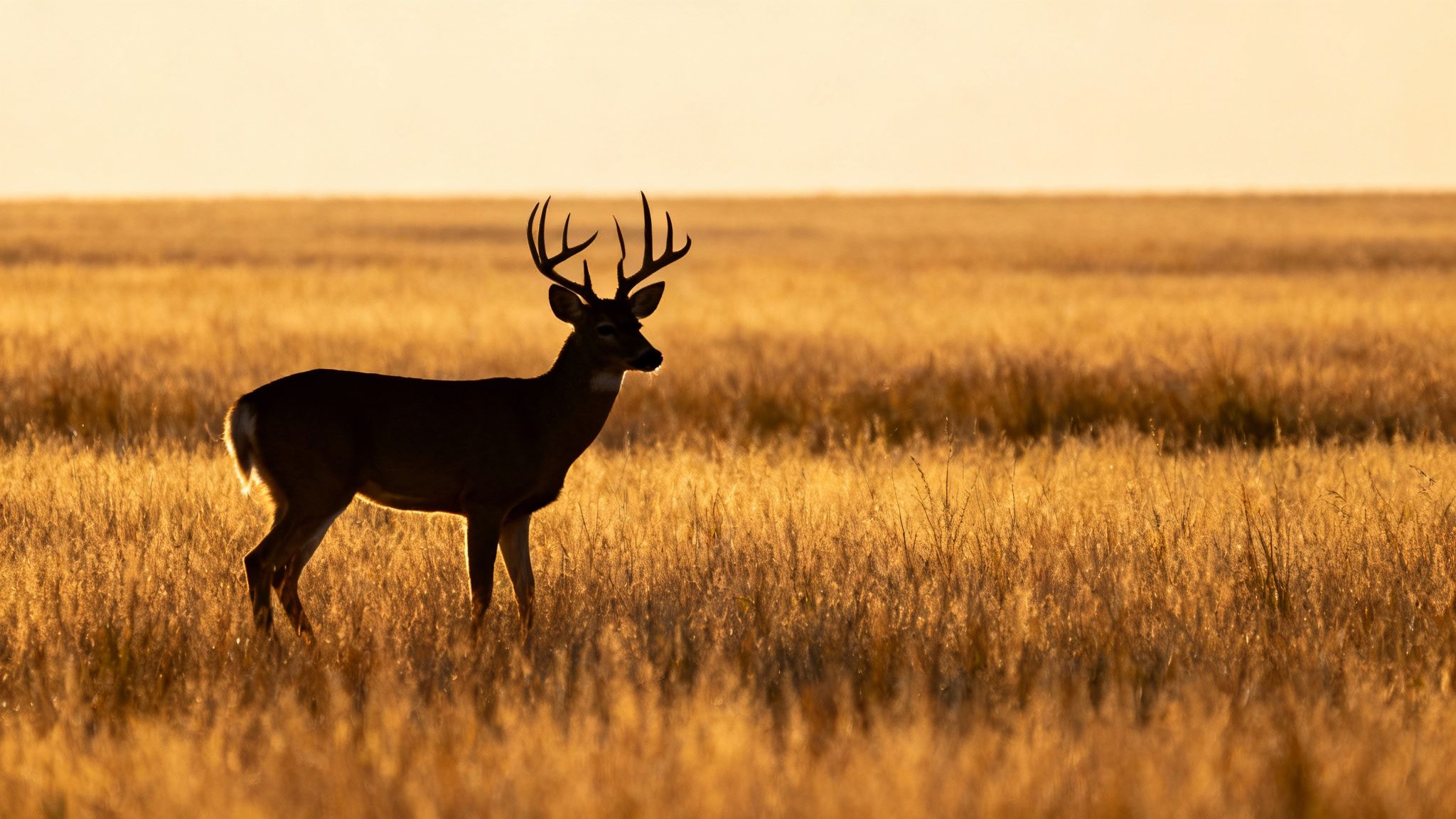
Unlike the dense forests of the East or the vast ranches of Texas, Kansas hunting is defined by isolated woodlots and creek drainages that act as natural funnels. This landscape makes deer patterns highly predictable. The state's focus on conservation and a strong outfitter network has cultivated a reputation for producing bucks in the 140-160+ inch class, making it one of the best states to hunt whitetail deer for those who prefer a spot-and-stalk or a strategic ambush approach.
Why Kansas Excels for Trophy Hunters
The key to Kansas's success is its landscape, which concentrates deer movement along predictable travel corridors. Bucks often bed in thick prairie grass or secluded timber patches and travel along creek bottoms and hedgerows to feed in agricultural fields. This creates ideal ambush points for both archery and firearm seasons, where a well-placed stand can offer incredible action during the rut. The combination of excellent nutrition and managed hunting pressure ensures a healthy age class of mature bucks.
Actionable Scouting and Hunting Strategy
Success in Kansas is about identifying and monitoring the funnels that connect bedding to feeding areas. Cellular trail cameras are indispensable for patterning deer in this open environment without adding human pressure.
- Monitor Travel Corridors: Deploy Magic Eagle cameras along creek beds, fence lines, and timber edges that deer use to transition between bedding and food sources. These pinch points are where mature bucks are most likely to appear during daylight.
- Leverage AI for Efficiency: Use the AI species recognition feature to filter out non-target animals. In open country, this saves significant time by letting you focus solely on identifying and inventorying the bucks using a specific corridor.
- Identify Rut Activity: During the pre-rut and rut, bucks will cruise these corridors searching for does. Set up your cameras on scrape lines and rub lines found along these routes to pinpoint when rutting activity peaks in your area.
- Hunt the Edges: Based on your camera data, set up stands on the downwind side of these travel routes. This approach allows you to intercept bucks as they move, increasing your odds of encountering a mature deer on its feet.
Top 10 Whitetail Hunting States Comparison
| State | Complexity 🔄 | Resources ⚡ | Expected Outcomes ⭐📊 | Ideal Use Cases 💡 | Key Advantages |
|---|---|---|---|---|---|
| Texas - The Trophy Whitetail Capital | High 🔄 — access and lease negotiation required | High cost ⚡ — leases $20–50+/acre; 97% private; OTC tags on private | Elite trophy ⭐⭐⭐⭐⭐ — 150+ B&C / 300+ P&Y annually; private mature-buck success 50–80% 📊 | Dedicated trophy hunters with long-term leases and year-round scouting | Largest trophy population; extended season; established outfitters |
| Wisconsin - The Public Land Giant | Moderate 🔄 — public-land scouting, preference-point planning | Low–Moderate ⚡ — 31% public land; affordable tags; preference system | Moderate‑High ⭐⭐⭐⭐ — P&Y 100+; B&C 20–30; rifle public success 30–45% 📊 | Public‑land hunters seeking accessible trophy opportunity without leases | Abundant public land; proven draw system; extended archery season |
| Iowa - The Boone & Crockett Factory | Moderate‑High 🔄 — permission-based access; precise timing | Moderate ⚡ — leases $5–15/acre; OTC tags common | High ⭐⭐⭐⭐⭐ — top B&C production east of MS; 150+ entries; private success 60–80% 📊 | Hunters focusing on managed agricultural properties and precise pre‑rut tactics | High per‑capita B&C production; affordable leases; predictable pre‑rut behavior |
| Kentucky - The Southern Premier Destination | Moderate 🔄 — public+private mix, rugged terrain challenges | Low–Moderate ⚡ — 40% public land; inexpensive non‑resident license | High ⭐⭐⭐⭐ — 120–150" public potential; public success 25–40% 📊 | Public‑land hunters wanting 140"+ potential without high lease costs | Large public forest (Daniel Boone); extended archery season; less crowded |
| Missouri - The Central Whitetail Proving Ground | Moderate 🔄 — mixed terrain and land access | Low–Moderate ⚡ — leases $3–8/acre; 48% public land; OTC tags | Consistent ⭐⭐⭐⭐ — 120–150" common; private success 50–75%; overall 35–45% 📊 | Hunters seeking balance of access, affordability and reliable bucks | Significant public land; affordable leases; diverse habitat types |
| Pennsylvania - The East's Trophy Whitetail Capital | High 🔄 — limited tags, preference draws and rugged terrain | Moderate ⚡ — 60% public land; draw/pref systems; limited non‑resident odds | High ⭐⭐⭐⭐ — 140–160" potential; premium private success up to 70–85% 📊 | Eastern trophy hunters using preference points and multi‑season scouting | Large game lands; controlled hunting culture; sustainable management |
| Mississippi - The Southern Rising Star | Moderate 🔄 — expanding options; timber/agriculture dynamics | Low cost ⚡ — leases $2–5/acre; 44% public land; OTC-friendly | High & rising ⭐⭐⭐⭐ — 140–160" achievable; managed properties 70–80% success 📊 | Budget‑conscious trophy hunters targeting Delta/timber regions | Very affordable leases; strong growth in trophy quality; abundant water/timber |
| Ohio - The Midwest's Hidden Gem | Low‑Moderate 🔄 — metro access plus permission needed | Low ⚡ — 20% public land; affordable tags; close to metro centers | Moderate‑High ⭐⭐⭐ — 130–150" possible; private success 40–60% 📊 | Weekend or metro-area hunters seeking accessible trophy opportunities | Close proximity to cities; affordable tags; growing reputation |
| South Carolina - The Southeast's Growing Opportunity | Moderate‑High 🔄 — lease-focused with year‑round scouting | Very low cost ⚡ — leases $2–4/acre; 7% public land; OTC tags | Growing ⭐⭐⭐ — 130–150" common; managed success 70–85% 📊 | Hunters leveraging year‑round scouting on plantations and managed tracts | Extended seasons; cheapest leases; warm climate enables continuous scouting |
| Kansas - The Plains Trophy Alternative | Moderate 🔄 — prairie/woodland strategy; terrain variety | Moderate ⚡ — leases $5–12/acre; 35% public land; OTC tags | High ⭐⭐⭐⭐ — 140–160"+ achievable; managed success 75–85% 📊 | Hunters preferring open‑country glassing and lower competition | Flint Hills habitat; lower hunter density; strong conservation culture |
Choosing Your State and Gearing Up for Success
The journey to finding your ideal whitetail hunting destination is as much about self-reflection as it is about state statistics. We've explored a diverse lineup, from the high-fence trophy potential of Texas to the vast, accessible public lands of Wisconsin, and the Boone & Crockett powerhouse that is Iowa. Each state offers a unique script for your next hunting adventure. Your task is to match that script to your personal hunting narrative.
The ultimate decision hinges on a clear understanding of your priorities. What are you truly seeking in a hunt? Is it the sheer number of deer and liberal tags found in states like Pennsylvania or Mississippi, or the heart-pounding pursuit of a once-in-a-lifetime giant in the managed landscapes of Kansas or Kentucky? By weighing factors like trophy genetics, hunting pressure, season dates, and access, you can move beyond a generic list and pinpoint the one or two states that align perfectly with your budget, timeline, and hunting style.
Key Takeaway: The "best" state is not universal; it's personal. Define your non-negotiables first-whether that's public land access, trophy-class genetics, or a specific season window-to narrow down your options effectively.
From Destination to Domination: The Power of Intelligent Scouting
Once you've selected your battleground, the real work begins. Success in any of these top-tier states is rarely a matter of luck. It is the direct result of meticulous, year-round preparation and, most importantly, intelligent scouting. This is where the modern hunter gains a decisive edge, turning abstract knowledge of a state into a concrete plan for a specific location.
Digital scouting using satellite and topographic maps is your first step, allowing you to identify potential funnels, bedding areas, and food sources from a thousand miles away. But boots-on-the-ground validation is irreplaceable. For many hunters, especially those planning an out-of-state trip, maximizing the value of limited scouting time is critical. This is where advanced cellular trail camera technology transforms your strategy from hopeful to surgical.
Deploying cameras like the Magic Eagle allows you to multiply your presence in the woods. While you're at work or home, your digital scouts are collecting invaluable data 24/7. Advanced features provide more than just a picture of a deer; they build a comprehensive intelligence portfolio on your target area.
- AI Species Recognition: Instantly filter out non-target species, saving you time and battery life, ensuring you only get alerts for whitetail activity.
- Real-Time Weather Overlays: Correlate buck movement with specific wind directions, temperatures, and barometric pressure changes, revealing predictable patterns.
- GPS Mapping: Pinpoint exact camera locations on a digital map, allowing you to visualize deer travel corridors between different camera setups.
Owning Your Hunt: The Dream of Private Ground
For many hunters, the ultimate goal is to move beyond public land or leasing and cultivate a personal whitetail paradise. Owning your own hunting property provides unparalleled control over habitat, pressure, and deer management. If this is part of your long-term vision, understanding the acquisition process is the first critical step. For those who dream of owning private hunting grounds, understanding the process is key, and you can consult this resource as a general reference for a beginner's guide on how to buy rural land. This knowledge can help you turn the dream of a private hunting sanctuary into a tangible reality.
Ultimately, whether you're tackling public land in Ohio or managing a private parcel in Missouri, the principles remain the same. Success is born from dedication, a deep respect for the animal, and the strategic application of the best available tools. The states on this list provide the stage; it's up to you to write the story of your hunt.
Ready to transform your scouting from a weekend task into a 24/7 intelligence operation? The Magic Eagle cellular trail camera series gives you the data-driven edge needed to succeed in the best states to hunt whitetail deer. Explore the full lineup and see how advanced features can help you pattern and harvest your target buck this season at Magic Eagle.