

In the world of serious hunting, the ethical recovery of a wounded animal is paramount. A well-trained tracking dog is not just a tool; it's the most effective and reliable partner a hunter can have for ensuring no game is lost. But what makes a dog truly exceptional at this demanding task? This guide moves beyond simple breed lists to explore the nuances that separate an average tracker from a great one. We will provide actionable insights into the top breeds that excel at deer recovery, breaking down their unique strengths, temperaments, and ideal hunting scenarios.
Many of these specialized hounds share traits with more common canines, so before delving into the specifics of deer tracking breeds, it's insightful to consider general information about these popular dog breeds and their characteristics. This foundational knowledge can help you better understand the instincts we will discuss.
Furthermore, we will show you how to pair the right canine genetics with modern technology. By combining a superior nose with smart scouting data from tools like cellular trail cameras, you can create an unstoppable system for tracking and recovery. Let’s explore the breeds that define the standard for good deer tracking dogs and learn how to turn a challenging trail into a guaranteed success.
1. Beagle
The Beagle might be famous for its rabbit-hunting prowess, but this compact scent hound is one of the most effective and popular choices for deer recovery. Their legendary nose, tireless stamina, and small size make them uniquely suited for navigating the dense undergrowth where a wounded deer often retreats. Weighing just 20-30 pounds, a Beagle can push through thickets and briar patches that would stop a larger dog, all while staying locked onto a scent trail.
Their independent nature and powerful drive are assets in tracking, as they will persistently follow a trail without constant handler direction. This combination of size and scenting ability makes them one of the best good deer tracking dogs for hunters working in challenging terrain.
Practical Implementation and Key Strengths
Professional guides across the American South have long relied on Beagles, often working them in small, rotating packs to keep the dogs fresh during long tracking sessions. A key advantage is their manageable size, which simplifies transportation to remote hunting spots. For landowners, combining a Beagle's on-the-ground talent with high-tech scouting offers a powerful advantage. For example, using a Magic Eagle trail camera to identify a deer's core bedding area provides a strategic starting point for the Beagle, saving valuable time. For an in-depth look at this compact yet powerful tracker, consider our detailed Beagle breed spotlight.
Actionable Tips for Beagle Handlers
To maximize a Beagle's potential, targeted training and strategic deployment are essential.
- Start Early: Begin scent training in puppyhood using deer hide and blood. This focuses their natural instincts on the correct quarry from the start.
- Leverage Technology: Use your Magic Eagle camera network to pinpoint the last known location or direction of travel. This gives your Beagle a high-probability starting point, which is crucial for interpreting complex whitetail deer tracks and signs.
- Reinforce Recall: Beagles have a one-track mind when on a scent. Constant and consistent training on recall commands is non-negotiable to prevent them from pursuing a trail too far.
- Utilize GPS: Equip your Beagle with a quality GPS collar. This allows you to monitor their location in real-time, ensuring their safety and helping you anticipate the deer’s path.
2. Bloodhound
When it comes to pure scenting ability, the Bloodhound is in a class of its own. This iconic breed is the ultimate tracking specialist, renowned for its unparalleled ability to follow aged scent trails over vast distances and difficult terrain. With over 300 million scent receptors, a Bloodhound's nose is so powerful it can distinguish individual scent signatures and follow a trail that is days old, making it one of the most reliable and good deer tracking dogs available.
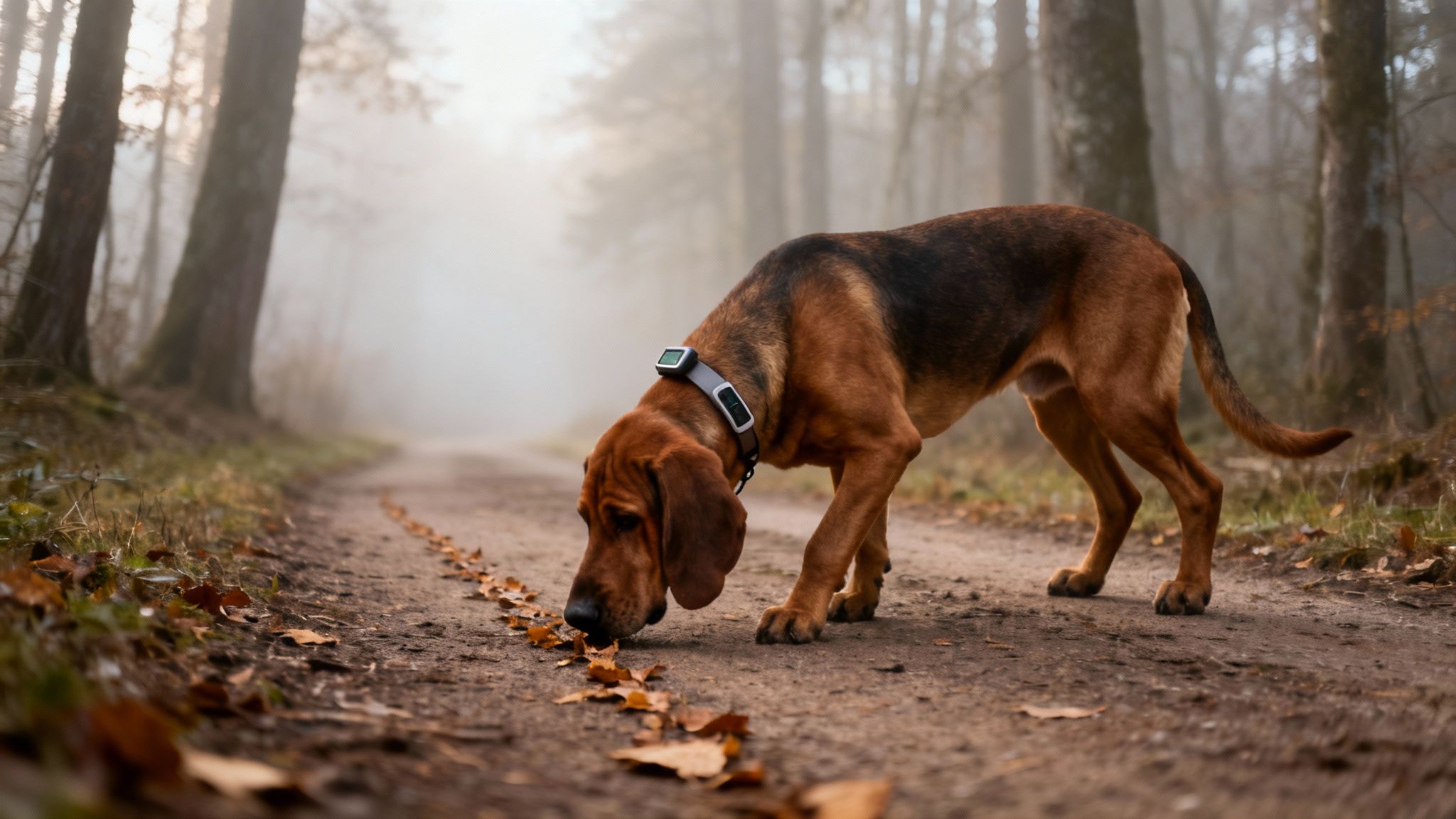
Weighing between 80-110 pounds, these are powerful and determined dogs built for endurance. Their methodical, nose-to-the-ground approach makes them the preferred choice for professional deer recovery services and hunters operating on large properties where a trail can stretch for miles. The Bloodhound's singular focus on the scent line allows it to work independently, providing confidence that no stone will be left unturned in a recovery effort.
Practical Implementation and Key Strengths
Professional recovery operations, such as Texas Tracker Dogs, utilize Bloodhounds to find deer across multi-thousand-acre ranches, demonstrating their effectiveness at scale. Their stamina allows them to work terrain that would exhaust smaller dogs. Outfitters often pair Bloodhound teams with technology like Magic Eagle's live-stream capabilities to provide clients with real-time updates and confidence during a recovery. This professional-grade combination turns a potentially lost deer into a successful and ethical harvest.
Actionable Tips for Bloodhound Handlers
A Bloodhound’s natural talent must be guided with smart handling and modern tools to achieve peak performance.
- Trust the Nose: Once a Bloodhound is locked onto an established scent line, allow it to work. Micromanaging or trying to "correct" its path can break its concentration and reduce effectiveness.
- Integrate Camera Data: Use your Magic Eagle app to map previous deer sightings and travel corridors. Starting your Bloodhound at the deer's last confirmed location provides a strong, clear starting point for a successful track.
- Optimize Conditions: Pay attention to the real-time temperature and humidity data from your Magic Eagle cameras. Bloodhounds perform best in cool, moist conditions that help hold scent.
- Train with Positivity: Bloodhounds are sensitive dogs that thrive on positive reinforcement. Harsh corrections can damage their confidence and diminish their natural drive to track. Consistent, rewarding training is key.
- Establish a Scent Library: Keep scent-soaked cloths or deer parts from previous harvests in sealed bags and freeze them. Using these for training reinforces the specific scent you want your dog to follow, especially when scouting to find deer bedding areas.
3. Redbone Coonhound
The Redbone Coonhound is a versatile American scent hound prized throughout the South and Southeast for its deer tracking capabilities. Originally bred for raccoon hunting, these medium-large dogs, typically weighing 45-70 pounds, blend speed, endurance, and an exceptional nose. They offer a powerful yet more manageable alternative to larger breeds like the Bloodhound, combining relentless determination with a higher potential for recall, making them responsive to commands during a track.
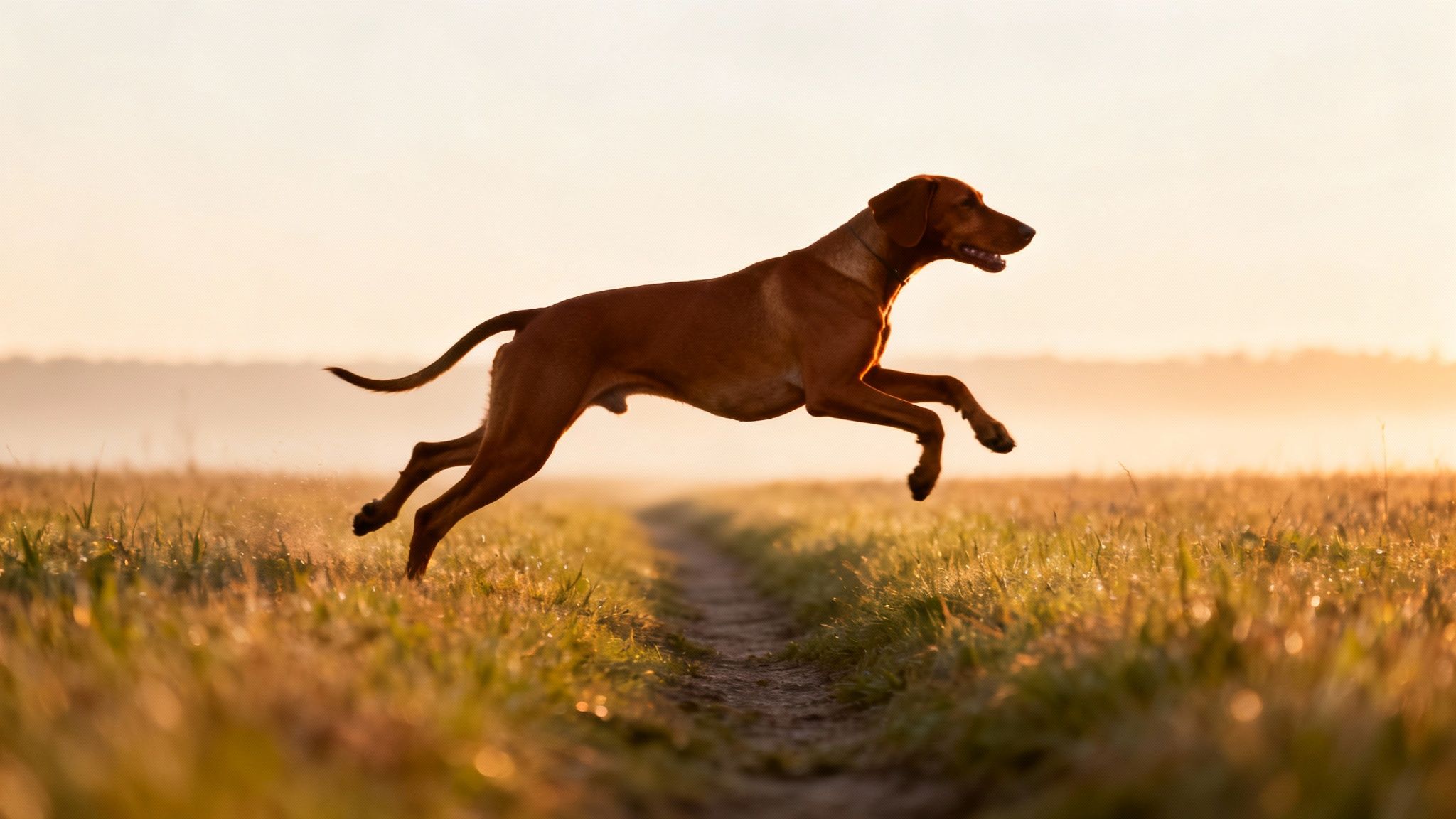
This balanced temperament makes the Redbone Coonhound one of the best good deer tracking dogs for hunters who need a persistent partner that remains engaged with the handler. Their adaptability has made them a staple for professional guides and landowners managing multi-use properties, where they assist in both deer recovery and predator control.
Practical Implementation and Key Strengths
In states like Louisiana, Arkansas, and Mississippi, Redbone Coonhounds are cornerstones of successful deer recovery operations. Their stamina allows them to cover significant ground, which is a major advantage in sprawling hunting territories. A key strategy involves using technology to complement the dog's natural abilities. For instance, a network of Magic Eagle cameras can identify a buck's movement patterns, especially during challenging weather conditions, giving the handler critical intelligence before deploying the Redbone. Exploring information on how deer movement is affected by rain can help a handler decide the best time to start a track.
Actionable Tips for Redbone Coonhound Handlers
To get the most out of a Redbone Coonhound, a handler must focus on targeted training and strategic use of modern tools.
- Focus the Drive: Train your Redbone with a specific scent, such as deer tarsal gland or interdigital gland lure, to channel their powerful hunting drive exclusively onto your target game.
- Leverage AI Scouting: Use your Magic Eagle camera’s AI species recognition to confirm deer activity at specific trailheads or crossings. This provides a high-confidence starting point for your Redbone.
- Work in Rotation: On long or difficult tracks, consider pairing multiple Redbones and rotating them. This tactic maintains peak performance and prevents individual dog fatigue, keeping the pressure on the deer.
- Utilize GPS: A reliable GPS collar is non-negotiable. It allows you to track your dog’s location in dense cover, monitor their progress, and ensure their safety during an extended pursuit.
4. Treeing Walker Coonhound
The Treeing Walker Coonhound, a quintessential American scent hound, is rapidly gaining favor in the deer tracking community for its potent combination of speed, intelligence, and an exceptional nose. Weighing between 45 and 70 pounds, these dogs possess the stamina and drive of their Walker Hound lineage but are also celebrated for their high trainability and responsiveness. This makes them a prime choice for modern hunters who prefer a more strategic and controlled tracking approach.
Their larger size and longer legs allow them to cover vast open country much faster than smaller hounds, making them highly effective on large properties. This breed's ability to process scent quickly and move with purpose makes them one of the most efficient and good deer tracking dogs for hunters looking to close the gap on a wounded animal before it travels too far.
Practical Implementation and Key Strengths
Treeing Walker Coonhounds are particularly valued in modern, technology-integrated hunting operations across the Midwest and Texas. Professional guides often prefer them for client hunts because their reliable and biddable nature ensures a more controlled and successful recovery. A key advantage is their adaptability; they excel in varied terrain, from dense woods to open pastures. Landowners are combining the Walker's on-the-ground speed with remote scouting, using the Magic Eagle trail camera network to pinpoint a deer’s last known location and then deploying the dog for a swift and targeted track.
Actionable Tips for Treeing Walker Coonhound Handlers
To harness the full potential of a Treeing Walker, blend their natural abilities with modern technology and focused training.
- Scout First, Track Later: Before releasing your dog, use your Magic Eagle trail camera network to identify the most recent deer activity zones. This gives your Walker a high-probability starting point, saving critical time.
- Focus the Scent: Train your hound to key in on specific scent markers like interdigital or tarsal glands, not just blood. This helps them stay on the correct animal if other deer cross the trail.
- Plan with Technology: Use the MAGIC EAGLE app’s interactive map to mark camera locations and plan a strategic release point near the most recent sighting, maximizing efficiency.
- Reinforce Strong Recall: A Walker's speed can get them far away, fast. Consistent, positive reinforcement training for recall commands is essential for control and safety.
- Track with GPS: Always equip your Treeing Walker with a reliable GPS collar. This allows you to monitor their location and pace, helping you anticipate the deer’s path and prevent an overly long pursuit.
5. Black and Tan Coonhound
The Black and Tan Coonhound is a quintessential American scent hound, bred for its relentless stamina and powerful nose. Renowned for their methodical and steady tracking style, these dogs bring a sense of calm reliability to the often-chaotic process of deer recovery. Weighing between 55-75 pounds, their size gives them the strength to navigate rugged terrain while their focused temperament prevents them from becoming overly agitated on a trail.
This breed’s heritage is rooted in trailing game for long distances, making them one of the most dependable good deer tracking dogs for hunters who need a consistent and trainable partner. Their balanced demeanor makes them suitable for landowners and outfitters who require a focused working dog that integrates seamlessly into property management efforts without excessive prey drive.
Practical Implementation and Key Strengths
Hunting preserve operators and professional guides across the South value the Black and Tan for its predictability and client-friendly nature. Their calm focus makes them ideal for guided hunts where a steady dog is essential. For landowners, these hounds serve a dual purpose, excelling at both wound recovery and general property security. By integrating a Black and Tan with a network of Magic Eagle trail cameras, a hunter can create a comprehensive wildlife management system. The cameras identify deer patterns, and the dog provides the on-the-ground recovery asset when needed.
Actionable Tips for Black and Tan Coonhound Handlers
To get the most out of this steady tracker, handlers should focus on conditioning and strategic deployment.
- Condition to Camera Intel: Establish a consistent presence on your property with Magic Eagle cameras. Train your Coonhound to associate your pre-hunt scouting on the MAGIC EAGLE app with an upcoming tracking job.
- Maintain Scent Focus: Create a "scent library" using hides, glands, and blood from legally harvested deer. Use these items in regular training drills throughout the year to keep your dog’s nose calibrated specifically for whitetail scent.
- Optimize Scenting Windows: Use your Magic Eagle camera data to identify peak deer movement times. Deploy your hound during these periods when scent trails are freshest, increasing the odds of a quick recovery.
- Develop a Hybrid Approach: For particularly difficult or long tracks, consider pairing your steady Black and Tan with a faster hound. The Coonhound methodically works the cold trail, while the faster dog can take over once the deer is jumped.
6. Plott Hound
The Plott Hound is a unique American scent hound with a distinctive heritage rooted in the mountains of North Carolina. Known for their fearless determination and intelligence, they are one of the most tenacious good deer tracking dogs available, especially in challenging terrain. Weighing 45-75 pounds, Plotts are highly adaptable to rugged landscapes and excel in mountainous or heavily forested environments where a deer recovery mission can be particularly demanding.
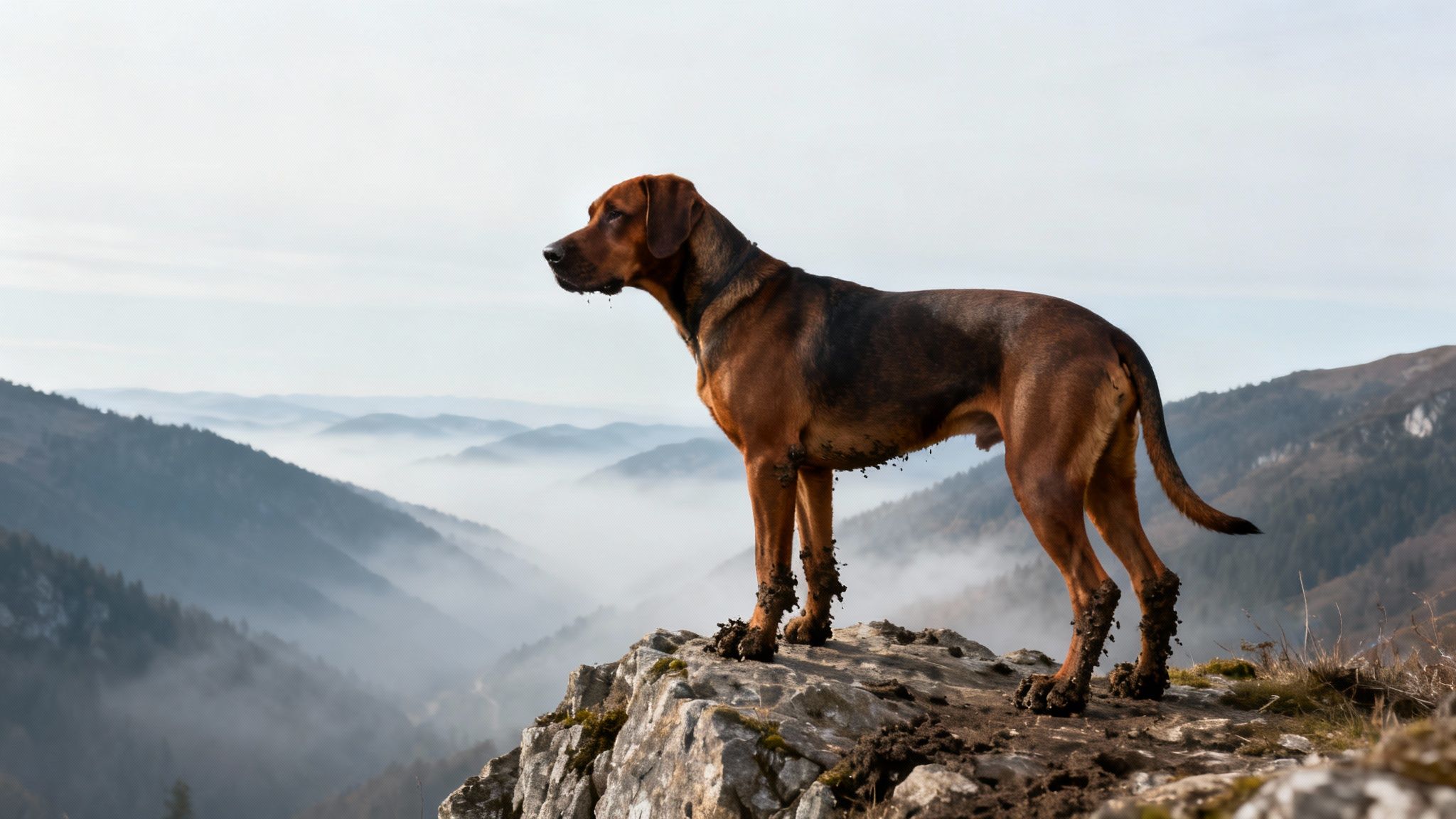
Unlike many hounds, the Plott Hound demonstrates exceptional problem-solving ability and a higher degree of trainability. This makes them ideal for hunters who want an intelligent tracking partner that responds well to commands while maintaining a powerful prey drive. Their gritty nature and loud, chopping bark make them unmistakable on a trail.
Practical Implementation and Key Strengths
Professional hunting guides throughout Appalachia have long relied on Plott Hounds for both deer and wild boar, a testament to their versatility. Their stamina and sure-footedness are unparalleled in high-altitude tracking scenarios. For modern hunters managing mountainous properties, combining a Plott’s grit with technology creates a formidable system. Using a network of Magic Eagle trail cameras positioned along ridges and elevation changes can reveal a wounded deer's likely escape route. This intelligence allows the handler to deploy the Plott Hound strategically, giving the dog a significant advantage in difficult terrain.
Actionable Tips for Plott Hound Handlers
To harness a Plott Hound's full potential, a handler needs to match the dog's intensity with structured training and smart technology integration.
- Establish Authority: Train with firm, consistent commands from an early age. A Plott’s intelligence means they will test handler authority, so establishing a clear leadership role is critical.
- Utilize Terrain Data: Deploy your Plott Hound strategically based on your Magic Eagle camera's interactive map showing recent sightings at various elevations. This is key for cutting off a deer’s path in the mountains.
- Monitor Scenting Conditions: Use the MAGIC EAGLE app's temperature and humidity data to identify optimal scenting conditions in mountain environments, where weather can change rapidly.
- Seek Mentorship: This is an intense breed. Pairing with experienced Plott handlers or mentors can help you develop the discipline and handling skills necessary to succeed.
7. English Foxhound
The English Foxhound, a classic symbol of aristocratic European hunts, brings centuries of scent-hounding heritage to the task of deer recovery. These large, powerful hounds, weighing 60-75 pounds, possess exceptional endurance and a world-class nose. Their calm, steady temperament and innate pack-hunting instincts make them an excellent choice for large properties and open country where a methodical, wide-ranging search is required.
While less common in North American deer woods than some American hound breeds, the English Foxhound's methodical nature and stamina are significant assets. Their ability to work harmoniously in a group makes them one of the best good deer tracking dogs for hunters who run multiple dogs, allowing for comprehensive coverage of vast areas where a single dog might be overwhelmed.
Practical Implementation and Key Strengths
Specialty hunting operations and large private preserves often utilize English Foxhounds for their ability to cover ground efficiently as a coordinated unit. Their size and power are well-suited for tracking in rolling hills or agricultural landscapes. A key advantage is their pack-oriented mindset, which allows a handler to deploy a team of dogs that work together to unravel a complex scent trail. Integrating this traditional approach with modern technology creates a formidable tracking system. For instance, using a network of Magic Eagle trail cameras to map deer movement corridors across a large property allows the handler to deploy the pack at the most strategic intercept point.
Actionable Tips for English Foxhound Handlers
Maximizing the effectiveness of an English Foxhound, especially in a pack setting, requires specific strategies.
- Establish Pack Structure: Through consistent training, establish a clear hierarchy within the pack to ensure cooperative tracking and prevent conflicts during a pursuit.
- Leverage Scenting Conditions: Use your Magic Eagle app’s weather overlay data to identify days with optimal humidity and temperature for scenting, which is critical for long-distance pack tracking.
- Deploy Strategically: Analyze your camera network's AI-detected deer activity to identify high-traffic funnels and bedding areas. Deploy your pack in these zones for the highest probability of success.
- Work in Groups: Operate English Foxhounds in small packs of 3 to 6 dogs. This size is ideal for maintaining control while maximizing the pack's collective scenting ability and trail-finding efficiency.
Top 7 Deer-Tracking Dogs Compared
| Breed | Complexity 🔄 (training / handling) | Resources ⚡ (space · cost · equipment) | Expected outcomes 📊 · Effectiveness ⭐ | Ideal use cases 💡 | Key advantages ⭐ |
|---|---|---|---|---|---|
| Beagle | Moderate 🔄 — consistent training; can be stubborn | Low ⚡ — small, affordable, moderate exercise | Good 📊 · ⭐⭐⭐ — excellent short-range scenting; quick in brush | Small/remote hunts; wounded-deer recovery on compact properties; camera-assisted scouting | Compact and portable; highly scent-driven; family-friendly off-season |
| Bloodhound | High 🔄 — needs experienced handlers; long training period | High ⚡ — large space, higher food/maintenance, GPS recommended | Exceptional 📊 · ⭐⭐⭐⭐⭐ — unmatched aged-trail and long-distance tracking | Large properties, professional recovery ops; integrate with GPS camera maps | Unparalleled nose; extreme endurance; reliable on aged trails |
| Redbone Coonhound | Moderate 🔄 — trainable but independent-minded | Moderate ⚡ — medium-large size; manageable upkeep | Very good 📊 · ⭐⭐⭐⭐ — fast, enduring, responsive with training | Active hunters who pursue dogs; Southern terrain; camera-directed deployments | Balance of speed, agility and trainability; manageable size |
| Treeing Walker Coonhound | Moderate 🔄 — highly trainable and responsive | Moderate ⚡ — medium-large, steady upkeep | Excellent 📊 · ⭐⭐⭐⭐ — efficient planned hunts; good endurance | Tech-assisted, planned deployments; mixed-terrain hunting | Intelligence and trainability; speed and handler responsiveness |
| Black and Tan Coonhound | Moderate 🔄 — steady, methodical training | Moderate ⚡ — larger frame; moderate maintenance | Consistent 📊 · ⭐⭐⭐ — reliable tracking; steady performance | Property-resident tracker; landowners and outfitters; dual companion/work roles | Calm temperament; dependable, methodical tracking |
| Plott Hound | High 🔄 — intense prey drive; needs firm, experienced handling | Moderate-High ⚡ — active, high exercise needs; mental stimulation | Very good 📊 · ⭐⭐⭐⭐ — excels in rugged/mountain terrain | Mountain/foothill hunting; multi-game operations; rugged properties | Fearless, intelligent, adaptable to difficult terrain |
| English Foxhound | Moderate-High 🔄 — pack dynamics; best in groups | High ⚡ — significant space and exercise for packs | Very good (pack) 📊 · ⭐⭐⭐⭐ — exceptional endurance in open country | Pack hunts, large preserves, open/semi-open terrain; integrated camera networks | Outstanding endurance; excels in coordinated multi-dog operations |
Choosing Your Ultimate Tracking Partner
Selecting a canine partner from our list of good deer tracking dogs is a decision that shapes your entire hunting experience. It’s not just about choosing a breed; it’s about forming a partnership built on trust, training, and a shared passion for the pursuit. We've explored the tenacious spirit of the Plott Hound, the legendary nose of the Bloodhound, and the versatile nature of the Beagle. Each breed brings a unique set of skills to the table, but the ultimate success of any tracking team hinges on the connection between handler and dog.
The journey doesn't end with picking a puppy. It truly begins with understanding your role as the handler. Your ability to interpret your dog's signals, provide consistent training, and create a positive working relationship is paramount. Remember, the dog provides the raw talent; you provide the guidance and strategy.
From Breed Selection to Field Success
The most effective hunters recognize that a great tracking dog is an investment, not just a tool. The real magic happens when you combine a dog's innate abilities with modern intelligence. By leveraging data from your cellular trail camera network, you can transform a difficult recovery into a calculated, efficient, and ethical success story. This synergy between instinct and information is the hallmark of modern, responsible hunting.
Your key takeaways should be:
- Match the Dog to Your Hunt: Don’t just pick the most famous breed. Honestly assess your hunting terrain, frequency, and personal handling style. A high-energy Redbone Coonhound may be perfect for one hunter, while a more compact Beagle is ideal for another.
- Training is a Non-Negotiable: A well-bred dog with a phenomenal nose is useless without consistent, positive, and scenario-based training. Start early, stay consistent, and build a foundation of trust that will hold up under the pressure of a real track.
- Technology is Your Strategic Advantage: Don’t leave recovery to chance. Use your trail cam data to pinpoint the deer’s last known location, direction of travel, and potential exit routes. This gives your tracking dog a critical head start and significantly increases your odds of a swift recovery.
Ultimately, partnering with a good deer tracking dog elevates you as a hunter. It fosters a deeper respect for the animal, ensures ethical and humane recoveries, and creates unforgettable bonds. The commitment is significant, but the reward of watching your perfectly trained partner confidently unravel a cold trail is an experience unlike any other in the outdoors. Make your choice wisely, train diligently, and embrace the technology that can turn a good team into a legendary one.
Ready to give your tracking partner the ultimate advantage? The Magic Eagle cellular trail camera system provides the real-time intelligence you need to pinpoint a deer's last known location and direction of travel, ensuring you deploy your dog with precision. Explore our line of advanced scouting tools at Magic Eagle and make every recovery faster and more ethical.