

When you're trying to find the best trail cameras for the money, you're really looking for that sweet spot: reliable image quality and solid battery life at a price that makes sense.
For most folks, that means non-cellular models under $100 for basic scouting, or cellular units between $120-$200 that give you remote access without emptying your wallet. True value isn't about the lowest price tag; it's about durability and performance that you can count on season after season.
Defining Value In Trail Cameras

Let's get one thing straight: finding the right trail camera isn't about grabbing the cheapest one on the shelf. It's about maximizing your return on investment. A camera that dies after one season or sends you blurry, useless images is a waste of money, no matter how little you paid for it.
The real trick is to figure out which features actually matter for your goals—and invest in those. You don't need to pay for bells and whistles you'll never use. This guide will walk you through those trade-offs, whether you're a hunter tracking a target buck or a landowner keeping an eye on your property. Getting this balance right is the key to a smart purchase you'll be happy with for years.
Key Factors of Trail Camera Value
Before we get into specific models, let's break down what actually makes a camera a good value. Think of these as your core criteria for comparing any camera on the market.
- Long-Term Cost of Ownership: Don't just look at the sticker price. You have to factor in ongoing costs. For cellular cameras, that’s the data plan. For any camera, it's the cost and lifespan of batteries. A cheap camera that chews through batteries will cost you more in the long run.
- Performance Reliability: A camera's value drops to zero if you can't trust it. This means it needs to trigger consistently, stand up to brutal weather, and just plain work when you leave it in the woods for months.
- Image and Video Quality: Value isn't about chasing the highest megapixel count. It's about getting clear, useful images that help you achieve your goal—whether that's identifying a specific buck from its rack or getting a clear shot of a trespasser's face.
The goal is to find the sweet spot where affordability meets dependable performance. A slightly higher initial investment in a camera known for its battery efficiency and durability often results in lower overall costs and less frustration.
To help you narrow down your search, I’ve broken down the market into a few common value tiers. This should give you a good starting point based on your budget and what you need the camera to do.
Trail Camera Value Tiers At A Glance
This table gives a quick snapshot of what you can expect at different price points. It’s a simple way to see where your needs might fit.
| Value Tier | Typical Price Range | Key Features | Best For |
|---|---|---|---|
| Budget Entry-Level | $40 - $80 | Standard-definition video, 8-12MP photos, basic detection circuit, slower trigger speeds. | General area monitoring, high-traffic feeder sites, or beginners on a tight budget. |
| Mid-Range Workhorse | $80 - $150 | HD video, 16-24MP photos, faster triggers (<0.5s), reliable non-cellular performance, or entry-level cellular. | Serious hunters, property owners, and wildlife enthusiasts needing dependable performance without premium costs. |
| Premium Value | $150 - $250+ | 4K video, AI detection, GPS, superior battery life, advanced cellular features (live stream), robust build. | Remote property owners, dedicated researchers, and hunters who need real-time data and advanced analytics. |
As you can see, you don't have to spend a fortune to get a functional camera. But paying a little more for a "Mid-Range Workhorse" is often the smartest move for anyone who relies on their trail cam for serious scouting or security.
Breaking Down Core Features For Smart Spending
Finding the best trail camera for the money isn’t about chasing the longest feature list. A camera loaded with bells and whistles you don't need is just an expensive paperweight. Real value comes from matching the right tech to your specific goals, making sure every dollar spent actually helps you scout better, secure your property, or just see what’s wandering through the woods.
Let's pull back the curtain on the core features that drive a camera's price tag and its performance in the field. This will help you figure out what’s a must-have and what’s just a nice-to-have, so you don't overspend on specs that won't make a difference for you.
Cellular Versus Non-Cellular: The True Cost
Your first, and biggest, decision is whether to go cellular or stick with a traditional non-cellular model. This choice hits your wallet upfront and over the long haul.
- Non-Cellular Cameras: These are the classic "set it and forget it" workhorses. You pay less to buy one and have zero monthly bills. The catch? You have to physically hike out to the camera to pull the SD card.
- Cellular Cameras: These rigs beam photos and videos right to your phone. The convenience is a game-changer, but you'll pay more for the camera itself and for a monthly data plan.
The value here boils down to a simple trade-off: money versus time. If your camera is set up on a lease that's a two-hour drive away, the gas money and lost weekends can easily add up to more than a year's worth of data fees. For that remote food plot, a cellular model is the clear winner. For your back 40, a non-cellular cam is probably the smarter financial move.
Key Insight: Do the math for one year of ownership. For a cellular cam, add the purchase price to 12 months of data fees. For a non-cellular, estimate the cost of gas and your time for at least four trips out. The "cheaper" camera might not be the best value in the long run.
Decoding Image and Video Quality
It's easy to get sucked into the megapixel race, but more megapixels don't automatically mean better pictures. The quality of the camera's sensor and lens are what really matter for getting sharp, usable images.
Believe it or not, the 8 to 12 megapixel (MP) camera segment holds the largest market share—over 57.5%, in fact. That’s because hunters and researchers have figured out this resolution is the sweet spot for getting high-quality images without a crazy price tag. For most of us, a crisp 12MP photo is more than enough to count antler points or identify a specific buck.
The same logic applies to video. While 4K video looks incredible, it creates huge files that chew through battery life and data plans like nothing else. A camera that delivers smooth, clear 1080p video is often the much smarter choice for everyday scouting and monitoring.
Trigger Speed and Detection Range Explained
A trail camera's detection circuit is its brain, telling it when to wake up and snap a picture. Two key specs define how well it performs.
Trigger Speed: This is how fast the camera takes a photo after sensing movement. A speed of 0.5 seconds or less is what you want for capturing a buck cruising down a trail. Anything slower, and you'll get a lot of photos of deer hindquarters. Slower speeds around 1 second are perfectly fine for a bait pile or feeder where animals tend to hang around.
Detection Range: This is how far out the camera can sense motion. But a longer range isn't always better. A camera with an 80-foot detection range but only a 60-foot flash range is a recipe for empty, black photos. The best value comes from a balanced system where the flash range meets or slightly exceeds the detection range.
Understanding the Passive Infrared (PIR) sensor is also key to avoiding hundreds of photos of a windblown tree branch. To get the full story on how it works, check out our guide on what PIR sensitivity on a trail camera means.
Battery Performance and Durability
Finally, a camera is only valuable if it can stay running in the field. A model that dies every few weeks becomes a constant headache and a drain on your wallet. Look for cameras known for being power-sippers, especially those that work well with lithium AA batteries or can be hooked up to an external solar panel. That can stretch your field time from weeks to months.
Durability is just as critical. The best value cameras are built tough, with weatherproof casings that can handle everything from sub-zero nights to torrential downpours. A camera that craps out after one nasty winter is no bargain at any price, which makes a rugged build a non-negotiable feature for any serious user.
Comparing The Top Value Trail Camera Models
Alright, let's put some of the top contenders head-to-head in the real world. Instead of just rattling off specs, we're going to compare these cameras based on what really matters when you're out in the field. This direct comparison will show you exactly what your money buys, helping you zero in on the best option for your property.
We’ve broken our picks into clear categories. Whether you need a simple, bulletproof non-cellular camera for your back 40 or a budget-friendly cellular model to watch a remote food plot, we’ve got you covered. Let's dive into the models that deliver where it counts without making your wallet hurt.
Best Budget Non-Cellular Pick: GardePro T5NG Pro
If you value incredible image quality over remote access, the GardePro T5NG Pro is a total standout. It’s a non-cellular workhorse that consistently punches above its price tag, making it one of the best trail cameras for the money, period—as long as you don't need a cellular connection.
Its biggest advantage is the top-tier Sony CMOS sensor. For a camera in this price range, the photos are exceptionally clear and detailed. Another huge selling point is its no-glow infrared flash, which boasts a detection and illumination range that can push past 100 feet. That's perfect for watching open fields or long shooting lanes where cheaper cameras would just give you black, useless images.
The true value of the T5NG Pro is its "set it and forget it" reliability. It sips battery, it's tough, and it's easy to program. It’s the ideal camera for anyone who wants high-quality pictures without the fuss or monthly fees of a cellular plan.
The camera's high sensitivity can be a double-edged sword, though. To avoid a memory card full of swaying branches, you'll want to be smart about placement. Clear out any stray limbs or tall grass that might cause false triggers on a windy day. But with a little attention to setup, its performance is tough to beat for the price.
This chart shows the core strengths you should be looking for in any value-focused trail camera.
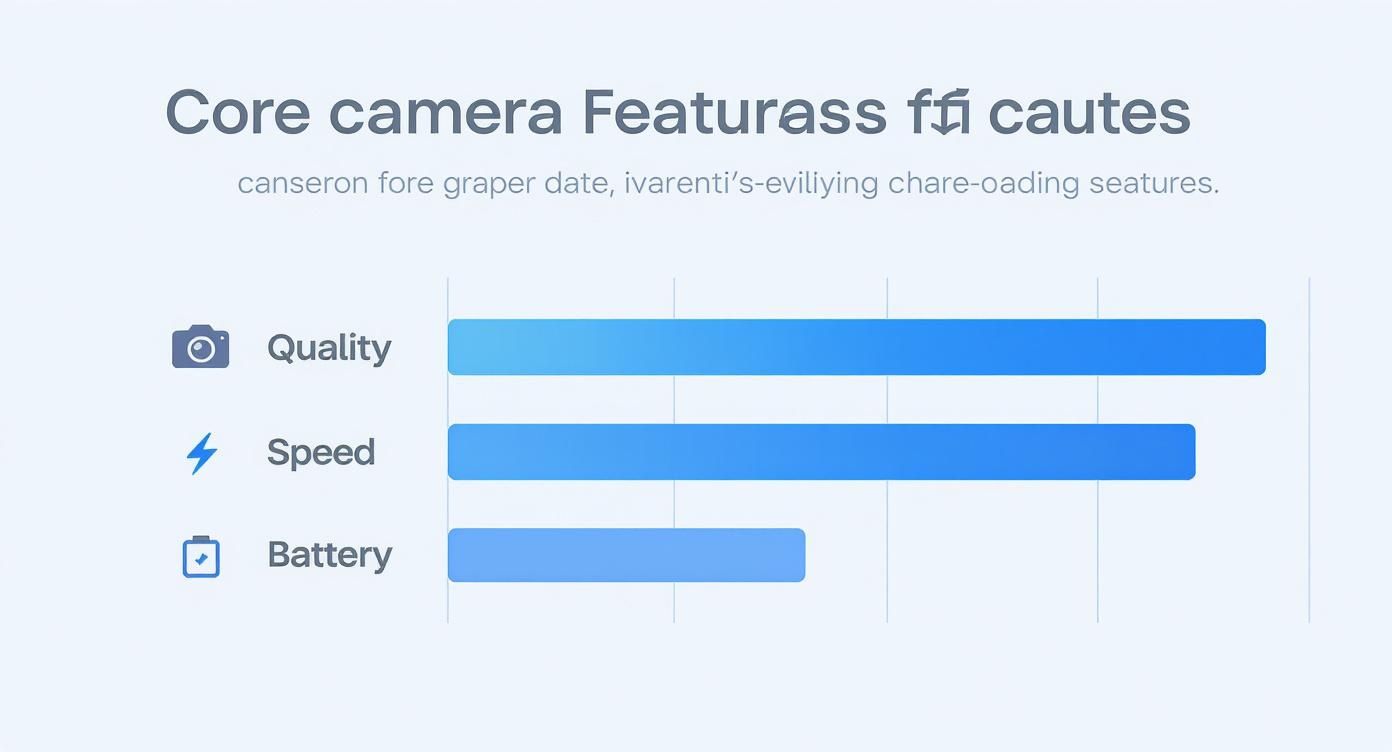
As you can see, while battery life is important, it’s really the image quality and trigger speed that separate a great value camera from a dud.
Top Cellular Value: Stealth Cam Deceptor Max 2.0
When you need the convenience of cellular without emptying your bank account, the Stealth Cam Deceptor Max 2.0 is a leading choice. It manages an impressive balance between speed, solid images, and affordable data plans, making remote scouting a reality for a lot more people.
The headline feature here is its blazing-fast 0.22-second trigger speed. This is what ensures you get crisp shots of deer on the move, not just frustrating pictures of their tail ends as they leave the frame. For scouting an active game trail, that kind of responsiveness is a game-changer.
The camera gives you a ton of control with multiple modes and adjustable settings, so you can dial it in for either wildlife monitoring or security. Its infrared flash provides solid nighttime illumination, ensuring you get usable images well after dark. That mix of speed and flexibility makes it a fantastic tool for any remote location.
Best All-Around Performer Under $150: Browning Dark Ops Pro DCL Nano
For those who want premium features packed into a compact, non-cellular body, the Browning Dark Ops Pro DCL Nano really delivers. What makes this camera special is its innovative dual-lens system—one lens is optimized specifically for daylight photos, while a second is dedicated to capturing sharp, clear nighttime images.
This dual-lens setup creates much better photos in all lighting conditions, pretty much eliminating the washed-out or grainy pictures you often get from single-lens models. It also has a totally invisible no-glow flash, making it incredibly stealthy for monitoring wary bucks or for discreet security use.
The specs are impressive for the price, too. With 4K video and a multi-shot mode that can fire off up to eight images in quick succession, it’s a powerhouse for serious hunters or wildlife photographers who need detailed intel. It also runs efficiently on just six AA batteries, which makes field maintenance easier and keeps long-term costs down. If you want to check out even more affordable options, our guide on good cheap trail cameras has some other great suggestions.
Feature And Performance Comparison Of Top Value Models
To make your decision even easier, here’s a quick breakdown of how our top value picks stack up on the most important metrics. This table should help you quickly see which camera’s strengths match what you need most, whether it’s trigger speed, image clarity, or stealth.
| Model | Camera Type | Image/Video Quality | Trigger Speed | Key Value Proposition |
|---|---|---|---|---|
| GardePro T5NG Pro | Non-Cellular | Excellent photos via Sony sensor, good 1080p video. | ~0.5 seconds | Unbeatable image clarity and flash range for a budget non-cellular camera. |
| Deceptor Max 2.0 | Cellular | Good 20MP photos, reliable 1080p video. | < 0.22 seconds | Blazing-fast trigger speed in an affordable cellular package, ideal for active trails. |
| Dark Ops Pro DCL | Non-Cellular | Superior photos/video with dual lenses, 4K video. | ~0.4 seconds | Premium dual-lens image quality and stealthy no-glow flash in a compact design. |
At the end of the day, picking the best trail camera for the money means figuring out your own priorities. The GardePro is for the budget-conscious user who just wants great pictures. The Deceptor Max 2.0 is for the scout who needs instant updates from a spot miles away. And the Browning Dark Ops Pro DCL is for the enthusiast who wants top-tier non-cellular performance without compromise.
When To Invest In Premium Value Features
The phrase "best trail cameras for the money" usually makes people think of budget models, but real value is about more than just the price tag. Sometimes, spending a bit more on a camera with premium features pays off big time in the long run. This is what I call premium value—investing a little more today to save a ton of time, money, and headaches down the road.
These aren't just flashy bells and whistles; they're smart features designed to cut your operational costs and make your life easier. You're not just buying a camera that takes pictures; you're investing in a smarter scouting tool.
AI Detection Saves Money and Time
One of the most valuable premium features out there is AI-powered species detection. A basic trail camera triggers on any movement, flooding your SD card or phone with hundreds of useless photos of swaying branches, squirrels, or raccoons. If you’re running a cellular plan, every one of those false triggers is costing you money to transmit junk data.
An intelligent camera like the Magic Eagle EagleCam 5 uses AI to cut through that digital noise. It knows the difference between a falling leaf and a whitetail buck, so it only sends you the alerts and images that actually matter.
This adds up to real savings:
- Reduced Data Costs: You stop paying to send photos of non-target animals or wind-blown leaves, which can seriously lower your monthly cellular bill.
- Saved Sorting Time: You don't have to waste hours scrolling through thousands of images just to find one or two good shots. The camera does the sorting for you.
The real return on investment here is efficiency. Every hour you're not sorting junk photos is an hour you can spend planning your hunt, managing your property, or just enjoying the outdoors.
Advanced Battery And Connectivity Efficiency
Another area where premium value really shines is in power management and connectivity. A cheap camera that dies every few weeks isn't a bargain—it's a liability. It costs you money for batteries and forces you to make extra trips to the field, leaving your scent behind.
Investing in a camera with a super-efficient power system, especially one that works with a solar panel, can stretch deployment times from weeks to months. This not only cuts down on battery costs but also minimizes human disturbance in your scouting area.
Likewise, advanced connectivity features offer a direct return. The market is shifting toward smarter tech like cloud services, GPS tagging, and artificial intelligence. Sophisticated demand from consumers is driving this, with North America alone accounting for over 30% of global wildlife camera deployment in early 2025. You can dig deeper into the trends shaping the market with this trail camera industry analysis.
This trend highlights why features that improve remote management are so important. For example, the GPS tracking and anti-theft capabilities in premium models like the EagleCam 5 offer serious peace of mind. Knowing your investment is protected from thieves and that you can find it if it gets moved is a value you can't really measure—until you need it. Ultimately, these advanced features are redefining what "best trail camera for the money" really means by focusing on long-term performance and reliability.
Aligning Your Camera Choice With Your Primary Goal
The idea of a single "best trail camera for the money" is a myth. The perfect camera for a hunter tracking a buck on a remote food plot is probably overkill for someone just curious about what’s visiting their backyard feeder.
The real secret to finding value isn’t chasing the highest specs—it's matching the camera’s features to your specific mission. When you know exactly what you need, you stop paying for bells and whistles you’ll never use and start investing in the tech that actually makes a difference.
Let’s break down the ideal camera setups for the three most common users: hunters, wildlife watchers, and property managers.
For The Hunter: Stealth and Speed are King
Hunters need actionable intel, and they need it without spooking the very game they're pursuing. Your priorities are simple: stay invisible, react instantly, and get your data from miles away. Everything else is secondary.
The absolute most critical feature is a no-glow infrared flash. A standard red-glow IR flash might seem minor, but a wary, mature buck will spot it from a hundred yards. Once he does, he might go nocturnal or even leave your property for good. An invisible flash is non-negotiable for capturing natural behavior.
Next up is trigger speed. You need a camera that wakes up fast—ideally under 0.5 seconds. A whitetail walking a trail isn't going to pose for a picture. A quick trigger means you get a clear shot of his rack, not a blurry image of his tail as he leaves the frame. Cellular connectivity seals the deal, giving you real-time updates to adjust your hunting strategy on the fly.
Hunter's Checklist:
- No-Glow Flash: The only way to stay completely invisible to sharp-eyed game.
- Fast Trigger Speed (<0.5s): Crucial for capturing moving targets before they're gone.
- Reliable Cellular Connection: Get instant intel to make timely, strategic moves.
For The Wildlife Enthusiast: Quality and Endurance Matter Most
If your goal is observation and appreciation, your focus shifts from pure stealth to image fidelity and long-term deployment. You want stunning photos and videos without constantly tromping through the woods to swap batteries or SD cards.
Here, image and video resolution are paramount. A camera with a high-quality sensor and lens that can snap crisp 20MP+ photos or smooth 1080p video lets you truly see the detail in every animal. It’s the difference between just identifying a bird and being able to count its feathers. This is where features like dual-lens technology really shine, providing optimized images for both day and night.
Long battery life is just as important. The goal is to set it and forget it for months at a time, minimizing your scent and presence. Look for models known for being power-sippers, especially those compatible with lithium batteries or an external solar panel. That way, you can document an entire season without a single interruption.
The global trail camera market is exploding, driven by a growing interest in both hunting and wildlife monitoring. In 2025, the market size reached an estimated USD 134.5 million, and with North America's strong hunting culture, the region accounts for over 40% of that demand. You can dive deeper into these numbers with this trail camera market growth report from cognitivemarketresearch.com.
For The Property Manager: Detection and Deterrence are Key
When you're using a trail camera for security, the objective is simple: see everything, see it now, and make sure the camera can take a beating. This camera is your first line of defense.
A wide detection angle and long flash range are non-negotiable. You need to cover as much ground as possible, whether it's a wide gate or a long, dark fence line. A camera with a balanced detection and illumination range of 80 feet or more ensures you don't have dangerous blind spots.
For security, cellular connection isn't a luxury; it's a necessity. A photo of a trespasser is a lot more valuable when you get it in real-time, giving you a chance to react immediately. Finally, durability is key. A security camera has to be built like a tank, with a rugged, weatherproof housing that will keep it running through rain, snow, and extreme heat for years to come.
Getting The Most From Your Trail Camera
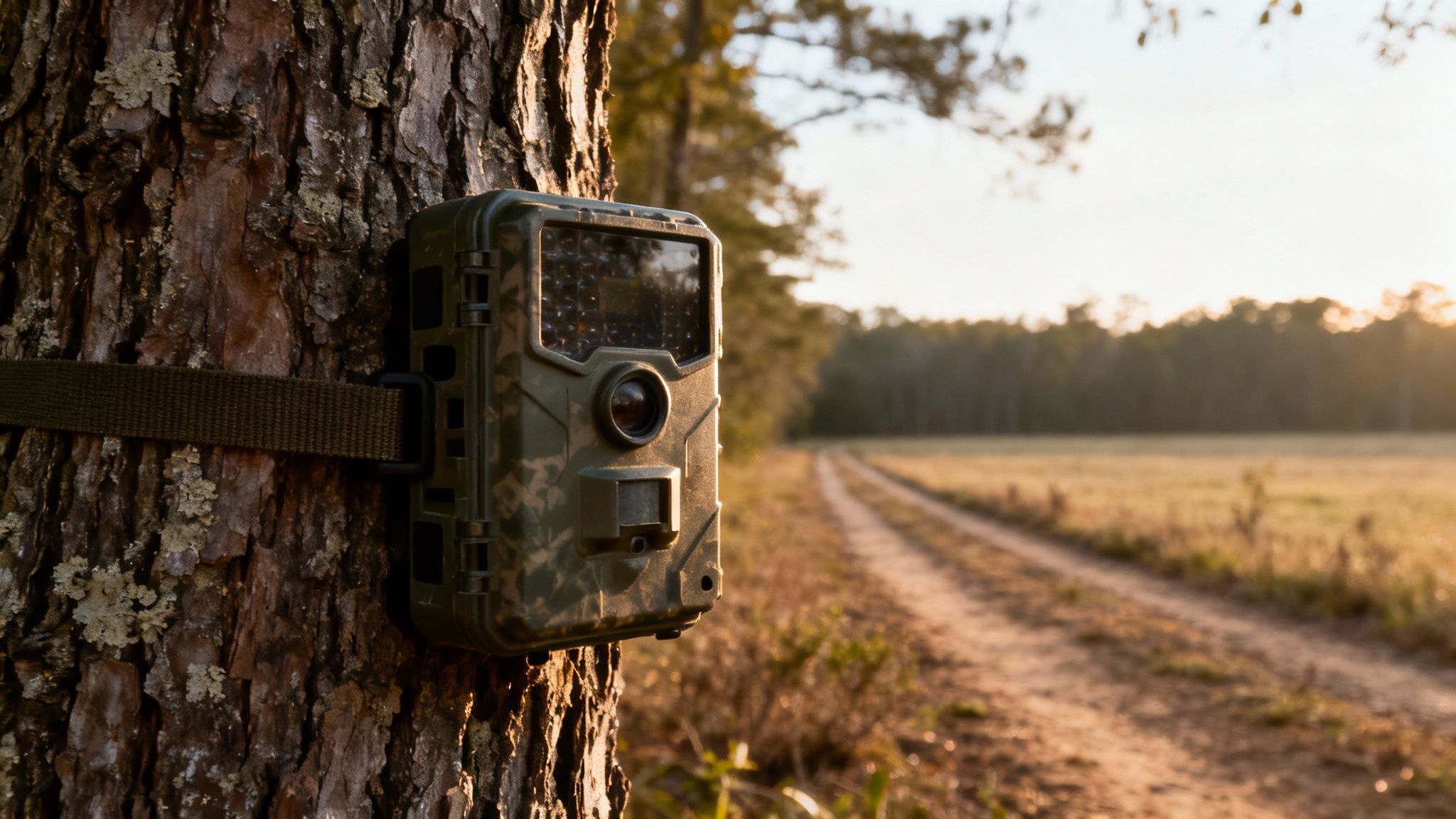
Owning a great value trail camera is just the starting line. Getting it set up and maintained correctly is what actually turns that piece of gear into a game-changing scouting tool. Even the most expensive camera on the shelf will give you junk if it’s placed poorly. You'll end up with missed shots and a whole lot of frustration.
Your placement strategy is everything. Tiny adjustments out in the field can make a massive difference in the quality—and quantity—of your captures. This is how you make sure every dollar you spent gives you real, usable intel.
Essential Setup and Placement Tips
First thing's first: think about the sun. If you point your camera east or west, you’re practically guaranteed to get washed-out, useless images at sunrise and sunset. And when do the animals move most? Sunrise and sunset. Always try to aim your camera north or south to keep direct sunlight from blowing out your pictures.
Next up is height and angle. A good rule of thumb is to mount it at chest height, maybe 3-4 feet off the ground. But that’s just a starting point. You’ll need to tweak it based on the terrain and what you’re trying to pattern. Tilt it down just slightly to get more of the animal’s body and less of the bright sky, which can mess with the camera’s exposure.
The single most overlooked step? Clearing your shooting lanes. I can't tell you how many times a single leafy branch or a tall weed waving in the wind has triggered hundreds of false photos. It's a surefire way to kill your batteries and clog up your SD card. Snip everything out of the way.
A Simple Maintenance Routine for Peak Performance
Spend a few minutes on maintenance every time you visit your camera, and it’ll run reliably for years. This isn't complicated stuff, but it keeps your investment working the way it should.
- Firmware Updates: Camera makers are always pushing out little updates to fix bugs and improve how the camera works. Before you set your cams for the season, check for new firmware.
- Sensor and Lens Cleaning: It’s simple, but critical. Use a soft, dry microfiber cloth to gently wipe down the PIR sensor and the lens. A smudged lens means blurry, disappointing images.
- Battery Management: A consistent power source is non-negotiable. If you're working with lower-resolution video from a budget cam, having good footage to start with is key; some folks even use video upscaling software to sharpen things up later. But none of that matters if your batteries die. For a deep dive on this, check out our guide on the best batteries for trail cameras.
Common Questions About Trail Cameras
When you're trying to find the best trail camera for your money, a lot of questions come up. It's easy to get lost in the specs and marketing claims.
Let's cut through the noise and answer a few of the most common questions we hear. These are the details that separate a good buy from a great one.
Is A Cellular Trail Camera Worth The Extra Cost?
This one comes down to how you use it. If your camera is set up on a remote property that’s a pain to get to, then yes, a cellular camera is absolutely worth it. The money and time you save on gas and trips into the field—not to mention avoiding spooking game—easily pay for the data plan.
But if you’re just monitoring your backyard or a piece of land you visit frequently anyway, a non-cellular camera is the smarter move. You get all the scouting power without any monthly fees.
How Many Megapixels Are Truly Necessary?
Don't fall for the megapixel race. For almost any kind of scouting or wildlife ID, 8-12 megapixels (MP) is plenty. What really matters for a clear shot is the quality of the lens and the image sensor.
Instead of chasing a high megapixel number, look at user-submitted photos from the cameras you're considering. Real-world images will tell you far more about a camera's performance than the number on the box.
The biggest factor in image clarity is often the quality of the lens and sensor, not the megapixel rating. A great 12MP camera will outperform a mediocre 30MP camera every time.
What Is The Biggest Factor In Battery Life?
Your camera's settings have the biggest say in how long it lasts in the field. Sure, the type of batteries you use matters, but your settings are the real power drain.
Things like video recording, sending a ton of cellular updates, and high-resolution photo bursts will chew through batteries fast. To get the most time out of a single deployment, find a camera known for being power-efficient and think about adding a solar panel. That combination is tough to beat for long-term value.
Ready to stop guessing and start scouting smarter? The Magic Eagle EagleCam 5 offers premium value with AI detection that saves you time and money, combined with rugged reliability you can count on. Discover the EagleCam 5 difference today.