

If you've spent any time running trail cameras, you know the feeling. You finally get back to that perfect spot, deep in the woods, only to find your camera has been dead for weeks. The batteries gave out right before the rut kicked into high gear. It’s a frustrating and all-too-common story that highlights a serious weak link in otherwise advanced gear.
This is exactly why a rechargeable lithium battery pack isn't just a nice-to-have accessory—it's a strategic upgrade. It’s the difference between guessing what’s happening on your property and knowing.
Why Your Trail Camera Deserves a Better Power Source
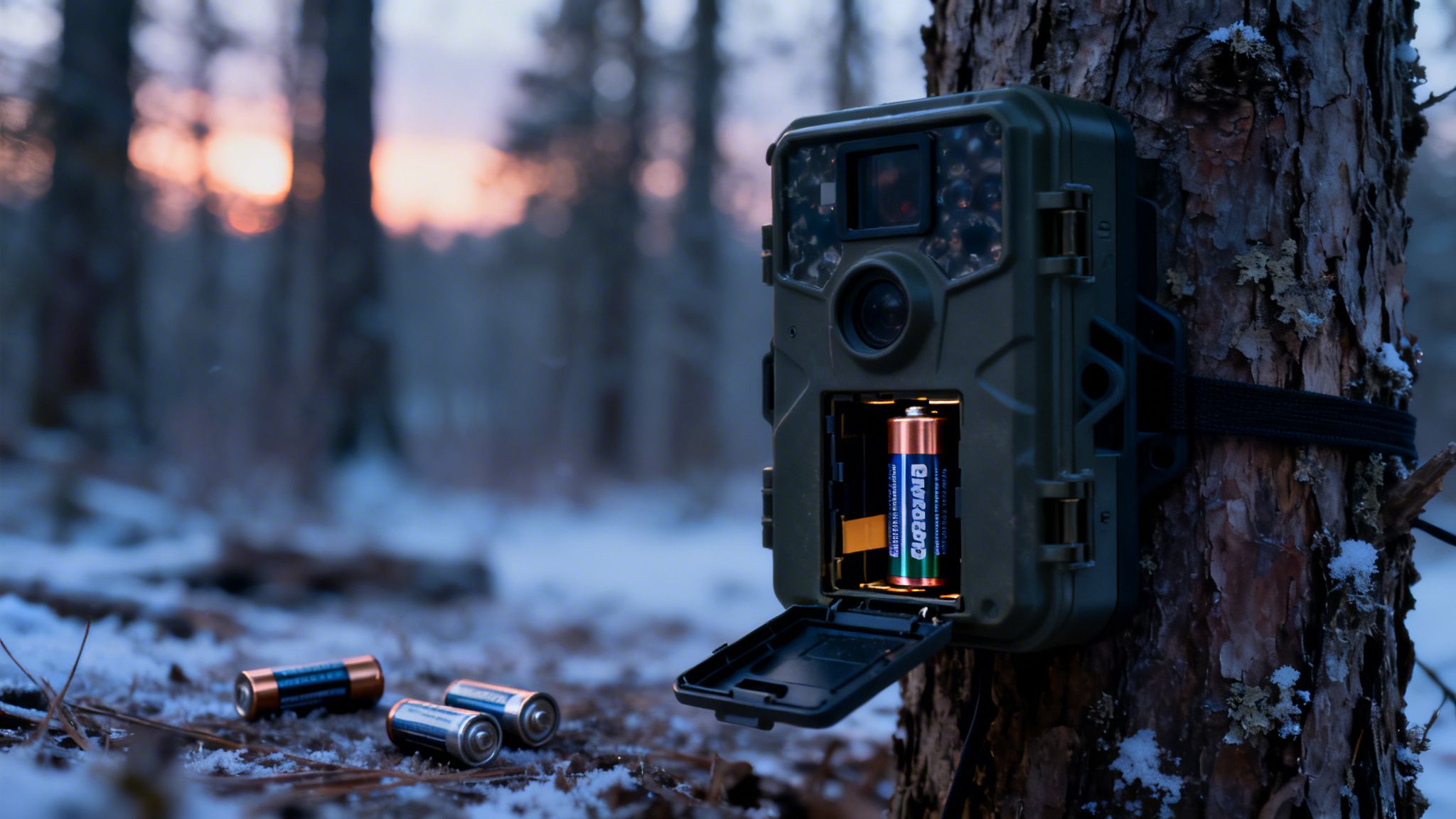
That familiar story of dead batteries is more than just an annoyance. It’s lost intel, wasted trips, and a gaping hole in your scouting efforts. The standard disposable alkaline batteries most people grab at the store are notoriously bad at handling temperature swings and simply can't keep up with the demands of a modern cellular camera.
The Downfalls of Disposable Batteries
Beyond just quitting unexpectedly, disposables create a whole host of other headaches for anyone serious about running trail cams.
- Recurring Costs: Those packs of AA batteries don't seem like much at first, but they add up fast. Over the life of a single camera, you can easily spend more on batteries than you did on the camera itself.
- Environmental Waste: Tossing out dozens of used batteries every season contributes to a significant amount of electronic waste, full of materials that aren't great for the environment.
- Poor Cold-Weather Performance: This is the big one. Alkaline battery chemistry tanks in the cold. Just when the animals are most active during those frigid winter months, the voltage plummets and your camera shuts down.
The move away from disposables is happening everywhere. In fact, the global rechargeable battery market is expected to hit USD 195.40 billion by 2030, which shows just how many people are tired of the old way of doing things. You can read more about this market shift and what’s driving it.
A high-performance cellular trail camera is only as good as its power source. Investing in a rechargeable lithium battery pack isn't just about convenience—it's about ensuring your equipment performs as intended, every single day, no matter the conditions.
At the end of the day, a rechargeable lithium pack isn't just another option. It's a fundamental upgrade for anyone who wants long-term, worry-free performance from their gear out in the field.
How Rechargeable Lithium Technology Actually Works
To really get why a rechargeable lithium battery pack is such a game-changer in the field, you have to think beyond just "more power."
Think of a standard alkaline battery like a single-use plastic water bottle. It gives you a strong burst at first, but the pressure drops fast, and once it's empty, you toss it. A rechargeable lithium battery pack is more like a high-tech canteen built for a long expedition—you can refill it hundreds of times, and it delivers a strong, steady flow from start to finish.
That consistent performance comes down to its internal chemistry.
At its core, the technology is all about the movement of lithium ions. When the battery is powering your EagleCam 5, these tiny charged particles travel from a negative electrode (the anode) to a positive one (the cathode). When you plug it in to recharge, your wall outlet forces those ions to travel right back to where they started, getting the battery ready for another round in the woods.
The Three Pillars of Lithium Performance
This constant, efficient flow of ions is what gives lithium technology its three biggest advantages for anyone running a camera outdoors. These aren't just technical buzzwords; they translate directly into better, more reliable performance when it counts.
-
Higher Energy Density: This just means a lithium battery can cram more energy into a smaller, lighter package. A lithium pack can hold way more juice than an alkaline battery of the same physical size, which is exactly why it can run your camera for weeks instead of just a few days.
-
Low Self-Discharge: Ever grab a flashlight with "fresh" alkaline batteries only to find them dead a few months later? That’s self-discharge. A rechargeable lithium pack loses its charge much, much more slowly. You can top it off today and trust it’ll be ready to go weeks from now.
-
Stable Voltage Output: This is probably the most critical benefit for a trail camera. As alkaline batteries drain, their voltage steadily drops. That slow decline is what causes cameras to act up—missing triggers, firing a weak flash, or just shutting down completely, even when there's still some power left.
A lithium-ion battery, on the other hand, maintains a rock-solid voltage throughout most of its cycle. It delivers full power until it's nearly empty, making sure your camera’s flash, sensor, and cellular modem work exactly as they should, every single time.
This stable power is a lifesaver in freezing weather when other batteries just give up. The chemistry inside a rechargeable lithium battery pack is simply more resilient to cold, delivering reliable performance when you need it most. It's this knockout combo of high capacity, long shelf life, and steady power that makes it the only real choice for a serious remote monitoring setup.
Decoding Battery Specs for Field Performance
The technical specs on a battery label can feel like a foreign language. But once you know what they mean, you've got the key to unlocking reliable, consistent performance from your trail camera out in the field. Let's translate this jargon into real-world advantages that will directly impact your scouting success.
Think of each spec as a dial you can tune to perfectly match your camera's needs and the environment you're in. Getting it right means you'll never miss that critical moment because of a preventable power failure.
Capacity (mAh): The Fuel Tank for Your Camera
The most important number you'll find on a rechargeable lithium battery pack is its capacity, measured in milliamp-hours (mAh). The easiest way to think about this is as the size of your battery's fuel tank. A bigger mAh number means a bigger tank, which translates directly to longer runtimes between charges.
For example, a 10,000mAh pack holds exactly twice the energy of a 5,000mAh pack. This is the single biggest factor determining how long your camera can stay active, especially if it's sending a lot of photos or recording video.
Voltage (V): Matching the Power Pressure
Voltage, measured in volts (V), is like the water pressure in a hose. Your trail camera is engineered to operate at a very specific "pressure"—say, 12V. It's absolutely critical that the battery's voltage perfectly matches what your camera requires.
Using a battery with the wrong voltage is a fast track to damaging your equipment. Too low, and the camera just won't work right. Too high, and you can permanently fry its sensitive electronics. Always double-check your camera's manual and match it to the battery pack's output.
The chart below breaks down the core strengths that make lithium technology so effective for this kind of work.
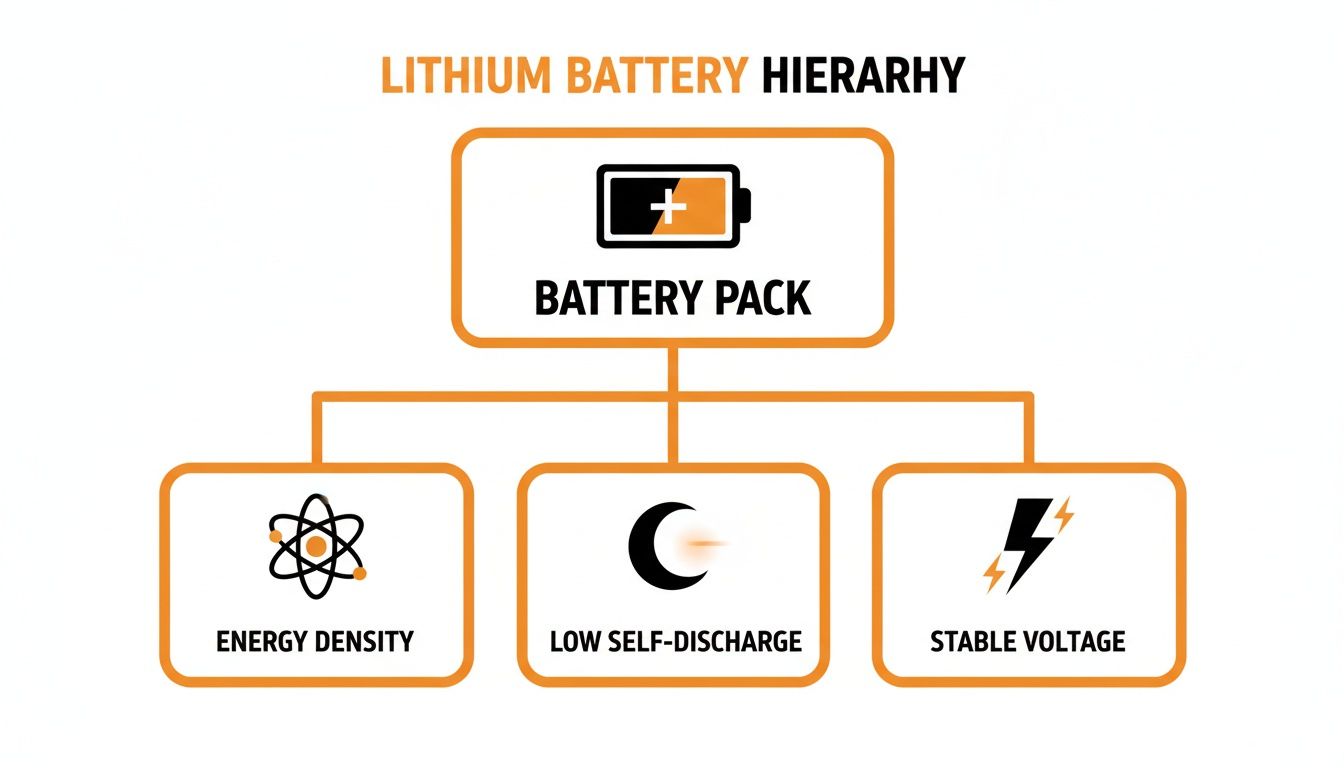
As you can see, the combination of high energy density, low self-discharge, and stable voltage makes for a superior power source built for demanding outdoor gear.
Discharge Rate and Weather Resilience
Beyond the big two, a couple of other factors are crucial for real-world field use. The battery's discharge rate (often called a C-rating) determines how quickly it can safely deliver its energy. For a trail camera sending large video files or working in rapid-fire mode, you need a battery that can deliver power quickly without faltering.
Finally, you can't overlook how well a battery pack stands up to the elements.
- IP Rating: An IP rating, like IP67, tells you how well the battery pack is sealed against dust and water. For gear that lives outdoors 24/7, a weatherproof rating isn't a luxury—it's a necessity to prevent moisture from causing a short circuit.
- Cold-Weather Performance: This is where lithium chemistry truly shines. While alkaline batteries see their power plummet below freezing, a good rechargeable lithium pack maintains a stable, reliable output. This ensures your camera keeps running right through the coldest winter hunts.
To learn more about how different battery types stack up in the cold, check out our guide on the best batteries for trail cameras, which dives deep into these performance differences. This resilience is what makes lithium the only truly reliable choice for year-round scouting.
How to Select the Perfect Battery Pack
Choosing the right rechargeable lithium battery pack isn't about picking a fancy brand. It's about matching the core specs to your gear. Get it right, and your trail camera will run flawlessly. Get it wrong, and you risk poor performance or even damage. The goal is to find a power source that acts as a true partner to your camera, giving you the confidence to leave it in the field for weeks or months at a time.
The first step is always the simplest, yet it's where most people mess up. Just check for compatibility.
Confirming Connectors and Voltage
Before you even think about capacity, look at the physical plug. Most trail cameras and external battery packs use a standard DC barrel plug, but it's smart to double-check that the size and type match your camera’s input port. A mismatched plug is a quick and frustrating dead end.
Next—and this is the most critical part—you must match the voltage perfectly. If your camera needs 12V, the battery pack you plug into it must put out 12V. Using a lower voltage means the camera won't even turn on or will act erratically. Go higher, and you’ll fry the internal circuits for good. This information is always printed in your camera's manual and on the battery pack itself.
Think of voltage as the key to a lock. The wrong key won't work, and forcing it will break the lock entirely. Matching the voltage is non-negotiable for the health and longevity of your electronics.
Once you’ve confirmed the pack is compatible, you can figure out how much fuel you need in the tank.
Calculating Your Required Capacity
Capacity, measured in milliamp-hours (mAh), is all about runtime. It answers the question: how long can this pack power my camera before I need to charge it again? Your personal usage habits are the biggest factor here. Are you setting up for a weekend scout or a season-long deployment?
- Low-Intensity Use: If your camera is in a low-traffic area taking just a few photos a day, a smaller pack will easily get you through several weeks.
- High-Intensity Use: If your camera is sending a steady stream of high-res images, recording video clips, or constantly fighting for a weak cell signal, you need a high-capacity pack of 10,000mAh or more. This is where robust, field-tested options like the Magic Eagle® PowerClaw External Battery come in, built specifically for these demanding jobs.
The demand for this kind of reliable, long-lasting power is exploding. The global market for rechargeable lithium-ion batteries is on track to nearly triple, hitting an estimated US$ 92.9 billion by 2036. That growth is fueled by everything from electric vehicles to professional outdoor gear like ours.
To really dig into what makes one battery better than another for a trail camera, you need to understand the lingo. For a deeper dive into how things like C-ratings affect performance, check out this excellent guide on decoding LiPo tech and C-ratings.
Charging and Maintenance Best Practices
A quality rechargeable lithium battery pack is a long-term investment in your scouting success. If you treat it right, it’ll deliver reliable power for hundreds of charge cycles, keeping your camera humming in the field season after season. It all starts with using the right tools for the job.
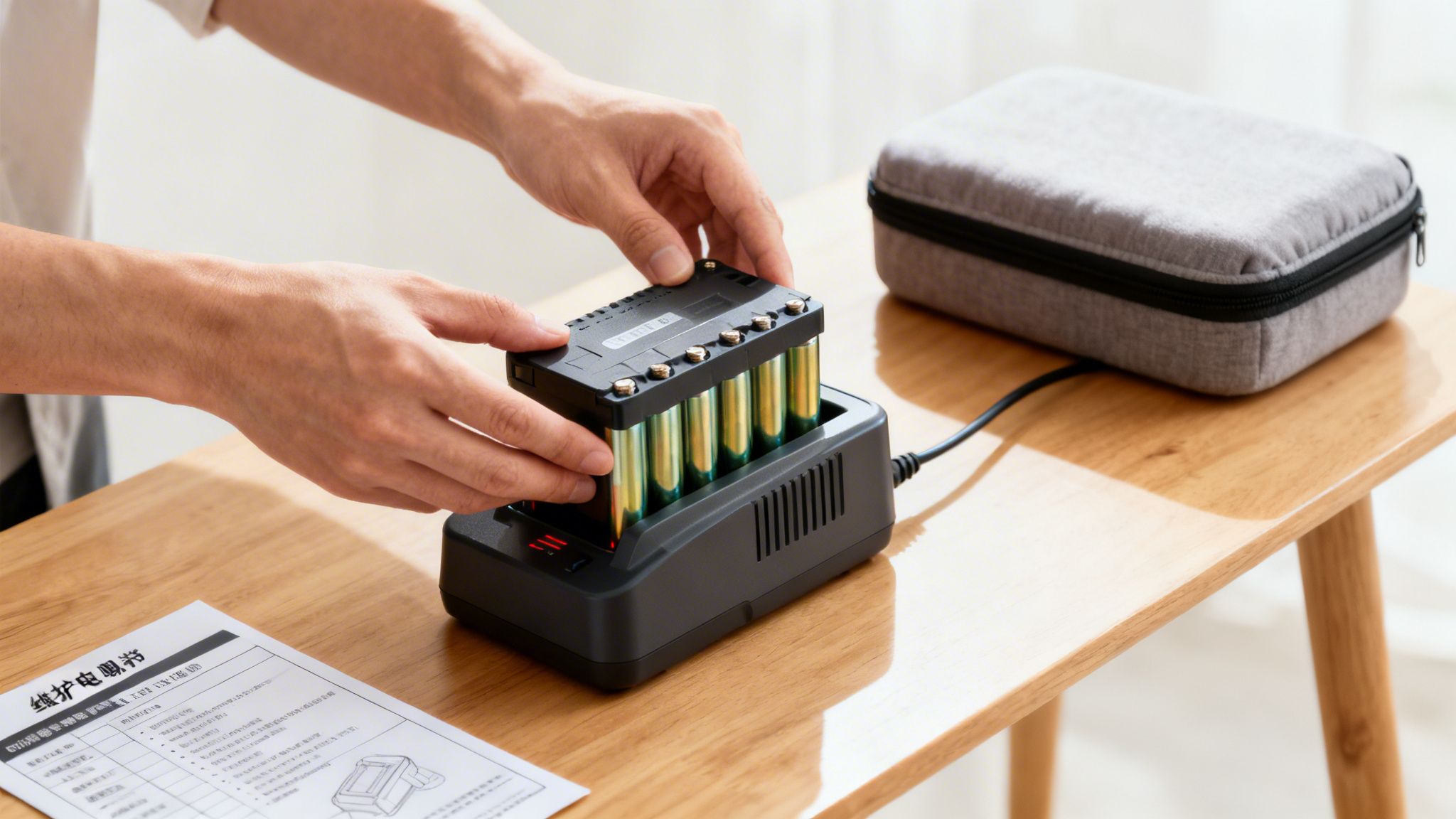
Always stick with the manufacturer-recommended charger that came with your battery. Generic or mismatched chargers can feed it the wrong voltage or current, which not only eats away at the battery’s health but can also be a serious safety risk. Think of it like putting the wrong kind of fuel in a high-performance engine—you’re just asking for trouble.
Smart Charging Habits for Longevity
How you charge your battery has a direct impact on how long it will last. Lithium-ion cells are happiest when they aren't constantly pushed to their absolute limits.
- Avoid Full Depletion: It’s tempting to run a battery until it’s completely dead, but doing so puts a lot of stress on its internal chemistry. A much better approach is to recharge it once it drops to around 20% capacity.
- Don't Overcharge: Most modern chargers have built-in protection to prevent this, but it’s still good practice to unplug the battery once it’s full. Leaving it on the charger for days on end can cause unnecessary wear.
- Charge at Room Temperature: Never try to charge a battery that’s blazing hot from the sun or ice-cold from a winter night. Let it come back to a normal room temperature before plugging it in to ensure a safe, efficient charge.
For a deeper dive into the science behind keeping your gear powered up safely, check out these lithium battery charging best practices.
Proper Storage and Handling
What you do with your gear when it’s not in the field matters just as much. Don't just toss the battery pack in a drawer and forget about it until next season.
For long-term storage (anything more than a few weeks), the sweet spot is a 40-50% state of charge. Storing a battery completely full or totally empty can permanently reduce its capacity over time.
Find a cool, dry place for it, away from direct sunlight and extreme temperatures. This one simple step can prevent premature aging and keep your battery ready for action.
And if you’re looking to create a truly self-sustaining setup, pairing your battery with a solar panel is the way to go, but it has to be done right. Take a look at our guide on using solar panels for game cameras to learn how to hook everything up safely and effectively.
Time to Power Up with Confidence
Switching to a rechargeable lithium battery pack isn’t just another gear upgrade—it’s about buying back your time and making your scouting efforts count. We've walked through why this tech is the clear winner for keeping your trail camera online, especially when the weather turns nasty and you can’t afford a dead battery. It all comes down to reliability in the field.
From decoding specs like capacity and voltage to building smart charging habits, you now know what to look for. This isn't just about picking a battery; it's about choosing a power source that saves you a ton of money and frustration compared to endless packs of disposables.
Your Path to Reliable Power
Getting it right is simple if you stick to the basics:
- Verify Compatibility: Always double-check that the voltage (V) and connector plug match your camera. No exceptions.
- Choose the Right Capacity: For long-term sets where you can't get back for weeks, a high-capacity (mAh) pack is a must.
- Maintain It for the Long Haul: Treat it right. Proper charging and storage habits will protect your investment for years of service.
When it comes down to it, the right power solution does a lot more than just run your camera. It gives you the confidence to leave your setup for weeks or even months, knowing it’ll be ready to capture that one moment you've been waiting for.
This frees you up to actually focus on hunting and enjoying the outdoors, not worrying if your gear is going to fail you. Your time and effort are too valuable to be cut short by a dead battery.
Frequently Asked Questions
Even after seeing all the benefits, you might still have a few lingering questions about making the switch to a rechargeable lithium pack. Let's tackle the most common ones with direct, practical answers to help you get it right in the field.
Can I Use Any Old Battery Pack with My Camera?
Absolutely not. If you remember one thing, make it this: you must use a battery pack that precisely matches your camera's required voltage.
For instance, if your camera is designed for 12V, plugging in a pack with a different voltage can fry its internal electronics—permanently. Always check your camera's user manual first, then double-check that the battery pack's output voltage and connector type are an exact match before you even think about plugging it in.
How Long Will a Rechargeable Battery Last Out in the Woods?
This really comes down to two things: the battery's capacity (measured in mAh) and how hard your camera is working. A high-capacity pack, like one rated at 10,000mAh or more, can easily keep a camera running for several weeks, or even months, under normal conditions.
But some activities are real power hogs and will drain that battery much faster. Be mindful of things like:
- Frequently live-streaming video from the field.
- Sending high-resolution videos over the cellular network.
- Operating in an area with a weak cell signal, which forces the modem to constantly search for a connection.
Is It Safe to Pair a Battery with a Solar Panel?
Yes, and it's an incredibly effective setup for anyone wanting a truly self-sustaining power source in a remote spot. The trick is to use a quality solar panel that has a built-in charge controller.
A charge controller is non-negotiable. It acts like a smart gatekeeper, constantly monitoring the battery's charge level. It stops the solar panel from overcharging the battery, which is vital for protecting its long-term health and ensuring safe, continuous operation year-round.
What’s the Right Way to Dispose of an Old Lithium Battery Pack?
Whatever you do, never toss a lithium battery in your regular household trash. If punctured or damaged in a waste facility, they can pose a serious fire hazard. They are considered electronic waste and need to be handled with care.
To get rid of one safely, look for designated battery recycling drop-off points. You can usually find them at major electronics retailers, home improvement stores, or through your local waste management service. Many communities also host special collection events for hazardous waste—the perfect place to drop off an old pack.
Ready to stop wasting money on disposable batteries and keep your cameras running longer? The Magic Eagle PowerClaw External Battery delivers the reliable, long-lasting performance your gear deserves. Upgrade your power source today.