

Summer deer food plots are one of the most powerful tools a wildlife manager has, especially for giving your herd a serious nutritional boost during the tough late-summer months. By planting plots with high-protein forage like cowpeas, soybeans, and certain clovers, you’re providing critical nutrition right when natural food sources are at their worst. This directly fuels antler growth in bucks and helps does with lactation.
Why Summer Food Plots Are a Strategic Investment
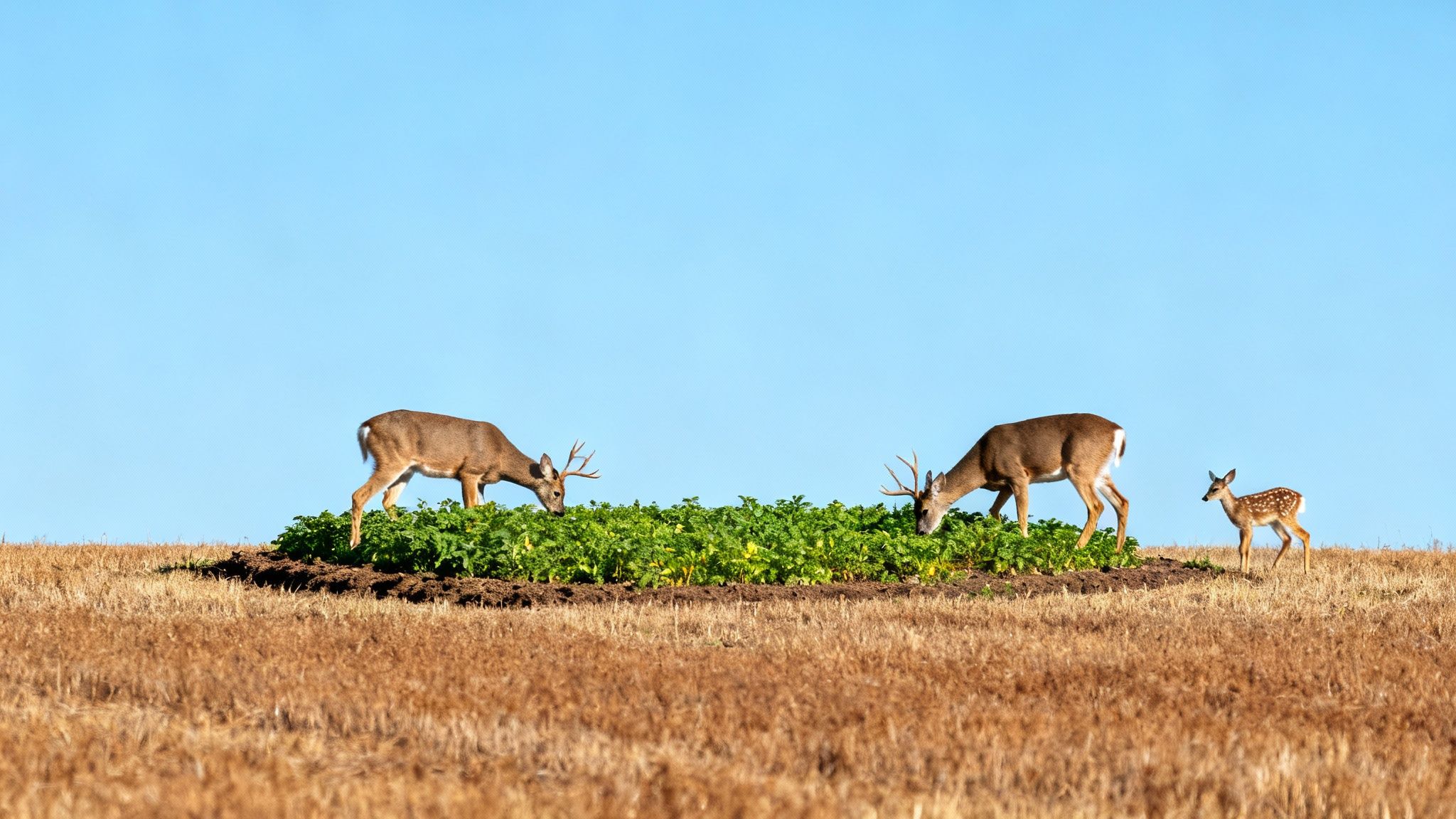
For anyone serious about managing their land, a summer food plot is way more than just a patch of green. Think of it as a calculated investment in the health and genetic potential of your entire deer herd.
Its real value shines during what we call the late-summer "nutritional bottleneck." This isn't just a catchy phrase; it's a predictable biological crunch that happens every single year, where deer face a perfect storm of high nutritional needs and low-quality natural food.
In July and August, bucks are putting the finishing touches on their racks—the most demanding stage of antler growth that burns through protein and minerals. At the same time, does are producing milk for their fawns, which drains their own energy and nutrient reserves. This all happens to coincide with the absolute worst time for natural forage.
The Late-Summer Slump
Once the summer heat really kicks in, most native browse and forbs are done growing. They get woody, fibrous, and tough to digest, losing a massive amount of their nutritional value. In fact, the quality of natural forage can tank by as much as 40%, creating a huge dietary gap. This nutritional stress hits especially hard in places like the Southeast, which don't have the massive ag fields you see in the Midwest.
This is exactly where a good summer plot saves the day. It acts as a concentrated buffet, delivering the high-octane protein that deer are desperately searching for but can't find anywhere else.
A well-managed summer plot is like a high-performance fuel station for your deer herd. It ensures they don't just survive the summer slump but actually thrive through it, leading to heavier body weights, healthier fawns, and maximized antler potential come fall.
Below is a quick rundown of just how impactful these plots can be.
Key Benefits of Summer Food Plots
| Benefit Category | Impact on Deer Herd |
|---|---|
| Antler Growth | Provides the 20-25% protein needed for bucks to reach their full genetic potential. |
| Doe & Fawn Health | Supports lactation, leading to higher fawn survival rates and healthier does entering winter. |
| Herd Density | Attracts and holds more deer on your property, increasing your local population. |
| Scouting & Patterning | Concentrates deer activity, making it easier to inventory your bucks and pattern their movement. |
These benefits compound over time, leading to a healthier, more robust deer population year after year.
More Than Just Food
Beyond pure nutrition, these plots become hubs of deer activity, making your property the go-to spot in the area. Deer are creatures of habit. If they know they can rely on a high-quality food source, they'll build their daily routines around it.
By understanding these patterns, you get a massive leg up on scouting. You can predict their movements with far greater accuracy, which is the first step in figuring out how to find deer bedding areas.
Ultimately, planting summer food plots is a proactive management strategy. You’re not just passively hoping for good deer—you’re actively building a healthier, more resilient herd that will pay you back for seasons to come. It’s a direct investment in bigger racks, healthier does, and a more dynamic hunting property.
Building the Foundation for a Thriving Plot
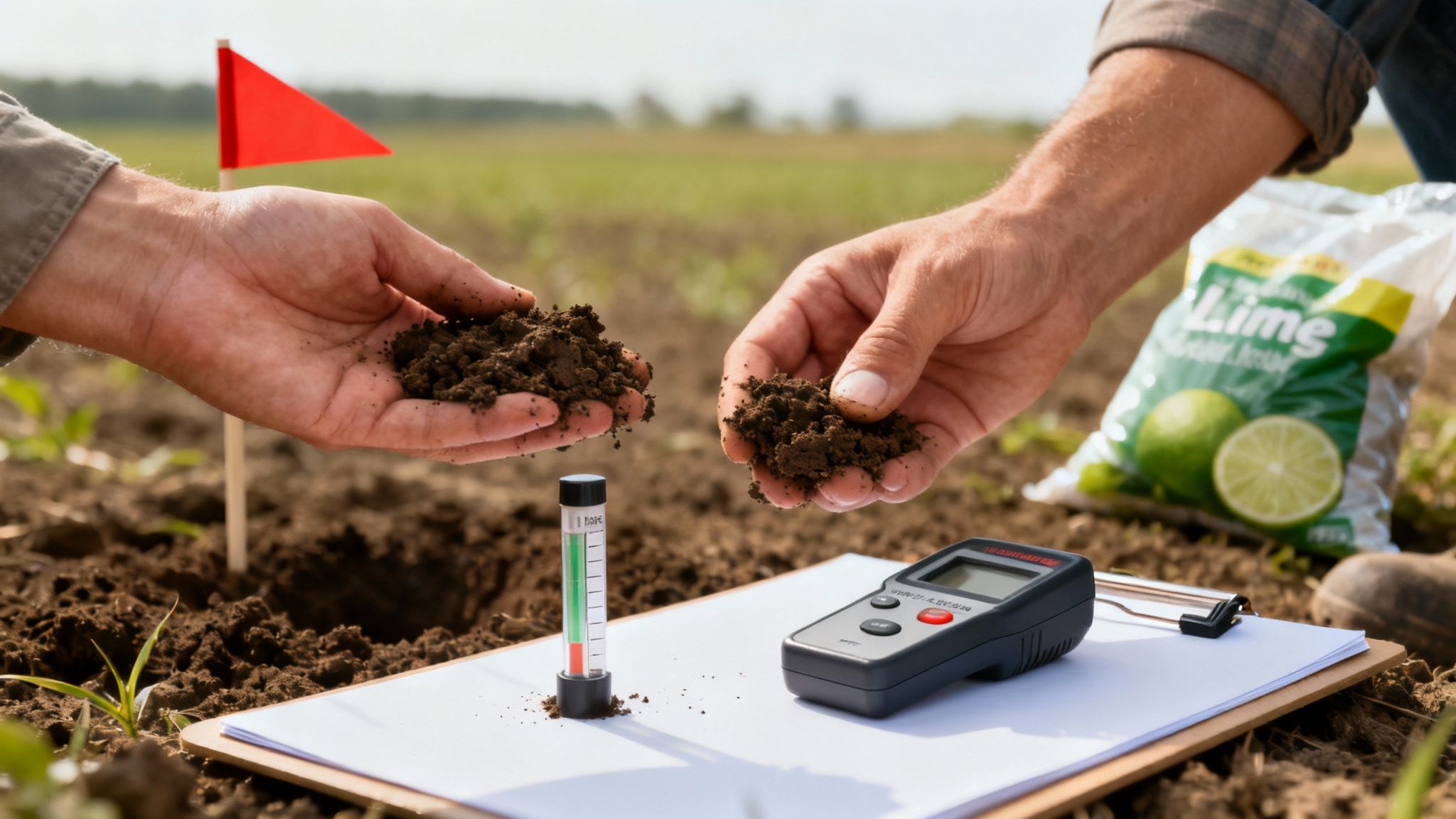
The difference between a dusty, weed-choked patch and a lush, deer-magnet food plot is decided long before you ever tear open a seed bag. I’ve seen it a hundred times. Success is built from the ground up, quite literally.
This foundational work—smart site selection and getting your soil right—are the two steps you absolutely cannot skip. Get them right, and the rest is easy.
A lot of hunters pick a spot because it’s easy to get to or has a great view from their favorite stand. While those things are nice, you have to start thinking like a deer. The best summer plots are tucked into spots that balance sunlight, drainage, and a sense of security for the animals using them.
Reading the Land for the Perfect Plot Location
First things first, you need sun. Look for openings that get at least six hours of direct sunlight a day. Most summer forages, especially the high-protein legumes like soybeans and cowpeas, need that sun to pack on the tonnage you're after. An opening that runs east-to-west is often a sweet spot, as it catches sunlight for most of the day.
Next, look at the lay of the land. Stay away from low-lying bottoms that turn into swamps after a good rain. Saturated soil will lead to root rot and kill a plot before it ever gets going. You’re looking for slightly elevated ground or a gentle slope where water can drain away naturally.
Finally, and this is a big one, think about security cover. A buck is far more likely to step out and feed during daylight if he feels safe. A plot tucked into an inside corner of a field, buffered by a thicket or timber, is infinitely more attractive than one sitting naked in the middle of a huge, open field.
- Pro Tip: Before you break ground, walk the edges of your potential spots and look for existing deer trails. If you find a spot where multiple trails already come together, you've found a natural hub. Planting there makes your plot an instant destination.
The Non-Negotiable Step: Soil Testing
If I could give only one piece of advice for food plotting, it would be this: always test your soil. Guessing what your soil needs is like building a house without a blueprint. A simple soil test is the single best investment you can make, giving you a precise roadmap for success.
A thriving plot starts with understanding proper soil preparation techniques, and a soil test takes all the guesswork out of it.
Your local extension office or farm co-op can handle this for a small fee. Just grab a few handfuls of soil from different spots in your plot, mix them in a bucket, and send off a sample. The report you get back is pure gold.
Turning Your Soil Test into Action
When you get that report, zone in on two key numbers: the pH level and the recommendations for phosphorus (P) and potassium (K).
-
pH Level: This is a measure of your soil's acidity. Most summer crops do best in a pH range of 6.0 to 7.0. If your soil is too acidic (below 6.0), nutrients get "locked up," and the plants can't access them—no matter how much fertilizer you throw down. Your test will tell you exactly how much lime you need per acre to fix it.
-
P and K Levels: Phosphorus is the engine for root development, while potassium helps with drought resistance and overall plant vigor. The report will give you a specific fertilizer blend to look for, like 10-10-10 or 0-20-20, and tell you exactly how many pounds per acre to apply.
Ignoring your soil's pH is the number one reason summer deer food plots fail. I've seen it time and again. Applying fertilizer to acidic soil is just pouring money on the ground; the plants simply can't use the nutrients. Fix the pH first, and you've won half the battle.
It can take a few months for lime to really work its magic, so applying it in the fall or winter ahead of a spring planting is ideal. That said, getting it down even a few weeks before planting is way better than not doing it at all. Once your pH is balanced and your fertilizer is spread, you’ve built the strong foundation needed for a plot that will pull in deer all summer long.
Choosing the Right Seeds for Your Property
Walking into a farm supply store or browsing online seed catalogs can feel overwhelming. Every bag promises giant antlers and more deer than you can count. But the secret isn't in the fancy marketing; it's in understanding what specific plants offer and matching them to your property's unique conditions.
For summer deer food plots, the mission is simple: plant forages that can handle intense heat, resist drought, and pump out high-protein tonnage. This is where warm-season legumes absolutely shine. They are the undisputed champions of summer nutrition.
The Powerhouse Legumes for Summer Stress
The most effective summer plots are almost always built around a core of powerhouse legumes. These plants are nitrogen-fixers, which means they actually improve your soil, and they’re incredibly resilient during the brutal heat of July and August.
Here are the top performers you should be looking at:
- Iron-Clay Cowpeas: Think of these as deer candy. They are highly palatable, grow fast, and can produce a massive amount of forage. Their vining growth creates a thick canopy that helps shade out competing weeds.
- Soybeans: A classic for a reason. Soybeans provide excellent protein in their leaves during the summer and then offer energy-rich pods in the fall. The only catch? They can be vulnerable to early browse pressure—deer can wipe out a small plot before it ever gets established.
- Lablab: This is another fantastic option, especially in hotter, drier climates. It's extremely drought-tolerant and holds its protein content well even in punishing conditions.
The real magic of these legumes is their ability to pump out protein-rich forage when natural browse has become woody and almost useless. While a native plant might offer 8-12% protein in August, these cultivated forages consistently deliver 20-30% protein, fueling antler growth and supporting does with fawns.
Monocultures vs. Strategic Blends
Once you know the key players, the next question is whether to plant a single species (monoculture) or mix them up in a blend. Honestly, both strategies have their place.
A monoculture, like a pure stand of iron-clay cowpeas, is perfect if your goal is maximum tonnage. If you have a large plot (over an acre) and just want to produce the sheer volume of food needed to support a high deer density, this is a great way to go.
However, for most situations, a strategic blend offers far more advantages. Mixing different plants together provides a more diverse offering and extends the life of your plot. It's like creating a buffet instead of just serving one dish.
Building the Perfect Summer Mix
A great summer blend leverages the strengths of different plants. For example, mixing vining cowpeas with more upright soybeans gives you a multi-layered canopy that deer love to browse through.
Adding a bit of chicory to the mix is another smart move. Chicory is a perennial with a deep taproot that makes it incredibly drought-resistant, and it will keep producing long after some annuals have faded. Similarly, Alyce clover is a fantastic warm-season clover that pairs well with other legumes. While many people associate clovers with cooler weather, Alyce thrives in the summer heat.
Our guide to spring deer food plots covers some of the foundational clovers that can complement these summer annuals and give you year-round attraction.
One standout performer for battling the toughest summer conditions is lablab. This drought-tolerant African legume thrives in the punishing heat, delivering protein content from 20% to 38%. Its high palatability makes it a top choice for handling weed competition, drought, and heavy browse. The payoff is huge: a single summer plot can yield roughly 8,000 pounds of forage per acre, dwarfing the 1,000 pounds you might get from even well-managed natural forest browse. You can learn more about how it solves the biggest summer challenges on MossyOakGamekeeper.com.
To make things easier, I've put together a quick comparison to help you weigh your options.
Comparing Top Summer Food Plot Seeds
This table breaks down the most popular summer forage options to help you choose the best seeds for your specific property and goals.
| Seed Type | Protein Content (%) | Drought Tolerance | Best For |
|---|---|---|---|
| Iron-Clay Cowpeas | 20-26% | Good | Maximum tonnage and browse resistance in larger plots. |
| Soybeans | 25-30% | Moderate | Dual-season attraction (leaves in summer, pods in fall). |
| Lablab | 20-38% | Excellent | Hot, dry climates and areas with intense browse pressure. |
| Chicory | 15-30% | Excellent | Adding a resilient, long-lasting perennial to a blend. |
Ultimately, selecting the right seeds comes down to your specific goals, soil type, and the number of deer you’re feeding. Don’t be afraid to experiment. Plant a small test plot with a new blend and see how your deer respond. Over time, you’ll discover the perfect recipe that turns your property into a summer nutrition hotspot.
Getting Seed in the Ground
Alright, your site is prepped and your seed is in hand. Now comes the fun part—turning all that planning into an actual food plot. This is where your execution really dictates whether you'll end up with a lush, green buffet for deer or a sad-looking weed patch.
There are two main schools of thought for planting: conventional tillage and no-till. The classic approach is conventional tillage, where you use a disc or tiller to break up the soil. This creates a soft, clean seedbed that gives your seeds a great start, especially if you have the equipment and the ground isn't too trashy.
The other route is no-till, which has become incredibly popular for good reason. It’s a fantastic way to prevent soil erosion and, just as importantly, conserve precious soil moisture during the hot summer months. The gold standard here is a no-till drill, which slices right through old crop residue or thatch to plant seeds directly into undisturbed soil.
No drill? No problem. You can still pull off a no-till plot with the "spray, throw, and mow" method. You just kill off the existing vegetation with an herbicide, broadcast your seed right on top, and then mow the dead vegetation down over the seeds. This creates a protective mulch that holds in moisture and helps with germination.
Guarding Against Early Threats
Just getting seeds in the dirt isn't the finish line. A brand-new food plot is incredibly fragile, and there are three major threats ready to wipe out your hard work overnight: weeds, drought, and the deer themselves.
Being proactive about these is everything. Weeds are your first and most persistent enemy, competing with your young forage plants for sunlight, water, and nutrients. If you tilled your plot, you probably kicked up a fresh batch of weed seeds that are just waiting to sprout right alongside your expensive seed mix.
A selective herbicide can be a total game-changer here. For plots heavy on legumes like cowpeas or soybeans, a grass-specific herbicide is perfect for knocking back pesky grasses without touching your main crop. Just make sure you read the label—seriously, read it—to confirm it's safe for your specific seed blend.
Water Is Everything
Drought is the silent killer of summer food plots. There’s nothing more gut-wrenching than watching a field of tiny green sprouts wither and die after a three-week dry spell in July. This is where your timing becomes the most powerful tool you have.
The single best thing you can do to guarantee a good start is to plant right before a solid rain is in the forecast. Watch your 10-day weather outlook like a hawk. That initial soak gives your seeds the kickstart they need to pop and send down roots before the summer heat really cranks up.
Sure, a small irrigation system is a dream, but for most of us, working with Mother Nature is the only real option. Planting just ahead of an incoming rain system dramatically improves your odds.
This is also where your seed choice comes back into play. Picking the right stuff can make all the difference when things get dry.
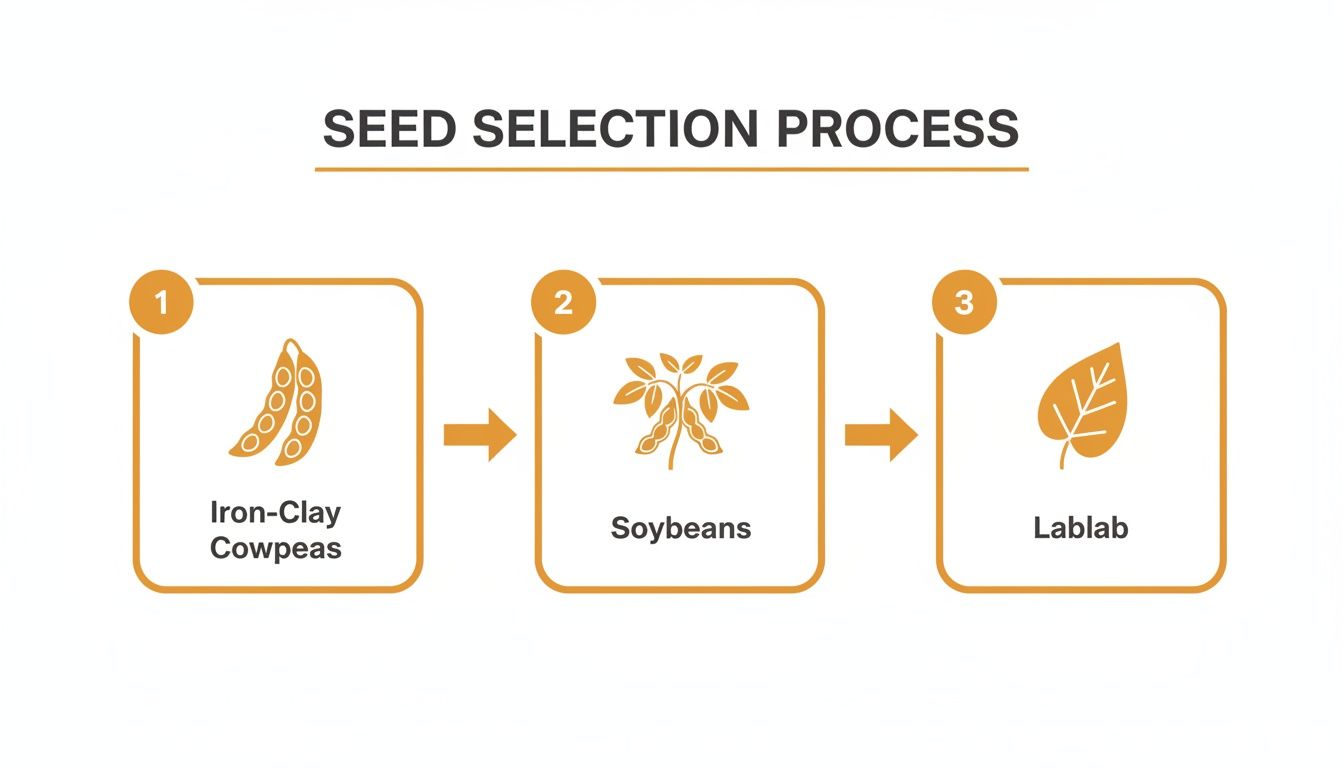
Drought-tolerant species like Iron-Clay Cowpeas or Lablab are your insurance policy against those inevitable summer dry spells.
Protecting Your Investment from Deer
Finally, you have to protect the plot from the very animals it’s for. It sounds counterintuitive, but in areas with a healthy deer population, a small, unprotected plot can get browsed into oblivion before the plants are even a few inches tall. Deer will nip off those tender growing tips, stunting the plants or killing them outright.
An exclusion fence is the most reliable way to prevent this. It doesn’t have to be a Fort Knox-style, eight-foot permanent fence, either. A simple, temporary enclosure often does the trick:
- Single-Strand Electric: One strand of poly wire baited with peanut butter on little foil tabs is a classic trick that quickly teaches deer to give the plot a wide berth.
- Poor Man's Fence: Even just a perimeter of T-posts strung with a few strands of bright flagging tape can create a visual barrier that deer are often hesitant to cross into a new, unfamiliar area.
Giving your plot protection for the first 30-45 days is critical. This allows the plants to establish deep roots and grow enough foliage to withstand browsing pressure later on. Once it's lush, established, and ready for action, you can take the fence down and officially open the buffet.
Turning Your Food Plot into a Scouting Hub
Once your summer food plots are green and growing, their job is only half done. Sure, they provide great nutrition, but their real value comes from the intelligence they help you gather. A thriving plot becomes a central hub where you can inventory your bucks, keep an eye on herd health, and pattern deer movement with unbelievable accuracy.
This is the point where you stop being just a farmer and start thinking like a field biologist and a hunting strategist. It’s time to combine your hard work in the dirt with some smart technology.
Strategic Maintenance for Maximum Attraction
A food plot isn’t a "plant it and forget it" deal. To keep it attractive and productive, you need to do a little ongoing work. One of the best things you can do is mow it strategically.
By mowing your plot in sections, you stimulate fresh, tender regrowth that deer absolutely crave. Think about it: a patch of cowpeas left alone will eventually flower and go to seed, making it far less appealing. But if you mow a strip every few weeks, you create a constant cycle of new growth. This simple trick turns a single plot into a multi-stage buffet that keeps deer coming back all summer.
You also need to watch for over-browsing. If the deer are hammering a section right down to the dirt, that’s a huge clue. It tells you that your plot might be too small for your herd, or that they're lacking other quality food sources nearby. That’s valuable intel for next year's planning.
Deploying Your Eyes in the Field
Now we get to the fun part: turning that plot into a 24/7 scouting machine. Cellular trail cameras are the linchpin here, giving you real-time data sent straight to your phone. Placing cameras on the main trails leading into the plot, or overlooking the field itself, gives you an unprecedented look into the secret lives of your deer herd.
Of course, camera placement is everything. You can get a deep dive into the specifics by reading our guide on how to set up a trail camera. With today's cameras, you’re not just getting grainy night photos—you’re collecting data you can actually use.
A camera gives you more than just a picture of a buck. It tells a story: when he shows up, where he came from, and which other deer he’s with. That story is your blueprint for a successful hunt.
Interpreting the Data from Your Plot
Modern trail cameras, like the ones from Magic Eagle, do a lot more than just take pictures. They’re sophisticated tools that help you understand deer behavior on a much deeper level.
- AI Species Recognition: This is a game-changer. It automatically sorts your photos, so you can stop scrolling through hundreds of pictures of raccoons. You can focus right in on the whitetails and track specific bucks as their antlers grow all summer.
- Activity Heat Maps: By analyzing the timestamps on your photos, the camera's app can show you peak activity times. You might discover your target buck consistently shows up in the last 10 minutes of daylight, giving you a precise window to be in your stand come fall.
- Real-Time Monitoring: Instant notifications let you monitor browse pressure as it happens. If a new bachelor group of bucks suddenly moves in and starts destroying your soybeans, you’ll know about it right away.
This level of insight helps you make decisions based on facts, not guesswork. The data doesn't lie. It shows you exactly how deer are using your property and helps you pinpoint the absolute best stand locations for the season.
The impact of these plots on herd health is huge. Research has shown that warm-season plots are critical for providing high-protein forage right when natural vegetation starts to decline. For perspective, well-managed natural habitat might produce 1,000 lbs of forage per acre. A quality summer plot? It can crank out up to 8,000 lbs per acre.
This is especially vital on properties where you can't do major habitat work. Just converting 3-5% of your land to food plots can maximize nutrition when bucks are finishing their antler growth and does are nursing fawns. By pairing this powerful food source with smart scouting technology, you create a feedback loop that makes you a much more effective hunter and land manager.
Common Questions About Summer Deer Food Plots
Even with a perfect plan on paper, the real world of land management always has a few surprises in store. I've been doing this long enough to know that practical questions pop up, and getting the right answers can be the difference between a lush plot and a patch of disappointment.
Let's tackle some of the most common questions I hear about summer food plots to help you sidestep problems and get your plan dialed in.
When Is the Best Time to Plant Summer Deer Food Plots?
The perfect planting window comes down to two things: soil temperature and the last frost date. You're looking for that sweet spot when all danger of frost is gone and your soil temperature is holding steady above 60°F. A cheap soil thermometer is a great tool to have in your pack.
For most of whitetail country, this usually happens between late April and early June. Planting too early is a huge gamble—a late cold snap can wipe out your young seedlings before they ever get a chance to take root. But wait too long, and you shorten your growing season, cutting down on the total tonnage your plot can produce.
My best advice? Watch the 10-day forecast like a hawk. Try to get your seeds in the ground right before a good, soaking rain is predicted. That timing gives you fantastic seed-to-soil contact and really jumpstarts germination.
How Big Should My Summer Food Plot Be?
This has less to do with how many acres you own and everything to do with how many deer you have. In areas with high deer density, a little half-acre plot can get browsed into oblivion before it even gets established. It's a common and frustrating mistake.
A plot of at least one acre is a much safer bet, as it can usually handle heavy and consistent grazing. If you've got a larger property, I've found that creating a network of several one-to-two-acre plots is way more effective than one giant five-acre field. This strategy spreads out the deer and creates more of that valuable edge habitat they love.
As a general rule of thumb for making a real impact, aim to dedicate 3-5% of your total acreage to high-quality food plots. It can genuinely change the health and holding power of your herd.
What Is the Most Common Mistake to Avoid?
Without a doubt, the single biggest mistake I see people make is ignoring their soil. So many landowners drop serious cash on premium seed and the best fertilizer, but they completely skip the most important step: checking their soil's pH.
If your soil's pH is too low (acidic), nutrients like phosphorus and potassium get chemically "locked up." That means no matter how much fertilizer you throw down, the plants just can't absorb it. A simple $20 soil test is the best investment you will ever make for your food plots, period.
It gives you a clear roadmap, telling you exactly how much lime you need to raise the pH and what specific fertilizer blend (like a 10-20-20) will unlock your plot's true potential. Skipping this step is the #1 reason summer plots fail.
Can I Plant a Food Plot Without a Tractor?
Absolutely. While a tractor makes life easier, "no-till" or "throw-and-grow" methods are incredibly effective, especially for getting plots into those remote, hard-to-reach spots. The process is simple and doesn't require a shed full of equipment.
- Kill the Competition: First, spray the entire plot area with a non-selective herbicide to wipe out all the existing vegetation.
- Expose the Dirt: Once everything is brown and dead, use a heavy garden rake or even a powerful leaf blower to clear away the dead thatch and get down to bare soil.
- Spread the Seed: Broadcast a tough, forgiving seed mix. Blends with clover and chicory are perfect for this method.
- Pray for Rain: This part is critical. Time your seeding to happen just before a rain is in the forecast. The rain will wash the seeds down and press them into the soil, giving them the contact they need to sprout.
This technique is a fantastic, low-cost way to establish a killer plot without any heavy machinery. It just goes to show that with some sweat equity and smart timing, anyone can improve their deer habitat.
An effective food plot is more than a feeding station—it's an intelligence-gathering hub. With the advanced features in the Magic Eagle cellular trail camera, you can monitor browse pressure, inventory your bucks in real-time, and pattern their movements with incredible precision. Don't just feed your deer—understand them. See how the EagleCam 5 can change your season at https://magiceagle.com.