

For a hunter, the right heated vest isn't a luxury—it's a critical piece of gear that can make or break your hunt. The best ones blend a silent outer fabric, a long-lasting battery (at least 10,000 mAh), and smartly placed heat zones to keep your core warm without messing up your draw. It's the difference between calling it a day early and staying put for that buck of a lifetime.
The Modern Hunter’s Advantage Over the Cold
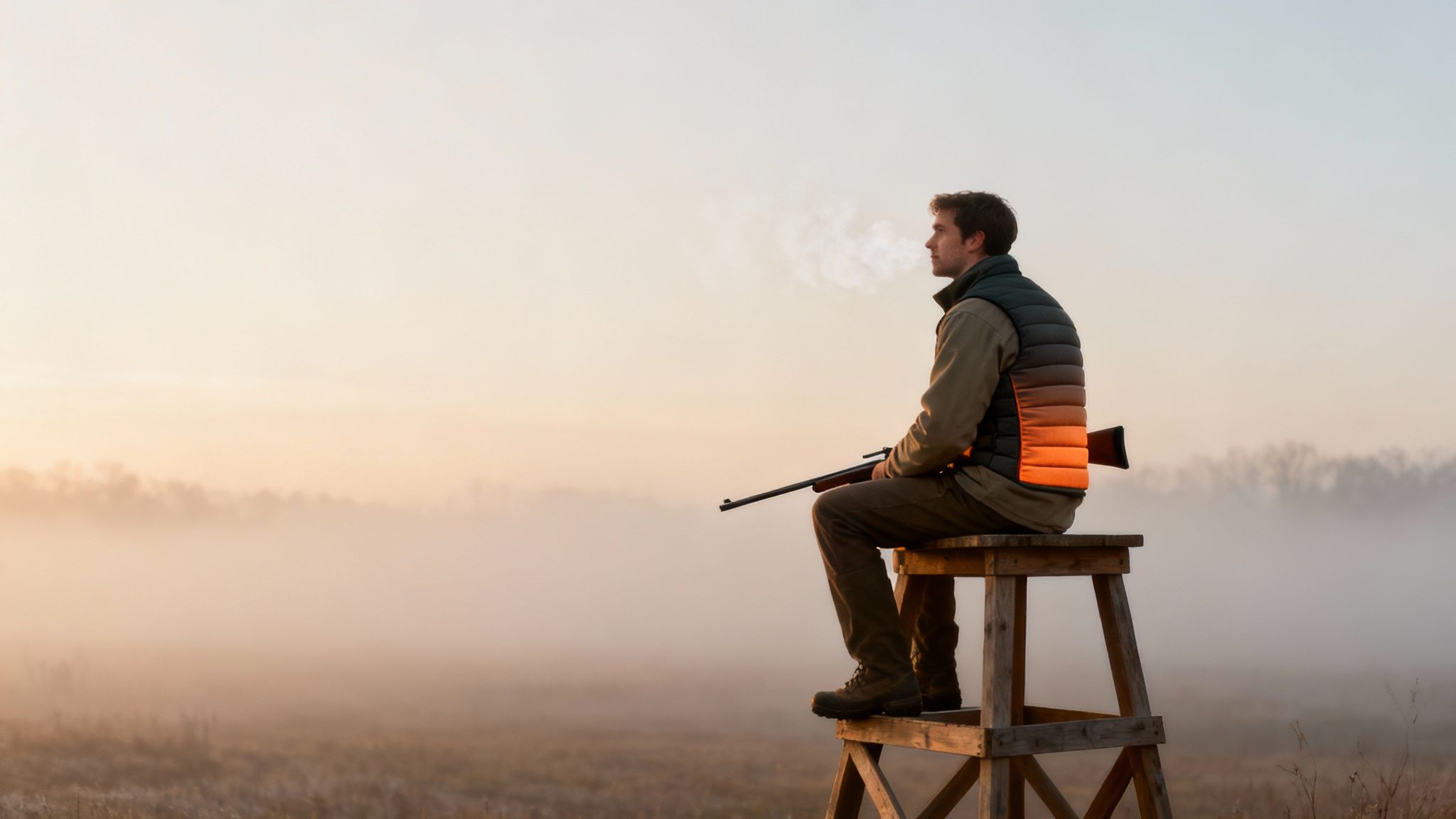
Think about that pre-dawn chill in the deer stand. You know the one. The kind of cold that seeps into your bones, where staying dead still and silent is the only rule that matters. That biting cold has sent more hunters packing than just about anything else, usually right when the woods start waking up. This is where modern gear gives us a serious edge, turning a hunt-ending freeze into just another part of the experience.
A heated vest is more than just a fancy hand warmer; it's a strategic tool. By pumping consistent, controllable warmth right to your core, it completely changes how you perform in the field. The biggest win? It stops the shivers. That uncontrollable shaking is a dead giveaway—it makes noise, it creates movement, and it even pushes out more of your scent. All things that will send a wary buck heading for the next county.
More Than Just Warmth A Strategic Edge
When you’re not shivering, you can stay on top of your game, both physically and mentally. With your body no longer waging a war against the cold, you can:
- Sharpen Your Focus: A warm hunter is an alert hunter. You'll be able to pick up on the snap of a twig or the flicker of an ear for hours on end.
- Extend Your Endurance: You can stay in your stand or blind longer, capitalizing on those magic hours at dusk and dawn when the big ones are moving.
- Improve Dexterity: Keeping your core warm helps send blood to your hands and feet, which is absolutely critical for safely handling your rifle or bow. While you're at it, check out our guide on the best hunting socks for cold weather to really lock in that warmth from head to toe.
This ability to stay comfortable has a direct line to your alertness and decision-making. A heated vest is a huge advantage out in the cold, making it just as essential as the other gear in a good winter survival kit. It lets you take full advantage of other modern tools, like your cellular trail camera, by giving you the grit to wait for the perfect shot it told you was coming.
The core principle is simple: the longer you can remain still, silent, and focused, the higher your chances of success. A heated vest directly addresses the biggest threat to all three of those factors—the cold.
It’s no surprise that more hunters are catching on. The global heated apparel market is on track to hit USD 9.5 billion by 2030. That's a clear signal that hunters and other outdoorsmen are investing in tech that keeps them in the game when conditions get harsh.
How a Heated Vest Actually Works
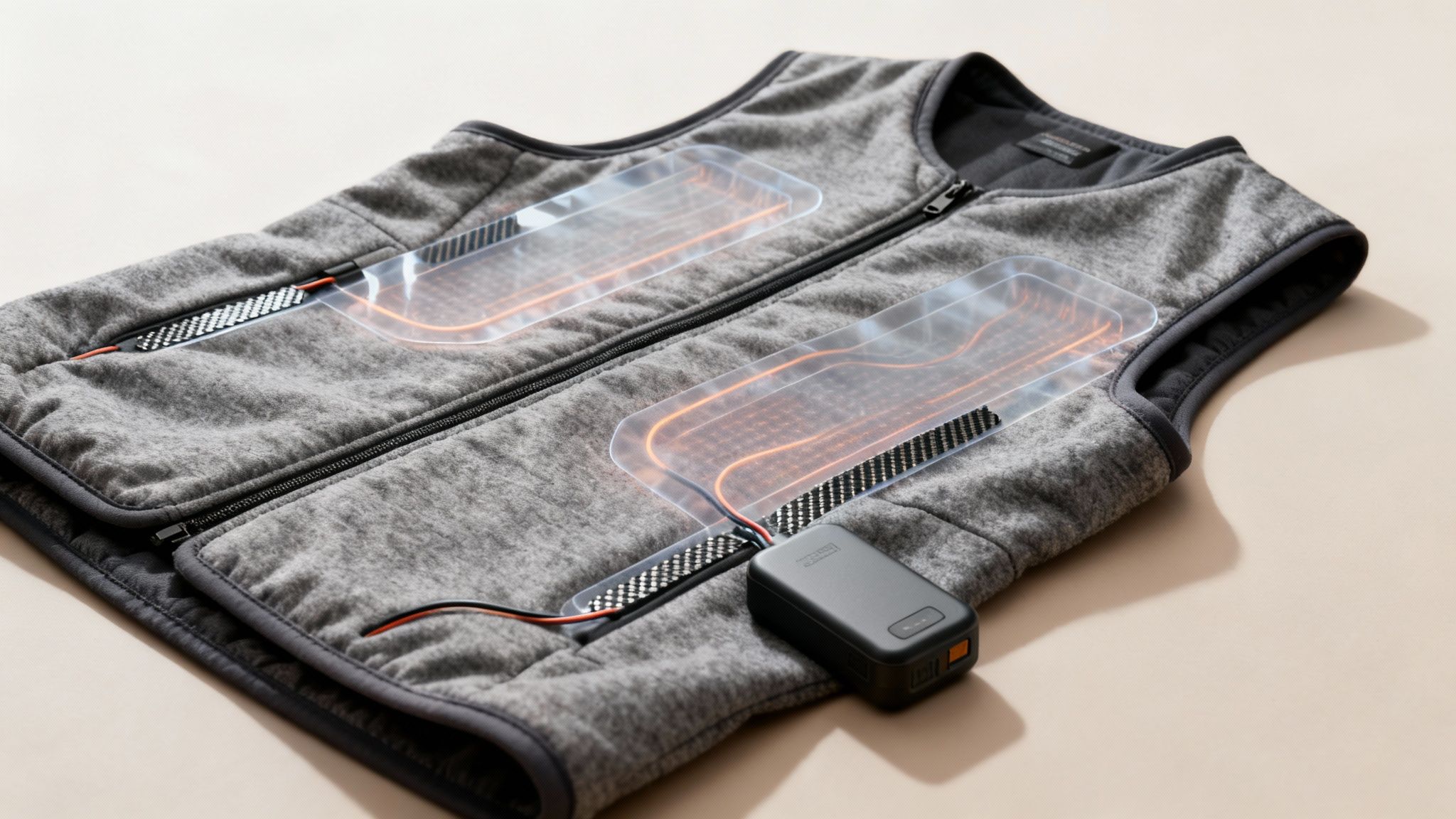
A heated vest might seem like high-tech wizardry, but the concept behind it is actually pretty simple. Think of it as your own personal, wearable furnace. Instead of trying to heat the cold air around you, it delivers warmth directly to your body, right where you need it most.
At its core, the system is straightforward. A rechargeable battery pack sends a safe, low-voltage current through a network of super-thin heating elements woven into the vest. These elements, usually made of carbon fiber threads, heat up and radiate that warmth inward to your core. It’s a game-changer compared to just piling on bulky layers, which only trap the body heat you’re already struggling to produce.
The Power Plant: Your Battery Pack
The battery is the engine that drives your heated vest. Its capacity, measured in milliampere-hours (mAh), is the single biggest factor determining how long you'll stay warm out there. A higher mAh number simply means you have a bigger "gas tank."
Most heated vest batteries fall between 5,000 mAh and 10,000 mAh. For any hunter planning an all-day sit from dawn till dusk, a 10,000 mAh battery is the gold standard. With a full charge, that capacity typically gets you:
- Low Setting: 8-10 hours of steady, continuous warmth.
- Medium Setting: 5-7 hours.
- High Setting: 3-4 hours, perfect for a quick blast of heat after a long, cold hike into your stand.
Pro tip: always carry a spare battery. Cold weather can sap a battery's efficiency a little, and having a backup means you’re guaranteed consistent heat from sunrise to sunset, no matter how much the temperature drops.
Strategic Warmth: Heat Zone Placement
Where the vest applies heat is just as important as how much heat it generates. The best heated vests for hunting have heating zones placed strategically over major muscle groups and key blood-flow areas. This is what warms your entire body efficiently.
The real goal of a heated vest is to keep your core temperature stable. When your core is warm, your body can pump that warm blood out to your extremities, which is what keeps your fingers and toes from going numb.
You’ll typically find a few common heat zone setups:
| Heat Zone Location | Primary Benefit for Hunters |
|---|---|
| Chest (2 zones) | Warms blood as it moves through your heart and lungs, giving you a quick, all-over feeling of warmth. |
| Upper Back | Targets big muscle groups that get stiff in the cold, helping you stay loose and ready for a shot. |
| Neck/Collar | A game-changer. Heat on the back of your neck can dramatically fight off chills and make you feel warmer instantly. |
Vests with three to five zones—usually two in the chest, one or two in the back, and maybe one in the collar—give you the most balanced and effective warmth. This layout wraps your entire torso in a consistent layer of heat, so you can stay focused on the hunt, not the cold.
The Shell: Fleece vs. Softshell
The vest's material plays a huge part in both insulation and stealth. While the heating elements make the warmth, the fabric is what traps it and protects you from the elements.
Fleece Vests: These are fantastic insulators. The soft, brushed material is quiet and traps air incredibly well, making it an ideal mid-layer under a shell. The downside? Fleece offers almost no protection from wind or rain on its own.
Softshell Vests: This is the go-to choice for an outer or primary layer. Softshell fabrics have a tough, tightly woven exterior that gives you serious wind and water resistance. The inside is usually bonded with a soft fleece for comfort and extra insulation. For a hunter facing unpredictable weather, a softshell is the far more versatile option—it’s the perfect mix of active heating and passive weather protection.
Essential Features for Stealth and Durability
Sure, staying warm is the name of the game, but the best heated vest for hunting has to nail two other things that are absolutely critical in the woods: stealth and durability. A vest that keeps you toasty but rustles like a potato chip bag when you draw your bow is worthless. The same goes for one that shreds to pieces after a single season of busting through briars.
These are the features that separate a generic heated vest from a true piece of hunting equipment. They’re the details that make sure your gear helps your hunt, instead of getting in the way. At the end of the day, your vest should just disappear—blending into the background and moving with you.
The Sound of Silence
For any hunter, silence is currency. The smallest unnatural sound can send a wary buck into the next county, ruining a perfect opportunity. The outer shell of your vest is your first line of defense against making that kind of noise.
- Noisy Nylon: A lot of standard heated vests use a slick nylon or polyester shell. It’s tough, sure, but it's also incredibly loud. It makes that distinct "swish-swish" sound with every little movement, which might as well be a bullhorn in the quiet woods.
- Quiet Brushed Fabrics: The good stuff is made from brushed polyester or softshell materials with a fleece-like, matte finish. These fabrics are engineered to be dead silent, letting you raise a rifle or draw a bow without making a peep.
Here's the ultimate test: just rub the fabric against itself right next to your ear. If you hear that sharp, synthetic rustle, it’s too loud for close-range bowhunting or a quiet sit in the treestand.
Built to Withstand the Backcountry
Hunting is hard on gear. You’re pushing through thickets, leaning against rough tree bark, and getting snagged on branches left and right. A vest designed for a walk in the park just isn't going to cut it. Durability really comes down to the quality of the build.
Look for these dead giveaways of a well-made vest:
- Reinforced Stitching: Take a close look at the seams, especially around the shoulders and pockets where the stress is highest. Double-stitching or bar-tacking in these areas is what keeps the vest from ripping when you’re hauling gear. This is especially important if you’re also running a saddle hunting backpack, which adds extra weight and strain.
- High-Quality Zippers: A busted zipper can make your vest totally useless. Look for oversized, rugged zippers (like the YKK brand) that are easy to grab with gloves on and won’t snag or fail when you need them most.
Weather Resistance and Camouflage
Beyond being quiet and tough, your vest needs to shield you from the elements and help you blend in. Unpredictable weather is just part of hunting, and being seen is simply not an option.
A solid hunting vest has to offer some level of wind and water resistance. A DWR (Durable Water Repellent) finish is key—it’ll shed light rain and snow, keeping the insulation and those all-important heating elements dry and working properly. That protection is a lifesaver when the weather decides to turn on you.
Finally, effective camo is non-negotiable. The pattern needs to match the environment you hunt in, whether that’s hardwoods, marshland, or open country. A good camo pattern breaks up your outline, making you look like just another part of the scenery. This blend of modern tech and traditional concealment is a big reason the hunting apparel market, valued at USD 3.57 billion in 2026, is so strong. Vests, in fact, have become the fastest-growing piece of gear within that market as hunters demand specialized, effective equipment. You can dig deeper into these trends with industry market analysis on fortunebusinessinsights.com.
Choosing the Right Vest for Your Hunting Style
There’s no such thing as a one-size-fits-all heated vest. The best heated vest for hunting is the one that disappears into your gear system, perfectly matching the demands of how and where you hunt. A vest that’s perfect for a whitetail hunter sitting motionless in a treestand could be a miserable choice for someone chasing elk up a mountainside.
Think of it like picking the right tool for the job. You wouldn't use a sledgehammer to drive a finishing nail. In the same way, you have to match your vest’s features—its battery life, how well it breathes, and its durability—to your activity level to stay comfortable and effective.
The Stationary Hunter: The Treestand Specialist
If your hunts involve long, cold, motionless hours in a treestand or ground blind, your biggest enemies are a deep, bone-chilling cold and the slow creep of boredom. For this style of hunting, your vest isn't just a piece of clothing; it's practically a life-support system.
Your needs are simple but completely non-negotiable:
- Maximum Core Warmth: You need powerful heating elements, ideally with multiple zones covering both your chest and back. Since you aren't moving to generate your own heat, the vest has to do all the heavy lifting.
- All-Day Battery Life: A battery that dies halfway through the morning is a failed hunt waiting to happen. Prioritize a vest with a high-capacity 10,000 mAh battery, or make sure you carry a spare. You'll likely be running it on low or medium for 8+ hours straight.
- Absolute Silence: When a mature buck is ghosting through the timber just yards away, the slightest "swish" from a noisy fabric will blow your cover. A brushed fleece or a completely silent softshell isn't a luxury—it's mandatory.
For the stationary hunter, the vest’s only job is to create a constant bubble of warmth, letting you stay perfectly still and focused during those prime early morning and late evening hours when the temperature really drops.
The Mobile Hunter: The Spot-and-Stalk Strategist
For the hunter who is constantly on the move, covering miles of rugged country after game, the entire equation flips. Your body generates a ton of heat and sweat while you're hiking, but you can get dangerously chilled the second you stop to glass a hillside.
This style of hunting is all about versatility and smart layering.
Your vest has to be a master of temperature regulation. It needs to breathe while you’re moving and then deliver instant warmth the moment you stop, keeping the sweat on your back from turning into a layer of ice.
Look for a vest with these critical attributes:
- Breathability and a Slim Fit: A bulky, heavily insulated vest will have you overheating in minutes. You need a slim, athletic-fit vest made from a breathable softshell that layers well. It should fit snugly over a base layer but comfortably under your outer jacket.
- Quick-Access Controls: You'll be turning the vest on and off all day long. The power button must be easy to find and use with gloves on, without forcing you to dig through multiple layers of clothing.
- Durability: Your gear is going to get scraped on rocks, snagged by branches, and generally put through the wringer. A tough, abrasion-resistant outer fabric is a must. This is where a vest designed for the backcountry really earns its keep, much like finding the best elk hunting backpack that can handle the abuse of the mountains.
For the mobile hunter, a heated vest is a tool for managing those wild temperature swings, keeping you from getting chilled during glassing sessions without making you sweat on the move.
The Waterfowl Hunter: The Marsh Warrior
Waterfowl hunting brings a new and relentless enemy into the mix: moisture. Whether it’s driving rain, blowing snow, or just the damp chill coming off the water, staying dry is every bit as important as staying warm. A wet hunter is a cold hunter, period.
Your vest needs to be a fortress against the elements.
- Serious Water Resistance: This is your top priority. Look for a vest with a DWR (Durable Water Repellent) coating at a bare minimum. A truly waterproof or highly water-resistant outer shell is even better. Make sure the seams and zippers are also sealed to prevent any leaks.
- Windproof Construction: That wind whipping across open water can steal your body heat in a heartbeat. A windproof membrane is absolutely essential for blocking that convective heat loss and keeping the warmth from the heating elements trapped where it belongs.
This decision tree gives you a quick visual of how your gear priorities should shift based on where and how you hunt.
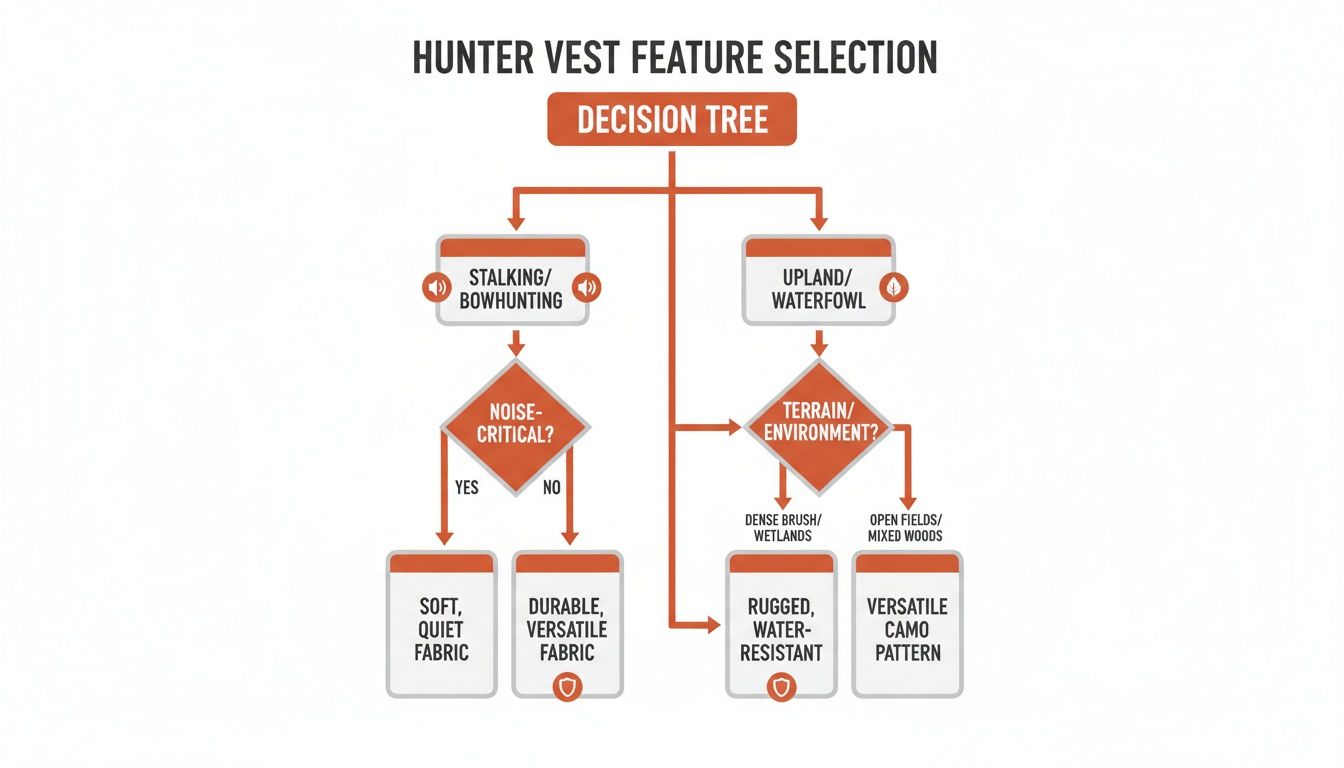
As the graphic shows, when your environment gets tougher—moving from quiet woods to harsh, open terrain—the focus shifts from pure silence to rugged durability and weatherproofing.
Matching a Heated Vest to Your Hunt
Use this checklist to evaluate which vest features are most important based on your primary hunting method, typical weather conditions, and layering strategy.
| Key Factor | Treestand Hunting | Spot-and-Stalk Hunting | Waterfowl Hunting |
|---|---|---|---|
| Top Priority | Max warmth & silence | Breathability & mobility | Water/wind resistance |
| Battery Needs | 8+ hours continuous runtime | On/off cycles; spare pack | Long runtime; waterproof port |
| Ideal Fit | Roomy for layering underneath | Slim, athletic fit | Roomy enough for over waders |
| Material | Brushed fleece, silent softshell | Breathable softshell, grid fleece | DWR-coated or waterproof shell |
| Heat Zones | Chest, back, and neck focus | Core-focused (chest/back) | Broad back and chest coverage |
| Durability | Low priority; focus on quietness | High priority; abrasion-resistant | High priority; ripstop fabric |
No matter your style, this table can help you zero in on the features that will actually make a difference in the field, ensuring you invest in gear that works for you, not against you.
Getting the Most from Your Heated Vest
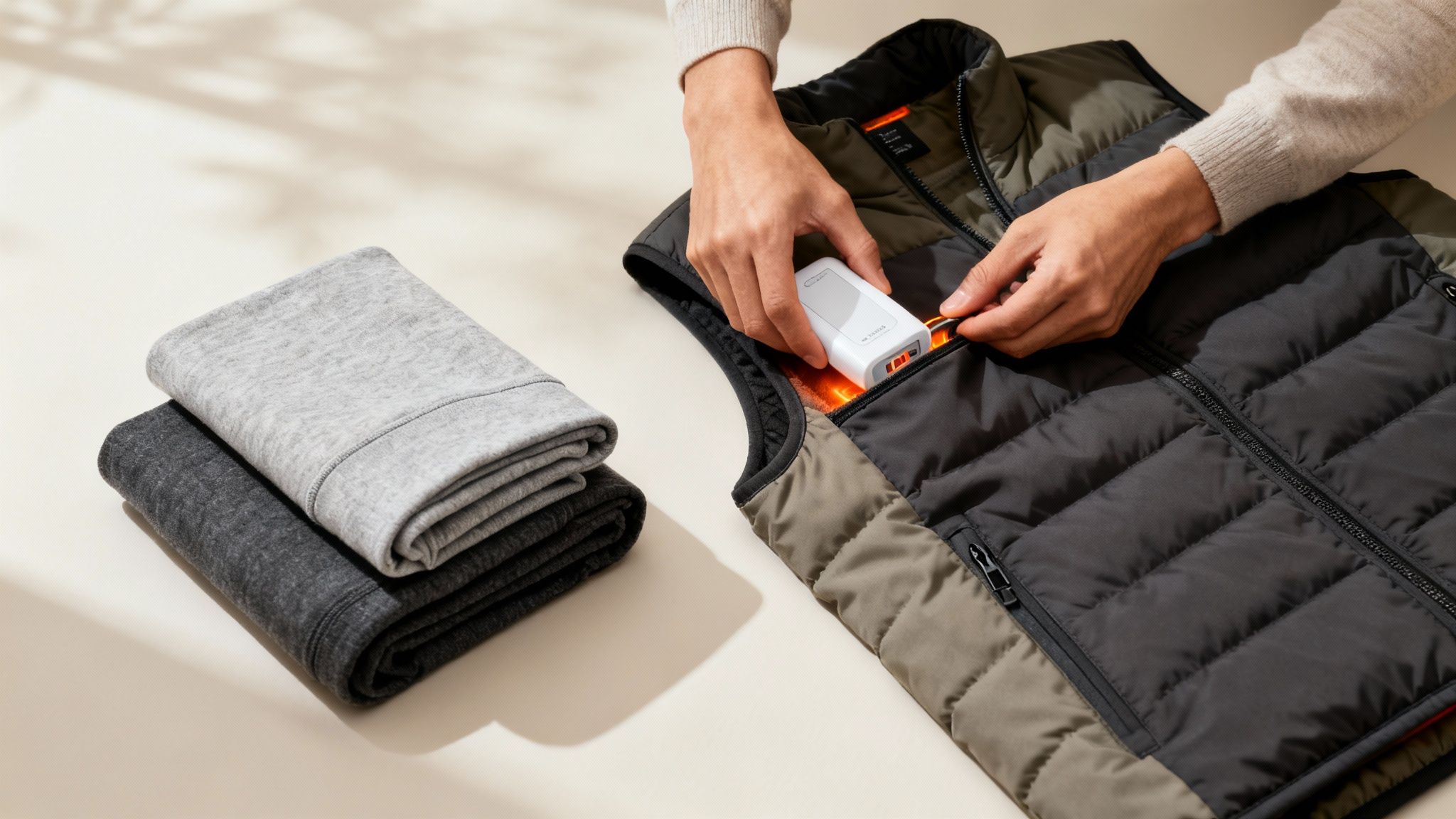
Owning a great heated vest is one thing, but knowing how to use it turns a piece of gear into a game-changer. Just like any specialized tool, a little know-how goes a long way in getting the most out of it and making it last. From layering right to taking care of its battery, a few good habits will keep you warm season after season.
The single biggest mistake I see hunters make is messing up their layering. You have to think of your heated vest as a supercharged mid-layer, not an outer jacket. It’s designed to work best when it's snug against your body, pushing warmth directly into your core. If it’s loose, you're just heating up empty air.
Here’s the right way to build your system for maximum warmth:
- Base Layer: Start with a moisture-wicking synthetic or merino wool shirt. This is critical—it pulls sweat off your skin so you don't get chilled.
- Heated Vest: Put the vest on right over your base layer. This ensures all that heat gets transferred where it counts.
- Outer Layer: Finish it off with a windproof and water-resistant jacket. This shell shields you from the elements and, just as important, traps the heat your vest is pumping out. You're creating your own personal furnace.
Mastering Battery Care and Longevity
The battery is the heart of your heated vest. Treat it right, and it’ll be there for you when the temperature drops. Lithium-ion batteries are tough, but they need a bit of attention, especially during the off-season.
A few simple habits can literally double the life of your battery pack. When hunting season wraps up, don't just chuck it in a drawer fully juiced or completely dead.
For long-term storage, the sweet spot is a 50-75% charge. Storing a battery at 100% or 0% for months on end can permanently wreck its capacity. Just check the charge every couple of months and top it off if needed.
And please, always use the charger that came with your vest. Mixing and matching chargers is a recipe for disaster—it can damage the battery or create a safety risk. A little care here ensures your gear is ready to roll on opening day.
Prioritizing Your Safety in the Field
Modern heated vests are incredibly safe, but it's smart to know what's protecting you. Any quality vest will have built-in overheat protection. This is a non-negotiable safety feature that automatically shuts the system down if it gets too hot, preventing any risk of burns and protecting the electronics.
This kind of advanced, safe technology is exactly why the heated apparel market is booming. The global heated jacket market, which includes vests, was valued at around USD 0.4 billion in 2024 and is growing fast. That growth is driven by hunters and outdoor pros who demand gear that performs reliably and safely in the worst conditions. You can dig into the numbers in this heated jacket industry report.
By layering smart, taking care of your battery, and trusting the built-in safety features, you’re making sure your investment doesn't just keep you warm—it keeps you in the hunt, safely and reliably, for years to come.
Making the Right Investment in Your Hunt
Choosing a heated vest isn't just about buying another piece of gear. It's a real investment in your comfort, your focus, and ultimately, your success out in the woods. This guide was built to help you cut through the marketing noise and zero in on what actually matters when the temperature drops and the buck of a lifetime is just over the ridge.
By now, you know that the guts of a good heated vest come down to a few critical components. It all starts with the power source. A tough, long-lasting battery is the engine that keeps you warm, and without enough runtime, even the most expensive vest is just dead weight on your shoulders.
The Hunter’s Holy Trinity
When you're ready to pull the trigger on a purchase, always come back to these three pillars. They separate a generic heated jacket from a piece of specialized equipment truly built for the hunt.
- Stealth and Silence: A dead-quiet fabric is non-negotiable. One wrong rustle from a cheap nylon shell can blow hours of patient waiting in a split second.
- Layering and Fit: The vest has to work with your existing system. It needs to fit snugly over a base layer to transfer that heat but can't be so bulky that it restricts you from drawing a bow or shouldering a rifle.
- Purpose-Built Design: Every little detail counts. Think durable zippers you can actually use with gloves on, or camo patterns that truly blend into your local environment. It all has to serve the hunt.
Think of your heated vest less as an expense and more as an investment that pays you back in time and endurance. It buys you those extra hours in the stand, keeps your head in the game when it matters most, and gives you the edge to stay perfectly still for that one critical shot.
At the end of the day, the goal is for you to feel confident picking out gear that will genuinely make your hunts better. You now have the checklist to find a vest that will keep you warm, silent, and dialed-in. Making the right choice means more than just being comfortable—it means staying in the hunt longer and giving yourself the best possible shot at filling your tag, year after year. A quality heated vest completely changes your relationship with the cold, turning a hunt-ending force of nature into just another part of the adventure.
Common Questions About Heated Hunting Vests
Even after you've weighed all the features, some practical questions always pop up right before you pull the trigger on a key piece of gear. Let's tackle the most common ones hunters ask about heated vests. We'll clear up any final doubts so you can make your choice with total confidence.
These are the real-world details that actually matter when you’re out in the elements. Getting a handle on these specifics means you'll know exactly how your vest will perform when you need it most.
Are Heated Vests Safe in Rain or Snow?
This is a top concern for any hunter, and the answer is a confident yes, as long as you buy a quality vest from a reputable brand. Vests built for hunting are made with water-resistant fabrics and have insulated wiring specifically to protect the electronic components. The low-voltage power from the battery pack is safe and poses no shock risk, even if it gets damp.
That said, it's crucial to remember that "water-resistant" isn't the same thing as "waterproof."
- For light rain or snow, a good vest will be perfectly fine on its own.
- In a heavy downpour, you should always wear it as a mid-layer under a truly waterproof outer shell.
- Never submerge the vest or its battery pack in water.
If the manufacturer provides an IP (Ingress Protection) rating, pay attention to it. This gives you a clear, standardized idea of its resistance to both moisture and dust.
The bottom line is that these vests are designed for the outdoors. The low-voltage DC power is inherently safe, and the internal wiring is shielded from the elements. As long as you use it as intended, moisture isn't a safety issue.
How Long Will the Battery Really Last?
Battery life is make-or-break in the field. It really comes down to two things: the heat setting you use and the battery's capacity, which is measured in mAh (milliamp hours).
On the lowest setting, a standard 10,000 mAh battery will typically last 8-10 hours—more than enough to get you through an all-day sit.
But if you crank it up to the high setting, that runtime can plummet to just 3-4 hours. This is exactly why so many seasoned hunters carry a fully charged spare battery pack. It's a simple step that guarantees you have reliable warmth from before dawn until after dusk, no matter how cold it gets.
Can I Wash My Heated Hunting Vest?
Absolutely. Most modern heated vests are designed to be machine washable, but you have to follow the manufacturer's instructions to the letter. If you don't, you risk damaging the heating elements permanently.
The process is generally pretty straightforward:
- Remove the battery pack. This is the most important step, period.
- Zip up all the pockets and, ideally, place the vest in a mesh laundry bag to protect it.
- Use a gentle cycle with cold water.
- Always air dry the vest completely. Never, ever put it in a machine dryer—the high heat will ruin the internal wiring.
A great heated vest keeps you in the field longer, just like a reliable cellular trail camera gives you the intel to be there in the first place. For gear that works as hard as you do, check out the smart scouting tools from Magic Eagle.
Explore Magic Eagle Cellular Trail Cameras Now