

The best hunting socks for cold weather are almost always a high-performance Merino wool blend. There's a reason for that. This stuff offers incredible insulation even when it gets damp, pulls moisture away from your skin like a champ, and naturally resists odor—making it the undisputed king for keeping your feet warm and dry on a long hunt.
Why Your Socks Are the Most Critical Cold Weather Gear
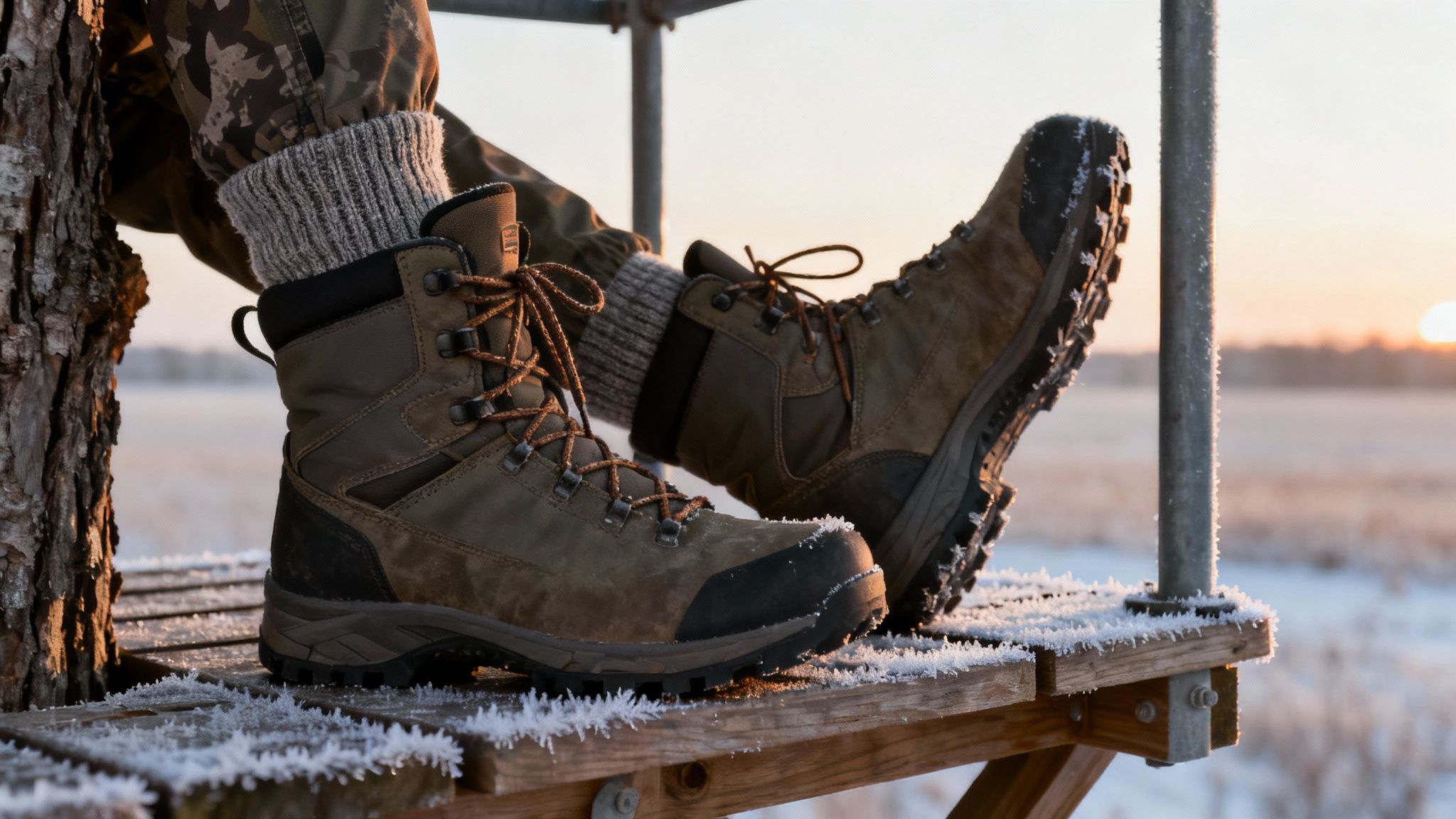
We’ve all been there. You dropped serious cash on insulated boots and layered up perfectly, but an hour into a cold sit, your toes are completely numb. Just like that, the hunt’s over before it really started.
The culprit probably isn't your boots—it's your socks. Your feet are ground zero for your entire cold-weather system, and picking the right socks is arguably the single most important gear choice you'll make for staying out longer.
Even the most expensive, high-tech boots are useless if your socks can't manage sweat and hold onto heat. Think of your sock as the engine for your foot's microclimate. Its main job is to pull sweat away from your skin, stopping that rapid, bone-chilling cold that sets in when moisture evaporates. Once that moisture is gone, the tiny air pockets in the sock’s fibers—its "loft"—trap your body heat and create a critical barrier of insulation.
The Foundation of Warmth and Dryness
This one-two punch of moisture-wicking and insulation is non-negotiable for hunters, whether you’re sitting motionless in a treestand or stalking through the backcountry. A sock that can’t do both will let you down, period. Cotton is the classic example of what not to wear; it just soaks up sweat and loses all its insulating power, turning into a cold, wet liability against your skin.
If you want a real appreciation for this system, just look at what kit is required to face the coldest places on Earth. The pros build their systems from the skin out, and it all starts with the right base layers and socks.
Your socks are the first and most important line of defense against the cold. They are what directly regulate the environment around your skin, and they will ultimately decide whether you stay warm and dry or head back to the truck with frozen feet.
Choosing the best hunting socks for cold weather isn't just about finding the thickest pair you can. It's about finding a material that's truly engineered for the job. We'll dig into the specific materials that make up the real hunter essentials you need in your pack.
At-a-Glance Material Comparison
To give you a quick lay of the land, this table breaks down how the most common sock materials stack up against each other in the field.
Cold Weather Hunting Sock Material Performance
| Material | Warmth When Wet | Moisture Wicking | Odor Resistance | Ideal Hunting Style |
|---|---|---|---|---|
| Merino Wool | Excellent | Good | Excellent | Stationary (Treestand) & Mixed Use |
| Alpaca | Excellent | Excellent | Excellent | Extreme Cold & Stationary |
| Synthetics | Good | Excellent | Poor | Active (Spot-and-Stalk) |
| Cotton | Poor | Poor | Poor | Not Recommended for Hunting |
As you can see, your choice directly impacts your comfort. Merino and Alpaca are fantastic all-around performers for cold, static hunts, while synthetics shine when you’re constantly on the move and generating a lot of sweat. And cotton? Just leave it at home.
Understanding the Anatomy of a High-Performance Hunting Sock
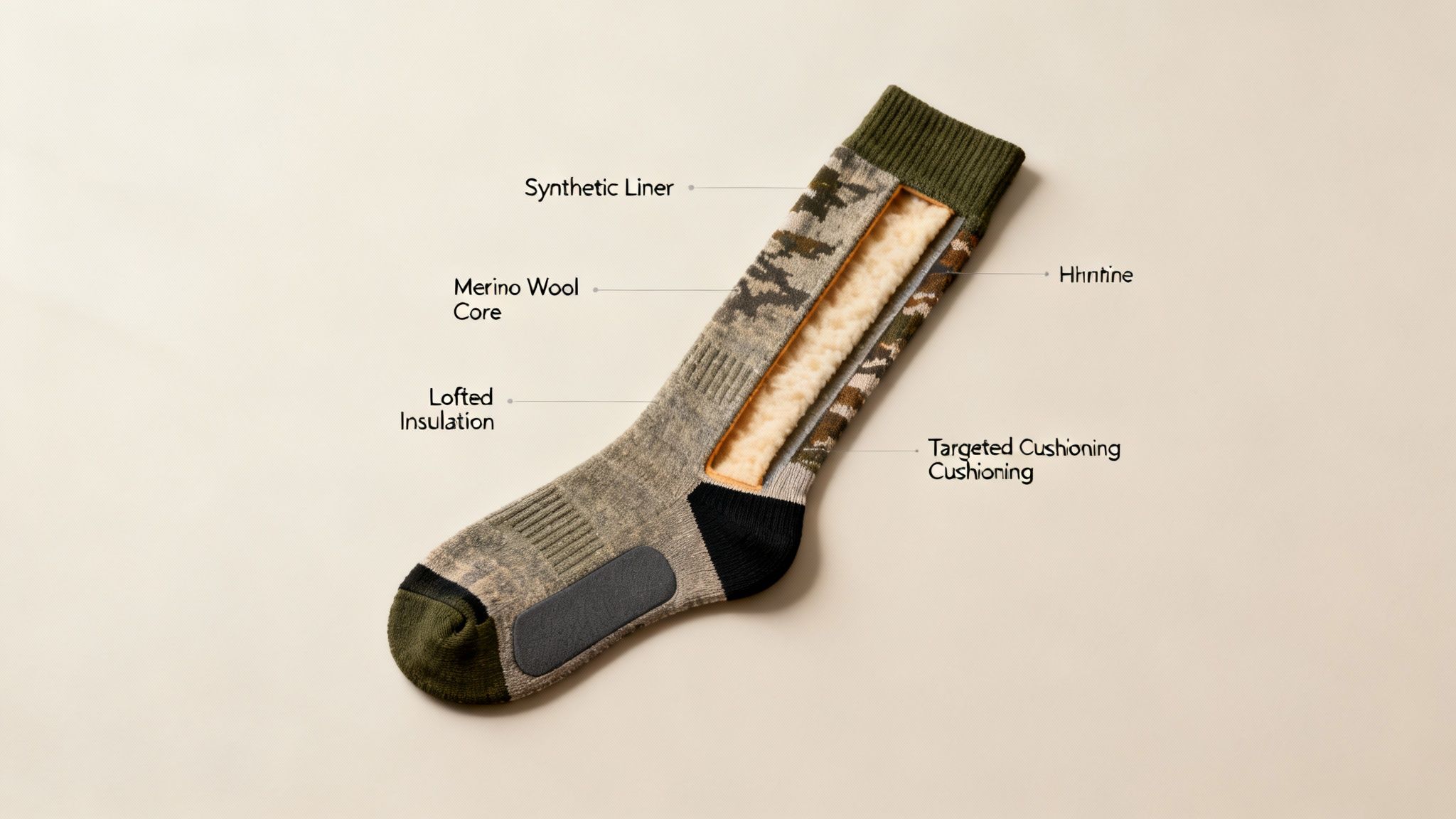
To pick the right cold-weather hunting socks, you need to look past brand names and flashy packaging. It helps to think of a top-tier hunting sock like a high-performance engine, where every single component has a critical job. When these parts work together perfectly, you get warmth, comfort, and reliability in the field.
The "engine block" is the core material, usually a smart blend of Merino wool and advanced synthetics. This forms the foundation, giving the sock its primary structure and insulating power. Just like an engine needs a coolant system, a sock needs to manage moisture. That’s its wicking capability—the power to pull sweat away from your skin and prevent that damp, chilling feeling that can ruin a hunt.
The Engine of Foot Comfort
Insulation comes from the sock's loft and thickness, which create thousands of tiny air pockets to trap your body heat. Finally, the "ergonomics" cover the sock's physical design and fit. Features like seamless toes prevent blisters during long stalks, while targeted cushioning in the heel and ball of the foot cuts down on fatigue and impact.
When you understand how these elements work together, you can evaluate any sock based on its actual performance, not just marketing claims. You'll see the engineering behind the fabric and make a choice that truly supports your hunt.
The demand for this level of performance is skyrocketing. While the global socks market has grown to $49.48 billion, the specialized athletic segment—which includes performance hunting socks—is growing even faster. This category is projected to grow at a compound annual rate of 5.4% through 2033, showing a huge shift in how serious hunters view their gear. They get it: quality socks directly impact comfort and success. You can discover more about this market growth on grandviewresearch.com.
Key Performance Components
A great sock is way more than just a tube of fabric. It's a system designed with specific zones that serve different functions. Let's break down the most important parts:
- Cushioning Zones: High-performance socks have padding in high-impact areas like the heel, Achilles, and shin. This isn't just for comfort; it protects your feet from boot pressure and abrasion on long hikes.
- Arch Support: An elasticated band wrapped around the arch provides gentle compression. This feature is huge for fighting foot fatigue and keeps the sock from slipping or bunching up inside your boot—a primary cause of blisters.
- Flex Zones: You'll often find thinner, more breathable panels woven into the area above the ankle. This allows for unrestricted movement and prevents the sock from binding up as your foot flexes.
- Seamless Toe Closure: This is a non-negotiable feature for any serious hunter. A flat, smooth seam at the toe box eliminates the main source of rubbing and blistering, especially on downhill treks where your toes are constantly pushed forward.
When every component is engineered correctly, the sock disappears. You shouldn't be thinking about your feet; you should be focused on the hunt. The best gear works so well that you forget it's even there.
By understanding this anatomy, you’re no longer just buying a pair of socks. You’re investing in a piece of technical equipment designed to keep you warm, dry, and dialed in on your target.
Choosing Your Material: Merino Wool vs. Advanced Synthetics
When you're gearing up for a cold-weather hunt, the material of your sock is the single most important decision you'll make. This isn't just about brand loyalty; it's a fundamental choice between two high-performance philosophies: nature's powerhouse, Merino wool, and meticulously engineered synthetics. Each has its place, and the right one depends entirely on your hunt.
Merino wool is nature’s original performance fabric, perfected over thousands of years to keep sheep alive in brutal mountain weather. Its fibers have a unique, wavy structure that creates thousands of tiny air pockets. This natural loft is what makes it an incredible insulator, trapping your body heat to keep your feet warm when the temperature drops.
But its real genius is how it handles moisture. Unlike cotton, which soaks up sweat and turns your boots into a refrigerator, Merino wool can absorb up to 30% of its own weight in water vapor before it even feels damp. It actively pulls perspiration away from your skin, keeping you dry and preventing that dangerous, bone-deep chill that sends you packing early.
The Case for Merino Wool
Merino's benefits go way beyond just warmth and moisture control. It’s also naturally antimicrobial, which means it stops odor-causing bacteria from growing. For multi-day hunts where you might be stuck in the same pair of socks for a couple of days, this is an absolute game-changer. It keeps your gear, and your tent, much fresher.
Key Takeaway: Merino wool’s biggest strength is its ability to insulate even when damp. If your feet sweat on the walk to the treestand, a good Merino sock will keep you warm through a long, cold sit.
The market has caught on. The global merino wool sock segment—a niche corner of the gear world for serious outdoorsmen—hit $419 million and is expected to blow past $650 million by 2033. That growth is fueled by hunters who count on merino's proven ability to wick moisture, regulate temperature, and fight odor when a hunt is on the line. You can read the full research about merino wool sock performance to see the data behind the trend.
The Power of Advanced Synthetics
On the other side of the aisle, you have advanced synthetics like polypropylene and specialized polyester blends. While Merino wool absorbs moisture vapor, synthetics are hydrophobic—they physically repel liquid water. Their entire job is to aggressively push sweat away from your skin as fast as possible, moving it to the outside of the sock where it can evaporate.
This makes them a phenomenal choice for high-exertion hunts where you’re pouring out sweat, like chasing elk in steep country or breaking trail through deep snow. Because they don’t hold onto moisture, synthetic socks dry incredibly fast. That rapid drying time is their trump card, helping you avoid blisters and keep your feet healthy during intense, constant movement.
Finding the Perfect Blend
So, which one is it? The choice often boils down to your specific hunting style. For a stationary hunter sitting in a damp, cold treestand, Merino’s warmth-when-wet capability is king. But for an active mountain hunter who needs to stay dry on the move, a synthetic blend’s quick-drying power might be the winning ticket.
Thankfully, you don't always have to choose. Many of the absolute best hunting socks solve this debate by using a strategic blend. These hybrid socks combine a high percentage of Merino wool for warmth and odor control with a backbone of nylon for durability and a touch of spandex for a secure, athletic fit. This approach gives you the best of both worlds, creating a sock that’s warm, tough, and ready for whatever the hunt throws at you.
How to Properly Layer Socks for Extreme Cold
Sometimes, one pair of socks just won't cut it, no matter how good they are. When you're facing truly brutal, sub-zero conditions, you need to think beyond a single layer and adopt a more strategic approach. It's the same principle we use for layering a jacket and base layer, but applied directly to your feet where it matters most.
The proven method for this is the two-sock system. This is your ultimate defense against that cold, clammy feeling that creeps in when your feet sweat on the hike in, only to freeze solid during a long sit. This system creates a powerful team where two different socks work together, each with a very specific job.
The Two Sock System Explained
The foundation of this entire system is a thin liner sock made from a synthetic material like polypropylene. This is your first layer, right against the skin, and its only mission is to aggressively pull moisture away from your foot. Think of it as a high-powered pump, constantly moving sweat outward and keeping your skin bone dry.
Over that liner, you'll pull on a thicker, insulated sock, usually heavyweight Merino wool or a quality Alpaca blend. This is your warmth layer. Because the liner is handling all the moisture, the outer wool sock can do its job much more effectively—trapping your body heat and insulating you from the cold.
The layering system is a one-two punch against cold feet. The synthetic liner defeats moisture, while the wool outer sock defeats the cold. Together, they create a dry, warm microclimate that a single sock often struggles to maintain.
One of the biggest mistakes hunters make is doubling up on two thick pairs of socks, especially if one is cotton. This is a recipe for disaster. It not only traps sweat right against your skin but also compresses all the insulation and—most importantly—restricts blood circulation. Less blood flow means less warmth, which ironically makes your feet colder, not warmer.
When to Layer Your Hunting Socks
You don't need the two-sock strategy for every hunt, but it’s an absolute game-changer in a few key situations. You should seriously consider layering when:
- Facing Sub-Zero Temperatures: In extreme cold, a single layer often just isn't enough to provide the insulation you need to stay out all day.
- Mixing Active and Static Hunting: If your hunt involves a tough, sweaty hike to a treestand followed by hours of sitting perfectly still, layering is the only way to effectively manage that moisture.
- You Have Naturally Sweaty Feet: For those of us who just run hot, a liner sock is the best tool you have to keep your skin dry and prevent that inevitable chill.
This flowchart makes it easy to decide on the right outer sock material based on what your hunt looks like.
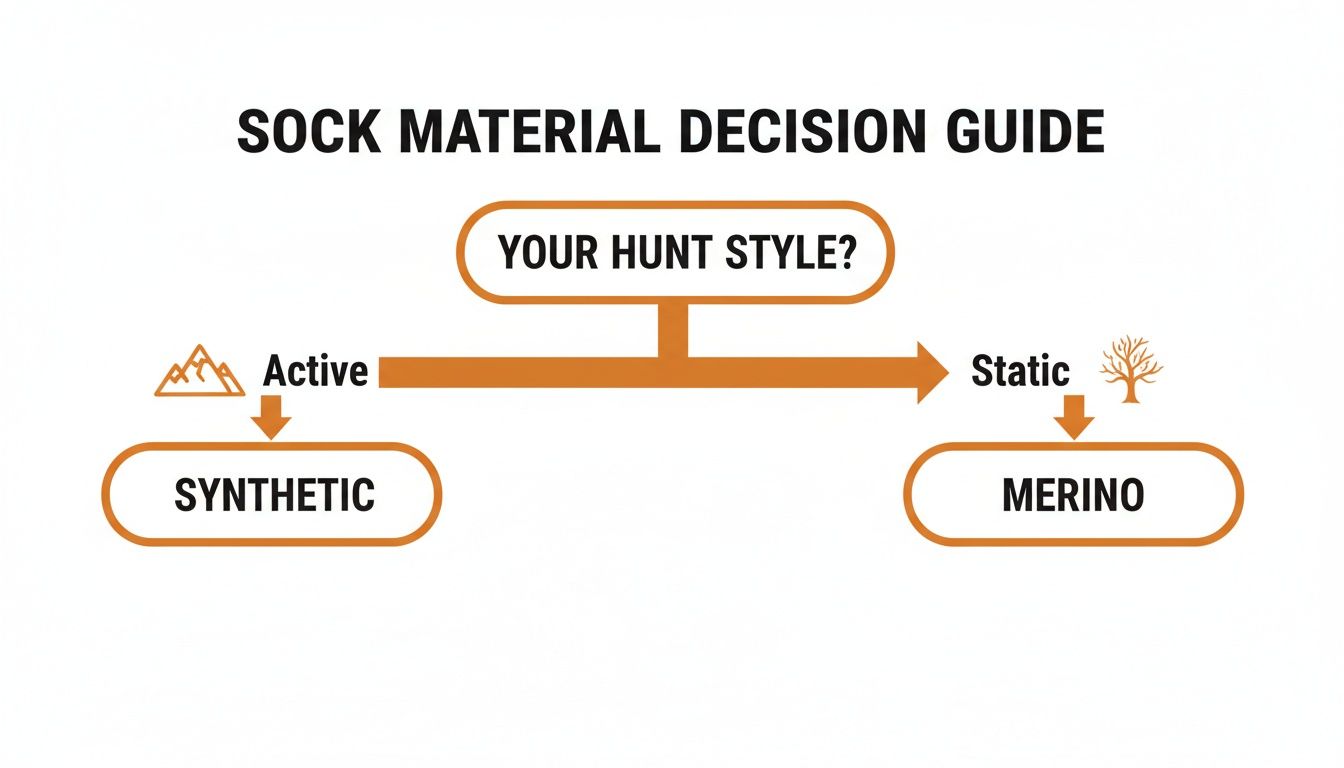
As you can see, for active hunts where you're constantly on the move, a fast-drying synthetic is often the smarter choice. But for long, cold sits in a blind or stand, nothing beats the superior insulation of Merino wool.
Matching Sock Thickness to Your Boots and Hunt
You can buy the best hunting socks money can buy, but they'll fail spectacularly if they aren't paired correctly with your boots. This relationship between sock thickness and boot volume is one of the most overlooked—yet critical—parts of staying warm. Getting it right is the secret to all-day comfort and performance in the field.
Think of your boot as a thermos and the air trapped by your sock’s fibers as the insulation. If you cram a heavyweight sock into a snug, athletic-fit boot, you're squeezing out all that precious air. This kills the insulation value and, even worse, can restrict blood flow to your feet. The result is the exact opposite of what you wanted: your feet get colder, faster.
On the flip side, wearing a thin, lightweight sock inside a roomy, high-volume pack boot is just as bad. All that extra space lets the warm air your sock trapped escape, leading to massive heat loss. The sloppy fit also allows your foot to slide around, creating friction that leads to painful blisters.
A Simple Compatibility Guide
Matching your gear is pretty simple when you think about the specific job each piece is designed for. For hunters, a well-organized system in their pack is just as important as the gear itself. You can find out more about what to carry in our guide to the essential saddle hunting backpack.
Here’s a straightforward system to make sure you always have the right combo for your hunt:
- Lightweight Socks: These are your go-to for early-season hunts with uninsulated or lightly insulated boots. Their main job is managing moisture during active stalks in mild to cool weather.
- Midweight Socks: This is your workhorse category. Midweights are perfect for standard insulated hunting boots (200g-800g of insulation), offering a fantastic balance of warmth and cushioning without feeling bulky.
- Heavyweight Socks: Save these for the bitter cold. Pair them with high-loft pack boots or boots specifically designed with extra interior room. They provide maximum insulation for those long, static sits in frigid temperatures.
Matching sock thickness to your boot's internal volume ensures your insulation actually works and your circulation stays healthy. This isn't just a comfort tip; it's a critical safety measure for any cold-weather hunt.
This simple check keeps you from undermining your expensive gear and makes sure your entire footwear system works together to keep you warm, dry, and focused on the hunt.
Protecting Your Investment with Proper Sock Care
Your high-performance hunting socks are a serious investment. You bought them for a reason—to keep your feet comfortable and dry, helping you stay out longer. Taking care of them properly is just as important as maintaining your rifle or bow. It ensures they perform at their peak, season after season.
First, let's bust a common myth: fabric softener is the enemy. While it sounds like a good idea, it’s a total performance killer. Fabric softener clogs the microscopic pores in technical fibers like Merino wool and modern synthetics. This completely destroys their ability to wick moisture, turning your high-tech socks into something as useless as cheap cotton.
The Right Way to Wash Your Socks
Follow these simple steps to preserve the delicate fibers, elasticity, and wicking power of your socks. This method prevents shrinking, stretching, and damage, maximizing their lifespan out in the field.
- Turn Them Inside Out: This is a pro-tip. It lets the water and detergent wash away the sweat and dead skin cells that build up on the inside, while protecting the more durable outer face from abrasion in the machine.
- Use a Gentle Cycle: Always wash with cold water and a mild, non-bleach detergent. Hot water is the fastest way to shrink wool and wreck the elastic fibers that give your socks their perfect fit.
- Air-Dry or Tumble Dry Low: The absolute best way to dry your socks is to lay them flat and let them air-dry. If you're in a hurry and need to use a dryer, make sure it’s on the lowest possible heat setting to prevent any damage.
A few extra minutes of proper care is all it takes. In return, your socks will be ready to perform when you need them most, protecting your feet and your hunt from ending early.
Of course, sock care is just one piece of the puzzle. A great pair of socks won't do you much good if your boots are soaked. Make sure your boots are treated and ready for the elements by applying a quality waterproofing wax for boots. This creates a critical barrier against external moisture.
And while you're thinking about gear prep, don't forget your other electronics. Knowing which battery for camera systems will last in the cold is just as important as keeping your feet warm. You can find more tips like these in our other guides.
Answering Your Questions About Cold Weather Hunting Socks
Even after you’ve got a handle on the basics of materials and layering, a few common questions always pop up. Let's tackle them with some straight, no-nonsense answers from years of trial and error in the field.
Is 100 Percent Wool the Best Choice?
It sounds perfect on paper, but 100% wool is almost never what you want in a high-performance hunting sock. Pure wool just doesn't have the grit and stretch to survive the abuse of a long hunt. It would bag out, bunch up in your boots, and wear through in no time.
This is exactly why the best socks on the market are a Merino wool blend. They mix a high percentage of wool with strategic amounts of nylon for serious durability and a bit of spandex (or Lycra) for that secure, athletic fit that doesn't slip. That blend gives you the perfect trifecta: warmth, moisture control, and toughness.
How Thick Should My Socks Be for a Treestand Hunt?
When you’re sitting still in a treestand or ground blind, you need to go with heavyweight socks. No question about it. Your body isn't generating much heat from movement, so you need the most insulation you can get to trap what little heat you have.
A heavyweight sock’s thick, lofty construction creates more tiny air pockets, and those pockets are what hold your body heat. The single most important catch here is making sure your boots have enough room. If you cram a thick sock into a tight boot, you'll compress all that insulation and cut off blood flow, which is a fast track to frozen toes.
The classic mistake that leads to cold, miserable feet? Wearing two pairs of cotton socks. Cotton is the absolute worst choice—it soaks up sweat like a sponge, loses all insulating power when wet, and actively pulls heat away from your skin.
A single pair of quality Merino wool or synthetic blend socks will always beat multiple layers of cotton. Every single time.
Are Alpaca Socks Better Than Wool?
For brutally cold conditions, alpaca is a serious contender and can definitely outperform even the best Merino wool. Alpaca fibers are naturally hollow, which is a huge advantage—it allows them to trap significantly more warm air. In fact, some independent tests show alpaca can provide 20% greater thermal insulation than traditional sheep's wool.
It's also incredible at wicking moisture and is naturally hypoallergenic. If you're a hunter who faces brutal, sub-zero temperatures, a high-quality alpaca sock can be a game-changer, offering a real, noticeable advantage in warmth and comfort. It's a top-tier choice for the harshest environments.
Ready to stop worrying about frozen feet and focus on your hunt? The smart scouting technology from Magic Eagle gives you the real-time intel you need to plan your trips and know exactly when and where to be. Get a clearer picture of your hunting grounds by visiting https://magiceagle.com.