

Leaving your expensive trail camera out in the woods with nothing but camouflage to protect it is a massive gamble. A solid game camera cable lock is the one piece of gear that separates savvy hunters from theft victims. It’s your simplest, most effective first line of defense against losing hundreds of dollars in equipment and irreplaceable scouting data.
Why Camouflage Isn't Enough for Your Trail Camera
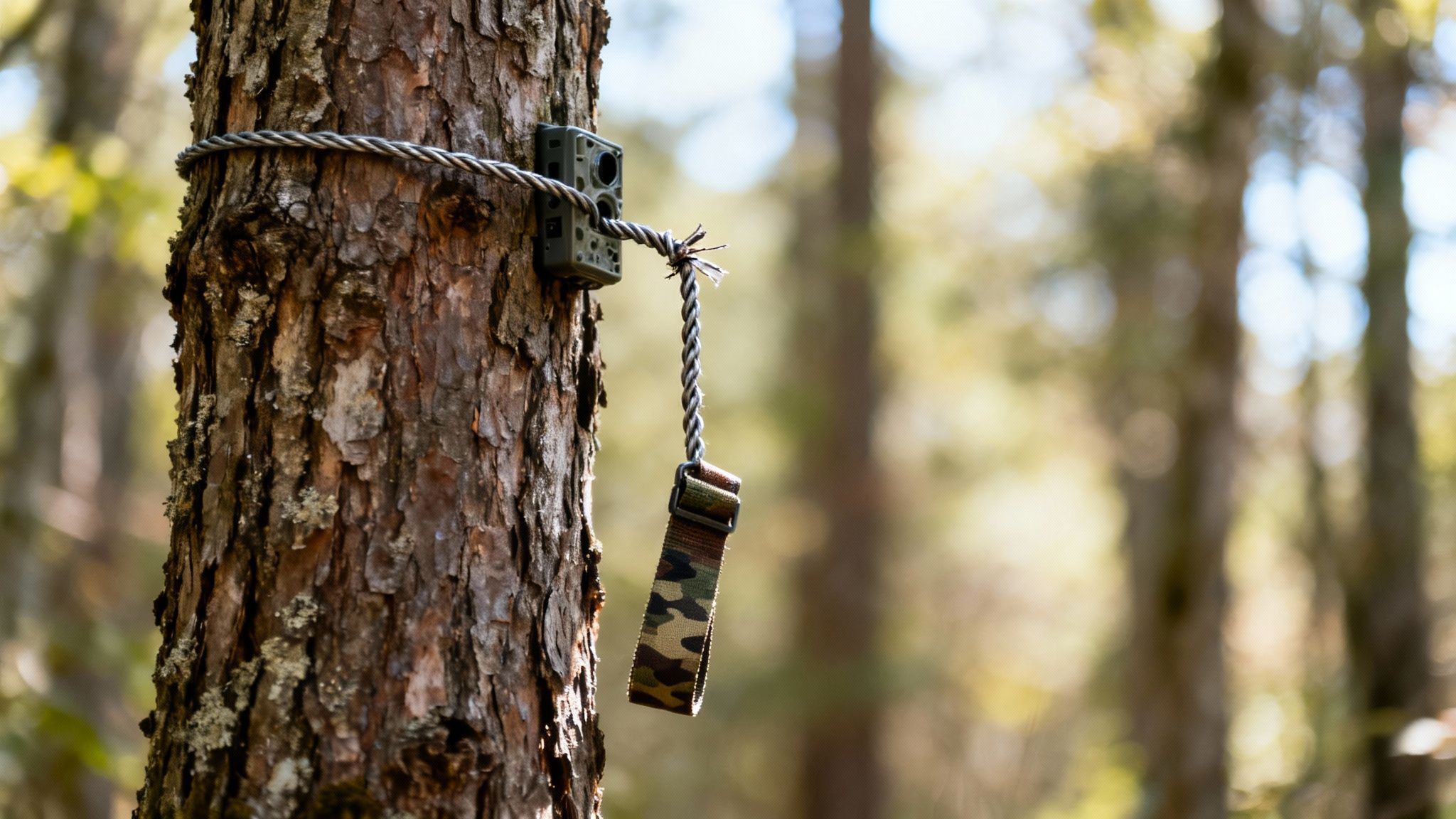
It’s a gut-wrenching scenario every hunter dreads. You hike back to your prime spot, full of anticipation, only to find an empty tree where your camera used to be. The frustration isn't just about the money you spent on high-tech gear. When a camera gets stolen, you lose something far more valuable: information.
The Real Cost of a Stolen Camera
All those weeks—or even months—of carefully collected intel on deer movement, feeding times, and herd dynamics can disappear in a flash. That kind of loss can completely derail a hunting season or set back a long-term wildlife monitoring project. Your real investment isn't just the camera's price tag; it's the countless hours you put into scouting, setup, and patiently waiting for the right shot.
A quality cable lock transforms your camera from an easy target into a hardened asset. It’s not just an accessory; it’s an essential piece of field equipment, as vital as the camera itself, for protecting your investment in both gear and time.
It's More Than Just a Deterrent
Securing your gear is all about tilting the odds in your favor. A visible, tough-looking lock is often enough to make an opportunistic thief think twice and move on. To really dig into how to protect your equipment out in the field, it helps to look at comprehensive guides covering real-world threats. Exploring ultimate security strategies can offer a wider perspective on what makes physical deterrence truly effective.
Thankfully, the security market is stepping up to meet this demand. The global cable lock market was valued at around USD 5.32 billion and is expected to keep growing. For us trail cam users, that means more innovation, better prices, and a wider variety of specialized locks designed to protect our valuable gear in the wild.
How to Choose the Right Cable Lock for Your Camera
Picking the right cable lock for your trail camera isn’t just about grabbing the first one you see on the shelf. The best choice really depends on where you're setting up, what camera you’re trying to protect, and frankly, how determined a thief you think you’ll encounter. A little thought upfront will get you a lock that offers real security, not just a false sense of it.
The absolute heart of any cable lock is the cable itself. This is what does the heavy lifting. While a standard braided steel cable is a good start, the thickness is what truly separates a real deterrent from a minor inconvenience.
Cable Diameter and Length
You’ll see a lot of 5/16-inch braided steel cables out there, and for casual theft, they do the job. But let's be honest, someone with a decent pair of bolt cutters can make short work of one if they have a minute. This is why I almost always recommend stepping up to a 3/8-inch cable. That extra thickness dramatically increases the effort needed to cut it, often requiring bigger tools and more time—two things a thief in the woods rarely wants to deal with.
Length is just as critical for practical use. A short cable is fine for a skinny sapling, but what about that massive old oak that overlooks your best food plot? A 6-foot cable is the versatile sweet spot. It gives you enough room to anchor your camera to just about any tree or post you'll find, without leaving a bunch of slack for a thief to mess with.
The real goal of a game camera cable lock is deterrence. A thick, beefy-looking cable sends a clear message: "This camera is not an easy score." It encourages a would-be thief to just keep walking and find an easier target.
Locking Mechanisms and Weather Resistance
Next, you need to decide between a keyed lock and a combination lock. Each has its place.
- Keyed Locks: These are my go-to for pure security and simplicity. If you run multiple cameras like I do, look for keyed-alike sets. It’s a total game-changer. Carrying one key for all your setups beats fumbling with a jangling ring of different keys in the dark, hands down.
- Combination Locks: The big win here is convenience—no keys to lose in the brush. The downside? They can be a pain to operate with frozen fingers or while wearing gloves, and the internal tumblers can be more prone to getting gummed up with dirt or ice.
Since your lock will be living outdoors through rain, snow, and humidity, weather resistance is non-negotiable. Always choose a lock with a protective vinyl coating over the steel cable. This simple feature is what stops rust and corrosion from weakening the cable over time. As a bonus, it also keeps the cable from scratching up your camera’s housing when you're cinching it down.
A Practical Comparison
Choosing the right cable lock is all about balancing strength, convenience, and the environment you're in. Not all locks are created equal, and what works for a camera on your back 40 might not be enough for one on public land.
This table breaks down the key differences between a standard lock and a more professional-grade option, helping you decide where your needs fall.
Game Camera Cable Lock Feature Comparison
| Feature | Standard Cable Lock (e.g., 5/16" Python) | Professional-Grade Lock (e.g., 3/8" Python) | Key Considerations for Camera Users |
|---|---|---|---|
| Cut Resistance | Moderate | High | For high-traffic areas or public land where theft risk is higher, the thicker cable is a must-have. |
| Versatility | Good for most common trees | Excellent for larger, irregular trees | A longer, 6-foot cable provides the flexibility you need for almost any mounting scenario you'll encounter. |
| Weather Proofing | Good (with vinyl coating) | Excellent (heavy-duty coating/seals) | Make sure the lock mechanism itself is rust-resistant. A seized-up lock is useless in the field. |
| Convenience | High (keyed-alike options available) | High (keyed or combination available) | Running multiple cameras? Keyed-alike is a huge time-saver. Consider a combo lock if others need access. |
Ultimately, a heavier-duty lock gives you more peace of mind and better odds against a determined thief.
We’ve seen some great professional-grade solutions hit the market. A perfect example is the Master Lock Python Professional Cable Lock, which features that thicker 3/8" braided steel cable for serious cutting resistance. Its 6-foot length gives you plenty of options, and the durable vinyl coating keeps it flexible in the cold while protecting your gear. You can find more in-depth analysis of the lock market over on DeepMarketInsights.com.
Finally, think about how the lock fits into your whole setup. If you’re not just strapping your camera to a tree, checking out different game camera stands can give you more secure mounting points that pair perfectly with a good cable lock.
Field-Tested Installation for Maximum Security
Owning a great game camera cable lock is a solid start, but how you install it in the field makes all the difference. A loose cable or a weak anchor tree is an open invitation for a thief. The small details are what truly separate a visual deterrent from a real physical obstacle.
Your first move is picking the right anchor. Look for a healthy, live tree that’s way too thick for someone to saw through quickly. A dead tree or a skinny sapling is a weak link that compromises your entire setup, so always go for something solid.
Getting a Cinch-Tight Fit
The single most common mistake I see is leaving slack in the cable. Any gap between the cable and the tree is just enough room for a thief to slip in a pair of bolt cutters or a pry bar. The goal is to get a cinch-tight fit, leaving zero wiggle room.
Start by threading the cable through your camera's security loops or the pass-through on its security box. Wrap it around the tree, feed the end through the lock, and pull it as tight as you possibly can before locking it down. You shouldn't be able to slide a finger between the cable and the bark.
A properly cinched cable transforms the lock from a simple suggestion into a serious problem for a thief. It forces them to work much harder and spend more time at your spot, which is exactly what they don't want to do.
Smart Placement Strategies
Where you put the camera and lock is just as critical as how tight you make the cable. You obviously need a clear view of the trail, but you don't want the camera sticking out like a sore thumb.
- Go High: Mount your camera and lock higher than eye level, somewhere in the 6 to 8-foot range. This simple move keeps it out of the casual line of sight and makes it a real pain to mess with.
- Use Natural Cover: Tuck your setup behind a cluster of branches, in the "V" of a tree fork, or behind some leaves. The idea is to break up the camera's rectangular outline and hide the lock from easy view.
This quick guide lays out the key decisions to make before you even step into the woods.
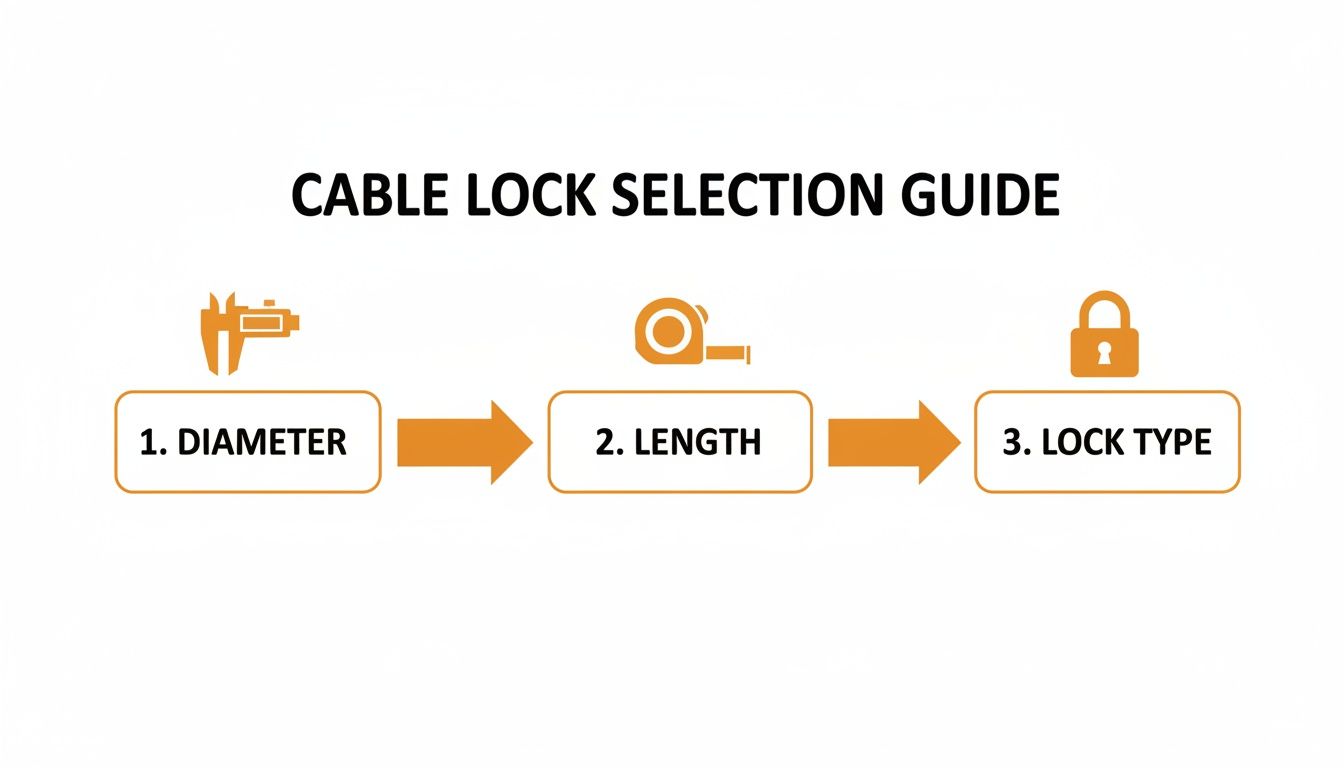
As you can see, it all comes down to three things: the cable’s diameter, its length, and the type of locking mechanism you trust.
Layering for Ultimate Protection
For the best security possible, always run the cable through both the camera body and a compatible security box. This creates a two-layer defense. A thief has to get through the steel box first, which is noisy and time-consuming, before they can even think about the camera inside. Most will just move on.
These installation tips are a huge piece of the puzzle. For a complete rundown on camera angles and settings, check out our guide on how to set up a trail camera. When you pair a tough lock with smart, field-proven installation, your gear will be right where you left it.
Pairing Locks With Smart Camera Security Features
A stout game camera cable lock is your first and most important line of defense, but it shouldn't be your only one. The best modern cellular trail cameras are packed with smart digital security tools that work right alongside a physical lock, creating a layered defense that’s incredibly tough for a thief to beat.
Think of it this way: your cable lock is the bouncer at the door, but the camera's smart features are the high-tech surveillance system watching everything inside.
Even if a truly determined thief brings bolt cutters and defeats the lock, the fight is far from over. This is exactly where features like GPS tracking and geofencing become your ace in the hole.
Real-Time Location and Instant Alerts
Many of today's advanced cellular cameras, including models from Magic Eagle, come with built-in GPS. This isn't just for geotagging your photos—it's a potent anti-theft weapon. Once you’ve set up your camera, you can log its precise coordinates in the companion app. If it gets stolen, you can track its location in real-time, which massively boosts your chances of getting it back.
Geofencing takes this a step further. It allows you to draw a virtual perimeter around your camera's location on a map. The second that camera is moved outside of your designated zone, you get an instant alert pushed right to your phone. This immediate notification is crucial; it tells you a theft is happening right now, not hours or days later when you hike back in to check your gear.
A physical lock makes theft difficult. A geofence alert makes it risky. That combination forces a thief to stop and wonder if the reward is worth the high probability of getting caught red-handed.
Using the Camera Against the Thief
Your camera's main job—taking pictures—can also be its own best defense. A lot of smart cameras have a feature that will automatically snap and transmit a photo if it detects sudden, aggressive movement, like being yanked off a tree.
Picture this scenario:
- A thief starts messing with your cable lock, trying to pry it off.
- The camera's internal accelerometer detects that sharp, unnatural motion.
- It immediately takes a photo and sends it straight to your phone over its cellular connection.
In the best-case scenario, you now have a clear image of the person trying to steal your equipment. That photo is priceless evidence for law enforcement and can be the key to not only recovering your camera but also making sure the thief is held accountable. This creates a powerful synergy where your physical and digital security work in perfect concert.
By layering these features, you build a comprehensive security net. The lock deters the casual, opportunistic thief, while the smart features provide a high-tech backup to track, alert, and identify the more persistent ones. For a deeper dive into how this tech works, check out our guide on a trail camera with GPS tracking. This combined approach is the best way to ensure your investment stays protected, season after season.
Keeping Your Locks Working Year-Round
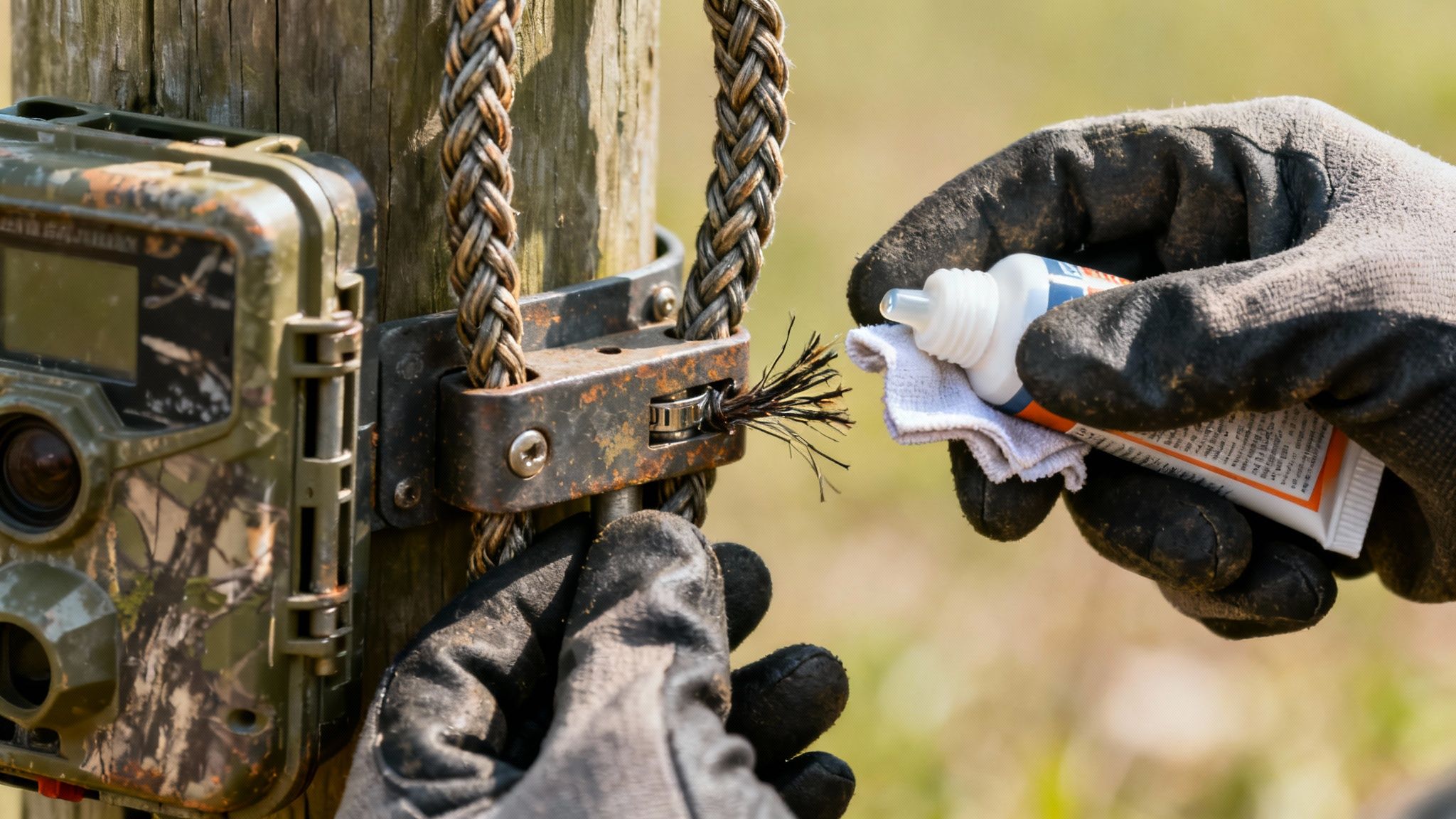
Your security setup is only as strong as its weakest link, and a neglected lock can easily become that weak point. A game camera cable lock lives a tough life out in the elements, getting hammered by everything from freezing rain to summer humidity.
But here’s the good news: a little preventative maintenance goes a long way. This isn’t some complicated chore. We’re talking about simple, quick checks you can do anytime you visit your camera. A well-maintained lock doesn't just keep your camera safer; it saves you from the frustration of a seized-up lock or a snapped key when you’re miles from your truck.
Your 60-Second Inspection Checklist
Make it a habit. Every time you swap an SD card or change batteries, give your lock a quick once-over. This simple routine will help you catch small problems before they leave your camera completely exposed.
Here’s what I always look for:
- Cable Condition: Eyeball the braided steel cable, focusing on the ends near the lock and any sharp bends. You’re looking for fraying, rust spots, or deep kinks. Also, check the vinyl coating for cracks or peeling—that’s where moisture gets in and starts causing trouble.
- Lock Mechanism: Is the keyway or combination dial packed with dirt or mud? A quick puff of air usually clears it. Cycle the lock a couple of times to make sure it still engages smoothly and feels solid.
- Signs of Tampering: This is a big one. Look for fresh scratches on the lock body, dents, or weird wear marks on the cable. These are tell-tale signs that someone has already tried (and hopefully failed) to get past your security.
A lock that's clearly been tampered with is your signal that someone has found your spot. It’s time to not only double-check your lock's integrity but also think about adding another layer of security or even moving that camera.
Beating the Weather
Your lock’s number one enemy is the weather. Freezing temps and constant moisture can turn a perfectly good lock into a useless chunk of metal if you aren't prepared.
We’ve all been there: you show up to your camera in the dead of winter, and the lock is a solid block of ice. To avoid this, hit the locking mechanism with a little graphite lubricant or a quality silicone-based spray in the fall. It displaces moisture and keeps the internal pins from seizing up when the temperature drops.
If you do find a frozen lock, whatever you do, don't force the key. You’ll just end up with two halves of a key and a much bigger problem. Try warming the lock body with your hands or carefully using a pocket hand warmer to thaw it out.
And one last thing: forgetting a combination or losing your key in the woods happens. It’s beyond frustrating. Always keep a backup key in your truck or pack. For combo locks, save the code in your phone or somewhere you won’t lose it. A little planning ahead beats a long walk of shame back to the vehicle.
Common Questions About Game Camera Cable Locks
Even with the best gear, questions always come up in the field. And when it comes to securing your trail camera, getting straight answers can mean the difference between a protected investment and a costly loss. I've pulled together some of the most common questions I hear about game camera cable locks to give you practical, no-nonsense advice.
Are These Locks Really "Cut-Proof"?
This is probably the first thing people ask, and the honest answer is no. A truly determined thief with an angle grinder or heavy-duty bolt cutters can get through just about anything. But that’s not really the point.
The real goal of a quality, thick braided steel cable is to be a powerful deterrent. It makes stealing your camera loud, difficult, and time-consuming—three things a thief absolutely hates. It's about stopping the crime of opportunity.
How Do I Manage Keys for Multiple Cameras?
Nobody wants to fumble with a giant ring of keys in the woods, especially in the cold. It’s a huge pain. Luckily, most of the top brands get this and offer "keyed-alike" options. This is a lifesaver, letting you use a single key for all your locks. If you’re running more than one or two cameras, it’s a feature you shouldn’t go without.
Will a Cable Lock Hurt the Tree?
It’s a valid concern. You don’t want to damage the very thing that’s helping you scout. The good news is that when installed correctly, a vinyl-coated cable lock shouldn't cause any significant harm to a healthy, mature tree. That vinyl coating is there specifically to protect the bark from the steel cable.
To keep the tree happy, just follow a few simple tips:
- Don't over-tighten it. Cinch the cable snugly, but don’t crank it down so hard that it cuts into the bark and girdles the tree.
- Stick to mature trees. A young sapling with thin bark is far more likely to get damaged.
- Give it a quick check. When you’re pulling cards, just make sure the cable isn’t getting embedded as the tree grows over time.
Think of your security in layers. A good cable lock stops the opportunist. Smart camera features like GPS tracking and geofencing handle the more persistent threats. It's all about making your camera more trouble than it's worth to mess with.
Where Can I Find a Good Lock?
It’s easier than ever to find the right lock now that more people are securing their gear. The online market for cable locks is growing fast—projections suggest the segment could blow past 160 million USD by 2027.
For hunters and outdoor pros, this boom means you can get top-tier game camera cable locks from just about anywhere, backed by tons of user reviews and detailed product specs to help you choose.
Of course, lock security goes beyond just trail cams. If you want to get a broader understanding of how locks work and general best practices, you can find solid info on a professional locksmith's general lock security FAQs. The principles of good security often apply across the board.
At Magic Eagle, we build our cellular trail cameras with a complete anti-theft suite, including GPS tracking and geofence alerts, to work hand-in-hand with your physical security. Protect your investment with a camera designed for the realities of the field. Learn more at https://magiceagle.com.