

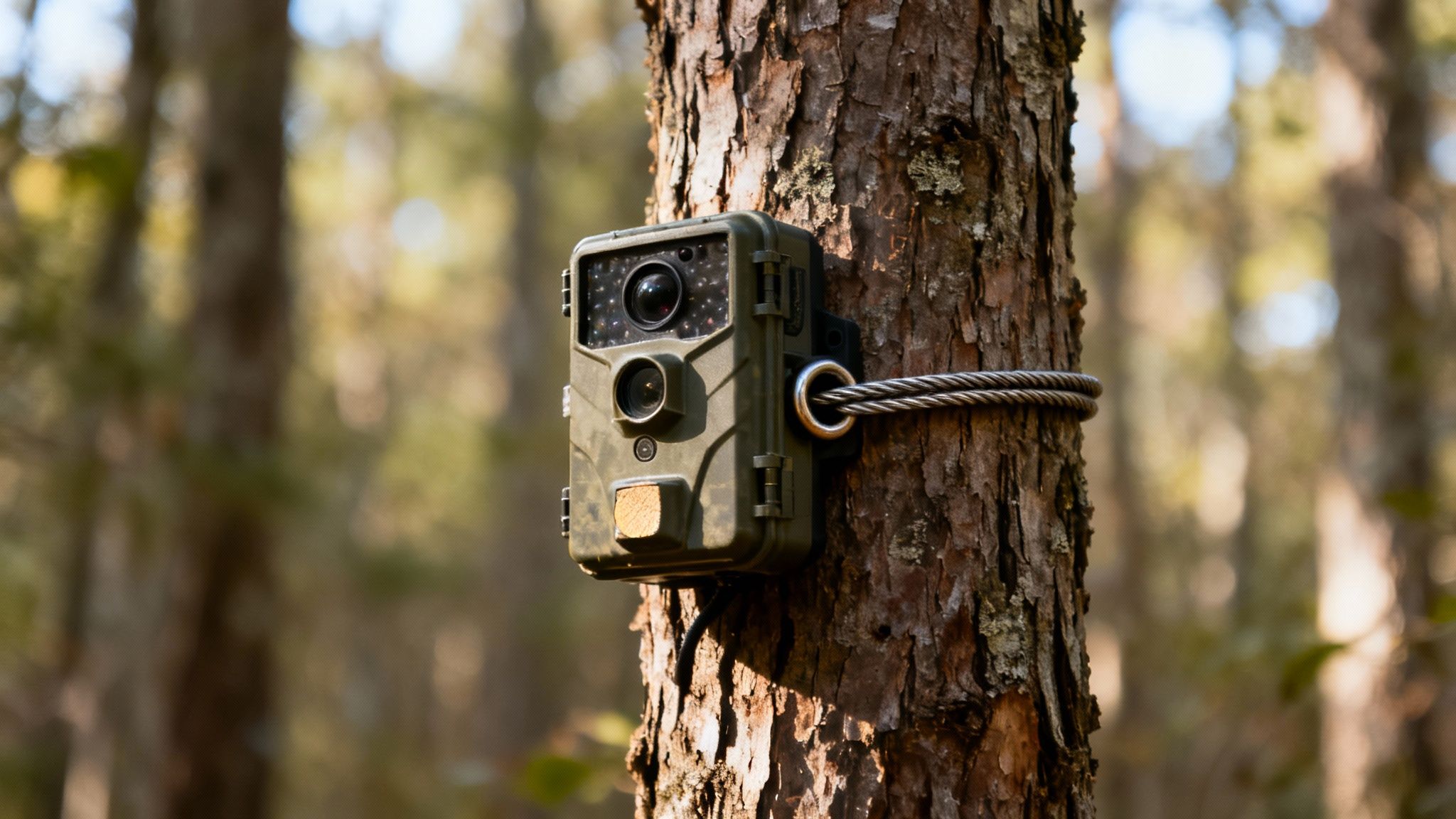
Trail cam cable locks are your first and best line of defense against theft. Think of them as a simple but powerful way to anchor your camera to a tree, acting as a strong visual deterrent that makes a thief think twice before trying to walk away with your gear.
Why Securing Your Trail Camera Is Not Optional
Your trail camera is more than just a piece of plastic and electronics; it's a significant investment of your time, money, and scouting efforts. Leaving it unprotected out in the woods is like leaving your laptop unattended in a coffee shop—it just becomes an easy target. With wildlife monitoring and hunting becoming more popular, theft and tampering are serious issues we all have to deal with.
It's no surprise that security has become a bigger deal. The global trail camera market swelled to USD 852.97 million in 2024 and is expected to climb to USD 905.94 million in 2025. That rapid growth means more cameras in the field, and unfortunately, more opportunities for theft.
The Real Risks Your Camera Faces
When your camera is deployed in a remote spot, it’s vulnerable to a lot more than just bad weather. Without a solid lock, you're opening yourself up to some real headaches.
Here’s a quick rundown of the most common threats that a good cable lock helps shut down.
| Key Security Threats Your Trail Camera Faces |
| :--- | :--- | :--- |
| Threat Type | Description | Impact on User |
| Opportunistic Theft | A casual hiker, hunter, or passerby sees an unsecured camera and decides to take it. It’s a crime of convenience. | Total loss of your camera, SD card, and any accessories. You're back to square one. |
| Vandalism | Someone stumbles upon your camera and decides to damage or destroy it for no good reason. | Your equipment is ruined, and you have to spend money on a replacement. |
| Data Loss | A stolen camera means losing weeks or even months of valuable scouting photos and wildlife patterns. | The intelligence you gathered is gone. This can be more frustrating than losing the hardware itself. |
These risks highlight why a simple lock isn't just a suggestion; it’s a core part of any smart trail cam strategy.
A trail cam cable lock is the essential starting point for any serious security plan. It transforms your camera from an easy target into a well-protected asset, ensuring your investment and data remain safe.
The need for robust protection isn't unique to trail cameras; the principles are universal. For instance, looking at effective secure bike storage solutions shows how important it is to physically protect any valuable asset left outdoors.
Of course, a physical lock is just one piece of the puzzle. For ultimate peace of mind, pairing it with modern tech is the way to go. You might find our guide on choosing a trail camera with GPS tracking helpful for adding that next layer of security.
The Anatomy of a Trail Cam Cable Lock
To really get why a trail cam cable lock is so effective, you need to see it as more than just a simple cable. Think of it as a purpose-built security system designed to live outdoors. Every piece has a job, from stopping a thief in their tracks to shrugging off a winter storm, making sure your camera is right where you left it.
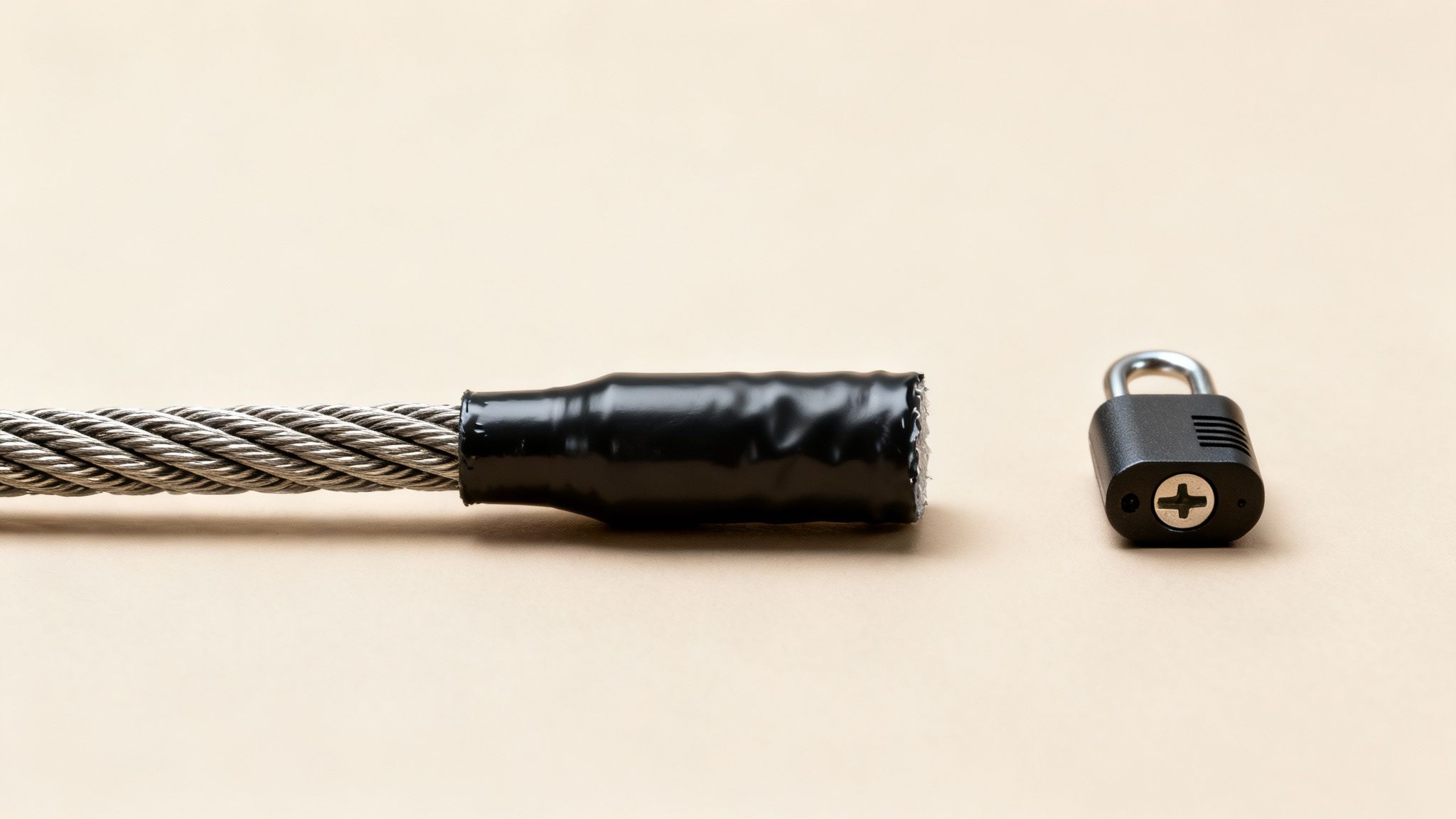
The backbone of the whole setup is the braided steel cable. This isn't just one thick piece of wire. It’s actually a bunch of smaller steel strands twisted together, and that design is key for security.
Ever tried snapping a single twig? Easy. Now try breaking a whole bundle of them tied together. That’s the same idea behind a braided cable. Bolt cutters can’t get a clean bite—they just pinch and fray the strands instead of cutting straight through.
This braided construction is the lock's first line of defense. It turns a quick "snip and run" job into a frustrating, time-consuming ordeal for any would-be thief.
The Brains of the Operation: The Locking Mechanism
The locking mechanism is what ties it all together. Most trail cam cable locks have an adjustable, cinch-tight design that works a lot like a heavy-duty zip-tie. You just feed the cable through the lock, pull it tight around the tree, and you get a perfect, no-slip fit.
These mechanisms usually come in one of two flavors:
- Keyed Locks: The classic, reliable option. The only real downside is fumbling for—or worse, losing—your key out in the woods.
- Combination Locks: These get rid of the key problem altogether, offering a great mix of convenience and solid protection for field use.
The lock body itself is built to take a beating and resist picking, making it a serious roadblock for anyone trying to mess with your gear.
Built to Brave the Elements
Wrapping it all up is a tough, weatherproof vinyl coating. This outer jacket does two critical things. First, it seals the steel cable off from moisture, stopping the rust and corrosion that can weaken it over time. This keeps your lock in fighting shape through seasons of rain, snow, and humidity.
Second, that soft vinyl coating protects both the tree bark and your camera’s casing from getting scratched up when you're installing or removing it. A good trail cam cable lock is made to endure the wild, ensuring your gear stays put year after year. Once you understand these parts—the cut-resistant cable, the secure lock, and the rugged coating—you'll know exactly what to look for to keep your Magic Eagle/EagleCam 5 safe.
Choosing the Right Cable Lock for Your Camera
Picking the right cable lock for your trail cam isn't a one-size-fits-all deal. The kind of trees on your property, your camera model, and even your personal habits in the field all play a part. It’s a lot like choosing the right tires for your truck—what works for smooth highway driving is useless in deep mud, and the same logic applies here.
And it’s a choice more and more people are making. The broader cable lock market, valued at USD 2.8 billion in 2024, is expected to hit USD 4.1 billion by 2030. That growth is fueled by people wanting tough, weather-resistant security. Innovations like cut-resistant steel have pushed adoption rates up by 35% since 2022. You can learn more about these market trends and how they’re shaping security products.
Making a smart choice comes down to three things: cable length, the type of lock, and the quality of the materials. Get these right, and your camera will stay put and work for years to come.
Finding the Perfect Cable Length
The length of your cable directly impacts where you can mount your camera. A shorter cable might seem like enough, but out in the woods, it can seriously box you in.
A standard 6-foot cable is usually the sweet spot for most situations. It gives you plenty of length to wrap around most medium-sized trees without leaving a bunch of slack for a thief to mess with.
Think about these factors when picking a length:
- Small Trees or Posts: A shorter 4-foot cable could get the job done, but it leaves you with zero flexibility if you need to move your camera to a bigger tree later.
- Average Trees: A 6-foot cable is perfect for the vast majority of setups, giving you a secure fit on trees up to about 22 inches in diameter.
- Large or Awkward Trees: If your spots are full of massive old-growth trees, an 8-foot or even 10-foot cable will give you the reach you need to get the job done.
Pro Tip: Always go with a cable that’s a little longer than you think you need. It’s way easier to wrap up a bit of extra slack than to realize your cable is six inches too short for that perfect tree.
Keyed vs. Combination: Which Lock Is for You?
The locking mechanism itself is a classic tradeoff between security and convenience. Both keyed and combination locks offer solid protection, but they’re built for different styles of use. Your choice really depends on how you like to manage your gear in the field.
To help you figure out what works best for you, here’s a side-by-side look at the two main types. This table breaks down the key features so you can quickly decide what’s best for your setup.
| Cable Lock Feature Comparison Guide |
| :--- | :--- | :--- | :--- |
| Feature | Keyed Lock | Combination Lock | Best Use Case |
| Security | Often considered slightly more secure and harder to pick. | High-quality models are very secure; no key to misplace. | Ideal for high-risk areas where maximum security is the absolute top priority. |
| Convenience | You have to carry and keep track of a key in the field. | No key to lose or forget—just remember the code. | Perfect for anyone managing multiple cameras or who just doesn’t want to carry extra keys. |
| Reliability | A simple mechanism with fewer moving parts that can fail. | Dials can sometimes get stiff or freeze up in icy weather if not maintained. | Excellent for set-it-and-forget-it deployments in just about any weather condition. |
Ultimately, there’s no wrong answer here. It just comes down to whether you trust yourself more to remember a combination or to not lose a key.
Material Quality and Camera Compatibility
Finally, whatever you do, don't cheap out on the materials. You want to look for braided steel cables that are at least 5/16 inches thick, which gives you a great mix of strength and flexibility. A tough, weatherproof vinyl coating is also non-negotiable—it keeps the cable from rusting and protects your camera from getting scratched up.
Just as important is making sure the lock is actually compatible with your camera. Your Magic Eagle/EagleCam 5 has pass-through security brackets built right in, designed specifically for a cable lock. Before you buy anything, double-check that the end of the cable will fit through those holes for a tight, secure installation.
Step by Step Guide to a Secure Installation
Even the best trail cam cable lock is only as strong as its installation. A sloppy setup is an open invitation for an opportunistic thief. This guide cuts through the guesswork, giving you a clear, step-by-step process to make sure your Magic Eagle/EagleCam 5 is locked down tight every single time.
Think of it like locking your front door. You don't just pull it shut; you throw the deadbolt and give it a jiggle to make sure it's engaged. That same attention to detail turns a good lock into a serious deterrent out in the woods.
The Pre-Installation Checklist
Before you even think about wrapping a cable around a tree, a few moments of prep work will make the whole process smoother and far more secure. Rushing this part is a rookie mistake that can easily compromise your entire setup.
- Pick a Sturdy Tree: Find a healthy, living tree that’s noticeably wider than your camera. This simple step makes it impossible for someone to just slide the lock and camera up and over the top of a flimsy sapling.
- Position Your Camera First: Get your camera mounted and aimed correctly before you add the lock. Make sure it has a clear field of view. For a deep dive on getting the perfect angle, check out our complete beginner's guide on how to set up a trail camera.
This quick visual guide breaks down the key decisions you need to make before heading into the field.
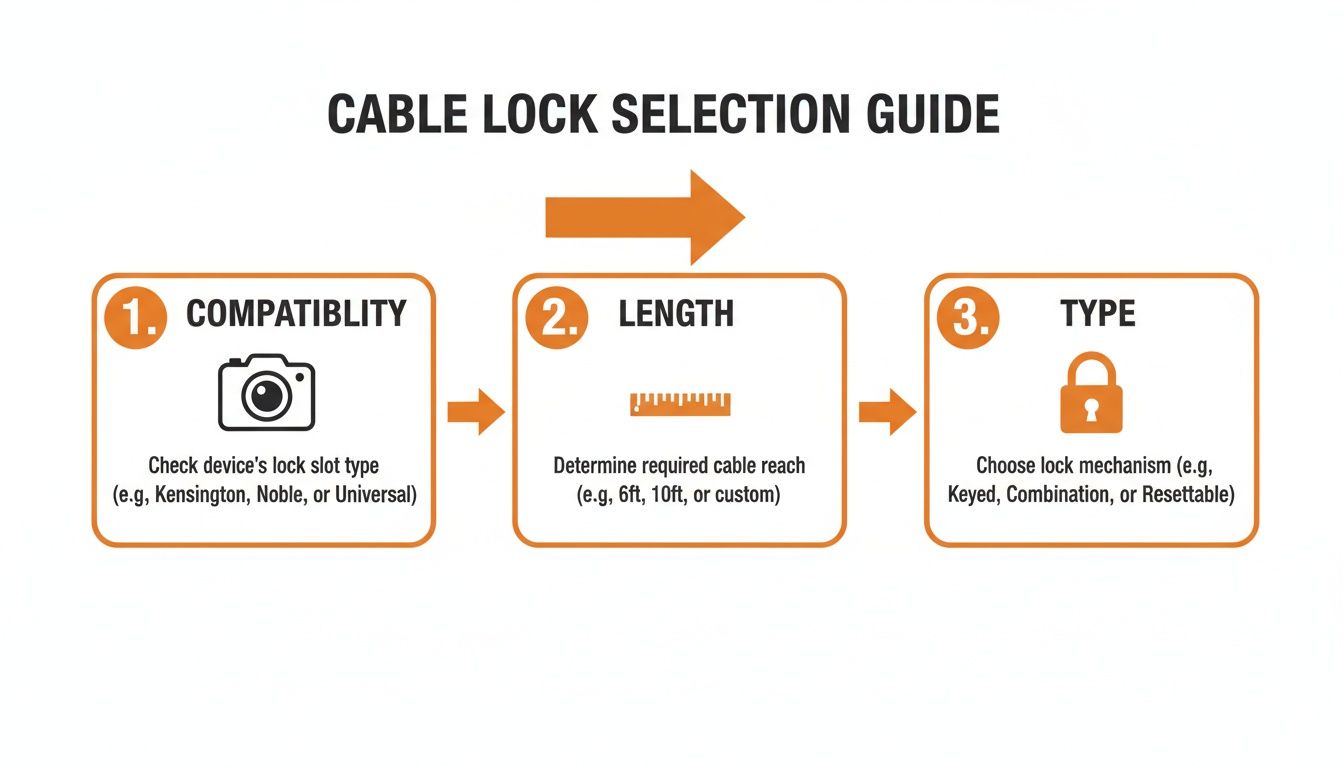
As the graphic shows, confirming compatibility, picking the right length, and choosing your lock type are the three pillars of a successful setup.
Executing the Perfect Lockup
Alright, your camera is on the right tree and aimed perfectly. Now it's time to secure it. Follow these steps for a tight, wiggle-free fit that maximizes your cable lock’s effectiveness.
- Thread the Cable: Carefully slide the cable’s end through the security brackets or loops on your EagleCam 5. Most are designed for the cable to pass through the back of the camera, but double-check your specific model.
- Wrap the Tree: Loop the cable around the tree trunk. Pull it snug so there’s no major slack or drooping.
- Cinch It Down: Feed the cable end back through the locking mechanism and pull it as tight as you can. You want that camera cinched firmly against the tree. The less slack, the harder it is for anyone to get leverage with bolt cutters.
- Engage the Lock: Once it’s taut, turn the key or scramble the combination to engage the lock. Give the whole setup a firm tug to be sure it’s locked solid and won't slip.
Pro Tip: Try to position the actual lock body on the side or, even better, the bottom of your camera. This helps shield it from direct rain and snow, preventing the mechanism from freezing up or corroding over time. It's a small detail that ensures your gear stays protected, season after season.
Beyond the Basics: Advanced Security Strategies
A trail cam cable lock is a great starting point, but real security isn't about one single defense—it's about creating layers of protection. Relying on just a cable lock is like putting a heavy-duty deadbolt on a glass door. To build a truly bulletproof system, you need to combine your physical hardware with smart, field-tested tactics.
This layered approach turns your camera from an easy target into a frustrating puzzle for any would-be thief. Each extra step forces them to waste more time and make more noise, which dramatically increases the odds they'll just give up and look for an easier score.
The Ultimate Duo: Lockbox and Cable
For anyone setting up cameras in high-traffic or high-risk spots, pairing your cable lock with a steel security box is the single most effective upgrade you can make. Think of the security box as a suit of armor for your camera. It shields the camera from direct hits, while the cable lock anchors the whole package securely to the tree.
This combo eliminates the weak points a thief looks for. A Midwest hunting guide I spoke with mentioned that using lockable security boxes with trail cam cable locks can slash theft incidents by up to 80% in problem areas. When you consider that a good camera is a $100-$300 investment, this two-part defense is a no-brainer. You can read more about the growth and value of the trail camera market to see why protecting your gear is more important than ever.
With this setup, even if a thief tries to smash the camera, they can't get to the internal components, the memory card, or the lock mechanism itself.
Blending In: Camouflage and Placement
Your next layer of defense is simple but incredibly effective: make your camera disappear. A camera that can’t be seen can’t be stolen.
- Elevate Your View: Don't mount your camera at eye level. Go higher—at least 7-8 feet up—and angle it down. Most people scan their immediate line of sight and will walk right past a camera mounted over their heads.
- Use Natural Cover: Tuck your camera behind a thick bunch of leaves, nestle it next to a big knot on the tree, or place it in the shadow of a large limb. Your goal is to break up that obvious rectangular shape of the camera.
- Conceal the Cable: Once your trail cam cable lock is tight, wrap any extra slack behind the tree. For an extra touch, use some camo tape to help the cable blend right in with the tree bark.
True field security is about making your camera setup both physically tough and visually invisible. A thief who can’t find your camera is just as defeated as one who can’t break your lock.
Finally, don't forget the digital layer. Make sure you enable the password protection feature on your Magic Eagle/EagleCam 5. This ensures that even if someone manages to steal the camera, they can't access your settings or view your photos. When you combine these physical and digital tactics with the ability to monitor cameras remotely, you've created a complete security ecosystem.
Common Questions About Trail Cam Cable Locks
As we wrap things up, let's go over a few of the most common questions people ask about trail cam cable locks. Getting these points squared away will help you deploy your camera with total confidence.
Can Bolt Cutters Defeat a Cable Lock?
Look, if a thief is determined enough and shows up with heavy-duty tools, they can eventually get through almost anything. But the real strength of a quality cable lock is how much of a pain it makes the whole process.
Most are made from braided steel, which is a nightmare for bolt cutters. Unlike a solid chain that might snap with one clean cut, braided strands just fray, pinch, and jam up the cutter's blades. This turns a would-be quick grab into a noisy, time-consuming struggle. The whole point is to make stealing your camera so inconvenient that most thieves will just give up and look for an easier target.
The goal of a trail cam cable lock isn’t to be indestructible; it’s to make theft a hassle. When you take away the "easy target" factor, your camera's odds of staying put go way up.
Will a Cable Lock Fit Any Trail Camera?
Not always. The vast majority of modern cameras, including the Magic Eagle/EagleCam 5, come with built-in security brackets or pass-through holes made specifically for a cable. However, you might find that some older or very basic models don't have them.
Before you buy a lock, take a second to inspect your camera's housing for these small but crucial holes. If your camera is missing them, your next best bet is a lockable steel security box. You can place your camera inside the box and then use the cable lock to anchor the whole setup to the tree.
Is a Keyed or Combination Lock Better?
This one really comes down to personal preference and how you like to operate in the field. There’s no single right answer, just a trade-off between convenience and risk.
- Keyed Locks: They're simple and very secure, but you always have that nagging risk of dropping a tiny key somewhere in the woods.
- Combination Locks: You never have to worry about a key, which is a huge plus for a lot of people. The only catch is you have to remember the code.
For most folks out there, a good combination lock strikes the perfect balance between solid security and practical, everyday use in the outdoors.
Ready to secure your scouting investment? The Magic Eagle EagleCam 5 is engineered with integrated security brackets to pair perfectly with any standard trail cam cable lock. Protect your gear and the valuable data it collects by visiting https://magiceagle.com to learn more.