

At its core, a trail camera is a rugged, motion-activated digital scout built to capture photos and videos of wildlife without a human anywhere in sight. These battery-powered devices are tough enough to handle the elements, working 24/7 to pull back the curtain on the secret lives of animals.
Your Unseen Scout in the Wild
Imagine having a tireless observer out in the woods, one that never sleeps and patiently waits to show you exactly what happens when you’re not around. That’s the real job of a trail camera. It serves as your eyes in remote locations, delivering intel that used to be impossible to gather.
But these aren't just cameras stuffed into a weatherproof box. They're sophisticated pieces of tech engineered for a tough, specific job. A modern trail camera blends three key pieces of technology: a motion sensor, a camera lens, and an illuminator for night vision. When an animal wanders into the sensor's detection zone, it triggers the camera to instantly snap an image or start recording a video.
From Film Reels to Real-Time Alerts
The journey of the trail camera is a great story of outdoor tech getting better and better. The first ones were clunky film contraptions. You had to physically hike out, retrieve the roll, and get it developed just to see what you might have captured. Then the digital revolution brought us SD cards, which was a huge leap forward but still meant a trip to the camera site was necessary.
Today, the most advanced models are cellular trail cameras. These smart devices changed the game completely by transmitting photos and videos straight to your smartphone, often just seconds after they’re taken.
This evolution has made trail cameras an indispensable tool. In North America, the world's biggest market, their impact is undeniable. A recent consumer survey found that over 62% of hunters now rely on them to scout game and understand animal patterns. This explosion in popularity is driving major growth, with the global trail camera market projected to hit USD 134.5 million by 2025. You can learn more about the trail camera market trends to see just why these devices are becoming essential gear.
A trail camera doesn't just take a picture of an animal; it captures a moment in time, revealing patterns, behaviors, and secrets that would otherwise remain hidden from human eyes. It transforms scouting from guesswork into data-driven strategy.
The Core Components of a Trail Camera
To really get what trail cameras are all about, you have to know what makes them tick. Each part plays a critical role in letting the camera work on its own, effectively, out in the field.
Below is a quick breakdown of the core components and why each one matters for serious users like hunters, researchers, and land managers.
| Component | Function | Why It Matters for Hunters & Pros |
|---|---|---|
| Durable, Weatherproof Housing | Shields the internal electronics from rain, snow, heat, and cold. | Your camera needs to survive a full season of harsh weather. A tough housing means reliability when it counts. |
| Passive Infrared (PIR) Sensor | Detects changes in heat and motion to trigger the camera. | This is the camera's "brain." A sensitive, accurate PIR sensor reduces false triggers from wind or leaves, saving battery and memory. |
| Camera Lens & Image Sensor | The "eyes" of the camera; determines photo and video quality, clarity, and field of view. | High-quality optics mean clearer images, making it easier to identify a specific buck, count points, or observe subtle animal behaviors. |
| Infrared (IR) Illuminator | A bank of LEDs that provides invisible light for nighttime photos and videos. | This lets you see what's moving in total darkness without a visible flash that could spook wary game. |
Understanding these parts is the first step. When you know how a PIR sensor works or why a good lens matters, you can make smarter choices about which camera will actually help you achieve your goals in the field.
The Technology Behind the Perfect Shot
Ever wonder what’s happening inside that little camo box to snag a perfect shot of an elusive buck? It’s not magic, but it is a clever bit of technology working in perfect harmony. It all starts with the unsung hero of every trail camera: the Passive Infrared sensor, better known as the PIR sensor.
Think of the PIR sensor as a silent, invisible tripwire that’s sensitive to both heat and movement. It doesn’t see images. Instead, it detects the unique thermal signature of a warm-bodied animal moving across its field of view. When a deer, bear, or coyote steps into the detection zone, that change in infrared energy is all it takes to trigger the camera's brain.
This single trigger kicks off an entire chain of events in less than a second.
From Detection to Digital File
Once the PIR sensor is tripped, the camera instantly wakes from its low-power standby mode. From there, it follows the exact instructions you’ve programmed into its settings. It might snap a single high-resolution photo, fire off a burst of several images, or start rolling a video clip, complete with audio.
At the same time, the camera’s illuminator gets to work. During the day, this isn't needed. But at night, the camera activates its bank of infrared LEDs, bathing the scene in light that’s invisible to most animals but perfectly visible to the camera's sensor. This is how you get those crisp, ghostly black-and-white night shots without spooking your target.
Finally, the captured image or video needs a place to go. In traditional models, the file is written directly onto a removable SD card. For cellular cameras, the process goes one step further: the image is compressed and sent over a 4G network, landing in your phone’s app just moments later. While trail cameras work hard to get the perfect shot, you can always clean up the images later using post-processing image upscaling technologies to enhance clarity and detail.
This entire process has come a long way over the years, evolving from manual film checks to instant digital alerts.
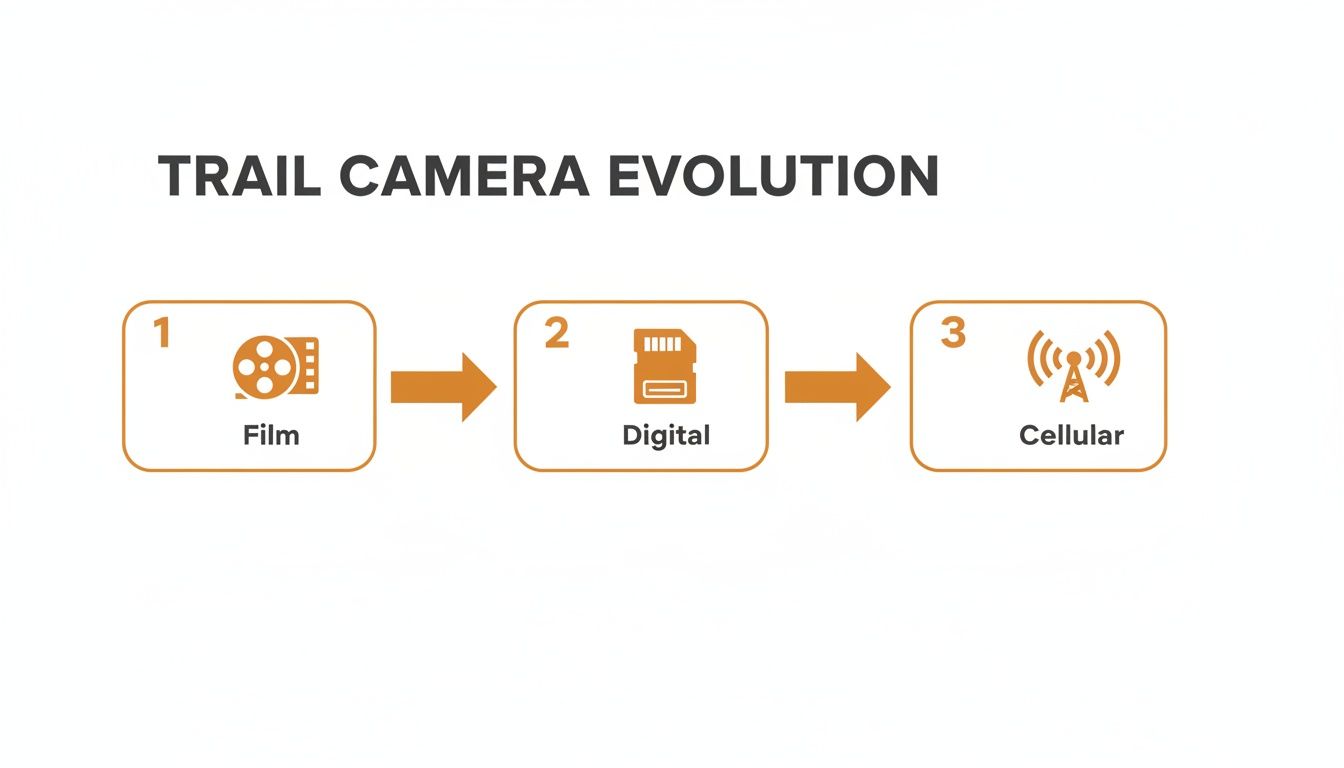
The infographic here really puts that evolution into perspective, showing the leap from old-school film to modern cellular tech. This shift represents a massive change from delayed information to real-time intelligence, completely changing how we scout and monitor wildlife. For a deeper dive into how this core function operates, you can explore our complete guide on the motion-activated game camera.
The beauty of a trail camera lies in its simplicity for the user, which masks a complex, rapid-fire technological process. From detecting a faint heat signature to delivering a crisp image to your phone, it all happens automatically, allowing you to be in the woods, even when you aren't.
Choosing Between Cellular and Traditional Models
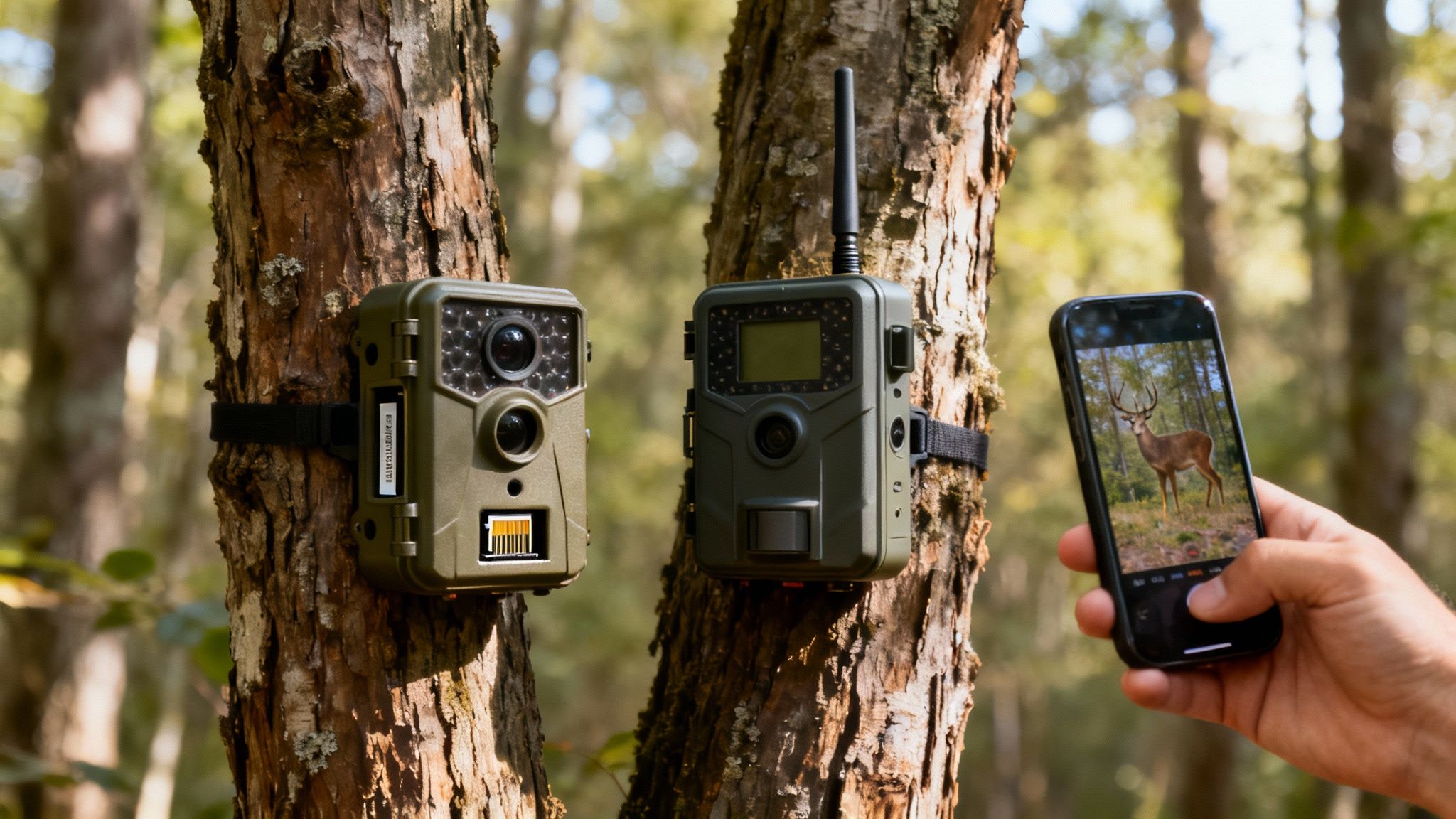
When you’re picking out a trail camera, the decision often comes down to one simple question: do you need to know what’s happening right now, or can you wait for the intel?
This is the key difference between modern cellular models and their dependable, traditional counterparts.
The Old School: Traditional Trail Cameras
Traditional, non-cellular cameras are the reliable workhorses of the trail cam world. They’re straightforward, built tough, and generally easier on the wallet upfront.
These cameras save every photo and video they take to a removable SD card. This makes them a great choice for spots that are easy to get to, where you don’t mind a short walk to swap cards and see what you’ve captured.
But that manual check-in is also their biggest drawback. Every time you pull an SD card, you’re leaving your scent behind. That’s more than enough to alert a wary old buck or coyote to your presence, potentially altering their natural patterns for good. For spots that are hard to reach or that you need to keep totally undisturbed, the traditional approach just doesn't cut it.
The Game Changer: Cellular Trail Cameras
This is where cellular trail cameras completely rewrite the rulebook. Instead of just storing images for you to collect later, they transmit them directly to your phone or computer moments after being taken.
Think of a cellular model less like a simple camera and more like a remote command center for your entire property.
This instant access gives you a massive strategic edge. You can monitor animal activity in near-real-time, letting you make immediate, informed decisions without ever setting foot in the woods. For anyone serious about scouting, understanding how cellular trail cameras work is the first step toward gaining that advantage.
With a cellular trail camera, you’re no longer reacting to old data from last week. You’re making informed decisions based on what’s happening on your property right now, turning scouting from a historical review into a live operation.
Beyond just getting photos instantly, cellular models give you powerful remote management tools through their apps. You can tweak camera settings, check the battery life, or even request a new photo on demand, all from the palm of your hand. That level of control is something a traditional camera simply can't offer.
Cellular vs Traditional Trail Camera Showdown
So, which one is right for you? It really boils down to your specific needs, the layout of your property, and your budget.
To help you make the call, we've put together a head-to-head comparison to break down the key differences.
| Feature | Cellular Trail Camera | Traditional Trail Camera |
|---|---|---|
| Photo Delivery | Instantly sends images to your phone or email. | Stores images on an SD card for manual retrieval. |
| Property Disturbance | Minimal; no need to visit the camera site. | High; requires regular trips to pull the SD card. |
| Initial Cost | Higher upfront investment. | Lower initial cost, very budget-friendly. |
| Ongoing Costs | Requires a monthly or annual data plan. | No recurring fees. |
| Best For | Remote areas, sensitive locations, and serious hunters needing immediate intel. | Easily accessible properties, backyard monitoring, and budget-conscious users. |
At the end of the day, traditional cameras are still a solid, cost-effective tool for certain situations. But for the serious hunter, researcher, or landowner who needs real-time data with zero disturbance, the advantages of a cellular system are impossible to ignore. They let you scout smarter, not just harder.
Features That Separate Good Cameras From Great Ones
Alright, you’ve decided between a cellular or traditional model. Now for the fun part—diving into the specs that really make a difference in the field. This is where a basic camera gets separated from a high-performance scouting tool.
Understanding these core features will help you see past the marketing hype. It’s what defines your experience, from the quality of your intel to how long your investment lasts. Let's break down what truly matters.
Speed and Precision: The Keys to Capture
When a trophy buck steps into view for a fleeting moment, a fraction of a second is everything. The two most critical speed specs are trigger speed and recovery time.
-
Trigger Speed: This is how fast the camera snaps a picture after its sensor detects motion. A slow trigger—anything over half a second—is notorious for capturing the tail end of a fast-moving animal. Elite cameras boast speeds of 0.2 seconds or less, ensuring you get a crisp, centered shot of the animal, not just a blurry glimpse as it leaves the frame.
-
Recovery Time: This is how quickly the camera can reset for a second photo. A fast recovery is clutch for getting multiple shots of a lone animal or capturing every deer in a group walking a trail. A slow recovery might get you a photo of the lead doe but completely miss the big buck following behind her.
The difference between a 0.7-second and a 0.2-second trigger speed is the difference between knowing a big buck was there and having a perfect photo to prove it. For serious scouting, speed is non-negotiable.
Image Quality and Power Management
Beyond speed, you need two things: clear visuals and a battery that won't die on you a week after setup. These are the fundamentals.
Resolution and Clarity
Don't get fooled by megapixels (MP). Some brands inflate their numbers through a process called interpolation, which just makes a lower-quality image bigger. Instead of chasing the highest MP rating, look at sample images and user reviews to judge the actual clarity, color, and nighttime quality. A great lens and image sensor will always beat a cheap lens with a phony megapixel count. For video, 1080p HD is the gold standard for clear, useful footage.
Battery Life and Solar Options
A trail camera is only as good as its power source. Battery life can vary wildly depending on how many pictures it takes, whether it's recording video, and the temperature outside. To maximize your time in the field, look for cameras that work with high-capacity lithium batteries. They perform exceptionally well in the cold.
If you want to know which ones will give you the best performance, check out our detailed guide on the best batteries for trail cameras.
Even better, many modern cameras now offer integrated or add-on solar panels. These are a total game-changer for long-term setups. They constantly trickle-charge the batteries, dramatically extending the camera's field life and cutting down on your maintenance trips.
Smart Features and Security
Today's top-tier trail cameras come loaded with smart tech that makes scouting way more efficient while also protecting your gear from getting stolen. These are the features that elevate a camera into a professional-grade tool.
-
AI Species Recognition: This is a huge time-saver. The camera's software automatically analyzes and tags photos based on the animal it sees (e.g., "Buck," "Doe," "Turkey"). It lets you filter out the endless pictures of squirrels and raccoons so you can focus only on the animals you’re actually targeting.
-
GPS and Anti-Theft Protection: High-end cameras often include built-in GPS, which is great for more than just mapping your camera locations. It's a powerful security feature. You can set up geofence alerts that ping you if the camera is moved and even get a picture of the person messing with it. That’s real peace of mind for your investment.
How Trail Cameras Are Used Beyond Hunting
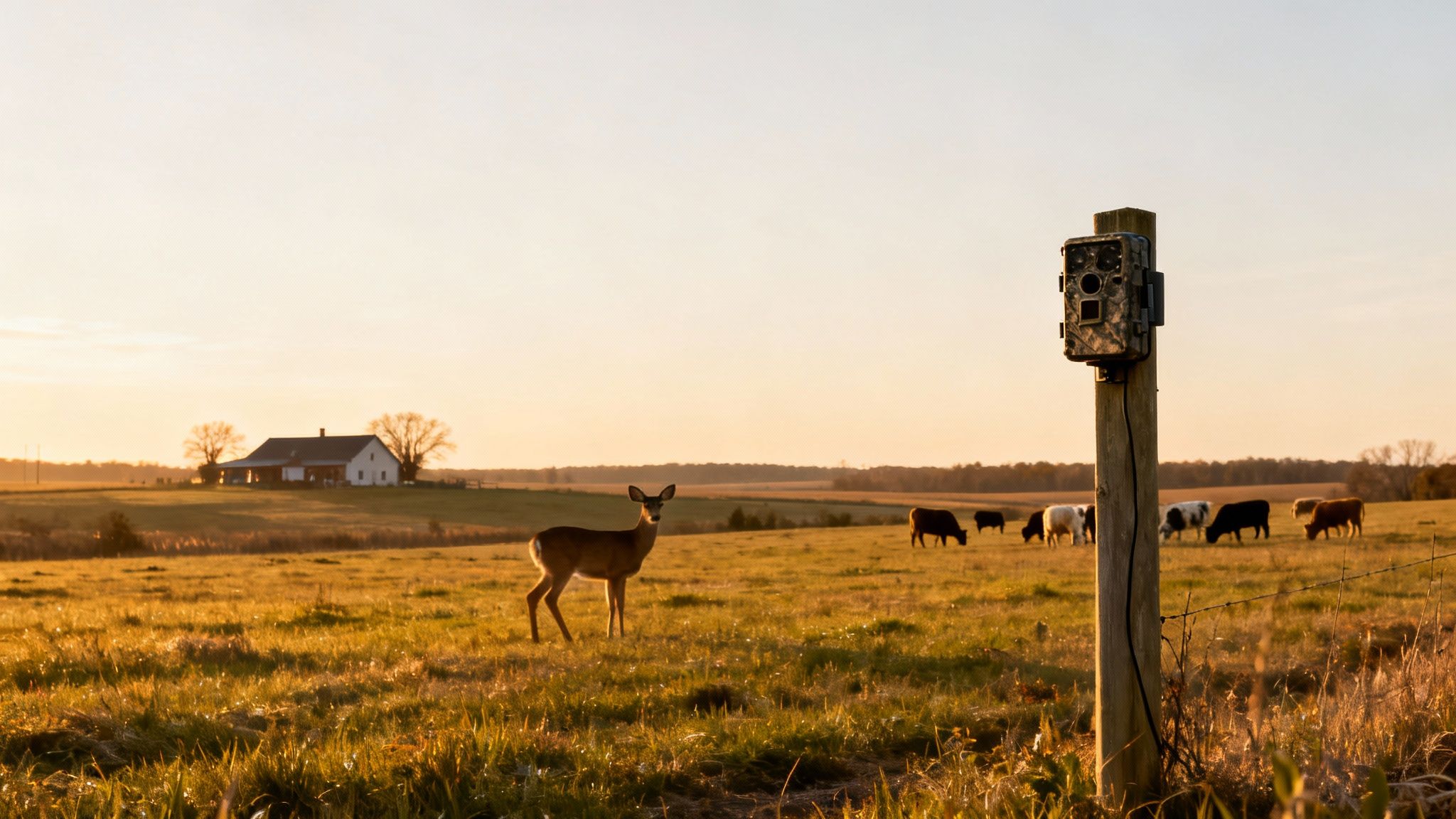
While their roots are firmly planted in the hunting world, the practical uses for trail cameras have exploded. These rugged, autonomous scouts are now essential tools in fields that have nothing to do with tracking game, proving just how versatile this technology has become.
From scientific research to managing a remote piece of property, people are finding creative ways to deploy these powerful little devices. Their ability to operate independently for months at a time makes them perfect for any scenario that needs a discreet, long-term watch.
For Research and Conservation
Wildlife biologists and conservationists basically use trail cameras as their eyes in the wild. These devices give them a non-invasive way to monitor animal populations, study behavior, and track the movements of elusive or endangered species without disturbing their natural habitats.
Researchers use them for crucial tasks like:
- Population estimates by identifying individual animals from their photos.
- Studying predator-prey interactions in remote ecosystems.
- Confirming the presence of rare species in protected areas.
This data is vital for making smart conservation decisions. For a biologist, a trail camera is a source of unbiased, round-the-clock field data that would be almost impossible to collect otherwise.
A trail camera provides an unfiltered look into an ecosystem's health. It captures the subtle, everyday moments of wildlife that collectively tell a much larger story about conservation and land management.
For Property and Land Management
For landowners, ranchers, and property managers, trail cameras are a first line of defense and an invaluable management tool. They offer a simple, effective way to keep an eye on remote properties, gates, and buildings.
This security application has become incredibly popular. Landowners use cameras to deter trespassers, monitor fence lines for damage, and document unauthorized activity for law enforcement. Ranchers also position them near water sources or feeding areas to check on the health and location of their livestock without constant physical checks.
For Enthusiasts and Content Creators
The appeal of trail cameras isn't limited to professionals. Outdoor enthusiasts and hobbyists set them up in backyards or local parks just to discover the hidden wildlife sharing their space. People interested in attracting wild birds to your yard are now using them to see what feathered friends show up when they're not looking.
Likewise, nature photographers and videographers use them to capture stunning, authentic footage that would require immense patience to get in person. The camera patiently waits for the perfect moment, delivering candid shots of animal behavior that feel raw and immediate, making it a powerful storytelling tool.
Frequently Asked Questions About Trail Cameras
Even after you get the basics down, a few questions always seem to pop up. We get it. Here are the most common ones we hear, with straightforward answers to help you feel confident about your gear.
Do I Need Wi-Fi for a Cellular Trail Camera to Work?
Nope, and this is a big one. It's a common mix-up, but cellular trail cameras don't need Wi-Fi at all. They run on 4G/LTE networks, just like your cell phone. They have a built-in SIM card that connects to the strongest cell tower in the area, letting them send photos and videos straight to your phone from just about anywhere.
That freedom from Wi-Fi is exactly what makes them so valuable. You can scout a remote food plot, keep an eye on a property hours away, or monitor any spot far from a home internet connection.
How Do Trail Cameras Take Pictures at Night?
The magic behind night vision is infrared (IR) technology. When the camera’s motion sensor (PIR sensor) detects movement in the dark, it triggers a bank of infrared LEDs to flood the area with light.
This light is completely invisible to the eyes of deer and most other animals, so the camera can grab a clear shot without spooking that wary old buck. The lens captures this reflected infrared light, turning it into a crisp black-and-white photo or video. Some really old-school models used a bright white flash—great for color photos, but terrible for scaring off everything in the woods.
The key to effective night vision is stealth. An infrared flash allows the camera to see in total darkness without announcing its presence, capturing natural animal behavior exactly as it unfolds.
How Can I Protect My Trail Camera From Being Stolen?
Protecting your investment is a top priority out in the field. The go-to physical deterrents are heavy-duty steel security boxes and Python cable locks, which anchor the camera tight to a tree. But for real peace of mind, you need a camera with built-in anti-theft tech.
Modern smart cameras have features that make stealing them a terrible idea:
- GPS Tracking pinpoints the camera's exact location if it gets moved.
- Geofence Alerts send you a notification the second the camera leaves a pre-set area.
- Remote Photo Capture lets you snap a picture of the thief in the act.
What Is the Difference Between Trigger Speed and Recovery Time?
People often confuse these two, but they measure very different things. Think of it this way:
Trigger speed is how fast the camera snaps a picture after it senses motion. A quick trigger speed, like 0.2 seconds, is crucial for catching a fast-moving animal perfectly centered in the frame instead of just getting its tail end.
Recovery time, on the other hand, is how long the camera needs to "reset" before it can take the next picture. A short recovery time is what allows you to get multiple shots of a single animal or capture an image of every deer in a group walking past. Both are absolutely critical for getting the full story.
Ready to see what a high-performance cellular camera can do for your scouting? The Magic Eagle EagleCam 5 combines instant 4G connectivity with AI species recognition and GPS anti-theft to give you a powerful, reliable eye in the woods. Learn more about the EagleCam 5 today.